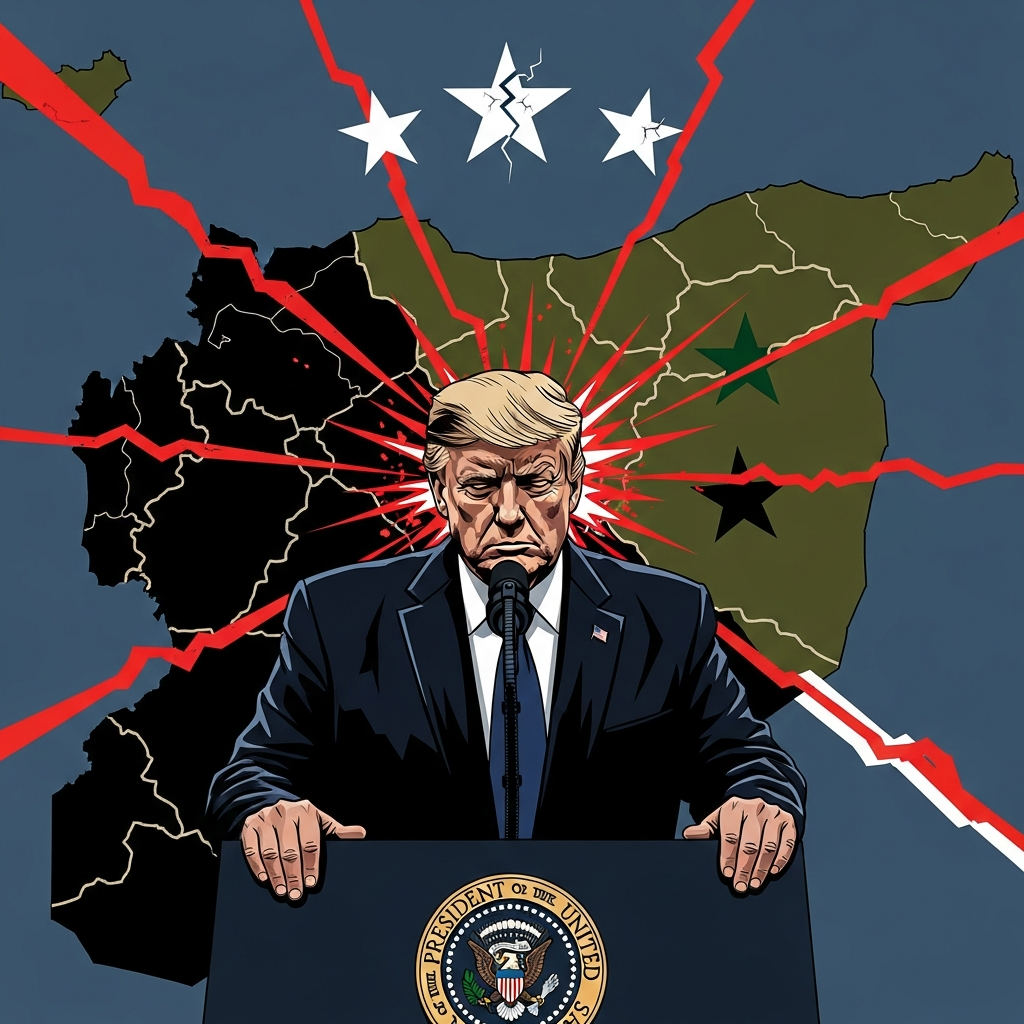
President Donald Trump has promised “very serious retaliation” following a deadly ambush in Syria that claimed the lives of two U.S. Army soldiers and an American interpreter. The attack, which also left three other U.S. service members wounded, occurred on December 13, 2025, marking a stark reminder of the persistent dangers U.S. forces face in the region despite shifting geopolitical landscapes. This incident has reignited urgent discussions about ongoing counter-terrorism efforts and the evolving U.S. presence in Syria.
The Syria Ambush: A Tragic Attack and Immediate Aftermath
The ambush unfolded in a “very dangerous part of Syria,” near Palmyra in the central Homs region, as U.S. soldiers were conducting a “key leader engagement” – a critical component of their mission to support ongoing counter-ISIS and counter-terrorism operations. Reports indicate a joint U.S.-Syrian government patrol came under fire, resulting in the tragic loss of two U.S. Army soldiers and a civilian interpreter. Three additional U.S. soldiers sustained injuries but are reportedly “doing well,” having been swiftly airlifted to the al-Tanf garrison, strategically located near the borders with Iraq and Jordan.
This incident marks the first time U.S. forces have incurred casualties of this nature since the significant geopolitical shift in Syria roughly a year prior, which saw the ousting of former President Bashar al-Assad. The immediate aftermath propelled the event into the global spotlight, demanding a swift response from Washington.
President Trump’s Resolute Response
Speaking to reporters as he departed the White House for the Army-Navy football game, President Trump conveyed the nation’s profound grief for the fallen service members and interpreter. He emphatically stated that the U.S. would “retaliate against ISIS if forces are attacked again.” Later, in a post on Truth Social, Trump reinforced his unwavering resolve, writing, “there will be very serious retaliation.” He described the event as an “ISIS attack against the U.S., and Syria,” highlighting the dangerous, often uncontrolled nature of the operational environment.
The President also notably mentioned Syrian President Ahmed al-Sharaa, indicating that the Syrian leader was “extremely angry and disturbed by this attack,” signaling a shared determination for retribution. This collaborative stance underscores a dramatically altered U.S.-Syria relationship.
Conflicting Narratives and the Search for Truth
While President Trump swiftly attributed blame to a “lone ISIS gunman,” the investigation into the ambush has revealed a more complex and at times contradictory narrative. U.S. Central Command (CENTCOM) initially reported an “ambush by a lone ISIS gunman” who was subsequently “engaged and killed.” However, the identity and affiliation of the assailant quickly became points of contention.
Joe Kent, Director of the U.S. National Counterterrorism Center, suggested the possibility of an “insider attack,” also known as a “green-on-blue attack,” where allied forces turn on their partners. Adding to the ambiguity, U.S. Ambassador to Turkey and Special Envoy for Syria, Tom Barrack, reportedly “backed away from language attributing this to ISIS” after initially condemning it as a “cowardly terrorist ambush targeting a joint U.S.–Syrian government patrol.”
Syrian Officials Offer a Different Perspective
Syrian officials also presented a contrasting account. Noureddine el-Baba, spokesperson for Syria’s Interior Ministry, stated that internal security officials had previously warned U.S.-led coalition partner forces about potential Islamic State infiltration into the Badia region, claiming these warnings were not adequately addressed. Furthermore, the Syrian Interior Ministry asserted that the attacker was a member of Syrian security forces who held “extremist ideology.” They revealed that an evaluation on December 10 had indicated the individual “might hold extremist ideas,” with a decision regarding his status due the following day. These conflicting reports emphasize the fluidity and challenges of information gathering in a complex conflict zone, highlighting the need for a thorough and transparent investigation.
A New Era: Geopolitical Shifts in U.S.-Syria Relations
This ambush occurs amidst a significant and positive transformation in U.S.-Syria relations. Following the fall of Bashar al-Assad last year, Syria’s new administration under President Ahmed al-Sharaa has actively sought closer ties with the U.S. and other Western nations, particularly in counterterrorism efforts. This geopolitical shift marks the end of five decades of Assad family rule, during which the U.S. had no diplomatic ties with Damascus.
The warming relations culminated in a “historic White House meeting” between President Trump and interim President al-Sharaa last month, signaling a new era of cooperation and a shared push for regional peace. Syria recently joined the U.S.-led Global Coalition to Defeat ISIS in November, demonstrating a commitment to joint anti-ISIL operations. This partnership, though nascent, is crucial for regional stability, yet the recent attack underscores the vulnerabilities that persist even with increased cooperation.
The Enduring Threat of ISIS: A Persistent Shadow
Despite ISIS being declared territorially defeated in Syria in 2019, the group remains a potent and dangerous force. The ambush serves as a grim reminder that ISIS’s ideology and capabilities are far from eradicated. U.N. estimates suggest that between 5,000 and 7,000 ISIS fighters still operate across Syria and Iraq, primarily through sleeper cells that continue to execute sporadic, deadly attacks.
Counter-terrorism efforts continue unabated. CENTCOM announced in late November the destruction of “more than 15 sites containing ISIS weapons caches,” indicating active measures to degrade the group’s capabilities. However, recent reports also indicate that Syria had foiled two ISIS plots to assassinate President al-Sharaa in November, highlighting the group’s continued intent to destabilize the region and target key figures. The U.S. and its partners remain committed to preventing a resurgence of the Islamic State.
U.S. Military Presence and Mission in Syria
The U.S. initially intervened in Syria in 2014 to monitor ISIS and prevent the establishment of a caliphate, operating eight bases across the country. As of June, approximately 1,500 U.S. troops remained after Pentagon-directed withdrawals, with projections for the force to decline to a few hundred personnel by year’s end. Other reports, however, suggest a total of approximately 2,000 troops are stationed primarily in the northeast, working with local security partners to prevent ISIS resurgence. Regardless of the exact number, the mission remains clear: to advise, assist, and enable partner forces in the enduring fight against terrorism.
Chief Pentagon spokesperson Sean Parnell confirmed the fallen soldiers were engaged in a “key leader engagement,” underscoring the high-stakes nature of these missions. Secretary of War Pete Hegseth issued a stern warning: “if you target Americans — anywhere in the world — you will spend the rest of your brief, anxious life knowing the United States will hunt you, find you, and ruthlessly kill you.” This uncompromising message reflects the U.S.’s unwavering commitment to protecting its forces and holding perpetrators accountable.
Frequently Asked Questions
What specific events led to the December 13, 2025, attack on US forces in Syria?
On December 13, 2025, a joint U.S.-Syrian government patrol conducting a “key leader engagement” near Palmyra in central Syria came under attack. This ambush resulted in the deaths of two U.S. Army soldiers and an American interpreter, with three other U.S. service members wounded. While President Trump initially blamed a “lone ISIS gunman,” conflicting reports from Syrian officials suggested the attacker might have been a member of Syrian security forces with extremist ties. The incident is currently under active investigation to clarify the precise details and perpetrator’s identity.
How does the recent attack impact the newly developing diplomatic ties between the U.S. and Syria under President al-Sharaa?
The attack, while tragic, appears to have reinforced, rather than damaged, the new diplomatic ties between the U.S. and Syria. President Trump highlighted Syrian President Ahmed al-Sharaa’s “extreme anger and disturbance” over the incident, indicating a shared resolve for retaliation against the perpetrators. Syria recently joined the U.S.-led Global Coalition to Defeat ISIS, signaling a commitment to joint counter-terrorism efforts. This shared threat could further solidify the emerging partnership, emphasizing common interests in regional stability and combating extremism, despite underlying complexities.
What is the current status of the ISIS threat in Syria, and what measures are the U.S. and its partners taking?
Despite losing all its territorial control by 2019, ISIS remains a significant threat in Syria, operating through sleeper cells and conducting sporadic attacks. U.N. estimates suggest between 5,000 and 7,000 ISIS fighters persist across Syria and Iraq. The U.S., with its Syrian partners, continues counter-terrorism operations, including targeted strikes and the destruction of ISIS weapons caches, as recently announced by CENTCOM. The U.S. maintains troops in Syria, primarily in the northeast, to advise and assist local forces in preventing an ISIS resurgence and ensuring regional security.
Conclusion: A Resolute Stand in a Complex Conflict
The deadly ambush in Syria serves as a poignant reminder of the enduring sacrifices made by U.S. service members in the global fight against terrorism. President Trump’s vow of “very serious retaliation” underscores a national commitment to justice and security. While the immediate details of the attack remain under investigation, the broader context reveals a complex geopolitical landscape, characterized by a nascent U.S.-Syrian partnership under President Ahmed al-Sharaa, yet shadowed by the persistent and evolving threat of ISIS. As investigations continue and the U.S. and its partners strategize their next moves, the world watches closely, recognizing the critical importance of sustained vigilance and decisive action against those who seek to destabilize global peace.