Venezuelan opposition leader María Corina Machado faced an impossible choice. Banned from running for office and hunted by the Maduro regime, she desperately needed to reach Norway. She was set to accept her Nobel Peace Prize. Her journey was a perilous one. It involved secret travel through Venezuela. Hours on a fishing boat in rough seas followed. Finally, she took a clandestine flight from Curaçao to Oslo. This daring escape, codenamed “Operation Golden Dynamite,” became a testament to her resolve and the extraordinary lengths taken for freedom.
The Prize and the Peril: Why Machado Had to Flee
María Corina Machado is a prominent figure. She is often called “the Iron Lady” of Venezuelan politics. In October, she was awarded the Nobel Peace Prize. This honor recognized her staunch opposition to Nicolás Maduro’s authoritarian government. Machado had won the opposition’s primary election by a landslide. International observers validated this victory. However, Maduro refused to acknowledge it. He subsequently barred her from the 2024 presidential election. This ignited a widespread crackdown on opposition figures. Machado found herself in profound danger.
A High-Value Target for the Regime
Machado’s popularity made her a prime target. She was arguably the most famous person in Venezuela, next to Maduro himself. The regime actively pursued her. They referred to their efforts as the “Hunt for Maria.” This chilling name echoed the pursuit of international terrorists. Authorities used facial biometrics to track her. For nearly a year, Machado remained in hiding. She sent her three children into exile for their safety. She had not seen them until her arrival in Oslo. Her escape became crucial. She needed to represent Venezuela’s democratic aspirations on the world stage.
Operation Golden Dynamite: Masterminding the Clandestine Mission
The audacious plan to extract Machado was dubbed “Operation Golden Dynamite.” It was meticulously planned. Bryan Stern, a U.S. Special Forces veteran, led the mission. Stern is the founder of the Tampa, Florida-based Grey Bull Rescue Foundation. This organization specializes in high-risk extractions. Operation Golden Dynamite marked their 800th mission. It was also their most high-profile rescue to date.
Strategic Challenges and Covert Preparations
Stern initiated planning for the complex operation on December 5th. His priority was Machado’s timely arrival at the Nobel ceremony. The team quickly dismissed a land route. Pervasive checkpoints and the high risk of Machado’s recognition made it too dangerous. A clandestine sea extraction was the only viable option. This choice, however, presented its own severe dangers. The Caribbean Sea off Venezuela’s coast had a significant U.S. military presence. U.S. forces had recently destroyed numerous suspected narco-trafficking boats. This resulted in many fatalities.
Stern carefully coordinated with U.S. officials. He ensured they were aware of his team’s presence. He deliberately chose a boat that would not be mistaken for a narco-vessel. This avoided large, fast-engine boats typically targeted by the U.S. military. Machado’s extreme notoriety also required elaborate deception. This included disguising her appearance. A Wall Street Journal report suggested she wore a wig. Stern would not confirm this detail. However, he stressed the necessity of obscuring her recognizable face. Secrecy was paramount. Even some members of Machado’s own team were kept in the dark.
The Treacherous Caribbean Crossing
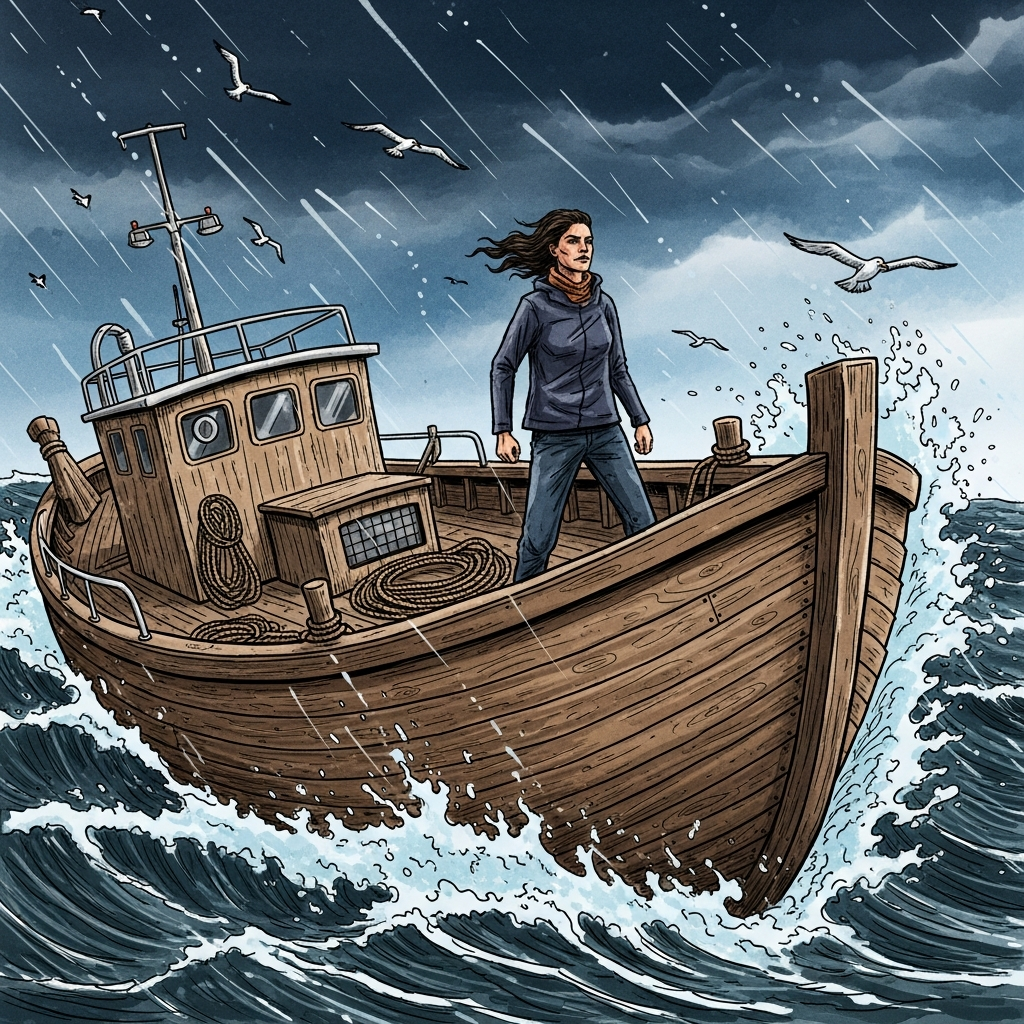
The most perilous part of the journey involved a small fishing boat. It navigated a treacherous stretch of the Caribbean Sea. The night was almost moonless. Stern vividly described the conditions. It was “pitch black.” Waves of “5- to 6-foot, maybe even bigger” pounded the vessel. The crew became “very cold and wet.” The boat pitched violently through waters known for U.S. missile strikes. Despite this, Machado’s composure was unwavering. Stern noted her resilience. She lived up to her “Iron Lady” nickname.
A Midnight Rendezvous
The operation hit a critical snag. Machado’s boat failed to arrive at the prearranged rendezvous point. Stern’s team had to pivot. They navigated towards Machado in pitch darkness. They faced treacherous 10-foot waves. Flashlights were their only guide. The rendezvous itself was tense. Both crews feared the other might be cartel members or government agents. Stern called the scene “scary stuff.” “Everyone skittish approaching each other in the dead of night at sea,” he recalled. The anxiety lifted when Machado’s voice cut through the darkness. She identified herself simply, “It’s me — María!”
Once Machado was safely aboard Stern’s larger vessel, the final leg to an unnamed Caribbean island began. This island was widely reported to be Curaçao. Machado merely “transited through Curaçao.” She “never cleared immigration” there. This indicated a discreet transfer. A private plane then awaited her. It would complete her journey to Oslo.
Arrival in Oslo: Defiance on the Global Stage
Machado’s arrival in Norway on December 11th marked a powerful moment. It was her first public appearance in nearly a year. She defied a decade-long travel ban imposed by Venezuelan authorities. Her daughter, Ana Corina Sosa Machado, had accepted the Nobel Prize on her mother’s behalf earlier. She delivered a speech written by Maria Corina. This speech emphasized the need for democracies to actively fight for freedom.
Upon her safe arrival in Oslo, Machado addressed cheering supporters. They gathered outside the Grand Hotel. Dressed in a white suit, she waved, blew kisses, and sang with them. Supporters chanted her name and Venezuela’s national anthem. She declared her intention to return to Venezuela. “I came to receive the prize on behalf of the Venezuelan people,” she stated. “I will take it back to Venezuela at the correct moment.”
Dedication and Political Resonance
Machado used her platform to send clear political messages. She dedicated her Nobel Peace Prize in part to former President Donald Trump. She thanked him for his support of Venezuela’s pro-democracy movement. Machado believed Trump provided critical assistance. This was during a period when Venezuelans felt abandoned by the international community. She also offered a unique perspective on her country’s situation. She stated that Venezuela was already “invaded.” She cited Russian agents, criminal gangs, and Hezbollah members. This underscored the complex threats facing the nation.
The Iron Lady’s Unwavering Resolve
Bryan Stern expressed profound admiration for Machado. He admitted to being “starstruck.” He called her “a hero.” Stern characterized “Operation Golden Dynamite” as the most challenging mission his group had ever undertaken. Machado’s resilience throughout the ordeal deeply impressed him. Despite the veterans’ complaints about the cold, wet, hunger, and darkness, Machado “didn’t complain once.” Stern concluded that her “Iron Lady” nickname stemmed from a deep, “gnarly” and “awesome” personal strength.
Her successful and clandestine exfiltration highlights incredible courage. It showcases the extraordinary measures required for prominent opposition figures. They navigate repressive regimes to champion democratic ideals. Machado’s defiance inspires hope. It shows unwavering determination to represent Venezuela’s democratic aspirations on the global stage. Her fight for freedom continues, even from exile.
Frequently Asked Questions
What was “Operation Golden Dynamite” and who led María Corina Machado’s escape?
“Operation Golden Dynamite” was the codename for the high-stakes mission to extract Venezuelan opposition leader María Corina Machado from Venezuela. It was meticulously planned and led by Bryan Stern. Stern is a U.S. Special Forces veteran and founder of the Grey Bull Rescue Foundation. This organization specializes in humanitarian rescue operations. The operation was designed to ensure Machado could reach Norway to accept her Nobel Peace Prize. It involved a complex, multi-stage journey, including a perilous sea crossing.
Where did María Corina Machado travel during her escape from Venezuela?
María Corina Machado’s escape involved a clandestine route. She traveled secretly through Venezuela to a fishing village. From there, she boarded a small boat, then transferred to a larger fishing vessel commanded by Bryan Stern. This boat navigated treacherous Caribbean waters for approximately 16 hours. The journey concluded on the Dutch island of Curaçao, where she transited without clearing immigration. A private plane then transported her from Curaçao to Oslo, Norway, for the Nobel Peace Prize ceremony.
Why was María Corina Machado’s escape so challenging and risky?
Machado’s escape was incredibly challenging due to her extreme notoriety and the Maduro regime’s active pursuit. She was a high-value target, facing a “Hunt for Maria” with facial biometrics in use. The sea route, while avoiding land checkpoints, presented dangers from rough seas and U.S. military anti-narco operations. The need for elaborate disguises and secrecy, even from some of her own team, added layers of complexity. The tense, dark rendezvous at sea, amidst fears of government agents or cartel members, further underscored the immense risks involved in this critical exfiltration.
Conclusion
María Corina Machado’s dramatic escape is more than a personal triumph. It stands as a powerful symbol. It represents the ongoing struggle for democracy in Venezuela. Her “Operation Golden Dynamite” journey, aided by Bryan Stern and his team, unveiled the lengths to which courageous individuals will go for freedom. From her hidden status to her public defiance in Oslo, Machado’s unwavering resolve shines brightly. She embodies hope for a nation yearning for change. Her promise to return to Venezuela with her Nobel Peace Prize reinforces her commitment. Her story inspires resistance against authoritarian rule worldwide.