President Donald Trump, returning to his signature campaign style, recently addressed the U.S. economy and affordability in Mount Pocono, Pennsylvania. While his performance on December 9, 2025, exuded confidence and amusement for his supporters, a growing chasm between his triumphant rhetoric and the daily economic realities faced by many Americans became starkly apparent. This article delves into the critical disconnect between the president’s optimistic claims and the persistent struggles of American households, drawing on expert analysis and voter sentiment.
The Pennsylvania Address: A Disconnect from Reality
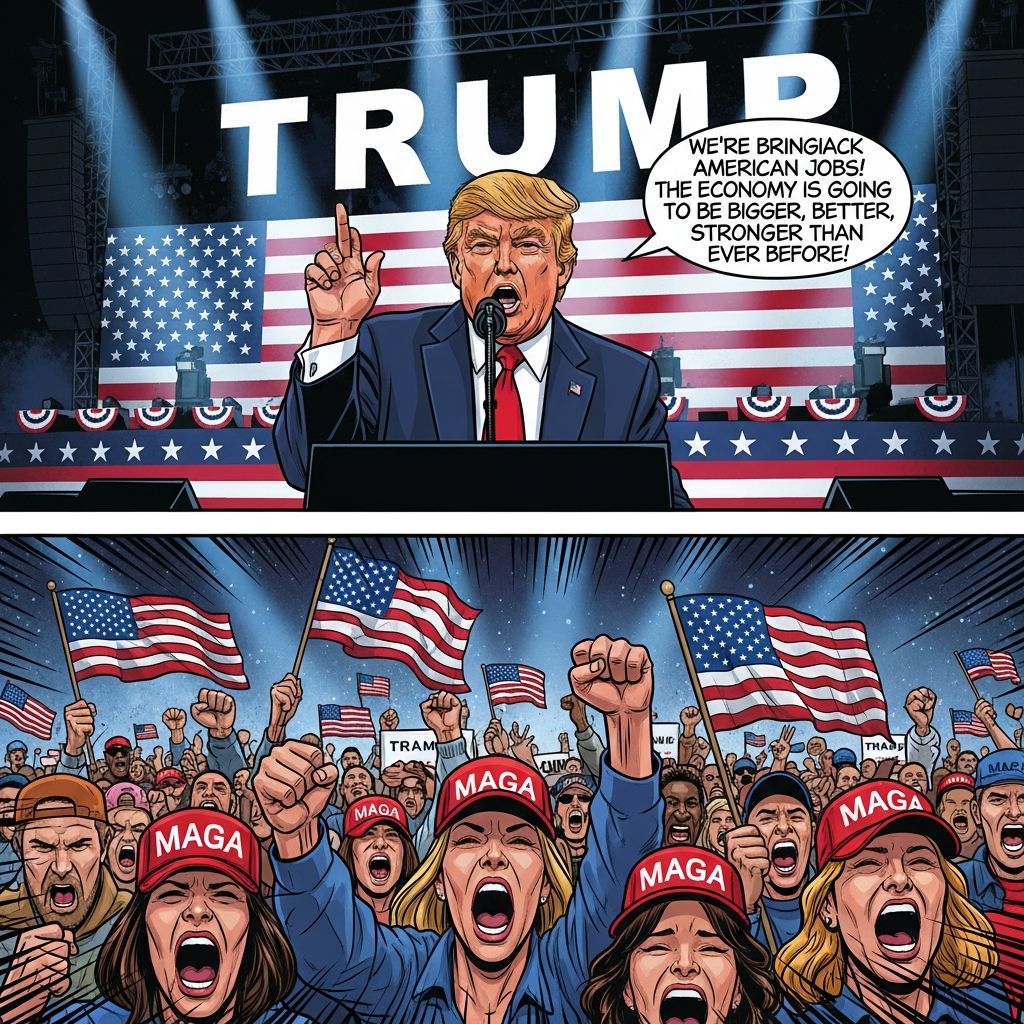
At the Mount Airy Casino Resort, President Trump enjoyed a lively rally, working the crowd like a seasoned comic. He largely abandoned his teleprompter, delivering a freewheeling, one-and-a-half-hour speech punctuated by classic gestures. For Trump, the event was clearly “fun.” However, for many voters grappling with high prices, the relief he aimed to provide seemed to miss its mark.
Republican strategists have repeatedly urged Trump to acknowledge the financial pain felt by ordinary citizens. They want him to show he understands the struggles of making rent, buying groceries, and affording health care. Trump offered a nod to these concerns in the swing district, stating, “I have no higher priority than making America affordable, again.” Yet, he quickly deflected blame for rising costs, despite his administration’s global tariff war, which has demonstrably made imported consumer goods more expensive. He accused Democrats of causing high prices, then insisted he had already brought them down “across the board.”
This message was often lost in a torrent of varied topics. Trump boasted about his 2024 election wins, criticized wind power, polled the audience on nicknames for Joe Biden, and even performed a Scottish accent. His self-professed enjoyment of these unscripted moments highlighted a deeper challenge: an inability to concede that economic conditions might be less than spectacular under his watch.
The Deeper Economic Strain: Beyond Rhetoric
Beneath the campaign trail bravado, economic indicators paint a concerning picture for many families. Consumer confidence remains near record lows, and contrary to presidential claims, most prices have not significantly decreased. Data from the Bureau of Labor Statistics indicates grocery and rent costs have surged by 30% over the last five years. While this suggests the cost-of-living crunch isn’t solely attributable to one administration, conditions are not measurably improving for many.
One Pennsylvania resident, Lynn Weidner, a lifelong Republican, articulated this sentiment. Speaking on CNN, she noted the confusion stemming from Trump’s earlier promises of affordability versus his current claim that it’s a “hoax.” This gap between presidential rhetoric and lived experience is a critical factor, especially as midterm elections loom. In Monroe County, where Trump spoke, he won by a narrow margin in 2024, highlighting the district’s vulnerability and the importance of economic issues.
A Battle on the Home Front: Tariffs and Their Toll
The impact of Trump’s trade policies, particularly his global tariff war, has created significant economic distress in specific sectors. American farmers, a traditionally loyal Republican voting bloc, have faced severe challenges. Tim Maxwell, an Iowa farmer, shared widespread concerns that while yields are good, international market interest has plummeted due to tariffs. US agricultural groups attribute this directly to economic tensions with China, leading to a sharp decline in orders for American crops. Small business bankruptcies among farmers have reached a five-year high, according to Bloomberg data from July.
Despite suffering severe financial pain, many rural Americans paradoxically maintain loyalty to Trump. Maxwell himself stated he would remain patient, believing in the president’s long-term strategy. Tariffs, like the 145% duty on China, have led to retaliatory measures, such as China’s 125% tariff on American goods. This has particularly devastated soybean farmers, as China, a major buyer, drastically reduced orders. Cornell economist Christopher Wolf warns that fluctuating tariffs create instability and long-term damage to supply chains. Farmers are also experiencing surging fertilizer costs due to other trade disputes. This persistent economic pressure means loyalty is not a “blank cheque,” with farmers demanding tangible results within a specific timeframe.
Presidential Priorities: A Glimpse Behind the Campaign Trail
The perception of President Trump as an “out-of-touch billionaire” stems partly from his reported focus on projects perceived as luxuries rather than immediate voter concerns. Reports suggest he has been preoccupied with a planned White House ballroom, transforming Dulles Airport, and engaging in high-stakes foreign policy gambles. This focus often overshadows the daily struggles of Americans.
Further contributing to this perception is Trump’s unique approach to the military and national displays of power. He views the military as a personal instrument, a point highlighted by his desired military parade for the Army’s 250th anniversary, coinciding with his 79th birthday. Tom Nichols of The Atlantic critiques this as a dangerous politicization of the military, signaling a shift towards its use as a personal tool of power rather than an apolitical institution.
The Spectacle vs. The Struggle: Military Parades and Public Backlash
The anticipated military parade, meant to project strength, instead proved “derpy” and “dull,” according to a USA Today report. It was overshadowed by “No Kings” protests nationwide, drawing hundreds of thousands of demonstrators. These protests, organized by groups like the ACLU, condemned “President Trump’s escalating abuses of power,” effectively overshadowing his birthday spectacle. The stark contrast between a lukewarm parade and massive public outcry further amplified the perception of a president more focused on personal glorification than genuine public service. This event served as a potent symbol of Trump’s broader disconnect from the prevailing public mood.
Unwavering Persona: Why Trump’s Rhetoric Persists
President Trump’s political career has been defined by hyperbole, and he struggles to admit anything less than spectacular performance under his watch. His self-grade of “A-plus-plus-plus-plus-plus” on the economy, even as many Americans face hardship, epitomizes this characteristic. His rhetoric often mirrors a consistent communication style that has alienated some while reinforcing loyalty among others.
His extensive public record, for example, includes numerous comments about women that often focus on appearance, perceived intelligence, or traditional roles. Terms like “weak and foolish” for political opponents or assessments of physical attractiveness for celebrities illustrate a persona that, while often controversial, plays into an image of “masculinity” for his base. This unwavering, often defiant, communication style, alongside his ability to frame complex issues in simple terms, helps maintain strong support among certain demographics, such as rural voters. Political scientists explain this phenomenon as “selective blame attribution,” where supporters are reluctant to fault their chosen leader for negative outcomes, instead blaming external factors or political adversaries. This dynamic helps sustain loyalty despite clear economic hardships.
The Political Fallout: Midterms and Beyond
The growing gap between Trump’s triumphalism and voter sentiment creates a significant political risk for Republicans. His dismissive attitude towards affordability issues could become a liability, especially in tight congressional races like those adjacent to Monroe County, which are prime targets for Democrats. Phrases like his “A-plus-plus-plus-plus-plus” comment could join “Mission Accomplished” or “Bidenomics” as defining labels of administrations struggling with economic perception.
Despite promoting policies like “no taxes on tips” and predicting higher wage packets from his tax reforms (which disproportionately benefit the wealthiest), Trump has offered few concrete new plans to tackle high prices or address expiring Affordable Care Act subsidies. History shows that simply reading lists of legislative wins or promising future improvements often fails to resonate with a public experiencing tangible financial pain. The administration’s efforts to attract foreign investment, such as the $20 billion Hyundai investment, are long-term plays. While potentially beneficial, they offer little immediate relief to voters struggling with current costs. Furthermore, tariffs, while intended to boost domestic manufacturing, can stifle inward investment by hiking raw material costs and creating uncertainty for investors.
Bridging the Divide: The Challenge of Economic Empathy
The core challenge for President Trump, and indeed any leader, lies in bridging the divide between political rhetoric and the lived economic realities of the populace. His administration’s economic policies, while aiming for domestic manufacturing resurgence, also carry risks. As warned by professors Jonathan Haskel and Matthew Slaughter, trade uncertainties could dampen business investment and stagnate growth, potentially mirroring the economic impacts of Brexit.
The ability to acknowledge widespread economic pain, rather than dismiss it as a partisan “hoax,” is crucial for building trust and demonstrating empathy. While Trump continues to insist “things have never been better” and relishes his unscripted rallies, the political consequences of this denial could be substantial. The upcoming elections will serve as a critical barometer for how effectively his confident narrative resonates with an electorate increasingly focused on household affordability.
Frequently Asked Questions
What specific economic challenges are American families facing according to the article?
American families are grappling with significant increases in the cost of living. The article highlights that grocery and rent costs have surged by 30% over the last five years, according to the Bureau of Labor Statistics. Consumer confidence is near record lows, and despite presidential claims, most prices are not significantly down. This means many households struggle with basic necessities, impacting their overall financial stability and economic outlook.
How have President Trump’s trade policies impacted the agricultural sector?
President Trump’s global tariff war has severely impacted the agricultural sector, particularly farmers. For instance, a 145% tariff on China led to retaliatory tariffs, causing a sharp decline in Chinese orders for American crops, especially soybeans. This instability has driven small business bankruptcies among farmers to a five-year high and increased costs for essentials like fertilizer due to other trade disputes. While some farmers remain loyal, they expect tangible results from these policies.
Why is there a perceived disconnect between President Trump’s economic rhetoric and voter experience?
The perceived disconnect stems from President Trump’s consistent optimism and claims of economic success, such as an “A-plus-plus-plus-plus-plus” grade, contrasted with the tangible financial struggles many Americans face. While Trump enjoys campaign-style events and deflects blame for high prices, voters like Lynn Weidner express confusion when affordability is dismissed as a “hoax.” This gap is amplified by his focus on other projects and events, which are seen as less aligned with the immediate economic pain of ordinary citizens, leading to accusations of being out-of-touch.
—