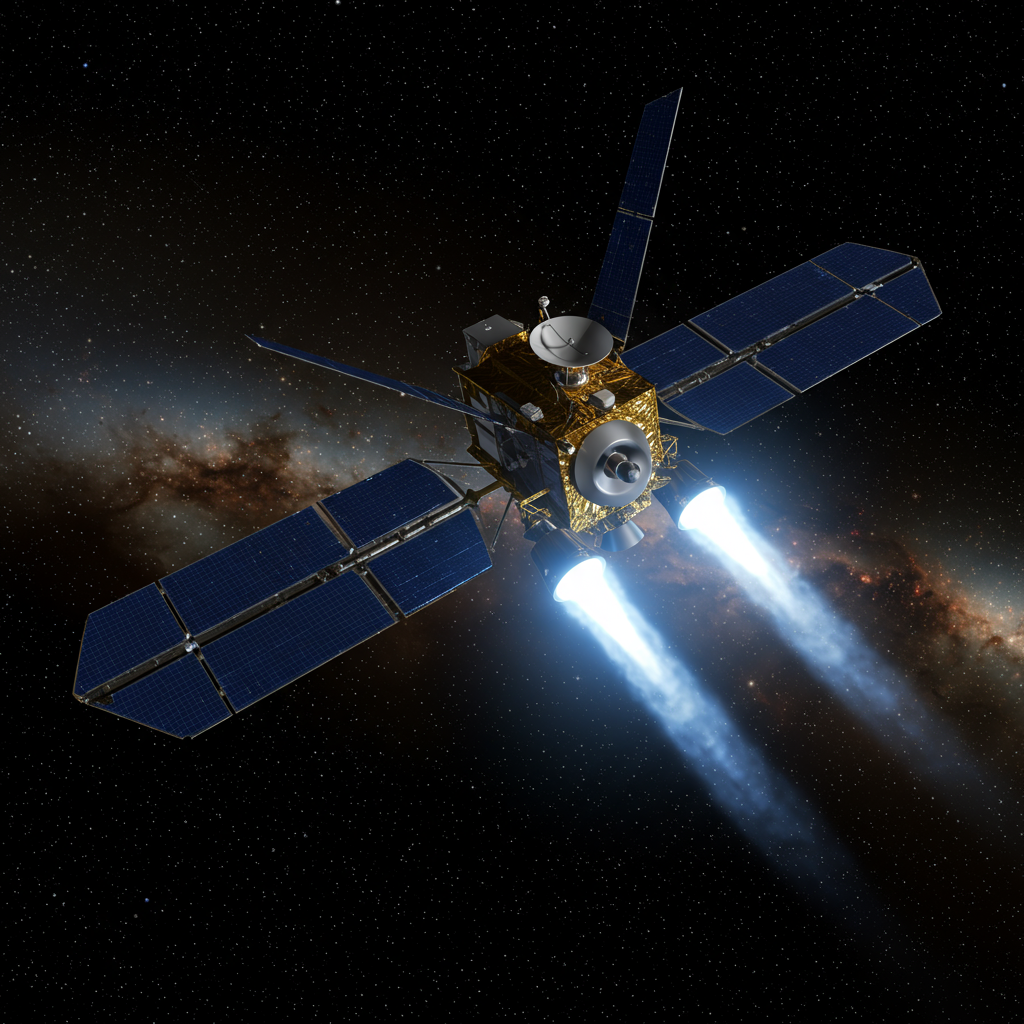
The quest for ubiquitous, high-speed internet has long been a challenge, especially in remote corners of the globe. Enter SpaceX Starlink, an ambitious satellite network rapidly transforming how millions connect online. This groundbreaking system, leveraging a vast constellation of satellites in low Earth orbit (LEO), promises to bridge the digital divide, offering broadband internet access where traditional infrastructure falters. From its initial test satellites to launching thousands, Starlink represents a paradigm shift in global connectivity, albeit one not without its own unique set of challenges and innovations.
The Starlink Phenomenon: Redefining Global Connectivity
Starlink, developed by aerospace giant SpaceX, is more than just another internet provider; it’s a “megaconstellation” designed to deliver high-speed, low-latency internet from space. Its core mission targets underserved regions, often referred to as “dark zones,” where conventional internet access is either limited or entirely nonexistent. This ambitious undertaking has seen rapid expansion, captivating the world with its potential to reshape internet accessibility on a global scale.
From Vision to Reality: A Brief History of Starlink
SpaceX CEO Elon Musk publicly unveiled the Starlink project in January 2015, establishing a dedicated satellite development facility in Redmond, Washington. However, the genesis of satellite internet ambitions at SpaceX dates back to the early 2000s. Key regulatory steps followed, including a November 2016 application to the Federal Communications Commission (FCC) for a non-geostationary orbit (NGSO) satellite system. The FCC granted approval for an initial deployment of 4,425 satellites. The first two test satellites launched in February 2018, paving the way for the inaugural batch of 60 operational satellites in May 2019. By November 2020, Starlink’s beta service became available to the public, marking a pivotal moment in its journey from concept to real-world utility. The network’s distinctive name, “Starlink,” reportedly drew inspiration from John Green’s popular novel, The Fault in Our Stars.
How Starlink Works: LEO Satellites Explained
The fundamental innovation behind Starlink lies in its utilization of low Earth orbit (LEO) satellites. Unlike traditional communication satellites, which reside in a geostationary orbit at a staggering 35,785 km (22,236 miles) altitude, Starlink’s satellites orbit much closer to Earth, typically below 1,600 km (1,000 miles), and often around 500 km. This significant difference in altitude is crucial. Signals traveling to and from geostationary satellites cover immense distances, leading to noticeable delays and slower service. LEO satellites drastically reduce this signal travel time, resulting in significantly improved service speed and, critically, much lower latency.
A unique characteristic of LEO satellites is their transient nature; each satellite passes over a specific location for only a few minutes. To ensure continuous, uninterrupted service, Starlink requires a massive number of satellites in orbit. As one satellite moves out of range, another seamlessly takes its place, guaranteeing a constant handoff and consistent connectivity for users on the ground, who connect via a portable rectangular dish. The economic viability of such a large constellation, which was once prohibitive (as seen with 1990s LEO ventures like Iridium), only became practical in the 2010s, thanks largely to advancements in reusable rocket technology and more cost-effective satellite production methods.
Milestone Launches and Unprecedented Growth
Starlink’s growth trajectory has been nothing short of extraordinary, with SpaceX consistently pushing the boundaries of space launches and satellite deployment. These efforts have culminated in remarkable achievements, solidifying Starlink’s position as a leading force in the satellite internet arena.
Breaking Records: The 10,000th Satellite and Annual Launch Feats
SpaceX recently marked a significant milestone, launching its 10,000th Starlink satellite into orbit. This achievement also coincided with the company setting a new annual record for launches, underscoring its relentless pace of development and deployment. A single Falcon 9 rocket successfully carried dozens of Starlink satellites aloft from Vandenberg Space Force Base in California, contributing to this record-breaking year. SpaceX celebrated this landmark on its webcast with the phrase, “From Tintin to 10,000!”, a nod to the program’s early prototype satellites. The rapid succession of these launches has been instrumental in building out the vast Starlink network, enabling it to serve millions globally.
Expanding Horizons: Current Reach and Future Ambitions
As of June 2024, the Starlink constellation boasts over 6,000 satellites, constituting more than half of all active satellites currently in orbit. This expansive network currently serves over six million users across the globe, a figure that continues to grow rapidly. By May 2024 alone, the subscriber base had exceeded three million. Starlink’s primary objective remains extending broadband internet access to regions overlooked by traditional providers, effectively bringing the “Internet from space” to those who need it most. Looking ahead, SpaceX already holds regulatory approval to deploy a constellation of 12,000 satellites. Furthermore, company filings suggest even more ambitious plans, indicating the constellation could eventually expand to approximately 30,000 satellites, significantly broadening its global reach and impact on internet accessibility.
Technical Innovation: Boosting Efficiency with Next-Gen Networks
The dynamic nature of LEO satellite constellations presents unique challenges for network design. Unlike the relatively static ground-based internet, satellites are constantly moving nodes, demanding fundamental re-evaluation of traditional networking principles. Pioneering research is addressing these complexities to optimize Starlink’s performance even further.
The ETH Zurich Breakthrough: Smarter Satellite Connections
Computer scientists at ETH Zurich, led by Professor Ankit Singla and doctoral candidate Debopam Bhattacherjee, have developed a novel network design poised to significantly improve the capacity and efficiency of satellite-based internet systems. Their research challenges the intuitive notion that satellites should always connect to their nearest neighbors. Instead, they propose a mathematical model that establishes connections based on specialized, repetitive patterns. This innovative approach suggests that it can be more efficient for data to utilize longer connections that traverse fewer nodes, as each node traversal consumes resources and can reduce overall network capacity.
The ETH Zurich team tested their design concept against the planned systems of SpaceX and Amazon’s Project Kuiper. Their findings reveal substantial potential improvements: the new design could increase network efficiency for SpaceX by an impressive 54% compared to its current approach, and for Amazon’s Kuiper, the efficiency gain is 45%. Bhattacherjee boldly states that their approach “could double the efficiency of satellite-based Internet,” representing a colossal leap forward in making global satellite broadband an even more robust and reliable reality. This research highlights the ongoing innovation dedicated to perfecting the “Internet from space.”
Starlink’s Growing Impact and Lingering Concerns
Starlink’s influence extends beyond merely providing consumer internet, venturing into specialized applications. However, its rapid expansion also raises critical questions about space environmentalism and the long-term sustainability of low Earth orbit.
Beyond Consumer Internet: New Applications
The versatility of the Starlink network is driving its expansion into various new sectors. In 2024, SpaceX began testing satellites equipped to provide cellular service, partnering with telecommunication giants like T-Mobile. This move promises to extend mobile connectivity to previously unreachable areas. Furthermore, SpaceX has developed a dedicated military version known as Starshield, actively building a constellation of secure communication satellites specifically for the U.S. government. These developments underscore Starlink’s potential to serve critical infrastructure and defense needs, showcasing its adaptable and robust capabilities.
Addressing the Challenges: Space Debris and Congestion
The sheer scale of the Starlink constellation, with thousands of satellites already launched and tens of thousands more planned, has understandably generated significant concerns regarding space debris and the potential for collisions. Concrete incidents highlight these risks: China reported to the United Nations in December 2021 that its Tianhe space station module had to perform evasive maneuvers twice to avoid Starlink satellites. More recently, a report filed by SpaceX with the FCC revealed a sharp increase in collision avoidance incidents. Between December 2022 and May 2023, Starlink satellites executed over 25,000 collision avoidance maneuvers, a doubling of incidents compared to the preceding six-month period. These figures underscore the growing challenge of managing an increasingly congested LEO environment and the imperative for responsible space stewardship.
Frequently Asked Questions
How does SpaceX Starlink’s low-Earth orbit (LEO) technology offer superior internet speed and lower latency?
SpaceX Starlink achieves superior internet speed and significantly lower latency by deploying satellites in low Earth orbit (LEO), typically around 500 km above the Earth. In contrast, traditional communication satellites operate in geostationary orbit at 35,785 km. The much shorter distance of LEO satellites drastically reduces the time it takes for signals to travel between the user’s dish and the satellite, and then back to a ground station. This minimized signal travel time translates directly into faster response times and a more responsive internet experience, making it highly competitive with, and often superior to, long-distance fiber optic connections in terms of latency.
What significant milestones has SpaceX Starlink achieved in its satellite launches and network growth?
Starlink has achieved remarkable milestones since its inception. SpaceX successfully launched its 10,000th Starlink satellite, setting a new annual company record for launches at the time with its 132nd mission in a single year. The network has expanded to over 6,000 active satellites as of June 2024, accounting for more than half of all functional satellites in orbit. This extensive constellation supports over six million global users, with more than three million subscribers recorded by May 2024. Future plans include regulatory approval for 12,000 satellites, with ambitions to potentially expand the constellation to 30,000, further solidifying its global reach.
What are the primary environmental and operational challenges associated with the rapid expansion of the Starlink constellation?
The rapid expansion of the Starlink constellation presents significant challenges, primarily concerning space debris and the increased risk of collisions in low Earth orbit. With thousands of satellites already deployed and tens of thousands more planned, the LEO environment is becoming increasingly congested. Documented incidents include China’s Tianhe space station having to perform evasive maneuvers to avoid Starlink satellites in December 2021. Furthermore, SpaceX reported over 25,000 collision avoidance maneuvers by Starlink satellites between December 2022 and May 2023, a doubling from the previous period. These events highlight the growing need for sophisticated traffic management systems and international cooperation to prevent a cascading effect of debris, known as the Kessler Syndrome, which could jeopardize future space activities.
Conclusion
SpaceX Starlink is undeniably pioneering a new era of global internet connectivity. By deploying a massive constellation of LEO satellites, it has already brought high-speed, low-latency broadband to millions, particularly in underserved regions. The continuous innovation, from record-breaking launches to advanced network designs, underscores its potential to further revolutionize access. However, this impressive expansion comes with critical responsibilities, especially regarding space debris and the sustainability of our orbital environment. As Starlink continues its ambitious trajectory, balancing technological advancement with environmental stewardship will be paramount to ensuring the long-term success of the “Internet from space” and the health of Earth’s orbital highways.