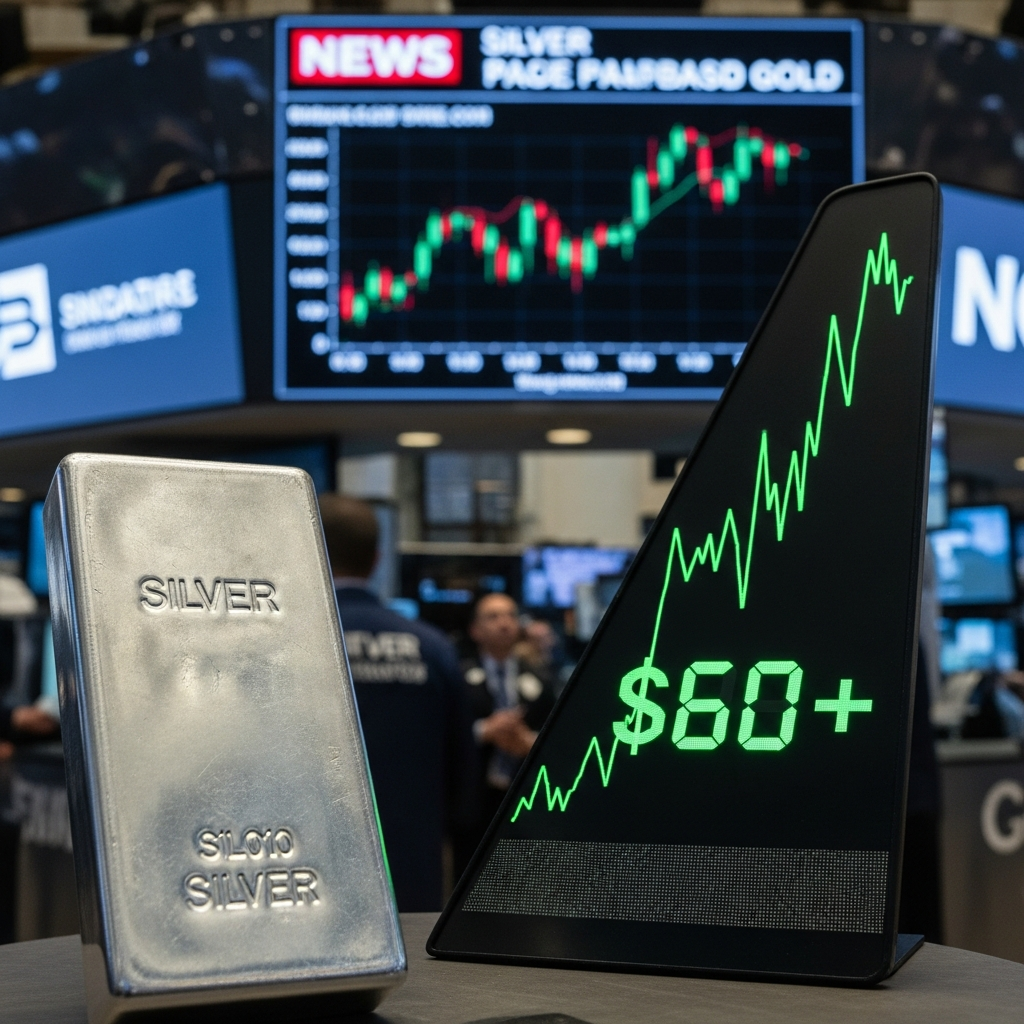
The world of precious metals is buzzing as silver, often dubbed “poor man’s gold,” shatters previous records. The metal’s value has more than doubled since the start of the year, recently eclipsing $60 per troy ounce on New York’s commodity exchange for the very first time. This monumental leap represents an astounding 102% increase for 2025, significantly outperforming gold’s substantial 59% rise over the same period. This isn’t just a fleeting spike; it signals a complex interplay of global economic forces, technological demand, and shifting investor sentiment.
This historic rally has caught the attention of investors and economists alike, prompting questions about its sustainability and broader implications. From the weakening U.S. dollar to an intensifying supply crunch, numerous factors are converging to propel silver into unprecedented territory. Understanding these drivers is crucial for anyone looking to navigate the current economic landscape or consider precious metals for their portfolio.
The Weakening Dollar and the “Debasement Trade”
A significant catalyst for silver’s remarkable ascent is the persistent weakening of the U.S. dollar. The greenback has depreciated by approximately 8.5% year-to-date in 2025. This decline began earlier in the year, partly attributed to the Trump administration’s steep tariffs on trading partners, which eroded the U.S.’s standing as a reliable trade and investment partner. Simultaneously, the burgeoning U.S. national debt and ongoing inflation concerns have further diminished the dollar’s value.
This scenario fuels what analysts like Collamore Crocker of New Century Advisors term the “debasement trade.” Investors are increasingly seeking refuge in alternative assets, such as gold and silver, as the dollar’s reputation as an ultra-safe haven falters. The anticipation of another Federal Reserve rate cut, driven by a slowing U.S. economy, is expected to further depress the dollar. Lower interest rates typically reduce returns on dollar-denominated assets, making non-yielding precious metals inherently more attractive. As independent consultant Bob Gottlieb succinctly puts it, “Lower rates are bullish for precious metals.”
Tariffs and Geopolitical Undercurrents
Policy shifts and geopolitical tensions also play a crucial role in silver’s volatility. Silver, being more sensitive to policy changes than gold, reacted strongly to concerns about potential U.S. tariffs. The U.S. Geological Survey (USGS) added silver to its list of critical minerals in 2025, a move that USGS acting director Sarah Ryker stated helps identify risks to supply chains. Historically, inclusion on this list can signal impending tariffs, prompting investors to drive up prices.
Metals traders have proactively responded by shifting physical silver to the U.S. from international hubs like London or Shanghai, aiming to mitigate potential import taxes. These actions, coupled with broader trade tensions like President Trump’s announced 100% levy on China, underscore the political element in silver’s price dynamics. The market’s jitters, reflected in broader indices like the S&P 500, highlight how policy uncertainty translates into demand for safe-haven assets.
The Historic Supply-Demand Imbalance
Beyond monetary and political factors, a deepening structural supply deficit is intensifying silver’s rally. Industrial demand for silver has surged by about 18% over the past four years, driven by rapid technological advancements. Unlike gold, where over 90% of demand comes from jewelry, investment, or central bank purchases, industrial uses account for roughly half of silver’s total demand. This unique dual identity positions silver as both a precious and an essential industrial metal.
Key sectors driving this demand include electric vehicles (EVs), artificial intelligence (AI) data centers, solar panels, 5G networks, semiconductors, and advanced electronics. Silver’s exceptional electrical and thermal conductivity makes it indispensable for these applications. Bob Gottlieb highlights the “inherent tightness” in the silver market, noting that “Demand is greater than supply every year.” The Silver Institute’s 2025 survey confirms a persistent market deficit for the fifth consecutive year.
Constraints on Global Silver Production
The supply side, unfortunately, remains inelastic. Global mine output is constrained, with only about 813 million ounces expected this year – slightly less than 2021 figures. A significant structural hurdle is that approximately 70-80% of global silver output is extracted as a byproduct of mining other base metals like lead, zinc, and copper. This means that even with soaring silver prices, miners cannot easily or quickly scale up silver production to meet accelerating demand.
The lengthy process of developing new mines further caps supply. Global silver stockpiles are shrinking, and mining regions report tightening reserves and slower-than-expected project timelines. This “structural squeeze” suggests that current higher prices might not be temporary fluctuations but rather a new market baseline that could persist for years. The cost to lease physical silver for industrial applications has hit multi-year highs, signaling the acute tightness in the market.
Investment Frenzy and “Poor Man’s Gold”
Adding to the demand is a substantial inflow of investment capital. India, for example, has become the world’s second-largest market for silver investment. Hiren Chandaria of Monetary Metals explains that as “poor man’s gold,” silver has emerged as a more affordable precious metal store of value for households and smaller investors, especially as gold prices continue to climb.
This trend is bolstered by supportive financial policies, such as India’s central bank allowing regulated silver-backed loans, which has led to a near doubling of silver-backed exchange-traded fund (ETF) prices in India since January 2023. Retail investor interest is skyrocketing, evidenced by increased search volumes for silver and growing long positions in futures markets. The iShares Silver Trust (SLV) has soared over 105% within the year, reflecting intense market conviction.
The Economic Context and Future Outlook
The current surge in silver prices is set against a backdrop of complex global macroeconomic conditions. Persistent high inflation across many economies, ongoing interest rate pressures, and rapidly rising national debt are causing investors to lose confidence in conventional monetary policy tools. This leads them to reallocate capital towards “real assets” – resources that cannot be digitally printed or inflated away. Silver, with its dual identity, benefits from both economic uncertainty and technological expansion.
Analysts are debating whether this is a temporary spike or the dawn of a “new monetary era” for silver. Parallels are drawn to the late 1970s, a period marked by high inflation and geopolitical tensions. However, today’s situation is amplified by technology, which significantly enhances silver’s relevance. A future characterized by structurally higher nominal rates, negative or mildly positive real rates, expanded central bank balance sheets, and greater tolerance for inflation could make parabolic episodes in silver a more recurring feature.
Analyst Forecasts and Investor Considerations
The silver boom has yielded significant returns for mining companies, with Canada’s Wheaton Precious Metals seeing its stock rise 85% year-to-date, Mexico’s Fresnillo by 365%, Industrias Peñoles by 230%, and Pan American Silver by 105%. While Bob Gottlieb remains bullish, particularly due to India’s robust demand, he suggests silver could settle between $50 and $75 an ounce over the next year, though he cautions against precise price forecasts.
Goldman Sachs analysts predict a likely rise in silver prices in the medium term, driven by potential Fed rate cuts attracting private investors to precious metals. However, they note “significantly more volatility and downside price risk for silver than for gold” in the near term, citing gold’s unique advantage of structural central bank demand. Bank of America has revised its forecasts upwards, projecting silver to reach $65 per ounce by 2026, averaging $56.25, and gold to hit $5,000 by next year.
For investors, the advice is clear: exercise caution. Recommendations include implementing tight risk controls, scaling out into strength, considering options over leverage, and preparing for significant drawdowns. Strategic allocators might consider staggered entries on pullbacks or diversified precious metals exposure instead of chasing the current “parabolic” rally. The long-term narrative for silver remains strong, underpinned by genuine use cases rather than speculative hype.
Frequently Asked Questions
What specific factors are driving the current record surge in silver prices?
The unprecedented surge in silver prices is driven by a convergence of factors. These include a weakening U.S. dollar, intensified by rising national debt and inflation concerns, which fuels an investor shift towards “real assets.” Additionally, there’s a significant supply-demand squeeze from soaring industrial demand, especially from green technologies like EVs, AI data centers, and solar panels, coupled with inelastic mine output. Geopolitical tensions and tariff concerns also contribute to silver’s appeal as a safe haven.
How does industrial demand for silver differ from gold, and why is it so critical now?
Industrial demand for silver accounts for approximately half of its total consumption, starkly contrasting with gold, where industrial uses are minimal. Silver’s exceptional electrical and thermal conductivity makes it indispensable for modern technologies such as electric vehicles, solar panels, 5G infrastructure, and artificial intelligence hardware. This current surge in technological adoption, particularly in green energy and advanced computing, makes silver’s industrial utility a critical and growing driver of its price.
What should individual investors consider before buying silver during this rally?
Individual investors should approach the current rally with caution. While the long-term fundamentals for silver appear strong, its price can be highly volatile. Experts recommend implementing tight risk controls, scaling out of positions into strength, and considering options strategies over direct leverage to manage potential drawdowns. Diversifying precious metals exposure and making staggered entries on price pullbacks are generally advised over chasing the current “parabolic” ascent, given the inherent unpredictability of market movements.
Conclusion
Silver’s dramatic rise above $60 per troy ounce represents far more than just a new record. It reflects a profound shift in global economic sentiment, a burgeoning demand from the green technology revolution, and a strained supply chain unable to keep pace. As the U.S. dollar weakens and investors seek tangible assets amidst inflation and debt concerns, silver stands out as a critical commodity.
While the market suggests continued strength, investors must remain vigilant, understanding the inherent volatility of precious metals. The ongoing dynamics of monetary policy, industrial innovation, and geopolitical stability will continue to shape silver’s trajectory, making it a compelling, yet complex, asset to watch in the coming years.