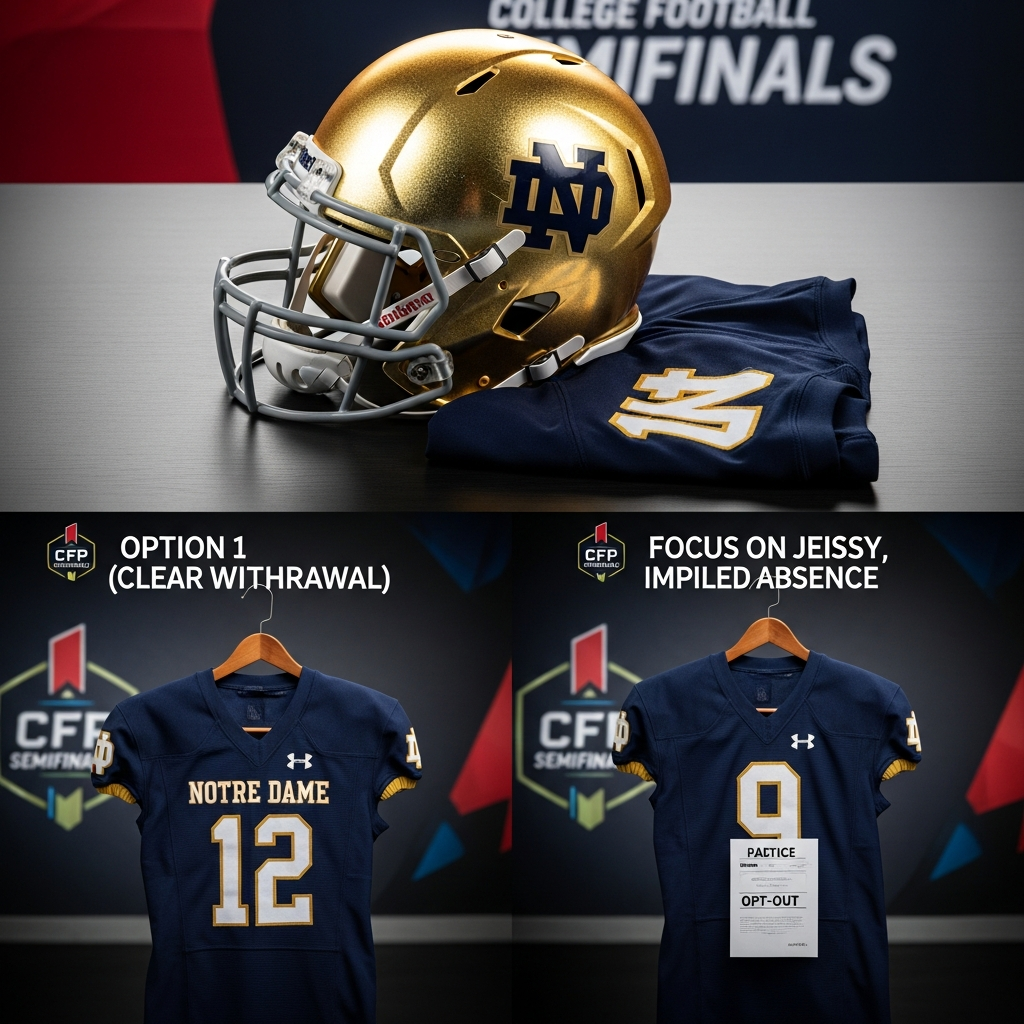
The world of college football was rocked when the University of Notre Dame announced its withdrawal from bowl consideration, a direct consequence of being excluded from the College Football Playoff (CFP). This decision ignited widespread debate, prompting questions about player motivations, the integrity of the bowl system, and the future direction of the sport. While surprising to some, Notre Dame’s choice underscored the escalating stakes of the CFP era, where only the national championship truly captivates top programs and their elite athletes. This unprecedented move from South Bend, Indiana, sent a clear message, signaling a shift in priorities within college football.
The Shockwave: Why Notre Dame Withdrew from Postseason Play
Notre Dame’s football program, steeped in tradition and national prominence, made the controversial announcement following the final CFP rankings reveal. Despite a strong regular season, the Fighting Irish found themselves on the outside looking in, deemed unworthy of a top-four spot. For a program with championship aspirations, missing the playoff can feel like a season-defining failure. The decision to forgo a lesser bowl game was not made lightly. It reflects a growing sentiment among major college football programs that participation in non-playoff bowls holds diminished value. This is particularly true when the team believed it had a legitimate claim to a playoff berth.
The primary catalyst for the withdrawal was the perceived “playoff snub.” The team and its fanbase likely felt that the effort, dedication, and sacrifices made over a grueling season were not adequately rewarded by the CFP selection committee. This deep-seated disappointment fueled the choice to opt out. Instead of playing in a consolation prize game, the program seemingly chose to prioritize the well-being of its student-athletes and focus on future goals.
Unpacking the “Playoff Snub”: A Committee Controversy
The College Football Playoff selection committee faces an immense task each year. They must choose the four best teams to compete for the national title. This process is inherently subjective, leading to perennial controversy. For Notre Dame, the “snub” likely stemmed from various factors. These could include strength of schedule, head-to-head results, or even perceived “eye test” evaluations by committee members. The committee’s rationale often comes under intense scrutiny, and this particular decision was no exception.
When a team like Notre Dame, with its national brand and passionate following, misses the cut, the discussion intensifies. Fans, analysts, and even rival coaches weigh in, often presenting compelling arguments for or against the committee’s choices. For the Fighting Irish, feeling undervalued after a commendable season ignited a program-wide sense of injustice. This feeling, combined with the increasing number of player opt-outs for non-playoff bowls, set the stage for their historic withdrawal.
Beyond the Gridiron: The Reasons Behind the Bold Decision
Notre Dame’s decision wasn’t merely an emotional reaction to disappointment. It was a multifaceted strategic choice. Several key factors likely contributed to the program’s resolution to pull out of the bowl season.
Player Welfare and Opt-Outs: A significant trend in modern college football involves top NFL-bound prospects choosing to sit out bowl games. This protects their professional careers from potential injuries. Playing in a non-playoff bowl presents a significant injury risk with little tangible reward for these athletes. By withdrawing as a team, Notre Dame could have been proactively protecting its entire roster.
Focus on the Future: Forgoing a bowl game allows the coaching staff and players to immediately shift their focus. They can begin preparations for the next season sooner, including strength and conditioning, recruiting, and tactical adjustments. This extended off-season period can be invaluable for development.
Sending a Message: The withdrawal could also be interpreted as a powerful statement. Notre Dame might have intended to signal its displeasure with the current CFP selection system. It also might have highlighted the perceived devaluing of traditional bowl games in the playoff era. Such a bold move from a prominent institution carries considerable weight. It could influence future discussions about college football’s postseason structure.
Mitigating Program Risk: While bowl games offer additional practice time, they also carry risks beyond injuries. A poor performance in a bowl game, especially if key players opt out, can negatively impact team morale and recruiting momentum. By withdrawing, Notre Dame avoided these potential pitfalls.
A New Precedent: Historical Context of Bowl Opt-Outs
While individual player opt-outs have become common, a high-profile team withdrawing from all bowl consideration is less frequent. However, the seeds of this trend have been sown over the past decade. The introduction of the CFP elevated the importance of the top four spots, inherently reducing the perceived significance of other bowls. This has led to a re-evaluation by programs. Historically, bowl games were the pinnacle for many teams. Now, they are often seen as an extension of the regular season, sometimes without the same competitive fire for teams that miss the CFP. Notre Dame’s action could serve as a new benchmark for how top programs react to playoff snubs. It highlights a growing tension between the traditional bowl structure and the modern playoff-centric landscape.
The Fallout: Immediate and Long-Term Impacts
Notre Dame’s bowl withdrawal created immediate repercussions and will likely have lasting effects. The specific bowl game that Notre Dame would have participated in was left scrambling. They needed to find a replacement team, impacting their ticket sales, sponsorships, and broadcast arrangements. This disruption underscores the tangible economic and logistical challenges such decisions pose for bowl organizations.
For Notre Dame itself, the immediate impact was a mixed bag. The decision likely garnered support from players who felt a sense of loyalty and a unified stance. However, it also sparked criticism from some corners, particularly those who cherish the tradition of bowl season. In the long term, the impact could range from heightened team cohesion and a renewed focus for next season to potential recruiting questions from prospects who value an extra game experience.
The broader message sent to the CFP committee and the college football landscape is significant. It demonstrates that not all major programs will passively accept a non-playoff bowl invitation after championship aspirations are dashed. This adds another layer of complexity to the ongoing discussions about CFP expansion. It might even influence how future committees perceive the “desire to play” among teams.
Shaping the Future: What This Means for College Football
Notre Dame’s bold move contributes to the evolving narrative of college football. As the sport moves towards an expanded playoff, decisions like this will become increasingly scrutinized. It forces a re-evaluation of the “value proposition” of the bowl system. Are traditional bowl games still relevant for top-tier programs that fall short of the national championship? Or will they increasingly become developmental opportunities for younger players, while star athletes and programs with national title hopes look elsewhere?
This event underscores player empowerment. With NIL deals and the transfer portal, student-athletes have more agency than ever. Their voices and desires play a larger role in program decisions. Notre Dame’s withdrawal can be seen as a collective act of player protection and a clear statement about what truly matters to a championship-caliber team in today’s environment. The event will undoubtedly be cited in future debates about the structure and incentives within college football’s complex postseason.
Frequently Asked Questions
Why did Notre Dame pull out of their bowl game after the playoff selections?
Notre Dame withdrew from bowl consideration primarily due to a perceived “playoff snub” by the College Football Playoff committee. After a strong regular season, the team felt they deserved a spot in the CFP’s top four. Missing out on the championship tournament significantly diminished the value of participating in a lesser bowl game. The decision was also influenced by factors like player welfare, a desire to protect NFL-bound prospects from injury, and a strategic focus on preparing for the next season. The program likely wanted to send a strong message about the devalued status of non-playoff bowls for elite teams.
How does the College Football Playoff committee decide its final four teams?
The College Football Playoff selection committee, comprised of athletic directors, former coaches, and administrators, meets weekly to evaluate teams. Their decision-making process considers several key metrics: won-loss record, strength of schedule, head-to-head results, championships won, and an “eye test” evaluation of team performance. The committee aims to select the “four best teams” in the country. This subjective process often leads to debates and controversies, particularly when multiple highly-ranked teams have similar resumes, as was likely the case when Notre Dame was “snubbed.”
What are the long-term consequences for a team that withdraws from a bowl game?
The long-term consequences for a team withdrawing from a bowl game can be varied. On one hand, it might foster team unity and signal a unified purpose focused solely on national championships, potentially aiding future recruiting of like-minded athletes. It also allows for earlier preparation for the next season. On the other hand, it could draw criticism from traditionalists and potentially impact future bowl invitations. It may also mean missing out on valuable practice time for younger players and national exposure. Ultimately, the perceived success or failure of the following season often dictates whether the decision is viewed as a brilliant strategic move or a misstep.
Conclusion
Notre Dame’s decision to withdraw from bowl consideration following a College Football Playoff snub represents a pivotal moment in the sport. It highlights the shifting landscape of college football, where the allure of the national championship vastly overshadows traditional bowl game prestige for elite programs. This bold action from South Bend was more than just a reaction to disappointment; it was a strategic statement. It underscored the increasing importance of player welfare, the competitive drive to prioritize future success, and a clear message to the CFP committee regarding the value proposition of the postseason. As college football continues to evolve, this event will undoubtedly be remembered as a significant marker in the ongoing conversation about the true meaning and future of its cherished, yet changing, postseason.