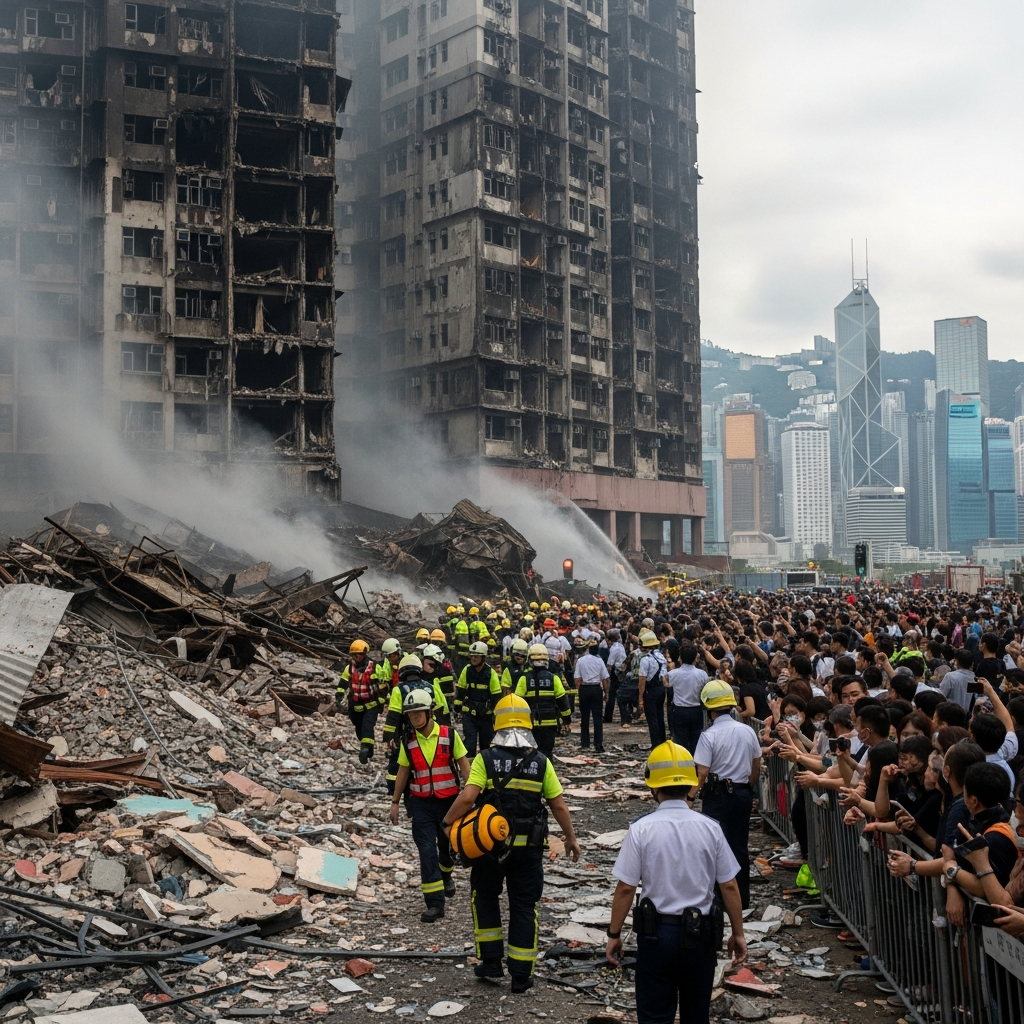
A devastating Hong Kong apartment fire has tragically claimed at least 128 lives this week, sending shockwaves across the city and igniting fierce public debate. This tragic residential blaze isn’t just a grim reminder of urban hazards; it presents a critical challenge for Hong Kong’s Beijing-backed leadership. These leaders have worked to rebuild public confidence following years of mass protests, often promising to improve the daily lives of Hong Kong’s citizens. Now, this catastrophe tests their commitment and capacity to deliver on those pledges.
The fire’s aftermath has exposed deep-seated issues within the city’s dense urban fabric and its governance. Public outrage is mounting, with many voices criticizing the government’s oversight and responsiveness. The incident serves as a stark litmus test for an administration striving to demonstrate its effectiveness and regain the trust of a populace still wary after recent political upheavals. The true measure of leadership often emerges in crisis, and for Hong Kong, this fire is proving to be a defining moment.
The Tragedy Unfolds: A City’s Darkest Hour
The terrifying conflagration ripped through a cramped residential complex, leaving a trail of destruction and immense human loss. Details emerging from the scene paint a harrowing picture of a rapidly spreading fire in an overcrowded environment. Emergency services battled the inferno, but the sheer scale of the blaze and the building’s characteristics made containment incredibly difficult. Rescuers continue to navigate the devastation, searching for answers amidst the rubble.
Initial reports and public commentary highlight several critical factors contributing to the catastrophic death toll. The building’s age, its likely subdivision into numerous tiny flats, and the materials used in its construction and renovation are under intense scrutiny. Such conditions are common in Hong Kong, a city grappling with a severe housing crisis. This scarcity often forces residents into precarious living situations, where safety standards may be compromised for affordability.
Unpacking the Risk: Flammable Materials and Density
Eyewitness accounts and early analyses point to the rapid spread of the Hong Kong apartment fire. A significant concern raised by the public involves the use of certain construction materials. Specifically, critics have questioned the prevalence of flammable substances like bamboo scaffolding, a traditional yet potentially risky material when not properly managed or maintained. While bamboo offers advantages in construction, its fire resistance can be a major liability in an uncontrolled blaze, accelerating its spread.
Beyond materials, the extreme urban density of Hong Kong exacerbates fire risks. Multi-story buildings, often packed tightly together, can create pathways for fire to jump between structures. Within residential complexes, illegal subdivisions transform single units into multiple tiny dwellings, increasing occupancy rates. These cramped conditions often restrict emergency exits and make evacuation incredibly challenging, trapping residents and hindering rescue efforts.
A Government Under Scrutiny: Promises and Realities
The devastating fire has placed Hong Kong’s government squarely in the crosshairs of public criticism. The administration, heavily backed by Beijing, has actively sought to heal societal divisions and restore faith in governance since the widespread protests. Central to this effort have been pledges to address socio-economic grievances and improve the “better lives” of ordinary Hong Kongers. This tragic residential blaze directly challenges those assurances.
Many citizens now openly question whether regulatory frameworks and enforcement mechanisms are truly robust enough to protect vulnerable communities. The gap between government assurances and the grim reality of the fire’s toll has fueled public anger. This incident forces a difficult confrontation with the efficacy of public services and the integrity of safety oversight within the city. Leaders must now demonstrate tangible action, not just words, to alleviate the deep-seated public anxieties.
The Erosion of Trust: Calls for Accountability
The comments and reactions from the public reflect significant discontent with the Hong Kong government’s handling of the crisis. There is a strong sentiment that inadequate safety regulations and lax enforcement directly contributed to the disaster. Many voices argue that the government has failed to prioritize citizen safety, particularly in older, subdivided buildings where fire hazards are notoriously high. This tragic event further strains the already fragile public trust.
Furthermore, a prevailing sentiment among some is that the broader influence of the Chinese government’s focus on political stability has overshadowed critical domestic concerns, including urban safety. This perception can deepen existing skepticism about the local administration’s autonomy and its ability to genuinely serve the needs of Hong Kongers. The demand for transparent investigations and genuine accountability is now louder than ever.
Lessons from the Flames: Preventing Future Catastrophes
The Hong Kong apartment fire must serve as a profound wake-up call for both authorities and residents. Preventing similar tragedies requires a multi-faceted approach, addressing systemic issues from housing policy to daily safety practices. Stronger regulatory frameworks are essential, paired with vigorous enforcement and public education. The lives lost demand that comprehensive lessons are learned and acted upon with urgency.
Authorities must re-evaluate and update existing building codes, especially concerning fire safety and material use in high-density residential areas. Regular, unannounced inspections of older and subdivided buildings are critical to identify and rectify hazards before they become lethal. Furthermore, urban planning initiatives need to prioritize citizen safety and adequate living standards over pure economic development.
Practical Steps for Enhanced Fire Safety
For residents, understanding and practicing fire safety can make a life-saving difference. Every household should have a clear fire escape plan, ensuring all occupants know at least two ways out. Installing and regularly testing smoke detectors is non-negotiable, providing crucial early warning. Avoiding the overloading of electrical sockets and carefully managing flammable materials are simple yet vital preventative measures.
Community engagement and awareness campaigns are also key. Educating residents on the dangers of illegal building alterations and the importance of reporting safety violations empowers them to contribute to a safer environment. A collective responsibility, from government policy to individual actions, is paramount in mitigating the risks posed by urban living in dense cities like Hong Kong.
Frequently Asked Questions
What factors contributed to the severity of the Hong Kong apartment fire?
The severity of the Hong Kong apartment fire was due to a confluence of critical factors. The cramped, often illegally subdivided nature of the residential complex meant high occupancy and limited escape routes. Public outcry has highlighted the suspected use of flammable materials, such as bamboo scaffolding, which could have accelerated the fire’s spread. Furthermore, alleged inadequate safety regulations and lax enforcement are believed to have played a significant role, allowing hazardous conditions to persist in older buildings. The urban density of Hong Kong exacerbates these challenges, making quick evacuation and emergency response exceptionally difficult in tight spaces.
How are Hong Kong authorities responding to the fire and public criticism?
Hong Kong authorities are facing intense pressure to respond comprehensively to the fire and the subsequent public criticism. The Beijing-backed leadership has initiated investigations into the cause of the blaze and the structural and safety integrity of the building. They are expected to announce measures aimed at enhancing building safety regulations, particularly for older and subdivided properties. Public statements from officials indicate a commitment to supporting affected families and addressing concerns about urban planning and fire prevention. However, the true test lies in the concrete actions taken to restore public confidence and prevent future tragedies, moving beyond initial promises.
What does the Hong Kong apartment fire signify for the city’s future governance and public trust?
The Hong Kong apartment fire signifies a major test for the city’s future governance and its efforts to rebuild public trust following recent mass protests. The tragedy undermines the administration’s stated goal of improving the “better lives” of Hong Kongers, highlighting perceived failures in public safety and regulatory oversight. It creates an urgent demand for genuine accountability and transparency from the Beijing-backed leadership. The incident could further erode public confidence if tangible, impactful reforms are not implemented swiftly. Ultimately, how the government responds to this crisis will largely define its legitimacy and shape the relationship between the administration and its citizens in the coming years.
The Path Forward: Accountability and Rebuilding
The Hong Kong apartment fire is more than just a local tragedy; it is a profound societal moment. The immense loss of life demands a thorough investigation, unwavering accountability, and a genuine commitment to systemic change. For Hong Kong’s Beijing-backed leaders, this incident represents a critical opportunity—or a perilous challenge—to demonstrate their capacity for effective governance and their dedication to the well-being of the city’s residents.
The path forward requires not only sympathy for the victims but also decisive action to prevent such horrors from recurring. This includes re-evaluating urban planning, strengthening building safety standards, and fostering renewed public trust through transparent, citizen-focused policies. Only by addressing the root causes of this disaster can Hong Kong truly begin to heal and build a safer, more resilient future for all its inhabitants.