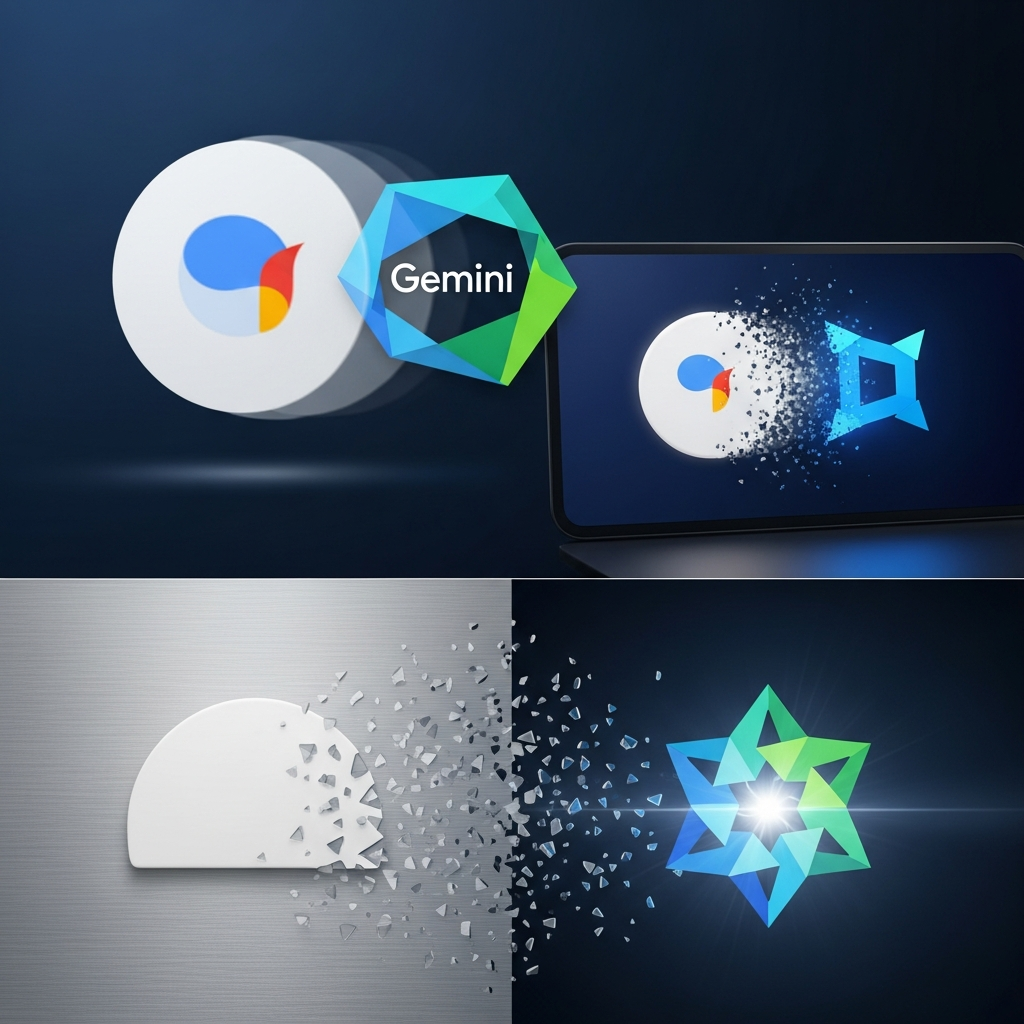
A significant shift is underway in the world of artificial intelligence and Android. After nearly a decade of serving millions of users across countless devices, Google Assistant is officially approaching its retirement. Google has confirmed a definitive timeline for this transition, signaling the dawn of a new era dominated by its advanced AI, Gemini. This move isn’t just an upgrade; it’s a strategic consolidation of Google’s AI efforts, promising enhanced capabilities while requiring users and developers to adapt to a new paradigm.
Google Assistant’s Final Chapter: A March 2026 Deadline
For years, the phrase “Hey Google” has been synonymous with voice commands on Android phones, smart speakers, watches, and even in cars. However, that era is now set to conclude. Google has quietly confirmed that its beloved digital helper, Google Assistant, will remain operational “until March 2026.” This crucial detail, initially spotted on Google’s official Android Auto support forum, marks the clearest and only official timeline the company has provided regarding the Assistant’s impending farewell. It’s a precise countdown for users to prepare for the change.
The sunsetting of Google Assistant is a clear indicator of Google’s overarching strategy. The company is actively transitioning all its foundational artificial intelligence endeavors under the singular, more powerful Gemini brand. This ambitious move aims to streamline Google’s diverse AI landscape, providing a unified and more sophisticated experience across its entire ecosystem.
Welcome Gemini: Google’s Next-Generation AI Assistant
Gemini is not merely an incremental update; it represents a fundamental rethinking of how users interact with AI. Built upon Google’s latest large language models, Gemini is designed to be highly conversational, context-aware, and multimodal. This means it can process and understand various forms of input, including text, images, and code, with greater sophistication than its predecessor. Google promises that Gemini “will understand the same commands as Google Assistant and also give you the option to speak naturally,” suggesting a more intuitive and flexible user experience.
The integration of Gemini is expansive, slated to replace Assistant across a comprehensive range of Google platforms. This includes Android phones, Android Auto in vehicles, Wear OS smartwatches, Google TV, and perhaps most notably, Google Home devices. This widespread rollout underscores Google’s commitment to positioning Gemini as the central intelligence for its entire product lineup.
The Promises of Gemini: Enhanced Interactions
Google highlights several key advancements with Gemini compared to the legacy Assistant:
Natural Conversation: Gemini aims to offer more fluid, back-and-forth dialogues with improved context retention. Users can expect more realistic voices and the ability to continue conversations without constant repetition.
Multimodal Understanding: Imagine asking Gemini about a photo on your phone and then instructing it to generate a recipe based on ingredients it identifies. Its capability to process multiple types of data simultaneously unlocks new interaction possibilities.
Complex Smart Home Control: With “Gemini for Home,” the AI can interpret nuanced requests. For instance, it could understand “turn off all the lights, except for the office lights” or activate kitchen lights because it knows you’re “about to cook.”
Proactive Assistance: Beyond simple command execution, Gemini seeks to be a more collaborative partner, helping with household coordination, managing calendars, and even brainstorming ideas with users.
- “AI Cameras” and “Ask Home”: Smart cameras will evolve from simple motion alerts to detailed narrative descriptions of events. Users can then leverage “Ask Home” to search video history using natural language, like “What time did the kids get home?”
- www.androidauthority.com
- www.webpronews.com
- blog.google
- www.nytimes.com
- arstechnica.com
The User Experience Shift: From Commands to Conversation
For many long-time Google Assistant users, this transition marks a significant shift in how they will interact with their devices. The Google Assistant excelled at deterministic tasks: setting alarms, playing specific songs, or providing quick facts. Its charm often lay in its simplicity and reliability for these common requests. When it couldn’t perform a task, it typically failed gracefully with a polite “Sorry, I don’t understand.”
Gemini, while boasting superior generative AI capabilities, operates differently. Its core function is to generate the “most plausible next token,” which can lead to incredibly creative and seemingly intelligent responses. However, this non-deterministic nature also carries a potential downside: the risk of “hallucinations” or confidently fabricated information. Experts note that while Gemini can act as a powerful chatbot, its trustworthiness for critical assistant functions—like managing schedules or extracting accurate information—remains a concern. A confidently incorrect answer from Gemini can be more frustrating than a simple “I don’t know” from Assistant, potentially sending users down time-consuming rabbit holes.
Navigating the Transition: Challenges and Adaptations
The road to a fully Gemini-powered ecosystem isn’t without its hurdles. Google’s initial transition of Gemini onto Google Home devices, for example, has reportedly encountered mixed user sentiment. Many individuals have expressed a preference for the established Google Assistant, valuing its consistency over the newer AI’s evolving capabilities. This highlights a common challenge in tech transitions: balancing innovation with user familiarity and ensuring that new features genuinely improve, rather than complicate, daily interactions.
For developers, the shift also presents both challenges and opportunities. The extensive toolkit and APIs previously available for Google Assistant integrations mean that many developers will need to rebuild or significantly adapt their applications for Gemini. This can be a substantial undertaking in the short term, but Google aims for it to streamline future development and unlock more advanced AI capabilities. Businesses relying on custom workflows powered by Assistant will also need to reassess their integrations, potentially influencing their adoption strategies for AI.
Currently, Android users still have the option to choose between Gemini and Google Assistant. However, this dual functionality is expected to be short-lived, implying a complete pivot to Gemini in the foreseeable future. Google’s strategic imperative is clear: consolidate resources, innovate rapidly, and maintain a competitive edge against other leading AI models and digital assistants in the market.
A Legacy Remembered, A Future Embraced
Google Assistant emerged in May 2016, initially tucked into the short-lived Allo messaging app and the pioneering Google Home speaker. From these humble beginnings, it quickly evolved into an integral feature of Android phones and permeated nearly every corner of Google’s vast ecosystem—from smartwatches and televisions to in-car infotainment systems. For almost a decade, it has been a defining consumer-tech feature, empowering millions to interact with technology through natural voice commands.
While its demise might evoke nostalgia for some, the transition to Gemini is framed as an inevitable step in Google’s rapid progression towards a more advanced, AI-driven future. The March 2026 deadline serves as a firm conclusion for Assistant’s successful run, paving the way for the next generation of Google’s AI experiences. The success of Gemini will ultimately depend on Google’s ability to seamlessly integrate its advanced intelligence, address user concerns about reliability, and provide a truly intuitive and helpful digital companion.
Frequently Asked Questions
When will Google Assistant officially stop working?
Google has confirmed that Google Assistant will continue to function on Android devices and other platforms “until March 2026.” This marks the official deadline for its retirement, just shy of its tenth anniversary. Users will need to transition to Gemini AI before this date for ongoing digital assistant functionality.
Which devices will transition from Google Assistant to Gemini AI?
Gemini AI is set to replace Google Assistant across a wide array of platforms. This includes Android phones, Android Auto in vehicles, Wear OS smartwatches, Google TV, and Google Home smart speakers and displays. Google plans to roll out Gemini for Home to all speakers, smart displays, cameras, and doorbells it has made in the last decade.
What are the key differences between Google Assistant and Gemini, and should users prepare for the switch?
Google Assistant excelled at deterministic tasks like setting timers or basic commands, often failing gracefully. Gemini, built on advanced large language models, offers more natural, context-aware, and multimodal conversations, able to process text, images, and code. However, its generative nature means it can sometimes “hallucinate” or provide inaccurate information. Users should be aware of these differences and begin familiarizing themselves with Gemini’s interface and capabilities as the transition approaches. Google plans to provide tools for transferring routines, though some legacy features may not carry over directly.
The Road Ahead for Google’s AI
The retirement of Google Assistant and the full embrace of Gemini represent a pivotal moment for Google. This strategic pivot highlights the company’s commitment to pushing the boundaries of artificial intelligence, aiming for a more intelligent, collaborative, and pervasive digital experience. While the transition may present initial challenges for some users and developers, the long-term vision is a unified AI ecosystem powered by Gemini’s advanced capabilities. As the March 2026 deadline approaches, users can anticipate an evolving landscape of AI interactions, fundamentally changing how we engage with our devices and smart homes.