The volatile Middle East witnessed a significant escalation on November 23, 2025, as an Israeli airstrike rocked Beirut’s southern suburbs. This marked the first such attack on the Lebanese capital in months, immediately raising fears of renewed conflict. Israeli authorities confirmed the precision strike, stating it successfully eliminated Haytham Ali Tabatabai, Hezbollah’s influential Chief of Staff and a pivotal military architect. Occurring almost exactly a year after a fragile ceasefire agreement, the incident has drawn widespread condemnation and left multiple civilian casualties in its wake.
The Precision Strike Unfolds in Beirut
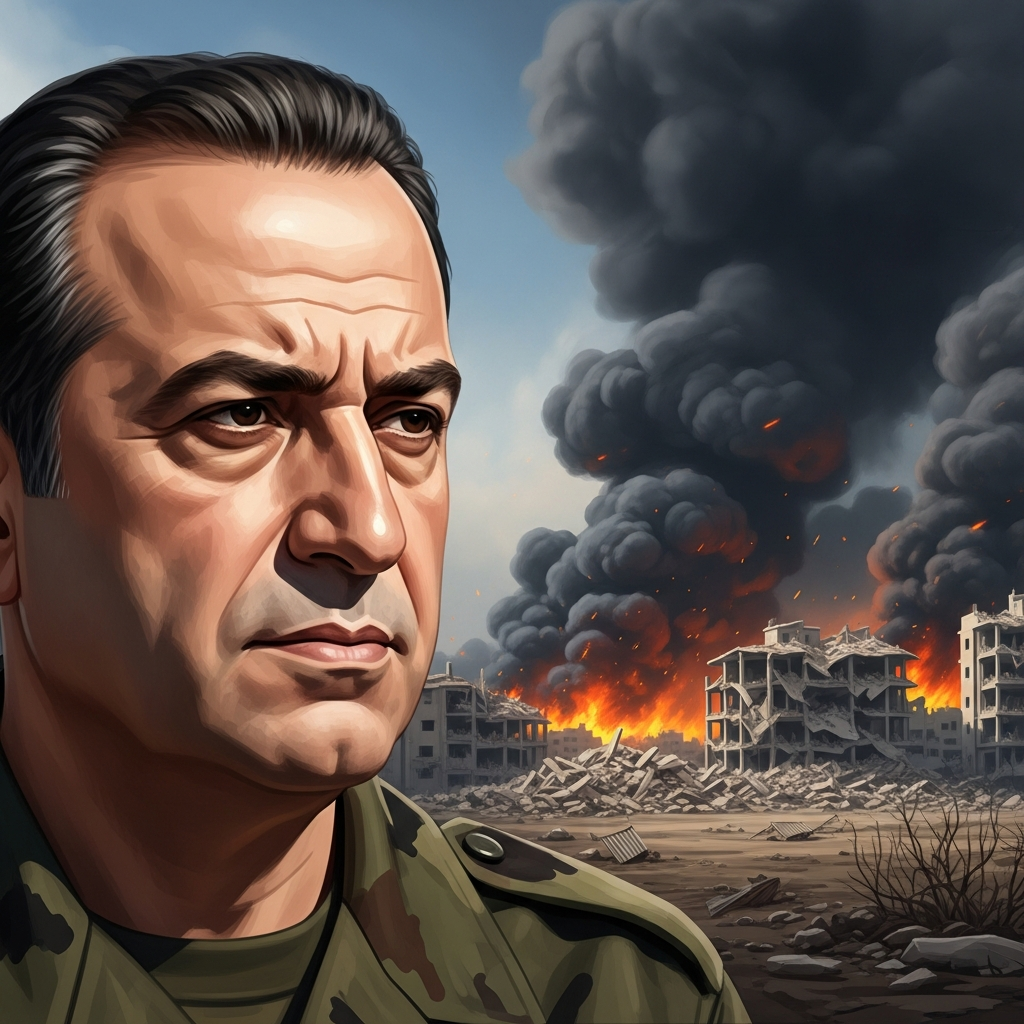
On that Sunday, residents of Beirut’s densely populated Haret Hreik neighborhood, a southern suburb, awoke to the shock of a military strike. Reports from Lebanon’s Health Ministry indicated at least five fatalities and 28 injuries. Images from the scene depicted smoke billowing from the upper floors of a residential building, confirming the civilian impact of the attack. According to multiple sources, two or three missiles targeted the third and fourth floors of a nine-story apartment complex, causing extensive damage.
The Israel Defense Forces (IDF) quickly claimed responsibility, identifying Tabatabai as “a key operative and veteran in the terrorist organization.” Israeli Prime Minister Benjamin Netanyahu reportedly ordered the strike based on recommendations from Defense Minister Israel Katz and IDF Chief of Staff Lt. Gen. Eyal Zamir. Netanyahu’s office emphasized that the strike hit “in the heart of Beirut,” targeting the individual who “led the organization’s buildup and armament efforts.”
Who Was Haytham Tabatabai? A Profile of the Target
Haytham Ali Tabatabai was not just another operative; he was a central figure in Hezbollah’s military command structure. Designated as Hezbollah’s Chief of Staff, he was described by Israel as “a key operative and veteran.” His influence extended across the region, where he reportedly commanded the group’s elite Radwan Unit and led its special forces in both Syria and Yemen. The United States had long recognized his dangerous capabilities, designating him a terrorist in 2016 and offering a substantial $5 million bounty for information leading to his capture.
Tabatabai’s significance grew particularly after a series of Israeli strikes in September 2024 that severely degraded Hezbollah’s top leadership. These attacks reportedly killed long-time leader Hassan Nasrallah and his apparent successor, Ibrahim Aqil, along with other senior figures. Tabatabai was believed to be a crucial figure in Hezbollah’s efforts to rebuild its command and control capabilities following these losses, making him a high-value target for Israel.
Israel’s Stated Rationale and Regional Context
The Israeli military justified the Beirut airstrike as a pre-emptive measure. IDF Chief of Staff Lt. Gen. Eyal Zamir stated the strike was “intended to prevent the organization from further strengthening its capabilities and to deliver a precise blow to those who attempt to harm the State of Israel.” Defense Minister Israel Katz issued a stark warning, declaring, “Anyone who raises a hand against Israel — his hand will be cut off,” underscoring Israel’s commitment to protecting its northern residents.
While Israel maintains it acts independently, a nuanced picture emerges regarding international notification. While some Israeli media suggested the U.S. was informed beforehand, U.S. officials clarified they were not explicitly notified of the strike’s timing, location, or target. However, they confirmed awareness that Israel was “on the verge of escalating its attacks in Lebanon.” This suggests Washington knew of impending Israeli military action, though not its specifics. This strike also reportedly wasn’t Israel’s first attempt to eliminate Tabatabai, with previous unsuccessful efforts during the ongoing conflict.
Hezbollah’s Condemnation and Lebanon’s Outcry
Hezbollah officially confirmed Tabatabai’s death, mourning him as “a key military commander” and swiftly condemning the attack as “treacherous Israeli aggression.” Mahmoud Qamati, deputy chair of Hezbollah’s political council, warned that the strike “crossed a red line” and “opens the door to an escalation of assaults all over Lebanon,” signaling that the group’s leadership was actively studying its response. Hezbollah parliamentarian Ali Ammar vehemently denied any military presence in the targeted Haret Hreik area, asserting it was “definitely a civilian area.” Local residents like Maryam Assaf expressed defiance, stating such attacks only strengthen their resolve.
Lebanese President Joseph Aoun condemned the strike, accusing Israel of violating the existing ceasefire agreement and disregarding international calls to halt its aggression. He reiterated Lebanon’s plea for international intervention to end the Israeli assaults, highlighting Israel’s perceived rejection of any negotiated settlement between the two nations.
A Fragile Ceasefire Shattered
The Israel Beirut strike represents a significant breach of the ceasefire agreement that officially came into effect in November 2024. This U.S.- and French-brokered accord was meant to de-escalate tensions that had flared following a widespread Israeli bombardment and ground invasion of Lebanon. The agreement stipulated several key conditions: Israeli forces were to withdraw from southern Lebanon, the Lebanese army was to deploy to the south, and Hezbollah was required to cease its military presence north of the Litani River and surrender its heavy weapons.
However, progress on these terms has been minimal. Israel has continued to conduct near-daily air raids in southern Lebanon, considered a Hezbollah stronghold, and maintains a military presence at five border outposts, violating the agreed withdrawal. Lebanese officials and UN peacekeepers have consistently criticized these actions as ceasefire violations. Conversely, Israel accuses Hezbollah of attempting to rebuild its military capabilities, including smuggling weapons and intensifying drone production—claims denied by the Lebanese government. Hezbollah, for its part, has refused to discuss its arsenal’s future until Israel fully withdraws from Lebanon and releases Lebanese prisoners.
Broader Conflict and Escalation Concerns
The current hostilities are rooted in the latest Israel-Hezbollah war, which began on October 8, 2023. This conflict erupted the day after Hamas launched its surprise attack on southern Israel, with Hezbollah firing rockets in solidarity with Palestinians in Gaza. That war proved devastating, causing over 4,000 deaths in Lebanon, including hundreds of civilians, and an estimated $11 billion in destruction. In Israel, the conflict resulted in 127 deaths, including 80 soldiers.
The elimination of Tabatabai follows a pattern of Israeli actions aimed at dismantling Hezbollah’s leadership and capabilities. Beyond the September 2024 killings of Nasrallah and Aqil, Israel had also previously disabled Hezbollah’s communications by blowing up pagers and walkie-talkies, leading to dozens of casualties. In a related recent development, an Israeli strike in the Palestinian refugee camp of Ein el-Hilweh near Sidon reportedly killed 13 people, targeting what Israel claimed was a Hamas facility—a claim Hamas denied. These events underscore the pervasive nature of military action and its ripple effects across the region.
International Implications and an Uncertain Outlook
The Hezbollah Chief of Staff killed in Beirut has significantly heightened regional tensions. The timing is particularly sensitive, occurring just days before Pope Leo XIV’s scheduled visit to Lebanon, adding a layer of diplomatic complexity. The U.S., while not directly involved in the strike, continues to exert pressure on Lebanon to disarm Hezbollah, a plan the Lebanese government has approved despite its cash-strapped army’s limited resources.
Lebanese President Aoun recently expressed readiness for negotiations with Israel to halt airstrikes and for Israel to withdraw from five occupied hilltop points, while also committing to disarming non-state actors. However, Hezbollah insists that discussions about its arsenal must occur directly with the Lebanese state, only after Israeli attacks cease. This divergence in demands, coupled with the latest high-profile assassination, means the specter of a wider, more destructive conflict looms large over the region. Even within the Israeli military, internal accountability for past failures, such as the October 7, 2023, Hamas attack, saw senior officials sanctioned or retired, highlighting the intense pressures and strategic calculations at play.
Frequently Asked Questions
What was the significance of Haytham Tabatabai’s killing?
Haytham Ali Tabatabai was Hezbollah’s Chief of Staff and a highly influential military leader. His elimination is significant because he was considered a key figure in the group’s efforts to rebuild its command structure and military capabilities, especially after previous Israeli strikes in September 2024 killed other senior leaders like Hassan Nasrallah and Ibrahim Aqil. The United States had designated him a terrorist since 2016 and offered a $5 million bounty for information leading to him, underscoring his importance to Hezbollah’s regional operations.
Where did the Israeli strike on Beirut occur, and what was the impact on civilians?
The Israeli airstrike occurred on November 23, 2025, in the Haret Hreik neighborhood of Beirut’s southern suburbs. This area is densely populated and primarily civilian. The strike targeted a residential building, with reports indicating two or three missiles hit the third and fourth floors. According to Lebanon’s Health Ministry, the attack resulted in at least five fatalities and 28 injuries among civilians, drawing strong condemnation from Lebanese officials who emphasized the civilian nature of the targeted area.
What are the potential consequences of this Israeli strike on the existing ceasefire and regional stability?
The strike is a major violation of the ceasefire agreement established in November 2024 between Israel and Hezbollah, which aimed to de-escalate hostilities. Hezbollah has declared that the strike “crossed a red line” and warned of potential escalation across Lebanon. This incident could lead to a breakdown of the fragile ceasefire, provoke retaliatory actions from Hezbollah, and destabilize a region already fraught with tension, especially given Israel’s continued military presence in southern Lebanon and ongoing accusations of rearmament.
The Israel Beirut strike, marking the first attack on Lebanon’s capital in months, immediately shattered a fragile calm. The elimination of Haytham Ali Tabatabai, a key figure in Hezbollah’s leadership, underscores Israel’s determination to prevent the group from rebuilding its military might. While Israel frames it as a necessary security measure, the strike has been vehemently condemned by Lebanon and Hezbollah as a severe violation of the ceasefire, sparking fears of a wider escalation. As regional actors weigh their responses, the immediate future of the Lebanon-Israel conflict remains highly uncertain, with significant implications for civilians and the broader Middle East.