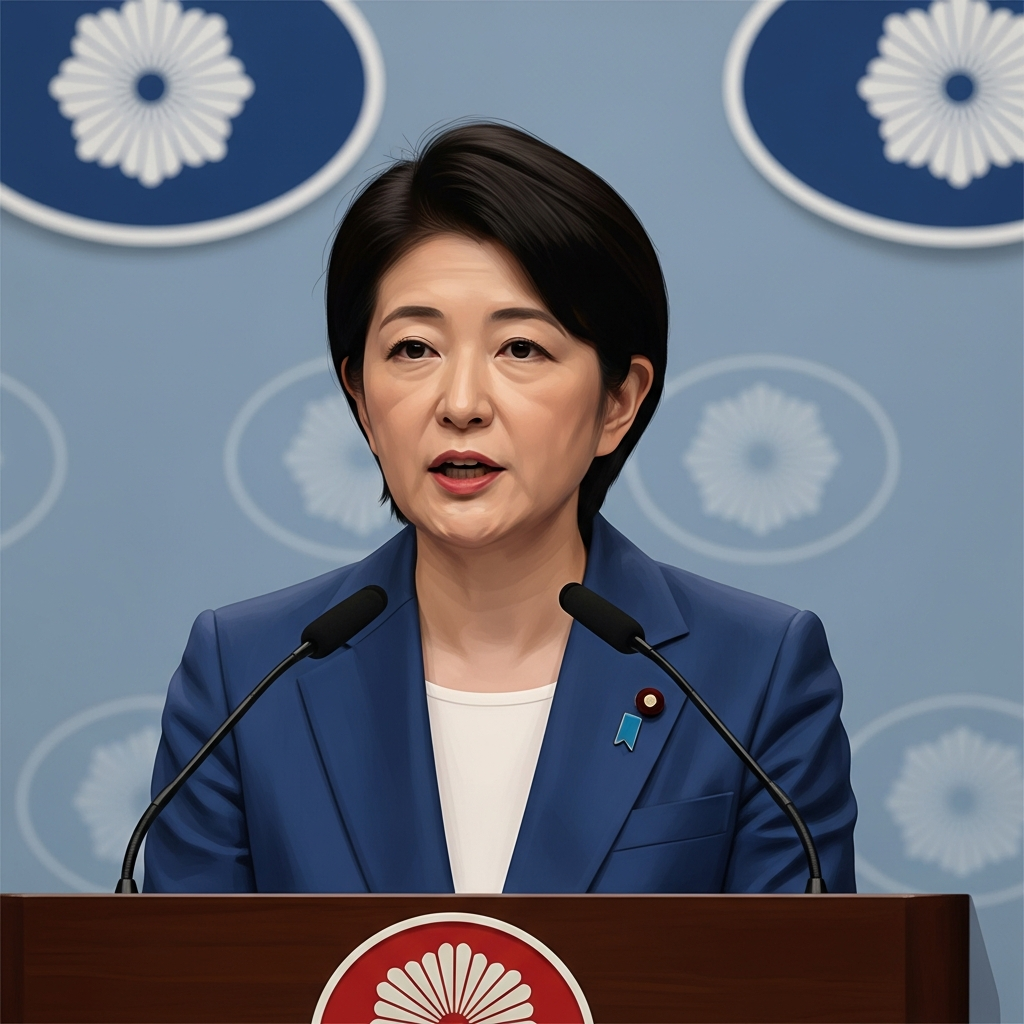
Japanese Prime Minister Sanae Takaichi has firmly rejected Beijing’s demands to retract her recent comments concerning Taiwan. This bold defiance signals a crucial moment in East Asian geopolitics. Takaichi’s unwavering stance, linking a potential Taiwan Strait crisis to Japan’s national security, has sparked a furious response from China, including diplomatic pressure and economic retaliation. The international community, notably the United States, is watching closely as this diplomatic standoff unfolds, revealing the delicate balance Japan must strike between regional stability and its evolving security interests.
A Pivotal Standoff: Japan’s Premier Rejects Beijing’s Demands
Prime Minister Sanae Takaichi recently became the first sitting Japanese leader in decades to publicly connect a potential Taiwan Strait crisis with the possible deployment of Japanese troops. This landmark statement, made in early November 2025, sparked immediate condemnation from Beijing. China views Taiwan as a renegade province and considers any suggestion of foreign intervention in a cross-strait conflict as a severe infringement on its sovereignty.
Before departing for the Group of 20 (G20) summit in South Africa, Takaichi reaffirmed Japan’s consistent position. She declared there was “no change” to Tokyo’s approach regarding a major regional security crisis. When directly asked to retract her comments, she did not back down. Instead, Takaichi reiterated that Japan would make “a comprehensive judgment based on all available information” concerning any situation “threatening Japan’s existence.”
This classification is vital. It provides the legal justification for Japan to deploy its Self-Defense Forces (SDF) to assist friendly nations, aligning with its reinterpreted post-war constitution. Takaichi emphasized her government’s stance remains “consistent,” having stated this position repeatedly. Her firm resolve highlights a new era of assertive diplomacy from Japan concerning its strategic interests in the region.
Beijing’s Furious Response and Economic Coercion
China’s reaction to Prime Minister Takaichi’s remarks has been swift and severe. Beijing launched a comprehensive campaign of diplomatic pressure and economic retaliation, aiming to compel a retraction. Chinese Foreign Ministry spokeswoman Mao Ning warned of “serious countermeasures” if Tokyo failed to withdraw the comments.
These countermeasures have already manifested in several significant actions:
Travel Advisories: China advised its citizens against visiting Japan.
Trade Restrictions: Efforts to resume imports of Japanese seafood were suspended, and an existing ban was reimposed.
Cultural Freeze: Approvals for new Japanese films were halted.
Diplomatic Snub: A trilateral meeting scheduled between Japan, China, and South Korea was suspended.
Adding to the diplomatic tension, Chinese Consul General in Osaka, Xue Jian, posted a now-deleted message on X (formerly Twitter) stating “cut a dirty neck.” This was widely interpreted as a direct threat against Prime Minister Takaichi, suggesting a deliberate directive from Beijing’s top leadership to test Japan’s resolve. Despite the mounting pressure, it is noteworthy that China has not yet threatened to disrupt its supply of rare earths to Japan, a critical economic lever.
Navigating Complex Diplomacy: Takaichi’s Dual Stance
Prime Minister Takaichi is attempting to navigate a complex diplomatic landscape. While firmly maintaining Japan’s strategic position on Taiwan, she has also expressed a desire for improved relations with China. She referenced a recent encounter with Chinese President Xi Jinping during the Asia-Pacific Economic Cooperation (APEC) summit in South Korea.
During their discussion, Takaichi stated they mutually confirmed “the broad direction of comprehensively advancing our strategic and mutually beneficial relationship and building a constructive and stable relationship.” She insisted that “There has been no change whatsoever in this stance” regarding the pursuit of a stable and constructive relationship with China. This dual approach signifies Japan’s efforts to manage a critical economic partnership while safeguarding its national security.
The Legal Framework: Japan’s Evolving Security Posture
At the heart of Takaichi’s comments is Japan’s evolving interpretation of its post-war pacifist constitution. Article 9 traditionally limited Japan’s military to self-defense. However, a 2014 reinterpretation by former Prime Minister Shinzo Abe allowed for “collective self-defense,” meaning Japan could use military force to defend allies under certain conditions.
The crucial condition is a “survival-threatening situation” – an armed attack against a foreign country that gravely threatens Japan’s survival and poses a clear danger to its people. By linking a Taiwan Strait crisis to such a situation, Takaichi provides a legal rationale for potential Japanese military involvement. This shift represents a significant departure from previous, more ambiguous stances by Japanese leaders, highlighting a proactive and assertive approach to regional security.
International Reactions and the US-Japan Alliance
The United States has strongly condemned China’s actions and voiced unwavering support for Japan. U.S. Ambassador to Japan, George Glass, denounced China’s statements as “provocative” and its economic measures as “coercive,” calling them “very unhelpful and undermine regional stability.” He characterized Beijing’s moves as a “classic case of Chinese economic coercion.”
Ambassador Glass reaffirmed the enduring strength of the U.S.-Japan alliance, emphasizing America’s unwavering commitment to Japan’s defense. He specifically mentioned the Senkaku Islands (Diaoyu in China), islets administered by Japan but claimed by China in the East China Sea, further underscoring U.S. protective assurances. Glass also conveyed direct support from U.S. President Donald Trump, stating, “we have her back” and pledging continuous pushback against China’s actions.
Taiwan itself has also reacted to the escalating situation. Senior Taiwanese security official Lin Rei-fan condemned China as the true “troublemaker” in the region. Taiwan has taken steps to prepare its citizens, distributing a new civil defense handbook. For the first time, this handbook includes explicit instructions on how citizens should respond to encountering enemy soldiers and emphatically states that any claims of Taiwan’s surrender should be considered false.
Regional Stability at Stake: A Broader Geopolitical View
This diplomatic friction underscores the precarious nature of regional stability in East Asia. The dispute reflects the broader geopolitical struggle surrounding the Taiwan Strait, a critical flashpoint. China maintains its “One China” policy, viewing democratic Taiwan as an inseparable part of its territory to be reunified, by force if necessary. Japan, while acknowledging the “One China” policy, also shares deep economic and strategic ties with Taiwan, seeing its security as intrinsically linked to Japan’s own.
The ongoing standoff presents a significant challenge for Prime Minister Takaichi’s nascent leadership. It highlights the complex security concerns that intertwine with economic dependencies, requiring Japan to carefully balance its relationships with both China and the United States. The implications of Japan’s evolving security posture could redefine the regional power dynamics for years to come.
Looking Ahead: Prospects for De-escalation
Immediate diplomatic resolution appears distant. While Chinese Premier Li Qiang represented China at the G20 meeting, there were no scheduled plans for him to meet with Prime Minister Takaichi. Furthermore, earlier meetings between Japanese and Chinese diplomats reportedly did little to soothe tensions, with the Chinese side expressing dissatisfaction.
Despite these hurdles, Takaichi and her senior officials have consistently expressed a desire to de-escalate the situation and move past the immediate dispute. However, Beijing’s persistent demands for a retraction and its ongoing economic pressures suggest a prolonged period of diplomatic friction. The core “Japan-China Taiwan dispute” remains a formidable challenge, requiring careful navigation and strategic foresight from all parties involved.
Frequently Asked Questions
What specific remarks did PM Takaichi make about Taiwan that angered China?
Prime Minister Sanae Takaichi became the first sitting Japanese leader in decades to publicly link a potential crisis in the Taiwan Strait with the possible deployment of Japanese troops. She indicated that if military force were used in Taiwan, it could be classified as a “survival-threatening situation” for Japan. This classification, made in early November 2025, angered China because it suggests a potential Japanese military intervention in what Beijing considers an internal affair, directly challenging China’s sovereignty over Taiwan.
How does Japan’s “survival-threatening situation” classification relate to its military deployment?
Under Japan’s reinterpreted post-war constitution, a “survival-threatening situation” is a crucial legal trigger for the deployment of its Self-Defense Forces (SDF) in collective self-defense. This means if an armed attack against a foreign country gravely threatens Japan’s survival and poses a clear danger to its people, Japan can use military force to assist allies. By categorizing a Taiwan contingency as such, Takaichi provides a legal basis for Japan to potentially intervene and support Taiwan, a significant departure from previous, more ambiguous Japanese security policies.
What economic countermeasures has China implemented against Japan in response to the Taiwan dispute?
In retaliation for Prime Minister Takaichi’s remarks, China has implemented several economic countermeasures. These include advising Chinese tourists against visiting Japan, reimposing and suspending efforts to resume imports of Japanese seafood, and halting approvals for new Japanese films. Additionally, Beijing suspended a trilateral meeting with Japan and South Korea. These actions signify China’s intent to exert economic pressure to compel a retraction of Takaichi’s statements regarding Japan’s stance on Taiwan.
Conclusion
Prime Minister Sanae Takaichi’s firm rejection of China’s demand to retract her Taiwan comments marks a significant moment in regional diplomacy. Her administration’s stance underscores Japan’s evolving security posture and its commitment to safeguarding its strategic interests amidst rising tensions in the Taiwan Strait. While China escalates diplomatic pressure and economic coercion, Japan, bolstered by strong U.S. support, continues to assert its sovereign position. The outcome of this delicate balancing act will undoubtedly shape the future of Japan-China relations and profoundly impact stability across East Asia. The world watches to see how this critical geopolitical dynamic will unfold, highlighting the complex interdependence and strategic rivalries at play.