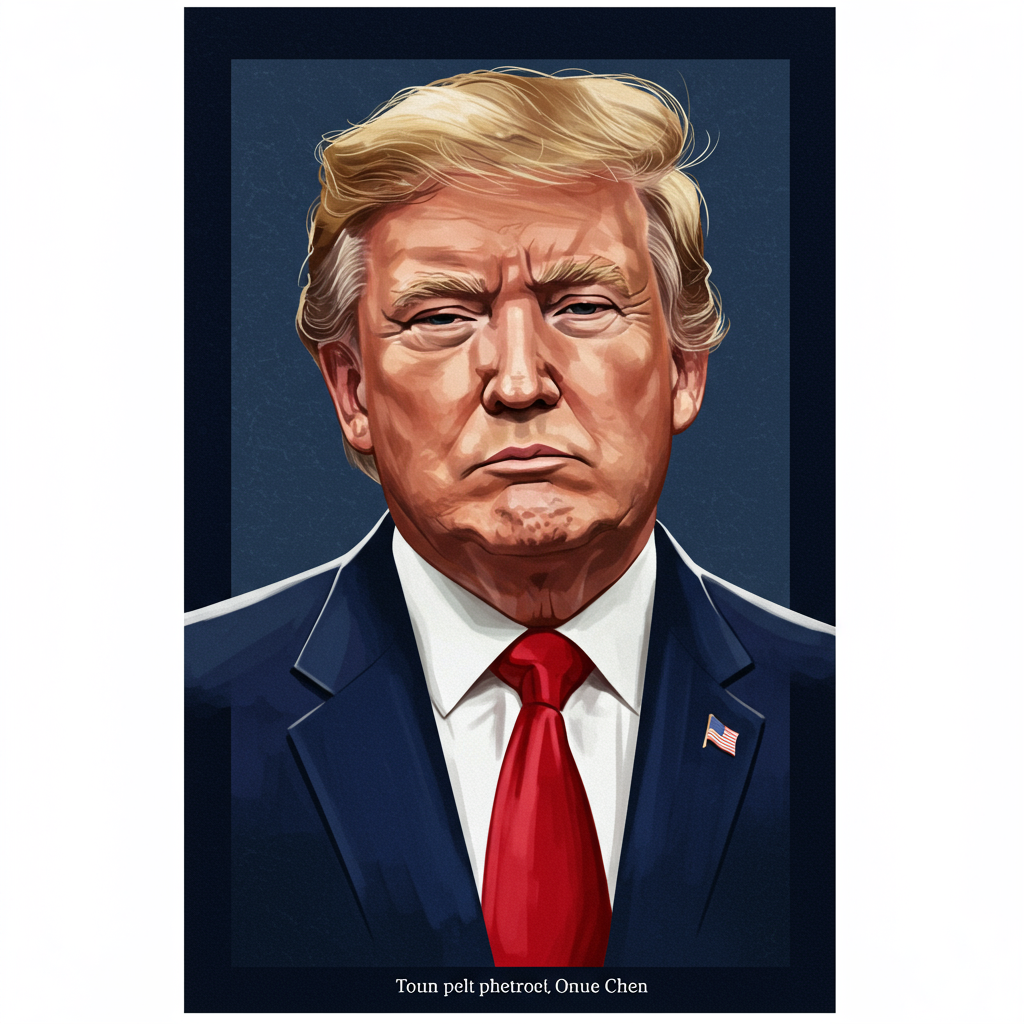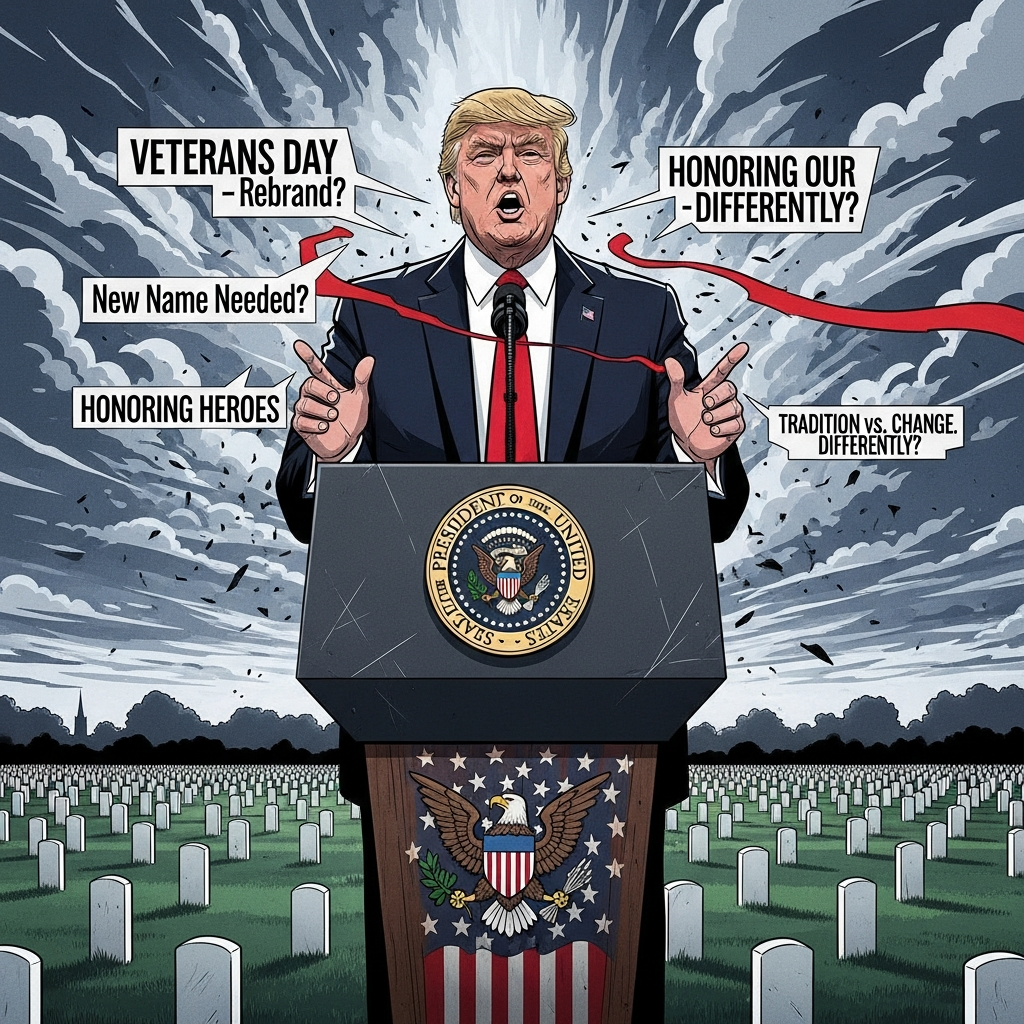
Former President Donald Trump frequently uses public appearances to share his policy proposals and critiques. On a recent Veterans Day, his speech at Arlington National Cemetery stirred significant debate. He proposed renaming the federal holiday and attacked the current administration, sparking discussion on historical accuracy and political messaging. This article dives deep into Trump’s controversial remarks, examining his plans for Veterans Day and other historical nomenclature.
The “Victory Day” Proposal: A Deep Dive into Trump’s Vision
During the Veterans Day ceremony at Arlington National Cemetery, Donald Trump announced a significant proposal. He plans to rename the November 11 holiday “Victory Day for World War I.” This idea, he explained, stemmed from observing European nations like France celebrating “Victory Days” for both World War I and World War II. Trump suggested the United States, as a victor in these conflicts, should similarly honor its achievements. He believes America “won the wars,” implying that other “Victory Days” could follow for successful conflicts.
This isn’t an isolated thought. Trump previously revealed on social media his intention to declare May 8th as “Victory Day for World War II” and November 11th as “Victory Day for World War I.” He emphasized his belief that the U.S. uniquely lacks a celebration for its decisive role in World War II. However, these proclamations, made through social media, do not legally establish federal holidays. Trump also clarified that these proposed days would not involve closing the country, stating, “We already have too many Holidays in America.”
Historical Context: From Armistice Day to Veterans Day
Trump’s “Victory Day” proposal directly challenges the historical evolution of the November 11 holiday. Originally, it was known as Armistice Day. It commemorated the signing of the armistice that ended World War I on November 11, 1918. The first Armistice Day was observed just a year later, in 1919. This historical fact directly refutes Trump’s claim that the U.S. lacks a specific day to acknowledge victory in WWI.
It was Congress, specifically at the urging of American veterans organizations, that officially changed the name to Veterans Day in 1954. This change broadened the holiday’s scope. It shifted from honoring only World War I veterans to celebrating all who have served in the U.S. Armed Forces across all conflicts and times. This legislative action transformed Armistice Day into the inclusive Veterans Day we recognize today, encompassing a wider range of service and sacrifice.
Trump’s Pattern of Renaming: Beyond Veterans Day
The proposed renaming of Veterans Day fits into a broader pattern during Trump’s time in and out of office. His administration previously undertook several controversial name changes. These include referring to the Gulf of Mexico as the “Gulf of America,” the Persian Gulf as the “Arabian Gulf,” and Mount Denali as “Mount McKinley.” These actions suggest a consistent intent to assert American exceptionalism or revert to older, sometimes contested, nomenclatures.
His engagement with holidays extends further, as seen with Columbus Day. Trump has vocally expressed a desire to “bring Columbus Day ‘back from the ashes’.” This is despite its existing status as a federal holiday. His statements underscore the ongoing cultural debate around the holiday, which many now observe as Indigenous Peoples Day. Trump explicitly blames Democrats for attempting to “destroy Christopher Columbus” and Italian American heritage, framing the debate as a cultural battle. This demonstrates a recurring theme of engaging in “culture war” discussions through holiday designations.
The Department of Defense Renaming: Fact vs. Rhetoric
Another significant renaming mentioned by Trump involved the Department of Defense. He claimed his administration “officially renamed the Department of Defense back to the original name Department of War.” Trump attributed the earlier change from “Department of War” to “political correctness.” He vowed that his administration would not be “politically correct anymore,” emphasizing a singular focus on winning wars.
However, historical records provide a crucial correction to Trump’s assertion. The renaming was not a simple act of “political correctness.” The landmark 1947 National Security Act, signed by President Harry Truman, initiated a complex reorganization. It renamed the Department of War as the Department of the Army. It then combined it with the Department of the Navy and the newly created Department of the Air Force. This new entity was initially called the National Military Establishment. It was led by the first Secretary of Defense, James Forrestal. Two years later, in 1949, further legislation consolidated these departments into the renamed Department of Defense. This reflected a post-war need for a more integrated national security structure, not just a linguistic preference. The term “Department of War” became obsolete, replaced by a more comprehensive defense framework.
Political Correctness and the Biden Administration Critique
Trump also used his Veterans Day platform to rail against “political correctness.” He declared, “We don’t like being politically correct, so we’re not going to be politically correct anymore.” This sentiment often accompanies his policy proposals and critiques. He asserted that when America fights a war, it should do so “only for one reason: to win.” This aligns with his broader political messaging about strength and decisive action.
A significant portion of his speech was dedicated to criticizing the Biden administration. He specifically targeted its management of the Veterans Administration (VA). Trump claimed that during his previous term, his administration “fired thousands of people” at the VA. He described these individuals as “sadists,” “sick people,” and “thieves,” stating over 9,000 were removed. He then alleged that the Biden administration rehired “many of them.” Trump contrasted this by saying his team replaced them with “people who love our veterans.” Official records show the Department of Veterans Affairs laid off over 2,400 people in February during his prior term, a figure that differs from his claim.
Beyond Renaming: Trump’s Broader Political Strategy
Trump’s Veterans Day speech and other commemorative remarks highlight a consistent approach. He often uses such solemn occasions for political commentary and to promote his agenda. During a Memorial Day event at Arlington National Cemetery, he honored fallen soldiers but also took a “veiled swipe” at the previous administration. He spoke of “fixing” a republic after “a long and hard four years,” implicitly criticizing Joe Biden. These instances reveal a strategic integration of political messaging into events traditionally reserved for non-partisan reflection.
His proposals, while often lacking immediate legislative pathways, consistently appeal to a base concerned with national pride and historical revisionism. The idea of establishing new “Victory Days” or reverting department names resonates with supporters. These moves are often presented as restoring strength or correcting perceived historical slights. However, they frequently spark intense public debate and fact-checking regarding their historical accuracy and feasibility.
Frequently Asked Questions
What specific changes did Trump propose for Veterans Day?
Donald Trump proposed renaming the federal holiday observed on November 11th as “Victory Day for World War I.” He stated this was part of a broader plan to recognize American victories, similar to how European nations celebrate “Victory Days” for various conflicts. He also suggested establishing a “Victory Day for World War II” on May 8th. However, he clarified that these new holidays would not entail closing the country or providing days off for workers.
How are federal holidays like Veterans Day officially established or changed in the U.S.?
Establishing or changing a federal holiday in the United States requires legislative action by Congress. A presidential proclamation or social media announcement, while symbolic, does not legally create a federal holiday. These holidays primarily apply to federal employees and the District of Columbia. Individual states retain the authority to determine their own legal holidays. Veterans Day itself was officially changed from Armistice Day by Congress in 1954.
Why is Trump’s claim about renaming the Department of Defense to “Department of War” historically inaccurate?
Trump claimed his administration “officially renamed the Department of Defense back to the original name Department of War” to reverse “political correctness.” However, this is historically inaccurate. The transition from the Department of War was a complex reorganization initiated by the 1947 National Security Act. This act renamed the Department of War as the Department of the Army and consolidated it with the Navy and a newly created Air Force into the National Military Establishment. In 1949, this entity was formally renamed the Department of Defense, reflecting a post-World War II need for an integrated national security structure, not merely a stylistic change.
Conclusion
Donald Trump’s Veterans Day speech offered a glimpse into his ongoing political strategies and historical reinterpretations. His proposal to rename Veterans Day to “Victory Day for World War I,” alongside other historical name changes, underscores a desire to reshape national narratives. While his pronouncements aim to assert American pride and strength, they often encounter scrutiny regarding historical accuracy and the legislative process. These remarks also consistently serve as a platform for criticizing political opponents and championing a stance against perceived “political correctness.” Ultimately, Trump’s continued engagement with federal holidays and historical designations highlights their potent role in contemporary American political and cultural discourse.