The NFL preseason kicks off each year as an exciting appetizer for football fans. It’s a chance to see new talent, glimpse tactical shifts, and eagerly anticipate the regular season. Yet, beneath this casual excitement lies a stark, often brutal reality for the players on the field. For them, these aren’t just warm-up games. They are high-stakes proving grounds where a single misstep can lead to a career-altering NFL preseason injury. This unseen cruelty highlights the profound human cost behind the spectacle, frequently before a player has taken a single meaningful snap.
The Hidden Cost of “Warm-Up” Games
Fans often view preseason contests as exhibition matches, an opportunity for players to shake off rust. However, for the athletes themselves, these games are “all too real.” Players are fiercely competing for precious roster spots, aiming to secure life-changing contracts, and chasing lifelong professional dreams. An injury sustained in August, whether during intense practice sessions or actual game play, can instantly vaporize a season. In some devastating cases, it can abruptly end an entire career. This is particularly cruel because it strikes before a player gets any chance to prove their worth during the meaningful regular season. Football, by its very nature, leads to a “100 percent injury rate” over a long enough career. However, severe injuries that occur at the very outset of a player’s journey carry a uniquely devastating emotional and professional toll.
Shattered Dreams: Rookie Setbacks and Lost Seasons
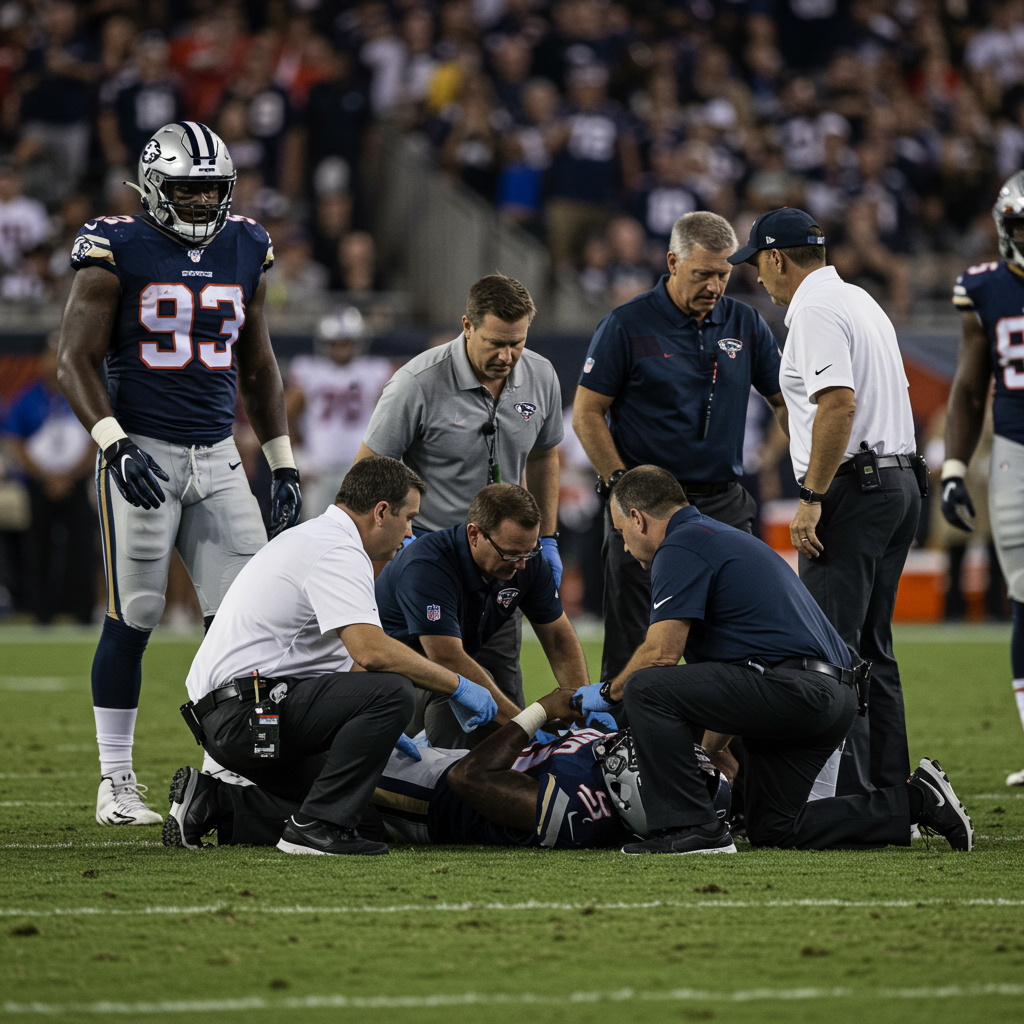
No one feels the sting of NFL preseason injuries more acutely than rookies. Their entire professional journey can be halted before it even properly begins. Consider Baltimore Ravens rookie cornerback Bilhal Kone. A sixth-round draft pick from Western Michigan, Kone harbored strong aspirations to contribute to the Ravens’ secondary. During a preseason game, after making a pivotal play to break up a pass, he landed awkwardly. Medical staff on the field immediately recognized the grim severity of the situation. Kone was carted off, his season-ending torn knee ligaments sealing his fate.
While Ravens head coach John Harbaugh offered words of encouragement, the “vicious truth” for Kone was a lost season. For a rookie, this setback is “worse than going back to square one.” By the time he potentially recovers, a new cohort of college players will have emerged, ready to compete for those same limited roster spots. This severely jeopardizes his future in the league, turning a lifelong journey into a heart-wrenching halt just short of the summit.
Another example is Philadelphia Eagles wide receiver Elijah Cooks. He suffered a shoulder injury during a preseason opener against the Cincinnati Bengals and also had to be carted off the field. An MRI was scheduled to determine the full extent of the damage. For Cooks, an undrafted player signed by the Jaguars in 2023 before joining the Eagles’ practice squad, this injury posed a significant “bump” in his arduous bid to earn a spot on the Eagles’ active roster. He faced stiff competition from an already deep wide receiver corps. The spectrum of NFL preseason injuries ranges widely in severity, but the impact, especially on players striving for their break, is always profoundly personal. This situation starkly contrasts with a minor injury, such as Colts quarterback Anthony Richardson Sr.’s dislocated pinky finger, which allowed for a swift return to play.
The Veteran’s Plight: When Experience Isn’t Enough
Even established veterans are not immune to the harshness of the preseason. Los Angeles Chargers left tackle Rashawn Slater, a two-time Pro Bowler, had just signed a massive $114 million contract, with $92 million guaranteed. Yet, he suffered a season-ending torn patellar tendon during a practice session, not even a live preseason game. This occurred before he had played a single meaningful snap. Slater’s injury immediately dealt a severe blow to the Chargers’ offensive line, which was anticipated to be significantly improved for the upcoming season.
Slater’s injury also created significant ripple effects, particularly within the fantasy football community. It drastically impacted the fantasy outlook for rookie running back Omarion Hampton, who was previously generating considerable hype. Yahoo analysts Justin Boone and Scott Pianowski highlighted that offensive line injuries disproportionately affect the run game compared to the passing game. Despite the Chargers’ commitment to heavily featuring the run, Slater’s absence severely compromised its potential effectiveness. This illustrates how one significant NFL preseason injury can have far-reaching consequences, affecting a team’s core strategy and directly altering fantasy league outcomes. It underscores that even financial security doesn’t eliminate the devastating impact of these early-season physical blows.
Balancing Act: Safety Versus Preparation
The NFL is keenly aware of the inherent risks of player injuries. Over recent decades, the league has made concerted efforts to enhance player safety. Rules have been modified, and practice routines have been adjusted, “systematically filing the rough edges off.” Yet, despite these ongoing initiatives, football remains an inherently violent, physically crushing sport. Preseason hits, despite the obvious risk, are largely deemed necessary. They are crucial for preparing players for the intensity, speed, and sheer physicality of regular season games. Without this vital preseason preparation, the risk of serious injury might even paradoxically increase during the more competitive, meaningful contests. This enduring dilemma forms a core challenge for the league, continuously balancing player welfare with the demands of a high-impact sport.
Beyond the Injury: The Broader Preseason Purpose
Despite the unavoidable injury risks, the preseason serves several vital strategic purposes for NFL teams. It’s far more than simple “entertainment” for casual fans. It functions as a critical period for developing highly drafted rookies. It also allows coaches to observe and evaluate ongoing position battles. Furthermore, it provides the first opportunity to implement and test new coaching philosophies and schemes in a live game environment. For example, teams closely monitor their first-year offensive linemen, such as the Patriots’ Will Campbell and Jared Wilson, crucial for future protection. Quarterbacks like Shedeur Sanders (Browns) and Jaxson Dart (Giants) gain invaluable experience during these snaps, essential for their long-term growth and potential as future starters.
Preseason games also offer the initial glimpse into new offensive and defensive systems. Coaches like Chip Kelly (Raiders) or Klint Kubiak (Seahawks) begin to introduce their tailored playbooks. It’s a proving ground for players battling fiercely for a spot on the final roster, such as the Cowboys’ rookie running back Jaydon Blue. The unique “Travis Hunter Experience” with the Jaguars, involving him playing extensively on both offense and defense, exemplifies the experimental opportunities preseason allows. This critical period is indispensable for assessing player talent and overall team cohesion before the regular season begins, making its existence, despite the inherent perils of NFL preseason injuries, strategically vital for every franchise.
The Human Element: Empathy in a “Next Man Up” World
In the fast-paced, often cold, “next man up” world of professional football, genuine empathy for injured players can sometimes seem undervalued. Yet, these athletes have dedicated their entire lives—countless hours, immense sacrifice, and unwavering focus—to reaching the pinnacle of their sport. To have that profound dream abruptly curtailed by an NFL preseason injury is truly devastating. It’s not merely a physical setback; it’s an immense psychological and emotional blow. Such an event challenges their identity, their financial stability, and their entire future trajectory. As fans, acknowledging this significant human cost adds a crucial layer of understanding to the game we all love. Supporting injured players, even those who may never achieve widespread fame, speaks to the true spirit of sportsmanship and humanity within this demanding sport.
Frequently Asked Questions
Why are NFL preseason injuries considered uniquely cruel?
NFL preseason injuries are particularly devastating because they often occur before a player has taken a single meaningful snap in the regular season. For rookies, like the Ravens’ Bilhal Kone, it can mean a significant portion of their professional career, or even their entire dream, is “vaporized” before it truly begins. This loss of a critical year of development and opportunity puts them at a severe disadvantage against new talent emerging the following year, effectively making it “worse than going back to square one” and often halting their lifelong journey just short of the summit.
Which types of players are most at risk of career-altering preseason injuries?
While any player can suffer an injury, rookies and those intensely fighting for a roster spot are arguably most vulnerable to career-altering preseason setbacks. For these players, a serious injury can mean a lost season and significantly reduced chances of making a final roster in subsequent years due to the constant influx of new talent. Established veterans, even highly paid Pro Bowlers like Rashawn Slater, can also face season-ending injuries that drastically impact their team’s performance and their own long-term health, despite their financial security.
How do significant preseason injuries impact team strategy and fantasy football outlook?
A major preseason injury to a key player can force immediate and substantial strategic adjustments for a team. For instance, Rashawn Slater’s torn patellar tendon fundamentally altered the Chargers’ offensive line strength, directly impacting their run game plans. In fantasy football, such injuries, especially to crucial offensive linemen, disproportionately hurt the effectiveness of the run game, directly lowering the fantasy value of skill players like rookie running backs. This ripple effect necessitates caution for fantasy managers in their drafts, as the team’s ability to quickly “patch up” the line is often uncertain.
Conclusion
The NFL preseason, while providing thrilling glimpses of new talent and strategic shifts, undeniably carries an immense human cost. NFL preseason injuries are far more than just cold statistics; they represent shattered dreams, lost opportunities, and immense personal sacrifice for the dedicated athletes who commit their lives to the sport. As we look ahead to the 2025 season and beyond, it’s vital to appreciate the intricate and often precarious balance between necessary player preparation and the paramount concern of player safety. Understanding the “brutal cruelty” of these early-season injuries allows fans to develop deeper empathy for the athletes, recognizing the profound stakes every time they step onto the field, whether it’s for an exhibition or a championship.