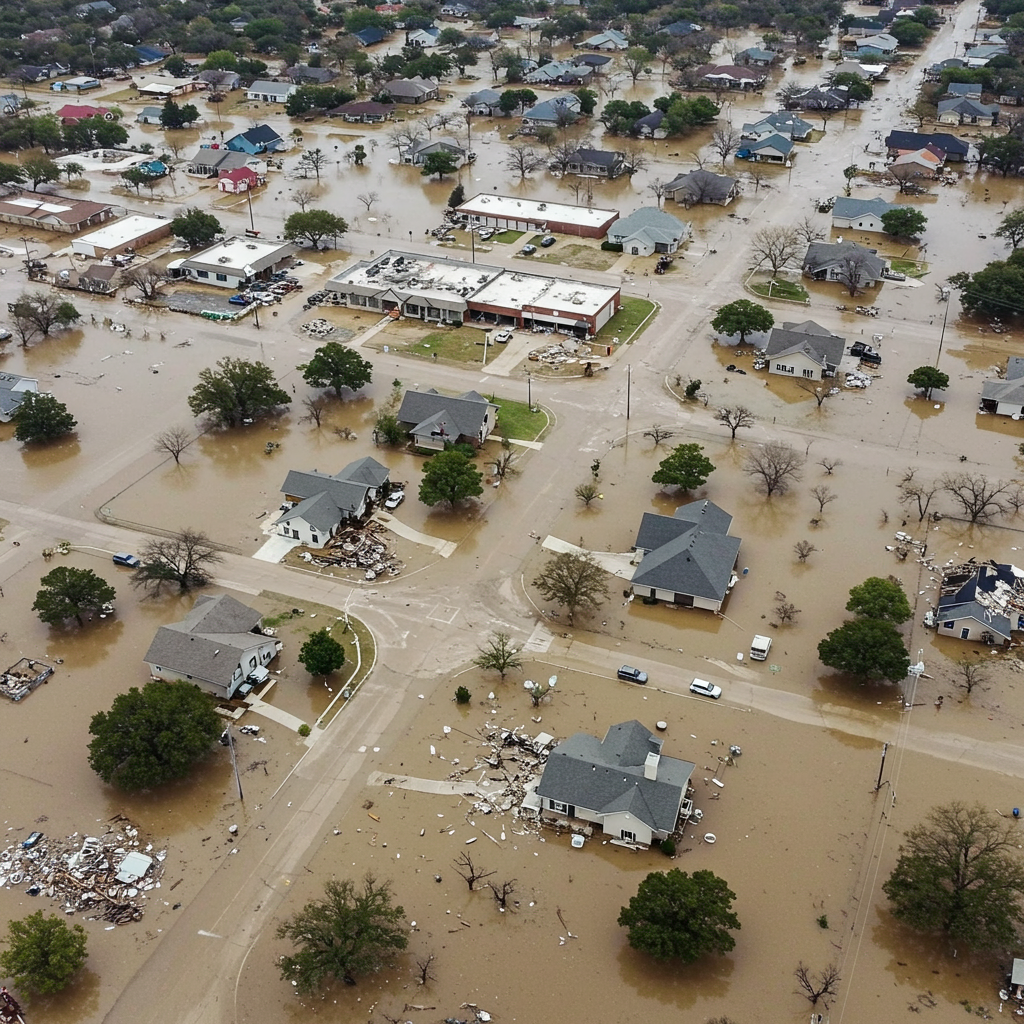
A catastrophic flash flood event has devastated parts of Central Texas, particularly the scenic Hill Country region, resulting in a tragic loss of life and widespread destruction. As of Sunday, July 6, 2025, officials confirmed that at least 81 individuals have died in connection with the disaster that unfolded primarily on Friday, July 4th. The sheer speed and intensity of the floodwaters overwhelmed communities and caught many by surprise, transforming popular river areas into scenes of unprecedented devastation.
The Rising Toll: Deaths and the Missing
The confirmed death toll stands at a minimum of 81 across central Texas counties. Kerr County has tragically accounted for the majority of fatalities, with authorities reporting 68 deaths within its boundaries alone. Among these, 40 were adults and a heartbreaking 28 were children. Other counties have also reported significant casualties: Travis County confirmed at least six deaths, Burnet County reported at least three deaths and two people missing (including the county fire chief), Kendall County confirmed two deaths, Williamson County reported one death, and Tom Green County reported the death of a 62-year-old woman.
Beyond those confirmed deceased, the search for missing persons remains a critical priority. As of Sunday, Governor Greg Abbott indicated that at least 41 people were officially unaccounted for across the affected areas, warning that the actual number could be higher. Search and rescue teams continue round-the-clock operations, facing challenging conditions as they navigate debris, swift currents, and difficult terrain.
Ground Zero: The Devastation at Camp Mystic
One of the most profoundly impacted locations was Camp Mystic, an all-girls summer camp situated along the Guadalupe River in Kerr County. The river’s rapid and violent surge overwhelmed the camp, reaching heights equivalent to a two-story building in some areas and washing away cabins and structures. While many campers were safely evacuated, the disaster tragically struck those in cabins closest to the river.
Officials reported that as of Sunday, 11 individuals remained missing from Camp Mystic. This number includes 10 campers and one counselor. Earlier reports had indicated potentially up to 27 campers were initially unaccounted for, highlighting the initial chaos and difficulty in assessing the situation. Approximately 750 children were at the camp when the floods hit. Governor Abbott visited the site, describing the devastation as “horrendously ravaged” and noting the shocking height the water reached. Survivors have shared harrowing accounts of being swept away or witnessing the terrifying speed of the rising water.
The Torrent’s Force: How the River Surged
The primary catalyst for this catastrophic flooding was an intense and localized heavy rainfall event that sat directly over the headwaters of the Guadalupe River’s north and south forks. Meteorologists noted that the downpour significantly exceeded initial forecasts. The speed of the river’s rise was astonishing; the south fork near Hunt, for example, surged from roughly 7 feet to 29 feet in a mere matter of minutes.
In one particularly devastating account, the Guadalupe River reportedly rose by an astounding 26 feet in just 45 minutes before daybreak on Friday. This rapid surge surpassed the river’s level during the significant 1987 flood at Hunt, reaching its second-highest level on record. The suddenness and intensity of the water’s force were key factors in the widespread destruction, washing homes off foundations and sweeping away vehicles with little warning.
Search and Rescue Efforts: A Desperate Race
Hundreds of dedicated personnel from various units, including Texas National Guard, state troopers, U.S. Coast Guard, search dogs, drones, helicopters, rescue divers, boats, and high-water vehicles, immediately mobilized to conduct search and rescue operations. Efforts have been ongoing around the clock since the floods began.
In the initial 36 hours alone, rescuers saved over 850 people. This included more than 160 air rescues conducted by helicopters. The U.S. Coast Guard is credited with saving 223 individuals. While search teams continue to comb affected areas, including riverbanks and debris fields, the outlook for finding additional survivors has understandably become increasingly bleak as time passes. Officials like W. Nim Kidd, chief of the Texas Division of Emergency Management, acknowledged that efforts would eventually transition from search and rescue to recovery.
Government Response and Assistance
In response to the scale of the disaster, President Donald Trump signed a major disaster declaration for Kerr County on Sunday. This action activates the Federal Emergency Management Agency (FEMA) and makes federal resources available to assist with recovery efforts. The declaration was later updated to include several other affected counties at Governor Abbott’s request.
Governor Abbott also issued a state disaster declaration for numerous counties. He committed state resources to the search and rescue mission, vowing to deploy limitless aid until every person is accounted for. Additionally, Governor Abbott declared Sunday a day of prayer for the state, urging Texans to pray for the victims, the missing, recovering communities, and first responders. The state is providing support at reunification centers set up for families anxiously awaiting news of their loved ones.
Community Impact and Personal Stories
The human impact of this event is profound and devastating. Families are mourning the loss of loved ones and desperately searching for those still missing. Specific victim examples highlight the tragedy, including 9-year-old Lila Bonner and 8-year-old Eloise Peck, Camp Mystic campers confirmed deceased. Two school-age sisters from Dallas, Blair (13) and Brooke Harber (11), were also reported missing after their cabin was swept away; their parents survived, but their grandparents remain unaccounted for. Survivors recount terrifying moments clinging to trees or seeking refuge in attics as the water rose. The popular nature of the Hill Country, particularly around the Fourth of July holiday weekend, complicated initial efforts to determine the exact number of people in the area and potentially missing.
Questions of Warning and Preparedness
The unprecedented speed and intensity of the flash floods have raised questions about warning systems and preparedness. While the National Weather Service did issue advisories on Thursday, followed by flash flood warnings and rare flash flood emergencies in the early hours of Friday, the actual rainfall amounts and the rapidity of the river rise exceeded expectations.
Kerr County Judge Rob Kelly noted that the area did not have a dedicated flood warning siren system, and past considerations for installing one never came to fruition. Authorities and elected officials stated they did not anticipate such an extreme downpour. Kerrville City Manager Dalton Rice committed to a full review of the emergency response, including public alerting systems, acknowledging the need to understand if preparations were adequate for the scale of this event. Some nearby camps had monitored weather and taken precautions, such as moving campers, but the ferocity of this particular surge was exceptional.
Understanding the Context: Flash Flood Alley
The Texas Hill Country is unfortunately located within a region colloquially known as “flash flood alley.” This area is particularly susceptible to rapid, severe flooding due to a combination of factors. The terrain features steep hills and winding rivers. Crucially, the underlying geology consists largely of limestone. This type of rock prevents rainwater from soaking into the ground efficiently. Instead, runoff flows quickly over the surface and rapidly accumulates in riverbeds and low-lying areas, leading to explosive rises in water levels, especially during intense, localized downpours, often exacerbated when prolonged droughts end abruptly with heavy rain events.
Meteorologists suggest that the intensity of this particular “rain bomb” may also be linked to climate change. A warmer atmosphere holds more moisture, which can lead to heavier downpours when storm systems develop. The National Climate Assessment indicates that the heaviest rainstorms in Texas are already dropping about 20% more rain now compared to the late 1950s, potentially making catastrophic events like this more likely.
The Lingering Threat: More Rain Ahead
The danger from flooding is not over for Central Texas. Flash flood watches remained in effect, and forecasts indicated the potential for more heavy rain through Tuesday. This additional rainfall poses a risk to already saturated ground and could exacerbate conditions in areas struggling with ongoing search efforts and initial cleanup. Officials continue to urge residents in low-lying areas and near waterways to remain vigilant and be prepared to move to higher ground if necessary.
Frequently Asked Questions
What happened in the Texas Hill Country leading to the high death toll?
A catastrophic flash flood struck Central Texas, primarily on Friday, July 4, 2025, caused by intense rainfall over the headwaters of the Guadalupe River. This resulted in an extremely rapid rise in river levels, devastating communities, sweeping away structures, and leading to at least 81 confirmed deaths across several counties, with many more individuals still reported missing.
Why was the flooding in this area so sudden and severe?
The severity was due to a combination of factors: extremely heavy rainfall focused on river headwaters, the region’s “flash flood alley” geography (steep hills, limestone bedrock preventing absorption), and the resulting incredibly rapid rise of the Guadalupe River, surging up to 26 feet in just 45 minutes in some spots. This intensity overwhelmed warnings and preparedness measures.
How are search and rescue efforts progressing, and what is the current situation?
Search and rescue operations have been ongoing around the clock since the disaster began, involving hundreds of personnel and various assets like helicopters and boats. Over 850 people have been rescued. While searches for the missing continue, including those from Camp Mystic, officials are acknowledging the difficult transition towards recovery efforts as the window for finding survivors narrows.
The path to recovery for the affected communities will be long, involving extensive cleanup, rebuilding, and emotional healing for the countless families impacted by this tragic natural disaster. State and federal resources are being mobilized to support these efforts in the coming days and weeks.