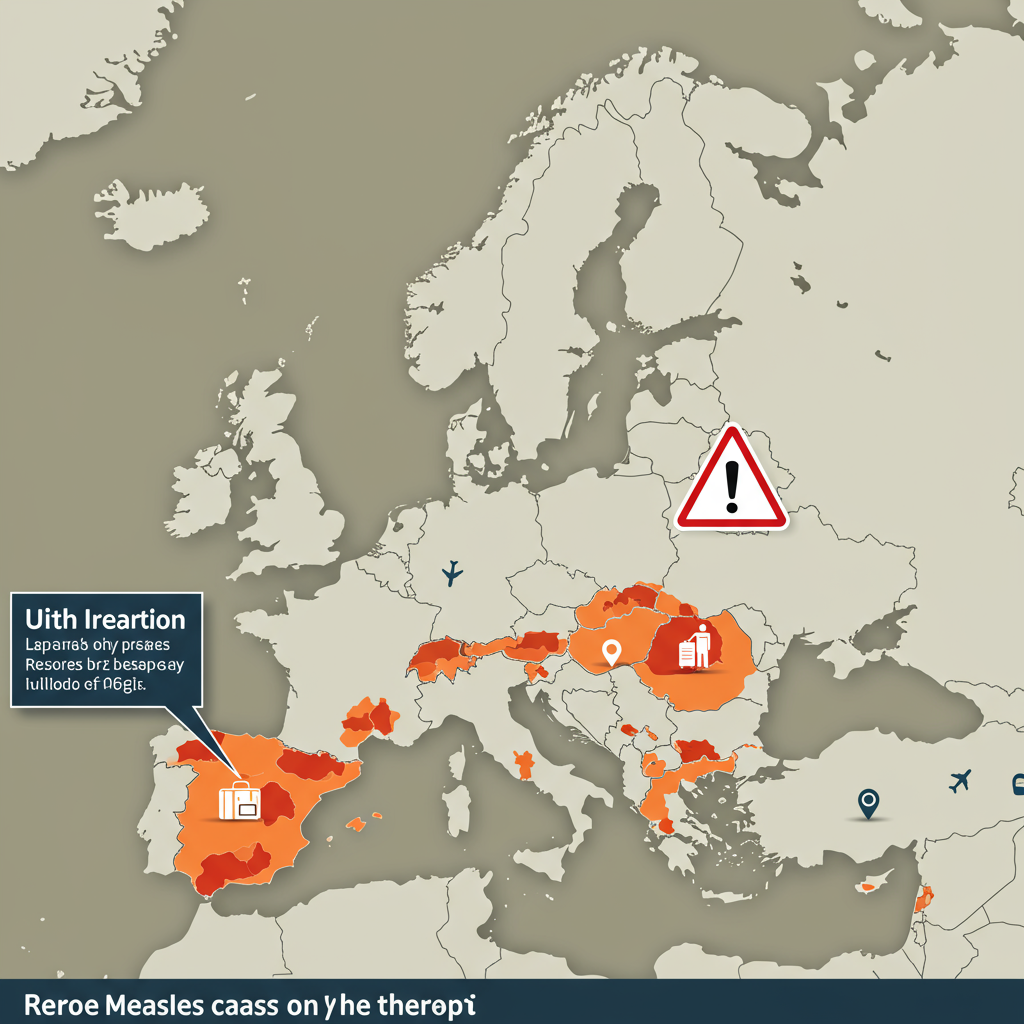
As families across the UK gear up for summer holidays abroad, health experts are issuing a crucial warning: measles cases are surging across Europe and beyond, posing a significant risk to unvaccinated travellers. This highly contagious disease is seeing a worrying resurgence globally, reaching levels not seen in decades.
Measles on the Rise: A European and Global Concern
Data from the World Health Organization (WHO) and UNICEF paints a stark picture. The WHO European Region reported over 127,000 measles cases in 2024, more than double the figure from the previous year and the highest number since 1997. This alarming increase isn’t confined to a few areas; outbreaks have hit several European countries popular with UK tourists, including France, Italy, Spain, and Germany.
Beyond Europe, countries like Pakistan, Nigeria, India, Thailand, Indonesia, and Romania are also grappling with high case numbers.
Why UK Travellers Are at Risk
The concern for UK families planning trips stems from a combination of factors:
- Surging Cases Abroad: The sheer volume of infections in popular destinations increases the chance of exposure.
- Low UK Vaccination Rates: Childhood vaccination rates for the Measles, Mumps, and Rubella (MMR) vaccine in the UK remain below the recommended 95% threshold needed to protect the population effectively. Worryingly, rates in London are particularly low, sitting just over 73%. This leaves many children and adults vulnerable.
- Ongoing UK Outbreaks: The UK Health Security Agency (UKHSA) has confirmed a continuing measles outbreak in England, mirroring the international trend. Recent figures show dozens of cases confirmed monthly, primarily affecting unvaccinated children under 10. Nearly half of recent cases have been reported in London.
- In rare cases, measles can be fatal.
- https://www.bbc.com/news/articles/c706y4jr95lo
- https://www.bbc.co.uk/news/articles/c706y4jr95lo
- https://wwwnc.cdc.gov/travel/notices/level1/measles-globe
- https://www.theguardian.com/society/2024/jan/23/world-health-organization-who-measles-warning-cases-rise-europe
- https://www.the-independent.com/news/uk/home-news/uk-measles-warning-alert-cases-symptoms-europe-b2764317.html
Measles spreads incredibly easily, often through coughs and sneezes. The virus can even linger in the air or on surfaces for up to two hours after an infected person has left. This makes busy travel hubs like airports and train stations potential hotspots for transmission.
The Importance of the MMR Vaccine Before Travelling
Health authorities are urging families to ensure everyone is up to date with their MMR vaccinations before travelling, especially if heading to Europe or other affected regions.
Dr Vanessa Saliba, a consultant epidemiologist at the UKHSA, stresses the urgency: “It’s essential that everyone, particularly parents of young children, check all family members are up to date with two MMR doses… Measles cases are picking up again in England and outbreaks are happening in Europe and many countries with close links to the UK.”
The good news? It’s never too late to catch up on missed doses. The MMR vaccine is provided free of charge as part of the routine NHS immunisation programme.
Who Needs the MMR Vaccine for Travel?
Infants aged 6 to 11 months: Should receive one dose of the MMR vaccine at least two weeks before travelling internationally. Note: This is an early dose, and they will still need the routine two doses later (at 12-15 months and 4-6 years).
Individuals aged 12 months or older: Should have received a total of two doses of the MMR vaccine, administered at least 28 days apart, before international travel.
Check your child’s Red Book or contact your GP surgery if you are unsure of your family’s vaccination status. It’s recommended to do this at least six weeks before travel to allow time for vaccination if needed.
Understanding Measles: Symptoms and Risks
Measles is far more serious than just a rash. It’s a potentially severe illness that can lead to dangerous complications.
Common Symptoms:
High fever
Cough, runny nose, sore throat
Red, sore, and watery eyes
Small white spots (Koplik spots) inside the mouth
A blotchy red or brown rash appears a few days later, starting on the face/behind ears before spreading (note: can be harder to see on brown and black skin)
While measles typically clears up in 7-10 days, complications are common and can be severe:
Ear infections
Diarrhoea
Pneumonia (lung infection)
Meningitis (inflammation of the membranes surrounding the brain and spinal cord)
Encephalitis (brain swelling)
Blindness
Seizures
Certain groups are at higher risk of severe complications, including babies and young children, pregnant women (risk of stillbirth, miscarriage, or low birth weight babies), and individuals with weakened immune systems.
Dr Amanda Doyle from NHS England highlights, “Too many babies and young children are still not protected against the diseases, which are contagious infections that spread very easily and can cause serious health problems.”
Don’t Let Measles Spoil Your Holiday
The message from health experts is clear: vaccination is the most effective way to protect yourself and your family from measles. With cases rising significantly in many popular holiday destinations and transmission ongoing within the UK, checking your MMR status before you travel is a vital step to ensure a safe and healthy summer trip. Contact your GP practice today to confirm your family’s vaccination records or book an appointment.