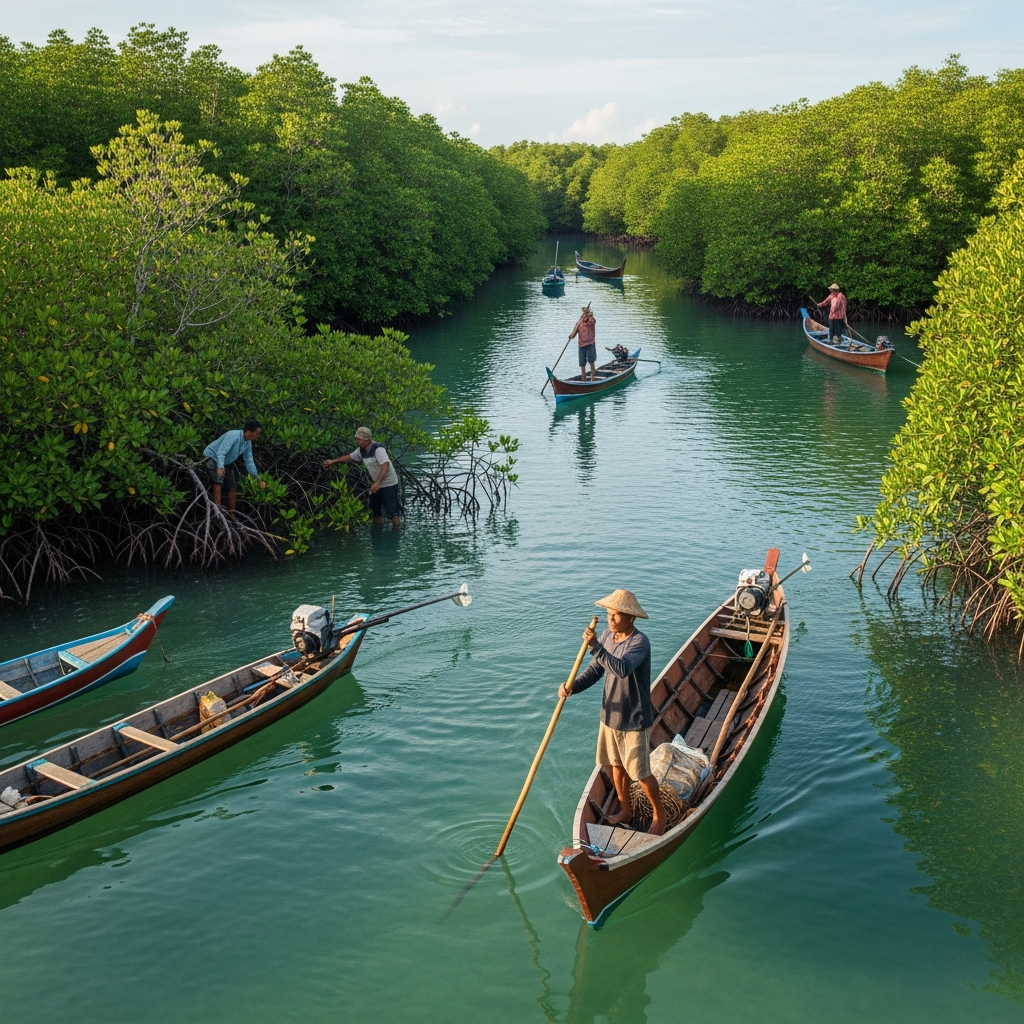
Nestled amidst the serene waters of the Molucca Sea, the remote village of Torosiaje in Indonesia offers a profound glimpse into humanity’s harmonious relationship with nature. Here, the Indigenous Bajau people, renowned “sea gypsies,” have perfected a centuries-old craft: sustainable living powered by the ecological marvel of mangroves. Their story is not just one of survival, but of thriving, demonstrating how traditional ecological knowledge can protect vital marine ecosystems and ensure a prosperous future. This remarkable community on Sulawesi island showcases an ultimate model of mangrove conservation, proving indispensable for their unique fishing culture and coastal resilience.
Journey to a Waterborne World
Reaching Torosiaje is an adventure in itself, mirroring its secluded charm. After a six-hour journey across Sulawesi, travelers typically transition to a motorized wooden longboat, a “water taxi,” navigating narrow, winding waterways. Along these passages, vibrant green mangroves densely line the murky saltwater, their intricate root systems creating a natural labyrinth. As the sun dips towards the horizon, painting the sky in fiery hues, Torosiaje emerges: a kaleidoscope of colorful stilted houses, shops, and schools, all perched directly over the sea. This striking village, founded in 1901, represents a unique human settlement, where the ebb and flow of the ocean dictate daily life.
The Bajau People: Masters of the Sea
Historically, the Bajau people of Southeast Asia were celebrated as nomadic sea fishers. Their lives revolved around the vast ocean, traveling from one fishing ground to another, often dwelling in houseboats or temporary stilt dwellings. While many Bajau communities across Indonesia have now adopted more settled lives along the coast, Torosiaje stands apart. It is a village built entirely on the water, with residents navigating its network of bridges connecting homes and public spaces. This on-water foundation powerfully symbolizes the Bajau’s enduring and profound connection to the marine environment, reflecting generations of deep understanding of the sea’s rhythms and resources.
Mangroves: The Heartbeat of Torosiaje’s Ecosystem
For the people of Torosiaje, mangroves are far more than just trees; they are the lifeblood of their existence. These resilient coastal forests provide essential protection and sustenance. Their dense, sprawling root systems act as natural barriers, shielding the coastline from the relentless forces of erosion, particularly crucial in a village built directly on water. Beyond physical protection, mangroves serve as critical nurseries for a diverse array of marine life. They offer sheltered breeding grounds for fish, crabs, and shrimp, providing abundant food sources for the Bajau’s traditional fishing practices. Without these vital habitats, fish populations would dwindle, directly threatening the community’s primary livelihood.
A Legacy of Conservation: The Bajau’s Active Stewardship
The deep understanding of mangroves’ importance has driven the Bajau community to become active stewards of their environment. They have initiated highly successful, community-led conservation efforts focused on cultivating mangrove trees. By actively planting and nurturing these crucial ecosystems, the Bajau have observed remarkable results. They have successfully restored fish habitats that were previously diminishing, leading to a resurgence in local fish populations. This proactive approach underscores a profound intergenerational wisdom: protecting nature is paramount for human survival and prosperity. Their diligent conservation ensures the continuous flow of marine resources, sustaining both their economy and way of life.
Beyond Ecology: Traditional Uses of Mangrove Resources
The Bajau’s interaction with mangroves extends beyond ecological conservation into innovative traditional resource utilization. Their comprehensive knowledge of these versatile trees allows them to derive a variety of useful products. For instance, mangrove seeds are carefully harvested and processed to create soap, a practical item for daily hygiene. The trees also yield ingredients for traditional medicines and skincare products, showcasing their holistic approach to health and well-being. Perhaps most surprisingly, mangrove seeds are even processed into flour, which the community uses to bake cakes, highlighting their resourcefulness and sustainable integration of nature into their culinary traditions. This demonstrates a truly comprehensive and respectful engagement with their natural surroundings.
Whispers of Origin: The Bajau’s Enduring Story
The exact origins of the Bajau people are shrouded in mystery, enriched by captivating legends. One prominent story speaks of a sultan’s beloved princess who was tragically kidnapped. In his grief, the sultan dispatched his most formidable men to search for her across the seas. Bound by loyalty, these warriors dared not return without the princess. Consequently, they became perpetual wanderers, forging new lives as nomads across the vast ocean. It is said that some of these sea wanderers eventually found a new home amidst the protective embrace of the mangroves, establishing the foundation for communities like Torosiaje. This enduring legend beautifully encapsulates the Bajau’s intrinsic connection to the sea and their enduring spirit of adaptation.
Lessons from Torosiaje: A Blueprint for Sustainable Living
The remarkable story of Torosiaje and the Bajau people offers invaluable lessons for a world grappling with environmental challenges. Their experience vividly illustrates the power of traditional ecological knowledge (TEK) in fostering genuine sustainability. The community’s deep-rooted respect for nature, combined with their active conservation efforts, provides a potent blueprint. We learn that successful conservation isn’t always about complex scientific interventions, but often stems from the profound understanding and active participation of local communities. Torosiaje exemplifies how indigenous wisdom can not only sustain a unique cultural heritage but also protect vital ecosystems for generations to come. Their integrated approach to life and land (or rather, sea) is a powerful testament to living in balance.
Frequently Asked Questions
How do mangroves contribute to both fishing and coastal protection in places like Torosiaje?
Mangroves are incredibly vital for both fishing and coastal protection. Their dense, complex root systems provide crucial sheltered habitats and nurseries for a wide variety of marine life, including fish, crabs, and shrimp. This supports healthy fish populations, which are essential for traditional fishing communities like the Bajau in Torosiaje. Additionally, these same robust root systems act as natural buffers against erosion. They absorb wave energy, stabilize sediment, and reduce the impact of storms, protecting coastlines and communities built on or near the water from sea-level rise and environmental degradation.
What makes Torosiaje village in Indonesia particularly unique for the Bajau people?
Torosiaje village is unique because it is entirely built on the water, featuring colorful stilted houses, shops, and schools connected by a network of bridges over the Molucca Sea. Unlike many other Bajau communities in Indonesia that have settled on land, Torosiaje, founded in 1901, represents a continuation of the Bajau’s historical nomadic, sea-centric lifestyle but in a permanent, on-water settlement. This distinctive architecture and location underscore the community’s profound and unwavering connection to the marine environment, making it a living testament to their “sea gypsy” heritage.
What key lessons on sustainable living can be drawn from the Bajau community’s relationship with mangroves?
The Bajau community’s relationship with mangroves in Torosiaje offers powerful lessons on sustainable living. Firstly, it highlights the immense value of traditional ecological knowledge (TEK) and local wisdom in managing natural resources effectively. Their active cultivation and conservation of mangroves demonstrate a proactive approach to environmental stewardship. Secondly, it shows that ecological health and human well-being are inextricably linked; protecting ecosystems directly sustains livelihoods. Finally, it provides a blueprint for community-led conservation, proving that local engagement and respect for nature can lead to flourishing environments and resilient communities.
Conclusion
The vibrant sea village of Torosiaje, home to the Indigenous Bajau people, stands as a beacon of hope and a testament to the power of sustainable living. Their profound connection to the ocean, exemplified by their active and intuitive mangrove conservation efforts, provides critical lessons for our modern world. By cultivating these vital coastal forests, the Bajau not only sustain their traditional fishing livelihoods but also fortify their entire community against environmental threats. Their story is a compelling reminder that the deepest wisdom often lies within those who live closest to the land – or, in this extraordinary case, the sea.