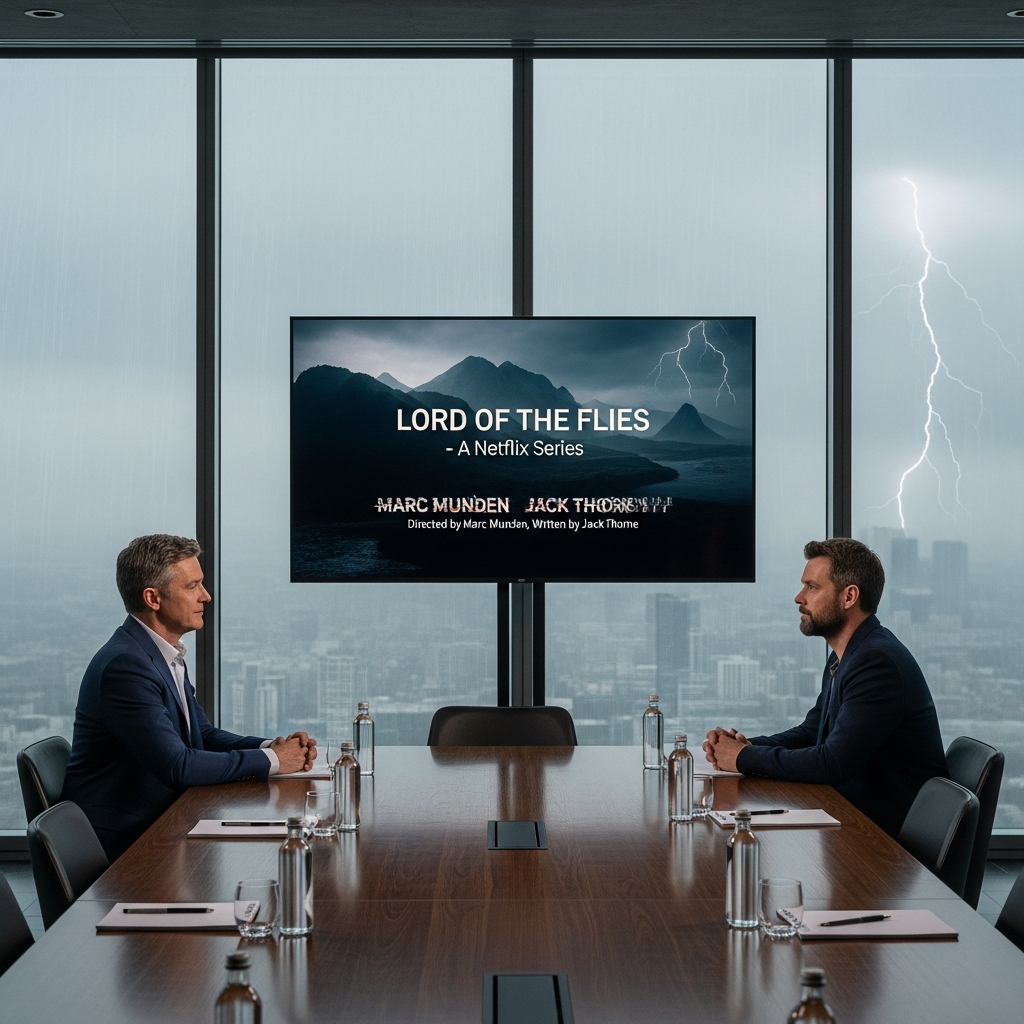
Netflix’s latest limited series, a chilling adaptation of William Golding’s iconic 1954 novel, Lord of the Flies, plunges viewers into a visceral nightmare. This four-episode BBC production, now streaming in the U.S., is a harrowing descent into the darkest corners of human nature. It presents a potent, unflinching allegory for the thin veneer separating civilization from savagery. Directed by Marc Munden and adapted by Jack Thorne, this series distinguishes itself with a uniformly brilliant young cast and a cinematic vision that intensifies Golding’s timeless warning. Prepare for an unforgettable, deeply unsettling journey into the heart of darkness.
A Faithful Yet Forceful Retelling of Golding’s Classic
William Golding’s Lord of the Flies has long stood as a foundational text exploring societal collapse. It tells the story of British schoolboys marooned on a remote tropical island during World War II, forced to confront their own primal instincts without adult supervision. This Netflix adaptation remains remarkably true to its source. It neither modernizes the setting nor introduces gender-swapped roles, instead honoring the specific historical and social context of the original narrative.
The series succeeds by reaffirming Golding’s dark predictions about human behavior. It powerfully explores the fragility of democracy and the ease with which order can crumble. Actor David McKenna, who portrays Piggy, chillingly notes the contemporary relevance, stating, “put 40 boys on a tropical island today, and the same thing would probably happen, sadly.” Director Marc Munden describes the adaptation as a political fable, mirroring today’s struggles between “dutiful Democrats versus the entitled bully leading another faction.” This fidelity, combined with a fresh cinematic approach, makes the series incredibly impactful for modern audiences.
The Phenomenal Young Ensemble: Faces of Humanity’s Dark Side
A cornerstone of this adaptation’s success is its extraordinary cast of child actors. Unlike many “teen soap” dramas featuring older actors, here the boys are visibly and undeniably children. This authenticity enhances viewer empathy, making their tragic descent into brutality all the more poignant. We feel for these characters deeply, rather than merely judging them.
Each episode delves into the perspective of a specific survivor, offering rich character development:
Piggy (David McKenna): The intelligent, bespectacled asthmatic. He represents rationality and the need for order. McKenna delivers a standout performance as the community’s most vulnerable yet insightful member.
Ralph (Winston Sawyers): The popular, initially elected chief. Sawyers masterfully portrays Ralph’s growing uncertainty, a reasonable response given the dire circumstances. He struggles to maintain civility amidst chaos.
Jack (Lox Pratt): The volatile choir leader. Pratt embodies Jack’s darker aspects – an entitled bully with a fragile ego who thrives on the breakdown of rules. His performance is key to the story’s unraveling.
Simon (Ike Talbut): The sensitive, spiritual soul often dismissed by the others. Talbut powerfully conveys Simon’s inherent kindness and civility, making him a tragic figure.
The ensemble’s high caliber, especially given the actors’ young ages and their ability to deliver Golding’s formal midcentury diction naturally, is a remarkable feat. Not a single performance feels stiff or unnatural, allowing for a profound immersion into the story.
Marc Munden’s Directorial Vision: Crafting a Hallucinatory Nightmare
Director Marc Munden’s artistic choices are crucial to translating the novel’s psychological horror onto the screen. Shot on location in the lush, yet oppressive, Malay Archipelago, the series masterfully conveys the boys’ isolation and mounting paranoia. Munden plays up the hallucinatory effects of their ordeal through distorted perspectives and heightened color saturation. Trees glow an unsettling green by day, shifting to a nightmarish, surreal red by night. This visual language evokes both the sweaty tropical heat and the feverish anxiety consuming the boys.
The cinematography effectively builds the atmosphere of dread, leading to their irrational fears of a mythical “beast” and their eventual descent into cultish rituals. These practices are built on a distorted, Darwinian faith in survival of the fittest. By the time the series’ namesake, a severed pig’s head swarming with gnats, eerily speaks to Simon, the audience is fully immersed in the terrifying reality. This powerful visual storytelling amplifies the horror and tragedy of collective survival spiraling into deadly brutality.
Subtle Adaptations and Provocative Choices
While remaining faithful to the core narrative, Jack Thorne’s adaptation introduces thoughtful augmentations that deepen the story. Flashbacks to the boys’ pre-crash home lives offer viewers a glimpse of what they stand to lose or gain on their “blank slate” island. These additions provide valuable insight into their developing behaviors.
A particularly striking new scene involves the survivors discovering suitcases from the plane crash. Unpacking these items, including Simon’s diary and women’s clothes, allows for a nuanced exploration of the boys’ complex relationships and their increasing detachment from societal norms. Some boys experiment with the discarded women’s clothing, engaging in a form of playful drag. Director Munden, inspired by images of Liberian child soldiers who used unusual costumes as “armor,” explains that this initial playfulness soon “becomes sort of perverted… and becomes like another form of armor,” deliberately challenging the audience.
The series also makes a curious choice by casting Ralph as biracial, though it refrains from commenting on this significant shift within a story that otherwise dissects social divisions. This decision, perhaps constrained by the four-hour screen time, remains an intriguing unspoken element of the adaptation.
The Rigors of Production: Crafting Island Despair
Bringing Lord of the Flies to life on screen was no small feat. Filming spanned five arduous months, from July to December 2024, in the challenging tropical environment of the Malay Archipelago. The production team navigated daily speedboat trips to uninhabited islands, dodged unpredictable monsoons, and battled extreme heat. Strict child labor laws imposed further complexities, limiting older boys to five or six hours of work daily and younger ones to just three. This necessitated clever cinematic tricks to simulate night scenes, as actual night shooting with child actors was prohibited.
Despite the grueling conditions and harrowing subject matter, the experience proved profoundly positive and bonding for the young cast. Many actors, in their first professional roles, flourished under a comprehensive safety net. Child psychologists, tutors, and chaperones ensured a supportive environment, allowing the young performers to delve deeply into the drama and horror of the story with the assurance of their well-being. This intense shared experience forged real-life friendships, with many of the older boys remaining close long after production wrapped, a poignant contrast to their on-screen antagonisms.
Why This Adaptation Resonates Now
This Netflix Lord of the Flies adaptation is far more than a simple retelling; it’s a powerful, kinetic series that resonates with profound contemporary relevance. In an era grappling with political division, groupthink, and the rise of populism, Golding’s allegory feels acutely pertinent. As actor Ike Talbut aptly puts it, the series serves as a cautionary tale against these dangerous societal currents.
The show excels not by modernizing its source material, but by forcefully conveying the inherent horror and tragedy of collective survival curdling into deadly brutality. Its impact lies in giving a powerfully youthful, empathetic face to humanity’s capacity for both civility and savagery. This adaptation is a harrowing, yet essential, watch that compels viewers to confront uncomfortable truths about human nature and the fragile structures of civilization.
Frequently Asked Questions
What makes Netflix’s Lord of the Flies adaptation different from the original novel?
While largely faithful to William Golding’s 1954 novel, the Netflix adaptation by Jack Thorne introduces subtle yet impactful changes. These include incorporating flashbacks to the boys’ lives before the crash, offering deeper character insights. A new scene where the boys discover suitcases from the plane allows for the exploration of new dynamics, including their experimentation with women’s clothing. This provocative choice, inspired by director Marc Munden’s research, challenges the audience by using the clothing as a form of “perverted armor,” pushing the boundaries of the original text while retaining its core themes.
Who are the key cast members in Netflix’s Lord of the Flies series?
The adaptation features a uniformly excellent young cast bringing Golding’s iconic characters to life. Key members include David McKenna as the rational but vulnerable Piggy, Lox Pratt as the volatile and power-hungry Jack, Winston Sawyers as the initially elected chief Ralph, and Ike Talbut as the sensitive and insightful Simon. These child actors, many in their first professional roles, deliver powerful performances that enhance the series’ emotional depth and make the boys’ descent into savagery profoundly empathetic.
Is Netflix’s Lord of the Flies adaptation suitable for all viewers?
This Netflix adaptation is a profoundly harrowing and intense watch, making it more suitable for mature audiences. It faithfully portrays the dark themes of William Golding’s novel, including the breakdown of order, psychological distress, and violent acts committed by children. The series does not shy away from the brutality and despair inherent in the story, utilizing powerful visuals and emotionally charged performances to convey its message. Viewers should be prepared for disturbing content and a challenging exploration of human nature.