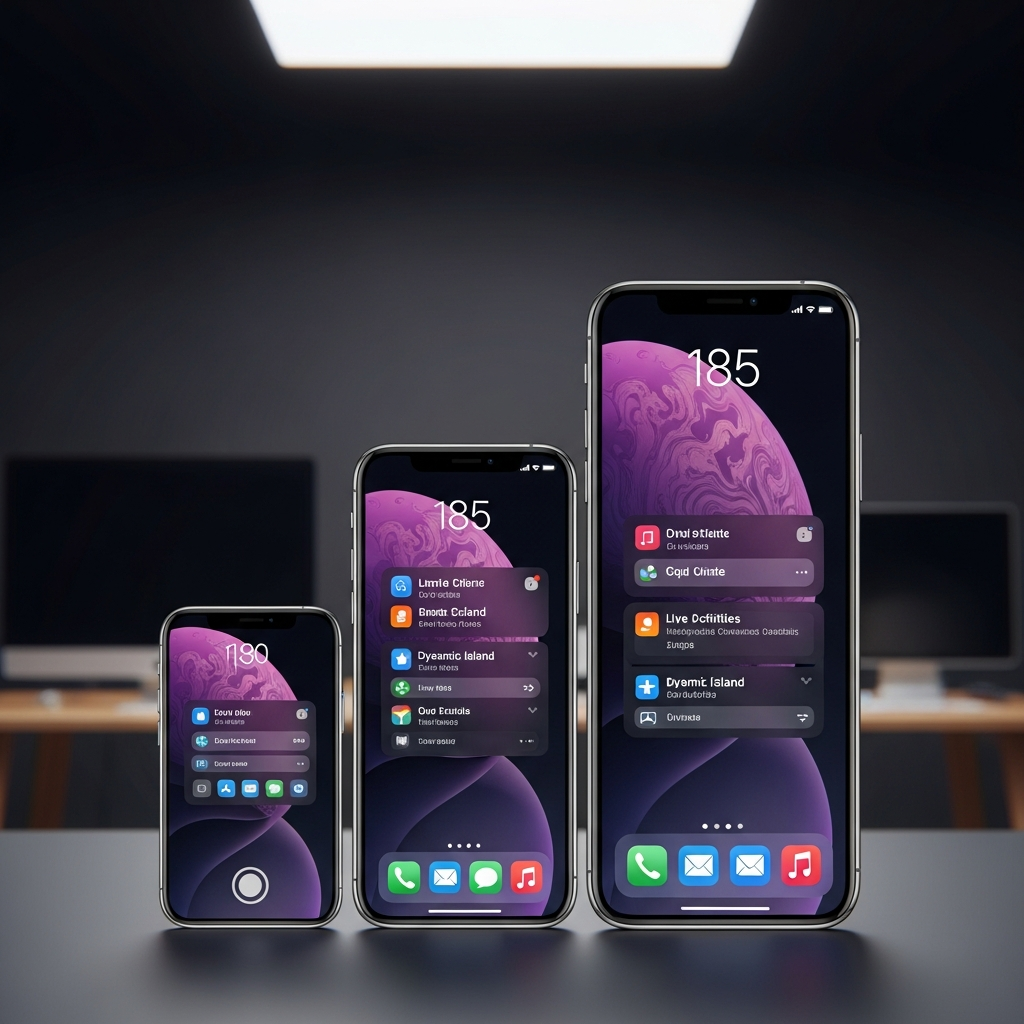
Anticipation builds as Apple grapples with a pivotal design choice for its upcoming iPhone 18 Pro Dynamic Island. While the tech giant meticulously refines its 2026 flagship, reports suggest a final decision on the Dynamic Island’s size remains elusive. This critical choice isn’t merely aesthetic; it promises to reshape user interaction and potentially influence sales performance significantly. Beyond this immediate dilemma, the iPhone 18 Pro is poised for transformative upgrades, from an innovative A20 chip to advanced camera systems, all launching alongside Apple’s highly anticipated first foldable iPhone.
The iPhone 18 Pro Dynamic Island Dilemma
Apple is reportedly weighing two distinct paths for the iPhone 18 Pro’s Dynamic Island, keeping tech enthusiasts and industry observers on edge. This indecision, according to a prominent Weibo leaker known as Digital Chat Station, reflects an active debate within the company. The outcome will dictate a key visual and functional element of the next-generation iPhone Pro models.
Two Paths Forward: Existing vs. Mini Dynamic Island
The first option for the iPhone 18 Pro Dynamic Island is to retain the current screen mold from the iPhone 17 Pro. This would mean the Dynamic Island’s design, size, and functionality would largely remain consistent with the previous iteration. It represents a more conservative approach, perhaps prioritizing manufacturing stability or existing software compatibility.
The second, more ambitious option, introduces a significantly smaller “Mini Dynamic Island.” This reduction in size would be achieved through a sophisticated engineering feat: relocating the Face ID receiver and transmitter components directly beneath the display. Moving these critical sensors out of sight would free up precious screen real estate, creating a sleeker, more immersive viewing experience. Digital Chat Station specifically suggests that adopting this “Mini Dynamic Island” could lead to exceptionally strong sales figures for the device. This indicates Apple’s internal belief in the market appeal of a less obtrusive notch replacement.
Leakers Divided: Gurman vs. Digital Chat Station
The latest report from Digital Chat Station represents a notable shift in their own previous stance. Earlier this year, the same leaker suggested Apple was leaning towards reusing last year’s design, implying minimal changes to the Dynamic Island. This previous claim, however, stood in contrast to a broader consensus among other reputable industry analysts.
Sources like Bloomberg’s Mark Gurman and DSCC’s Ross Young, along with several other Weibo leakers, had consistently indicated a different trajectory. They suggested the iPhone 18 Pro would feature a Dynamic Island roughly 35% smaller than that found on the iPhone 17 Pro. This aligns more closely with the newly proposed “Mini Dynamic Island” concept, reinforcing the idea that a significant shrink has been a long-term goal for Apple. The conflicting reports highlight the dynamic nature of supply chain information and the ongoing design fluidity within Apple’s development cycle.
Beyond the Dynamic Island: iPhone 18 Pro’s Evolving Design
While the Dynamic Island’s fate captures headlines, other design elements of the iPhone 18 Pro are also seeing refinements. The overall aesthetic is expected to largely retain the sleek, premium look of the iPhone 17 Pro. However, Apple is known for subtle, impactful changes.
The distinctive rectangular camera plateau design, first introduced with the iPhone 17 Pro, will reportedly carry over unchanged to the iPhone 18 Pro. This suggests a continued commitment to its established camera module appearance. However, the rear of the device will undergo “minor adjustments to the body materials and design details.” These subtle tweaks are likely aimed at achieving a more uniform and cohesive appearance between the aluminum unibody frame and the glass cutout for wireless charging, a detail that enhances the phone’s premium feel. Earlier rumors of under-display Face ID for the iPhone 18 Pro are now largely dismissed, with the technology apparently not yet ready for prime-time implementation. The iPhone 18 Pro Max might also see a slight increase in thickness (to 8.8mm) and weight (over 240 grams), indicative of potentially larger batteries or new internal components. Furthermore, a deep red finish is rumored to be among the new color options, moving away from black and gray.
Powering the Future: A20 Chip and Performance Leaps
At the heart of the iPhone 18 Pro’s expected performance revolution lies Apple’s pioneering 2-nanometer chip, the A20. This next-generation silicon is set to deliver substantial gains in both speed and power efficiency. Industry estimates project the A20 could be up to 15% faster and an impressive 30% more efficient than its A19 predecessor.
This leap is primarily thanks to TSMC’s advanced 2nm process, which allows for a greater density of transistors within the chip. Such advancements are crucial for powering new features, enhancing AI capabilities, and extending battery life. The A20 chips might also incorporate TSMC’s innovative Wafer-Level Multi-Chip Module (WMCM) technology. This would involve integrating RAM directly onto the same wafer as the CPU, GPU, and Neural Engine. The WMCM innovation could significantly boost “Apple Intelligence” performance, optimize battery life, and reduce the chip’s physical footprint, freeing up valuable internal space for other components. However, the cutting-edge 2nm manufacturing process is reportedly 50% more expensive than 3nm, suggesting these powerful A20 chips will likely be reserved for the higher-end iPhone 18 Pro models.
Capturing Innovation: iPhone 18 Pro Camera Upgrades
The iPhone 18 Pro models are also rumored to feature a substantial overhaul in their camera technology, promising professional-grade photographic capabilities. One key enhancement could be a variable aperture for the main camera. This feature would grant users greater control over light intake, helping to reduce overexposure in bright conditions and offering enhanced customization for depth of field.
Furthermore, at least one Pro model might incorporate a new three-layer stacked image sensor from Samsung. This advanced sensor design would improve camera responsiveness, significantly reduce image noise, and increase the dynamic range of photos. Both the Main and Telephoto lenses are expected to receive larger apertures, allowing more light to reach the sensor. This translates to improved low-light performance, faster shutter speeds, and better background separation for stunning portrait effects. Apple is even reportedly exploring a teleconverter to work with the variable aperture lens, aimed at increasing effective focal length and zoom reach, though its practical application in a compact smartphone remains a topic of speculation.
Unlocking Connectivity: C2 Modem and Satellite Integration
Connectivity on the iPhone 18 Pro will also see a significant upgrade with Apple’s next-generation C2 modem chip, expected in 2026. This in-house developed chip is projected to be far more capable than current iterations, offering robust mmWave 5G connectivity and performance levels closer to those achieved by Qualcomm’s leading modems.
Crucially, the C2 modem could introduce support for 5G satellite connectivity, utilizing the NR-NTN standard. This groundbreaking technology would enable direct phone-to-satellite links, allowing for communication in remote areas without traditional cellular coverage. Beyond emergency services, this could pave the way for full internet access over satellite, supplementing existing 5G networks for expanded coverage. Apple plans to open this satellite access to third-party apps, Apple Maps, and Photos, indicating a broad integration of this powerful new capability into the iOS ecosystem.
The Foldable Frontier: Apple’s iPhone Fold Challenges and Features
Alongside the iPhone 18 Pro, Apple’s highly anticipated first foldable iPhone is expected to launch in Fall 2026. However, its path to market is not without hurdles. Earlier reports of the iPhone Fold entering trial production phases may have been premature, as the device faces significant delays.
Material & Pricing Hurdles for the iPhone Fold
According to leaker “Fixed-focus digital cameras,” while Apple has finalized most of the iPhone Fold’s components—including Ultra-Thin Glass, inner display, battery capacity, and the A20 Pro chip—two critical issues persist. These include the final decision on using either liquid metal or 3D-printed titanium alloy for specific parts, and critically, settling on manufacturers’ pricing for these materials. Apple’s strategic push for 3D printing is largely aimed at reducing manufacturing costs, a technique also considered for the “MacBook Neo.” With the iPhone Fold’s estimated base price potentially reaching $2,000 to $2,500, Apple is actively negotiating for more affordable parts. These ongoing disputes have reportedly reached an impasse, threatening to push back the device’s mass manufacturing timeline and its projected 2026 launch. The Product Validation Testing (PVT) phase is scheduled for July or early August, a critical window for resolving these material and pricing disagreements.
Cutting-Edge Display and Design for the Foldable
Despite the delays, the iPhone Fold promises cutting-edge technology. Apple is reportedly adopting Samsung’s advanced Color Filter on Encapsulation (CoE) OLED technology for its displays. This innovative approach allows for thinner, brighter, and significantly more power-efficient screens by directly applying a color filter onto the OLED panel’s protective encapsulation layer, bypassing the traditional polarizing film.
A major highlight of the iPhone Fold will be its “crease-free” display. Samsung has reportedly developed a solution involving a laser-perforated metal plate beneath the foldable OLED panel. These perforations distribute pressure evenly when folded, preventing visible creases. The device is expected to feature a “passport-style,” wide form factor, with a primary foldable display around 7.7 to 7.8 inches and a cover display around 5.4 to 5.5 inches. Rumored specifications include a vapor chamber for cooling, a 2,713 x 1,920 resolution, side-mounted Touch ID, an A20 Pro SoC with 12GB of RAM, an in-house C2 5G modem, a 48MP rear dual-camera setup, and a battery capacity ranging from 5,400mAh to 5,800mAh. It’s also expected to launch as an eSIM-only variant.
Anticipating the 2026 Apple Lineup
The fall of 2026 is shaping up to be a monumental period for Apple, with the anticipated launch of both the iPhone 18 Pro and iPhone 18 Pro Max, alongside the groundbreaking foldable iPhone. This represents a significant shift in Apple’s launch strategy. The more affordable iPhone 18 and 18e models will see a delayed release in Spring 2027, meaning customers seeking a fall upgrade will be guided towards the premium Pro or foldable options.
Battery life is a particular focus for the iPhone 18 Pro Max, rumored to feature a larger battery (5,100 to 5,200 mAh). Coupled with the efficiency gains from the 2nm A20 Pro chip, this model is expected to offer best-in-class battery performance. Despite the expected technological advancements and increased manufacturing costs, analyst Ming-Chi Kuo believes Apple will maintain existing prices for the iPhone 18 Pro models, choosing to absorb costs to preserve market share.
Frequently Asked Questions
What are the two main design options Apple is considering for the iPhone 18 Pro’s Dynamic Island?
Apple is reportedly weighing two distinct options for the iPhone 18 Pro Dynamic Island. The first involves retaining the existing screen mold from the iPhone 17 Pro, keeping its design unchanged. The second, more innovative option, is a significantly smaller “Mini Dynamic Island.” This would be achieved by moving the Face ID receiver and transmitter components beneath the display, freeing up screen space and potentially boosting sales.
Beyond the Dynamic Island, what major advancements can users expect from the iPhone 18 Pro and Apple’s first foldable iPhone in 2026?
The iPhone 18 Pro is expected to feature Apple’s first 2-nanometer A20 chip for significant performance and efficiency gains, a revamped camera system with variable aperture and larger lenses, and a C2 modem supporting 5G satellite connectivity. Apple’s foldable iPhone, launching alongside it, will boast a crease-free CoE OLED display, a “passport-style” form factor, and powerful internal specifications, though it currently faces hinge material and pricing challenges.
Why might Apple’s rumored foldable iPhone face delays, and what could be its estimated price?
Apple’s first foldable iPhone faces potential delays primarily due to unresolved disagreements with suppliers over material choices and pricing. The company is still deciding between liquid metal and 3D-printed titanium alloy for certain components and struggling to finalize manufacturers’ pricing. These negotiations, along with the device’s estimated base price of $2,000 to $2,500, could push back its mass manufacturing timeline and 2026 launch.
Conclusion
The ongoing debate surrounding the iPhone 18 Pro Dynamic Island underscores Apple’s meticulous approach to design and user experience. While a definitive decision on its size is still pending, the options presented suggest a clear push towards optimizing screen real estate. Coupled with the revolutionary A20 chip, advanced camera systems, next-gen connectivity, and the highly anticipated foldable iPhone, Apple’s 2026 lineup promises a significant leap forward in smartphone innovation. As Fall 2026 approaches, the industry watches closely to see which path Apple ultimately chooses, and how these advancements will redefine the premium smartphone experience.