NASA’s venerable Hubble Space Telescope has achieved an astronomical milestone, accidentally capturing Comet C/2025 K1 (ATLAS) in the extraordinary act of breaking apart in deep space. This unprecedented observation, described by scientists as a “cosmic fluke” and a “white whale” discovery, offers researchers a unique opportunity to peer into the pristine interior of a primordial icy object. The serendipitous event provides invaluable insights into the raw materials that formed our solar system billions of years ago.
The Serendipitous Discovery of a Crumbling Comet
Astronomers have long sought to witness the early stages of a comet’s fragmentation, but such unpredictable events have remained elusive—until now. A team led by principal investigator Dennis Bodewits and co-investigator John Noonan from Auburn University stumbled upon this remarkable sight by pure chance. Their initial target for Hubble observation became unviewable due to technical issues, prompting them to select Comet C/2025 K1 (ATLAS), or K1, as a replacement.
“Sometimes the best science happens by accident,” Noonan remarked, recounting his astonishment upon reviewing Hubble’s images. Instead of the single comet they expected, he saw “four comets” – clear evidence of K1’s dramatic disintegration. This “slimmest of slim chances” event transformed what would have been a routine observation into a groundbreaking scientific discovery. The findings were subsequently published in the journal Icarus.
A Glimpse into the Solar System’s Ancient Past
Comets are often called “frozen time capsules” or “relics” from the early solar system. These icy wanderers formed approximately 4.6 billion years ago, during the infancy of planetary development, and are composed of the same primordial ice, dust, and chemicals that built the Sun and planets. Studying them provides direct clues about the conditions of our solar system’s dawn.
However, these cosmic voyagers are not entirely pristine. Billions of years of exposure to solar radiation, heat, and cosmic rays have altered their surfaces. The challenge for astronomers has always been distinguishing between a comet’s original, primitive properties and those modified by evolutionary processes. As Bodewits explained, “By cracking open a comet, you can see the ancient material that has not been processed.” This live breakup offers an unparalleled chance to examine the comet’s interior, providing a “core sample” of unaltered primordial matter.
Hubble’s Unmatched View of Cometary Disintegration
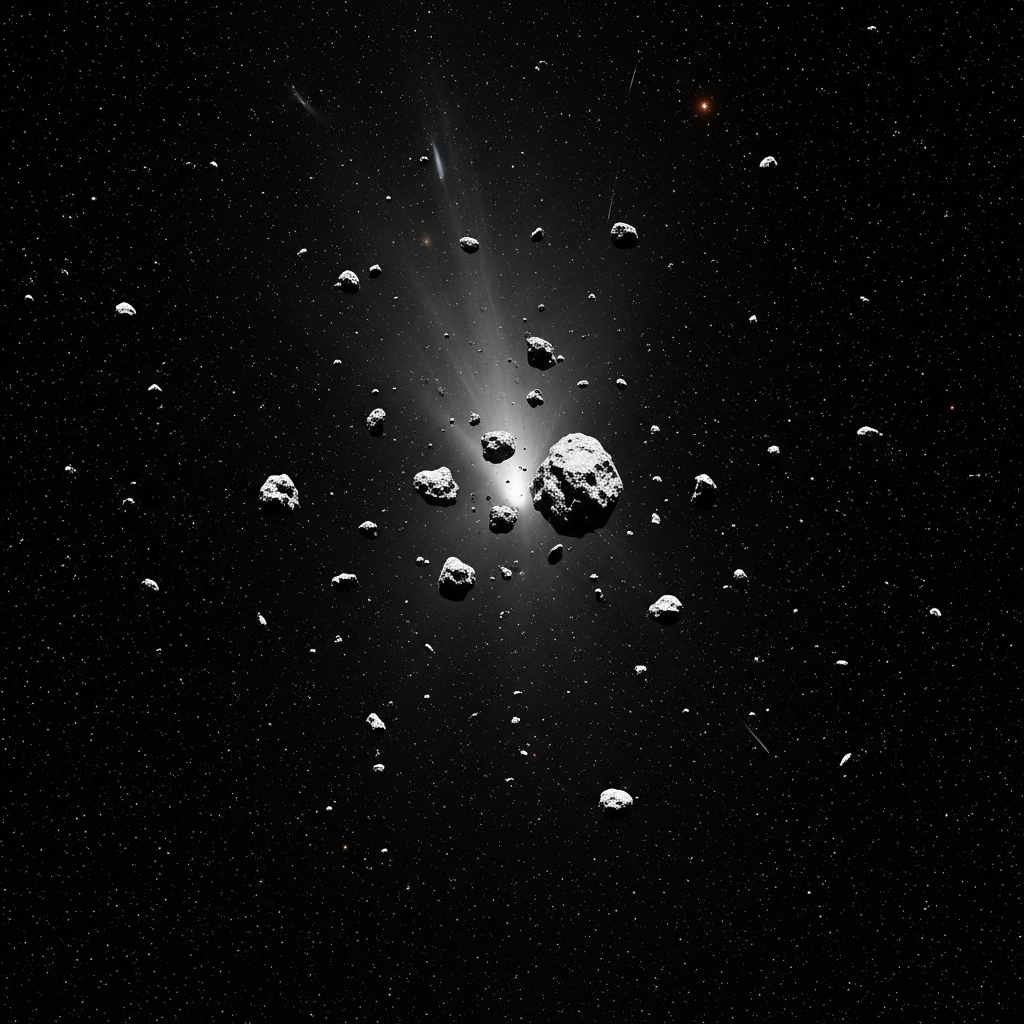
Hubble’s observations of K1, conducted over three consecutive days between November 8 and 10, 2025, provided an extraordinarily detailed view. Using its Space Telescope Imaging Spectrograph (STIS) instrument, Hubble clearly resolved K1 splitting into at least four distinct pieces. Each of these fragments developed its own glowing coma—the fuzzy envelope of gas and dust that forms around an icy nucleus as it warms. Ground-based telescopes, in contrast, could only discern these fragments as barely distinguishable blobs, highlighting Hubble’s superior resolution.
Scientists estimate that K1, initially about 5 miles (8 kilometers) wide—a size slightly larger than average—began breaking apart approximately eight days before Hubble’s initial observations. The timing aligns with the comet’s closest approach to the Sun, or perihelion, which occurred about a month earlier. During this period, K1 traveled inside Mercury’s orbit, subjecting it to intense heat and stress, a common trigger for long-period comets like K1 to begin disintegrating. During Hubble’s brief 20-second image captures, one of the smaller fragments was even observed to split further, showcasing the dynamic nature of the event. Researchers were able to trace these fragments backward in time, reconstructing the breakup sequence from a single, larger object.
Unraveling New Cometary Mysteries
Despite the success of this observation, the fragmentation of K1 presented a new puzzle. Earth-based telescopes recorded that K1 brightened later than expected, prompting questions about the physics at the comet’s surface. If fresh ice was exposed during the breakup, why didn’t the comet immediately brighten significantly?
The research team has proposed several explanations for this peculiar delay:
Dust Layer Formation: It’s possible that upon initial fragmentation, only clean ice was exposed. A dry dust layer might need time to form over this ice before being subsequently expelled, creating the reflective surface that causes a comet to brighten.
Pressure Build-up: Another hypothesis suggests that heat penetrates beneath the comet’s surface, slowly building pressure. This pressure could then eventually release a shell of dust into space, leading to a delayed outburst of brightness.
Noonan emphasized the significance of catching the fragmentation so soon after it began. “This is telling us something very important about the physics of what’s happening at the comet’s surface,” he noted, highlighting its potential to reveal the timescale required for a substantial dust layer to form and be ejected by gas.
The Strange Chemistry of Comet K1
Beyond the mechanics of its breakup, ground-based observations have revealed another intriguing aspect of K1: an unusual chemical composition. Initial data indicate that K1 possesses significantly lower levels of carbon compared to most other comets observed. This “chemically strange” characteristic adds another layer of mystery to the discovery.
Future spectroscopic studies using Hubble’s STIS and Cosmic Origins Spectrograph (COS) instruments are anticipated to provide deeper insights into K1’s precise chemical make-up. Understanding this unique composition could profoundly impact our models of solar system formation, potentially revealing distinct reservoirs of material or evolutionary paths for comets.
A Cosmic Farewell and a Lasting Legacy
Today, Comet K1 is no longer a single entity but a cluster of fragments, approximately 250 million miles (400 million kilometers) from Earth, located in the constellation Pisces. It is steadily moving away from the Sun and is not expected to return to the inner solar system. Its spectacular disintegration marks a pivotal moment in cometary science.
This accidental but immensely valuable observation underscores the enduring scientific legacy of the Hubble Space Telescope, a collaborative project between NASA and ESA. More than three decades after its launch, Hubble continues to deliver fundamental discoveries, much like the 18th-century astronomer Charles Messier, who, in his pursuit of comets, inadvertently cataloged distant galaxies and nebulae, becoming famous for discoveries he initially dismissed. Hubble’s serendipitous encounter with K1 ATLAS similarly proves that sometimes, the most profound insights into the universe emerge from the unexpected.
Frequently Asked Questions
Why is witnessing a comet breakup so important to scientists?
Witnessing a comet breakup in real-time is crucial because comets are considered “time capsules” from the early solar system. Their interiors contain primordial materials that have been largely untouched since the solar system formed 4.6 billion years ago. By observing a breakup, scientists gain direct access to this “ancient material that has not been processed.” This allows them to differentiate between the comet’s original, primitive properties and changes caused by billions of years of exposure to solar radiation and heat, offering unprecedented insights into the building blocks of planets.
When did Hubble observe Comet K1 ATLAS, and where is it now?
The Hubble Space Telescope observed Comet C/2025 K1 (ATLAS) breaking apart between November 8 and 10, 2025. This observation occurred about a month after the comet’s closest approach to the Sun, or perihelion. Currently, Comet K1 ATLAS exists as a cluster of fragments, located approximately 250 million miles (400 million kilometers) from Earth in the constellation Pisces. It is moving away from the Sun and is not expected to return to the inner solar system.
What makes Comet K1 ATLAS ‘chemically strange,’ and what does it tell us about the early solar system?
Comet K1 ATLAS has been identified as “chemically strange” due to initial ground-based observations indicating significantly lower levels of carbon compared to most other comets. This unusual composition suggests that K1 ATLAS may have originated from a distinct region of the early solar system, or experienced a different evolutionary pathway. Further spectroscopic studies using Hubble’s advanced instruments are expected to reveal more about its precise chemical make-up, providing deeper insights into the diverse conditions and material reservoirs present during the formation of our planetary system.