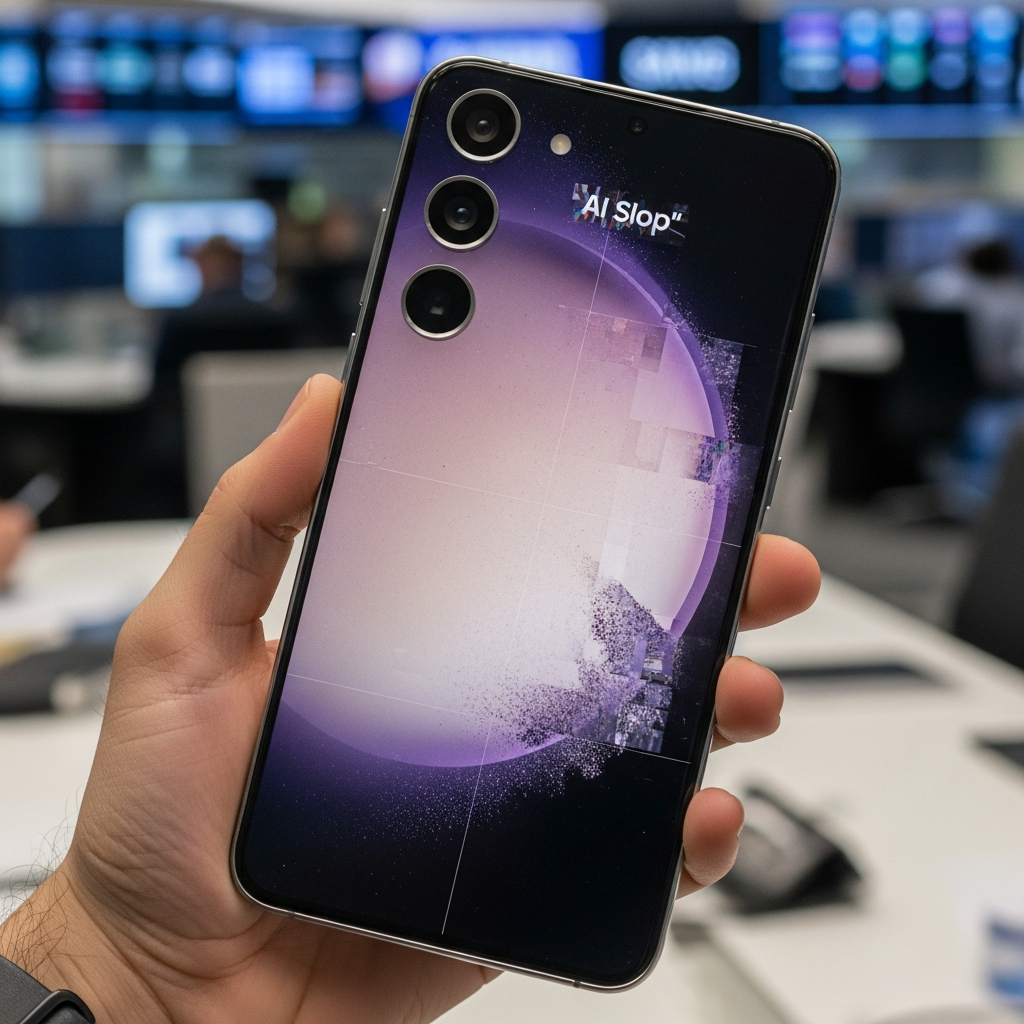
Samsung’s highly anticipated Galaxy S26 Unpacked event on February 25th, 2026, promises a fresh wave of artificial intelligence innovations for its flagship phones. As excitement builds for the S26 series, a crucial conversation is emerging about the impact of these advanced Samsung AI camera features on mobile photography. Experts are raising concerns about the rise of “AI slop,” questioning the very authenticity of images and videos generated or heavily modified by algorithms. This deep dive explores the blurring lines between reality and digital creation, and what it means for the future of your smartphone camera.
Samsung Unpacked 2026: The AI Revolution Continues
The upcoming Unpacked event is set to unveil the cutting-edge Galaxy S26 series, including the S26, S26 Plus, and S26 Ultra. Observers widely expect Samsung to push the boundaries of mobile technology even further. Reports suggest a renewed focus on AI-powered camera tools and a brighter camera system, alongside a built-in privacy mode. This intelligent feature could obscure notifications based on viewing angle, enhancing user privacy.
Anticipating the Galaxy S26 Series Innovations
Beyond the core phone lineup, new earbuds and other wearables might also debut. Samsung has been proactive, offering potential buyers a $30 promotional credit for reserving a new S26 device. This no-commitment offer, expiring before the event on February 25th, allows consumers to claim a credit for accessories. Additionally, attractive trade-in deals, potentially up to $900, aim to encourage upgrades to the new flagship series. Such aggressive marketing highlights Samsung’s confidence in its upcoming lineup.
The “Beyond Capture” Promise: A New Era?
A recent Samsung blog post promoting a “seamless Galaxy camera experience” has sparked significant debate. The post suggests mobile cameras are “moving beyond capture.” This statement implies a shift where the camera’s role extends far beyond merely recording what is physically present. Instead, it suggests a future where cameras actively create or dramatically alter scenes. This concept has ignited a critical discussion about the essence of photography itself.
Decoding “AI Slop”: A Threat to Photographic Authenticity?
The phrase “AI slop” describes the phenomenon of artificial intelligence generating content that, while visually appealing, lacks narrative depth or genuine connection to reality. It’s often seen as “empty calories” in the digital world. For cameras, this translates into an unprecedented ability to manipulate images. Such capabilities could fundamentally change how we perceive and trust photographic evidence.
What is “AI Slop” in the Context of Cameras?
Samsung’s promotional material offers a glimpse into these new generative AI capabilities. Examples include transforming a puppy’s picture into cute stickers or digitally filling in a bite from a cupcake. More dramatically, users might edit a cow in a field to appear abducted by aliens, simply by asking in natural language. While some basic editing tools already exist, the ease and generative nature of these new features are raising eyebrows. This pushes the boundaries of traditional image enhancement.
Previously, computational photography helped small phone sensors produce better images. Google Pixel phones, for instance, introduced features like “Add Me,” merging multiple photos for a combined scene. Generative AI also fills missing details during high digital zoom. These tools, though sometimes problematic, usually aim to create an image that could have happened. “AI slop,” however, moves further into creating wholly fabricated realities. It emphasizes description over direct observation.
When AI Blurs the Lines of Reality
The “beyond capture” notion suggests a perilous destination, what some call “Slopsville USA.” Here, AI no longer serves as a tool for recording reality or even enhancing memories. Instead, it transforms into a creative engine. Users could describe desired embellishments to a scene or command the camera app to create entire videos from simple prompts. This shifts away from actual photographic capture towards pure generation.
Sam Altman, a prominent figure in AI, believes the distinction between real and AI-generated content will inevitably blur. He suggests people may eventually “no longer care about the distinction.” This perspective underscores the profound implications for media literacy and trust. The concern isn’t just about minor touch-ups. It’s about a future where a photograph might bear little resemblance to its original source.
The concept of “AI slop” isn’t limited to still images. Meta AI’s “Vibes” app, for example, offers an endless scroll of AI-generated videos. Critics describe it as an “infinite slop machine.” Despite technological prowess, these clips often lack compelling storytelling, leading to viewer disengagement. They are “great eye candy” but offer “empty calories” for the brain. This illustrates how even advanced AI content can fail to resonate without narrative depth.
Samsung’s AI Advertising: A Glimpse into the Future (or a Warning Sign?)
Samsung’s aggressive integration of generative AI extends to its social media advertising campaigns. This marketing strategy offers a preview of the company’s AI vision, but also raises questions about transparency. The use of AI in these ads highlights the capabilities Samsung might bring to its devices. However, it also brings concerns about misrepresentation.
Misleading Marketing and Inconsistent Disclosures
Several Samsung promotional videos, particularly teasers for the Galaxy S26 series, show signs of extensive AI manipulation. The “Brighten your after hours” video, intended to showcase low-light performance, features shopping bags and cobblestones that appear unnaturally manipulated by AI. Although a fine print disclosure often states the content was “generated with the assistance of AI tools,” the visual evidence is sometimes clear even without it.
A critical issue is the inconsistency in these AI disclosures. While Samsung includes fine print, platforms like YouTube and Instagram haven’t always added their own AI labels to the same content. This is notable given that Samsung, Google, and Meta have adopted C2PA, an authenticity standard for AI labeling. This discrepancy creates confusion. It makes it difficult for consumers to discern what is real and what is AI-generated.
These campaigns often pose the question, “Can your phone do that?” without clarifying if the showcased content was created by Samsung’s phones or by external AI models. This practice echoes past criticisms of Samsung’s marketing. Critics argue it can mislead consumers about the true capabilities of its smartphone cameras. The broader implication is a potential erosion of trust in product demonstrations.
The Broader Implications of Generative AI in Photography
The debate surrounding Galaxy S26 AI and “AI slop” transcends mere technical innovation. It touches upon philosophical questions about art, reality, and the role of technology in mediating our experiences. Understanding these broader implications is crucial.
Redefining the Camera’s Purpose
If cameras truly move “beyond capture,” their fundamental purpose shifts. No longer just chroniclers of moments, they become co-creators of narratives. This transformation presents both exciting possibilities and significant challenges. It redefines what constitutes a “photograph” and what value we place on its authenticity. The industry must grapple with how to label, categorize, and present such generated content responsibly.
Samsung’s continuous integration of AI is not new. A previous Unpacked event in July 2025, for instance, unveiled the Galaxy Z Fold 7 and Flip 7, showcasing deep Google Gemini AI integration via One UI 8. This included features like AI Mode and Gemini Live. However, even then, a skeptical note was raised about the practical visibility of these AI features in everyday use. This suggests a challenge in making AI truly impactful and seamlessly integrated into user experience, beyond headline features.
Balancing Innovation with Authenticity
Not all AI is problematic. Some Samsung AI camera features could genuinely enhance user experience. For instance, a smart privacy screen that intelligently obscures notifications from onlookers offers clear value. The challenge lies in striking a balance. Innovation should not come at the cost of transparency and trust. The industry needs clear standards for disclosing AI-generated content. Consumers need to understand what they are seeing.
The future of mobile photography hinges on this delicate balance. As generative AI becomes more sophisticated, robust ethical guidelines and clearer labeling systems will be essential. This will help users navigate an increasingly blended digital reality. Companies like Samsung have a critical role in shaping this future responsibly.
Frequently Asked Questions
What specific new Samsung AI camera features are expected at Unpacked 2026?
At the upcoming Galaxy S26 Unpacked event on February 25th, 2026, Samsung is expected to unveil advanced AI-powered camera tools. These features might include enhanced natural language editing for transforming photos (e.g., turning puppies into stickers, filling in missing parts of images), advanced low-light video brightening, and even generative editing capabilities like placing a cow in an alien abduction scene. The core idea is to move “beyond capture,” allowing users to create or heavily modify images and videos with simple prompts.
What is “AI slop,” and why is it a concern for mobile photography?
“AI slop” refers to AI-generated content that, despite being visually competent, lacks depth, storytelling, or genuine connection to reality. In mobile photography, it raises concerns because it can create images and videos that are significantly manipulated or entirely fabricated, blurring the line between authentic capture and digital creation. This can erode trust in photographic content, making it difficult to discern what is real versus what is an AI embellishment or invention, potentially leading to a “what is a photo-pocalypse.”
How is Samsung addressing transparency regarding AI-generated content in its marketing?
Samsung has been extensively using generative AI in its social media advertisements for the Galaxy S26 and other AI-powered devices. While some of these ads include fine print disclosures stating they were “generated with the assistance of AI tools,” critics note inconsistencies. The AI manipulation can be visually obvious, yet platforms like YouTube and Instagram don’t always add their own AI labels, despite industry standards like C2PA being adopted. This inconsistency raises concerns about misleading consumers regarding the true capabilities of Samsung’s products versus external AI models.
Conclusion
The Samsung Galaxy S26 Unpacked event is poised to be a pivotal moment for mobile technology. It highlights the accelerating pace of AI integration in our everyday devices. While the promise of intuitive, powerful Samsung AI camera features is compelling, the concurrent rise of “AI slop” demands careful consideration. The debate around “beyond capture” challenges us to redefine the very essence of photography and the trust we place in visual media. As consumers, staying informed and critically evaluating the content we consume and create will be more important than ever. What do you think about AI’s role in shaping the future of your photos?