A critical NASA investigation has exposed severe shortcomings in Boeing’s Starliner program, painting a damning picture of a 2024 mission that left two astronauts stranded in space for months. This comprehensive report, released on Thursday, February 20, 2026, details a “Type A mishap” – NASA’s most severe classification – underscoring a profound breakdown in safety protocols, testing, and leadership from both Boeing and the space agency itself. The findings reveal a perilous “culture of mistrust” that jeopardized the lives of astronauts Butch Wilmore and Suni Williams.
The Starliner Incident: A “Type A Mishap” Unveiled
The events surrounding Boeing’s 2024 Starliner flight to the International Space Station (ISS) have officially been deemed a “Type A mishap.” This serious designation is reserved for incidents resulting in significant financial losses or a grave risk to crew members, including potential fatalities. The gravity of this classification mirrors that of the tragic 2003 Space Shuttle Columbia disaster, highlighting the profound risks encountered during the Starliner mission. This NASA probe into the Boeing Starliner mishap aims to prevent future occurrences.
The Critical Mission and Its Unexpected Turn
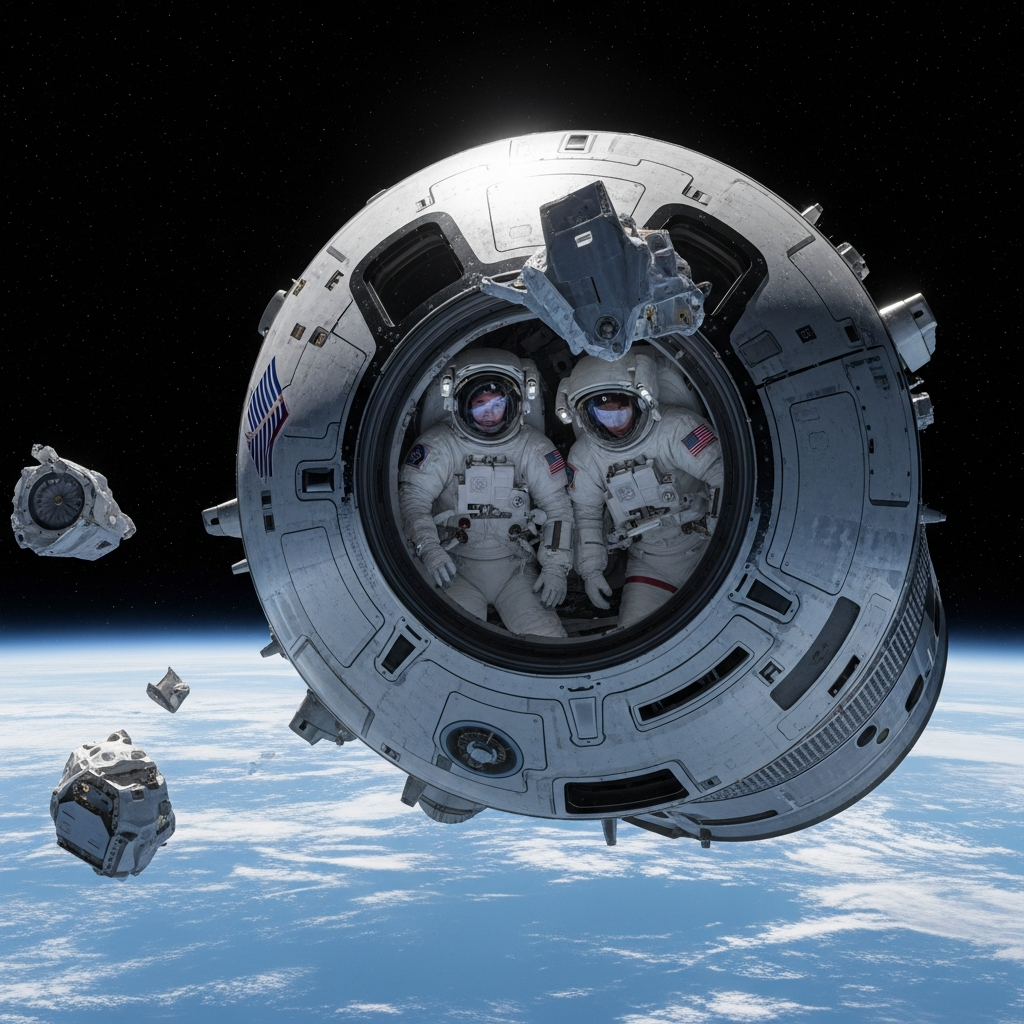
Intended as a crucial test flight, the Starliner mission launched in June 2024. Its primary goal was to demonstrate the spacecraft’s readiness for routine astronaut transport to and from the ISS. NASA astronauts Butch Wilmore and Suni Williams were aboard, expecting an eight-day journey. However, shortly after liftoff, the mission veered off course. Engineers detected multiple helium leaks within the capsule’s propulsion system. Subsequently, several thrusters malfunctioned as the spacecraft attempted to dock with the orbiting laboratory.
Unprecedented Delays and a Safe Return
What was planned as a brief test quickly became a crisis. Weeks of frantic tests and evaluations followed, as mission managers wrestled with the propulsion issues. Ultimately, NASA made the difficult decision to send the Starliner capsule back to Earth uncrewed. This left Wilmore and Williams marooned on the ISS for more than nine months, far beyond their scheduled return. They eventually returned safely in March, aboard a SpaceX Dragon capsule, alongside other crew members. Their unplanned extended stay underscored the severity of the operational failures.
Unpacking the Failures: Boeing and NASA Under Scrutiny
NASA’s blistering report meticulously outlined a series of systemic failures. It highlighted inadequate testing, severe communication breakdowns, and critical leadership deficiencies on both sides. This intense scrutiny revealed deeper issues than mere technical glitches. The investigation unearthed a pervasive atmosphere of distrust and dysfunction.
Technical Malfunctions and Operational Chaos
The report’s findings heavily criticized Boeing’s shortcomings in building and rigorously testing the Starliner spacecraft. The helium leaks and thruster malfunctions were not isolated incidents. They pointed to fundamental flaws in design and quality control. Moreover, the report described “chaotic meeting schedules” as the crisis unfolded. This suggests a lack of clear command and control during a critical space emergency. Such operational disarray posed direct risks to the mission and crew.
A Culture of Mistrust and Dismissed Concerns
Perhaps most alarming was the identification of an “intensifying mistrust” between NASA and Boeing teams. The investigation highlighted perceptions of managers on both sides being “overly risk-tolerant” and prone to “dismissing dissenting views.” This toxic “culture of mistrust” is particularly dangerous in high-stakes aerospace projects. It can lead to critical warnings being ignored, ultimately compromising safety. For complex endeavors like the Commercial Crew Program, open communication and a robust safety culture are paramount.
Shared Accountability and Future Commitments
While the report focused heavily on Boeing’s deficiencies, NASA administrators were quick to acknowledge their own share of the blame. This shared responsibility marks a significant moment for the agency. It highlights a commitment to transparency and corrective action within the program.
NASA’s Acknowledgment of Culpability
NASA Administrator Jared Isaacman, who assumed leadership in December after the mishap, stated unequivocally that “We returned the crew safely, but the path we took did not reflect NASA at our best.” He also noted that the incident fostered a “culture of mistrust.” Isaacman emphasized, “While Boeing built Starliner, NASA accepted it and launched two astronauts to space.” He added that the agency must “own our mistakes and ensure they never happen again.” Associate NASA Administrator Amit Kshatriya went further, asserting, “The agency failed them,” referring to Wilmore and Williams. He stressed the agency’s responsibility to current and future crews.
Boeing’s Response and Corrective Actions
In response to the report, Boeing issued a statement expressing gratitude for the thorough investigation. The company affirmed its commitment to improvement. “We’re grateful to NASA for its thorough investigation and the opportunity to contribute to it,” Boeing stated. The aerospace giant claimed significant progress over the past 18 months. This includes “substantial progress on corrective actions for technical challenges” and driving “significant cultural changes” within its team. These actions, Boeing asserts, directly align with the report’s findings, aiming to restore confidence in the Starliner program.
The Broader Implications for Commercial Spaceflight
The Starliner mishap carries significant implications for the future of commercial spaceflight. It underscores the inherent risks and challenges of relying on private industry for crew transport. The incident impacts not only Boeing but also the Commercial Crew Program’s reputation.
Astronauts’ Legacy and the Path Forward
The two astronauts at the heart of the incident have since retired. Butch Wilmore retired from NASA in August 2025, after 25 years and 464 days in space. Suni Williams announced her retirement last month, concluding 27 years with NASA and 608 days logged in space. Their extended stay on the ISS and subsequent safe return via SpaceX underscore the critical role of redundancy in space transport. Their retirements mark the end of distinguished careers profoundly impacted by this unexpected ordeal. NASA has confirmed that further Starliner crew flights are on hold. Administrator Isaacman firmly stated that NASA “will not fly another crew on Starliner until technical causes are understood and corrected.”
Boeing’s Troubled Track Record Beyond Starliner
This Starliner incident is the latest in a series of high-profile setbacks for Boeing. The company’s aviation division faced intense scrutiny after a panel blew out on a 737 Max 9 aircraft mid-flight. Earlier, the entire 737 Max fleet was grounded following two fatal crashes in 2018 and 2019. The Starliner program itself has had a challenging development. Its uncrewed debut in 2019 was cut short by software glitches. Subsequent fuel valve issues caused multiple delays before a successful uncrewed docking and return in 2022. This persistent pattern raises serious questions about Boeing’s quality control and corporate culture across its various divisions. This aerospace giant faces a steep climb to rebuild trust.
What This Means for Future Space Missions
The Starliner program operates under NASA’s Commercial Crew Program, launched in 2011. This initiative aimed to foster privately built space vehicles to fill the gap left by the retired Space Shuttle program. SpaceX’s Crew Dragon spacecraft, a rival in this program, has successfully conducted routine flights to the ISS since 2020. The Starliner mishap highlights the complexities and dangers inherent in human spaceflight, even with commercial partners. NASA’s commitment to corrective actions and its insistence on a full understanding of technical causes before resuming crewed flights are vital. This ensures future missions prioritize safety above all else, upholding the integrity of the Commercial Crew Program.
Frequently Asked Questions
What exactly was the “Type A mishap” designation for the Starliner incident?
The “Type A mishap” designation is NASA’s most severe classification for incidents. It is reserved for events that result in significant financial loss, severe damage to equipment, or pose a serious risk to crew members, including potential death. For the Starliner incident, this designation indicates that the extended stranding of astronauts Wilmore and Williams on the ISS, coupled with the critical technical failures (helium leaks, thruster malfunctions) and systemic issues uncovered, reached the highest level of severity in NASA’s incident reporting framework. This mirrors the gravity of the 2003 Space Shuttle Columbia disaster.
How does the Boeing Starliner program fit into NASA’s Commercial Crew Program?
The Boeing Starliner program is one of two primary initiatives under NASA’s Commercial Crew Program, which launched in 2011. The program’s goal is to partner with private companies to develop and operate spacecraft capable of ferrying astronauts to and from the International Space Station. This strategy was designed to ensure independent U.S. access to space after the retirement of the Space Shuttle fleet. While Boeing developed the Starliner, SpaceX developed its Crew Dragon spacecraft as part of the same program and has been conducting routine crewed flights since 2020. The Starliner’s issues represent a significant challenge to the program’s objectives and Boeing’s role within it.
What are the next steps for Boeing’s Starliner spacecraft before it can fly astronauts again?
Following the damning NASA report, the Starliner spacecraft cannot fly another crew until all identified technical causes are thoroughly understood and corrected. NASA Administrator Jared Isaacman explicitly stated this requirement. Boeing has acknowledged the need for “corrective actions for technical challenges” and “significant cultural changes.” Specific modifications to the Starliner’s thrusters have been in progress since late 2024. These corrections will undergo rigorous testing and verification by both Boeing and NASA. Only once NASA is fully confident in the spacecraft’s safety and reliability will a crewed flight be considered, ensuring no recurrence of the 2024 mishap.
In conclusion, the NASA report on the Boeing Starliner mishap serves as a stark reminder of the immense challenges and critical importance of safety in human spaceflight. The findings highlight the need for unwavering vigilance, robust testing, and transparent communication between all partners in the Commercial Crew Program. As NASA and Boeing work towards resolving these deep-seated issues, the future of the Starliner spacecraft—and confidence in commercial space travel—hinges on their ability to learn from these failures and implement lasting, meaningful change.