The next chapter in human spaceflight is about to unfold as NASA’s SpaceX Crew-12 mission prepares for its journey to the International Space Station (ISS). This critical mission, initially facing weather-related delays, will send four international astronauts on an eight-month scientific expedition. Aboard the resilient SpaceX Dragon spacecraft “Freedom,” these pioneers will conduct cutting-edge research, maintain the orbital laboratory, and advance humanity’s reach further into space. Get ready to explore the mission’s ambitious goals, the diverse crew, and the technical intricacies behind this landmark flight.
Mission Overview: Aboard “Freedom” to the ISS
NASA’s SpaceX Crew-12 mission is poised to launch its four-person crew to the International Space Station. This extended, eight-month stay marks the 12th crew rotation under NASA’s Commercial Crew Program. Astronauts will dive deep into scientific experiments, perform vital technology demonstrations, and handle routine station maintenance. Their work is crucial for future human exploration efforts to the Moon and Mars.
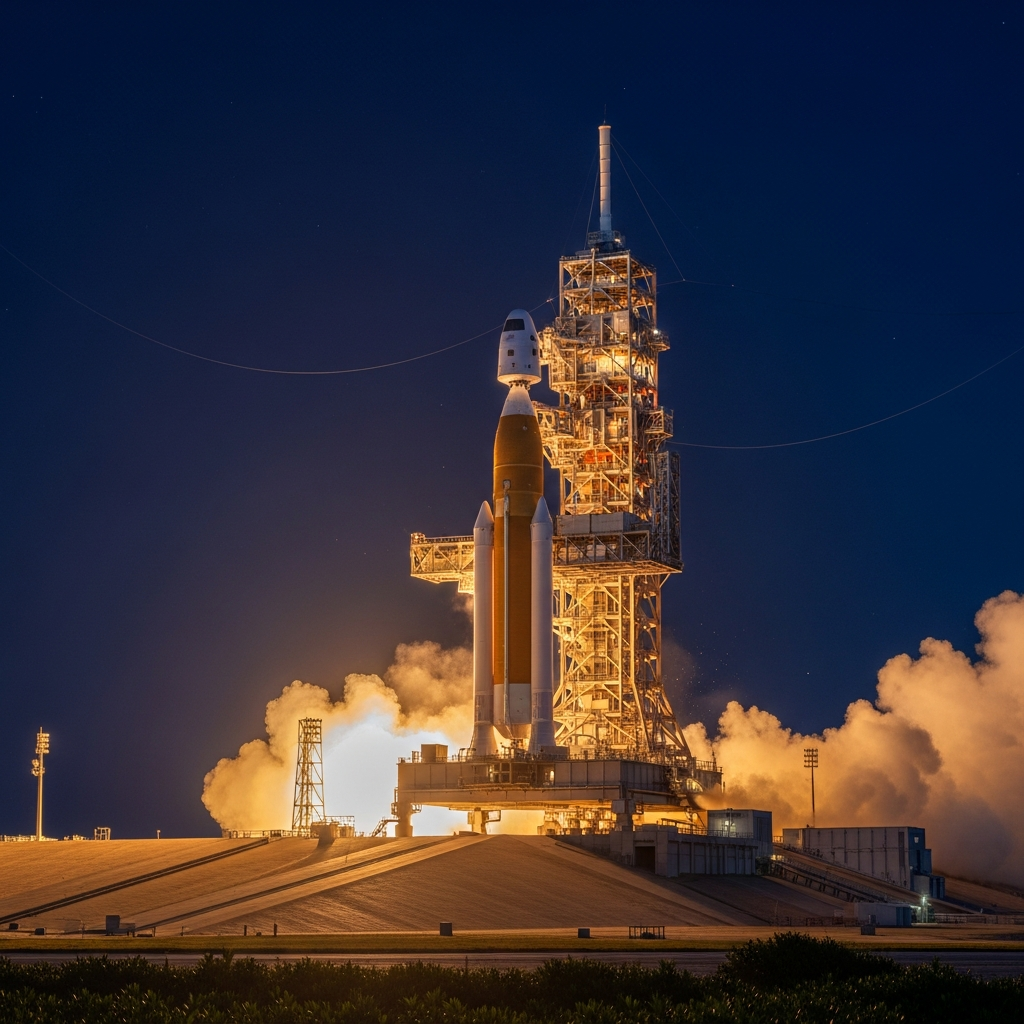
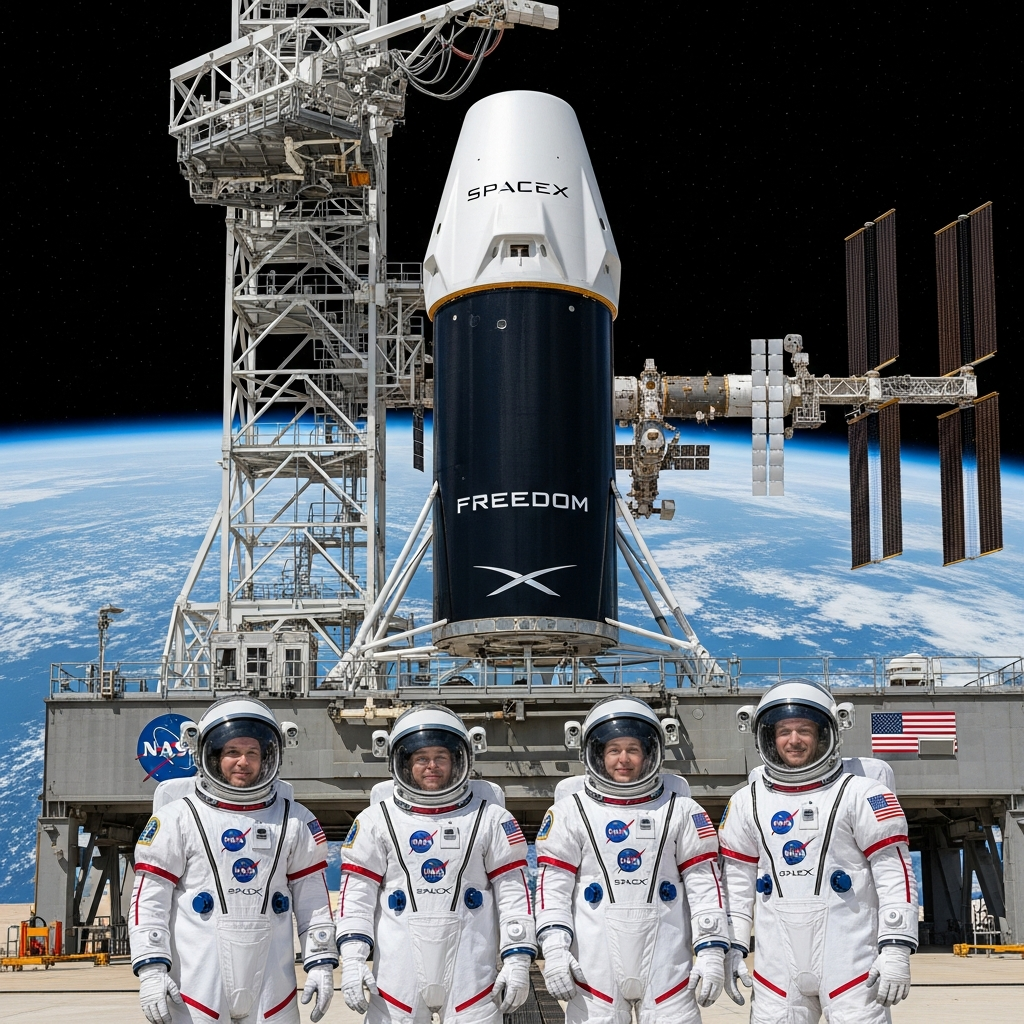
The mission will lift off from Space Launch Complex 40 (SLC-40) at Cape Canaveral Space Force Station in Florida. Powering the Crew Dragon “Freedom” into orbit will be a flight-proven SpaceX Falcon 9 rocket booster. The “Freedom” spacecraft itself is a veteran, having successfully supported previous NASA and private astronaut missions. This includes NASA’s Crew-4 and Crew-9 missions, along with Axiom Mission 2 and 3. Its reliability underscores the advancements in commercial space transportation.
The Elite Crew of Four: Pioneers of Space
The NASA’s SpaceX Crew-12 mission brings together an exceptional team of astronauts and a cosmonaut from three different space agencies. This international crew is ready to tackle the challenges and discoveries awaiting them in orbit. Upon arrival, they will join the Expedition 74 crew already on the ISS.
Commander Jessica Meir: A Veteran’s Return
Jessica Meir will command the Crew-12 mission, embarking on her second journey to the ISS. A highly accomplished NASA astronaut, Meir previously spent 205 days in space during Expedition 61/62. She notably participated in the first three all-woman spacewalks, accumulating over 21 hours outside the station. Her academic prowess includes degrees in biology, space studies, and marine biology. Between missions, Meir held key leadership roles at NASA.
Pilot Jack Hathaway: First Journey to the Stars
Jack Hathaway is making his inaugural spaceflight as the mission’s pilot. Before his selection as an astronaut in 2021, Hathaway was a U.S. Navy Commander. He boasts an impressive flight record, with over 2,500 flight hours across 30 different aircraft. His combat mission experience adds a unique layer of expertise. Hathaway also holds multiple master’s degrees in areas like flight dynamics and national security.
Mission Specialist Sophie Adenot: ESA’s Rising Star
Representing the European Space Agency (ESA), Sophie Adenot will experience her first space mission. This French engineer brings a strong background in spacecraft and aircraft flight dynamics. She also holds a Master of Science in human factors engineering from MIT. Adenot’s career includes extensive experience in helicopter cockpit design and search and rescue piloting. She further served as an experimental test pilot before her astronaut selection in 2022.
Mission Specialist Andrey Fedyaev: Roscosmos’s Experience
Andrey Fedyaev of Roscosmos will undertake his second long-duration mission to the ISS. A qualified pilot engineer and test cosmonaut since 2014, he previously flew as a mission specialist on NASA’s SpaceX Crew-6 mission. During that flight, Fedyaev spent 186 days in orbit. His distinguished service earned him the title Hero of the Russian Federation and the Yuri Gagarin Medal. His inclusion highlights ongoing international space collaboration.
Crucial Research & Benefits for Earth and Beyond
The Crew-12 mission’s extended eight-month stay enables a diverse array of scientific endeavors. These experiments are designed to push the boundaries of knowledge in space. They also aim to yield tangible benefits for life on Earth. Key research areas include:
Pneumonia-Causing Bacteria: Studies aim to develop improved treatments for this severe illness.
On-Demand IV Fluid Generation: Developing systems to produce intravenous fluids during long missions. This capability is vital for future deep space travel.
Automated Plant Health Monitoring: Implementing advanced systems to ensure plant vitality in microgravity environments.
Plant-Microbe Interactions: Investigating how plants interact with nitrogen-fixing microbes. This research seeks to enhance food production techniques in space.
- Blood Flow in Space: Exploring how physical characteristics affect blood flow during extended spaceflight. Understanding these effects is critical for astronaut health.
- www.nasa.gov
- www.space.com
- spaceflightnow.com
- www.upi.com
- www.floridatoday.com
This research aligns with NASA’s broader strategy. It leverages the ISS as a crucial testbed for human missions to the Moon and Mars.
Navigating the Skies: Launch Details & Unexpected Delays
The NASA’s SpaceX Crew-12 mission has experienced launch delays due to challenging weather conditions. Originally slated for February 11, the mission’s new target launch date is no earlier than Friday, February 13, 2026, at 5:15 a.m. EST. This underscores the rigorous safety protocols governing crewed spaceflight.
Weather Challenges and Safety First
The primary reason for the delay was unacceptable weather along the flight path. Specifically, high winds in the ascent corridor posed a significant risk. NASA’s Commercial Crew Program Manager Steve Stich emphasized the critical importance of favorable “abort weather.” This ensures that if an anomaly occurs after liftoff, the Dragon capsule can safely separate and land. Wind speeds estimated at 24 to 28 knots in “higher risk areas” prevented an earlier launch attempt. Despite the initial postponement, officials remain optimistic about launch opportunities later in the week.
Pre-Launch Preparations and System Checks
Before the launch, the Falcon 9 rocket underwent a static fire test. During this test, SpaceX engineers discovered a “sluggish” check valve on a transfer tube seal. This component was promptly replaced. A subsequent inspection revealed moisture, likely indicating ice formation, which caused a slight pressure rise. William Gerstenmaier, SpaceX vice president of Build and Flight Reliability, confirmed this was part of routine diligence. A successful “dry dress rehearsal” also took place, with the Crew-12 flight team. This rehearsal was described as “extremely smooth,” a notable achievement for only the second crew launch from SLC-40.
Strategic Launchpad Choice
The decision to launch Crew-12 from SLC-40, rather than the more frequently used LC-39A, is strategic. This choice allows LC-39A to be freed up for upcoming Starship and Falcon Heavy missions. LC-39A’s crew access arm is also undergoing maintenance for bearing repairs. While temporarily removed, it will remain as a reserve, ready for quick reinstallation if future crew flights from 39A are necessary. This flexibility highlights SpaceX’s dynamic launch operations.
Coordination across the Eastern Range is continuous. The Crew-12 mission had priority over a United Launch Alliance (ULA) Vulcan rocket launch scheduled from SLC-41. NASA confirmed no conflicts with the Artemis 2 launch campaign’s wet dress rehearsal.
Pioneering Policies: Smartphones in Space
In a historic first, NASA’s SpaceX Crew-12 mission astronauts will be permitted to bring smartphones into space. NASA Administrator Jared Issacman announced this new policy. The goal is to empower crews to “capture special moments for their families.” Additionally, it allows them to “share inspiring images and video with the world.” This initiative aims to enhance public engagement and foster a deeper personal connection to spaceflight. It marks a significant step in humanizing space exploration.
Ensuring Safety: Addressing Past Anomalies
Recent concerns arose after a SpaceX Falcon 9 rocket experienced an upper-stage anomaly. This occurred during a Starlink launch from Vandenberg Space Force Base on February 2. The incident prompted a Federal Aviation Administration (FAA) investigation, which swiftly concluded. SpaceX identified the root cause as a gas bubble in a transfer tube, affecting a third deorbit burn.
Addressing these concerns for the NASA’s SpaceX Crew-12 mission, SpaceX’s William Gerstenmaier provided clear reassurance. He stated that the Starlink incident was “unique to Starlink” and distinct from crewed missions. Gerstenmaier emphasized that crewed flights “don’t do three burns,” the specific profile that led to the issue. This clarification underscores SpaceX’s rigorous safety protocols for human spaceflight.
International Collaboration: A Legacy Continued
The International Space Station (ISS) has been continuously inhabited for over 25 years. It remains an unparalleled platform for scientific advancement. The NASA’s SpaceX Crew-12 mission exemplifies the enduring spirit of international cooperation in space. With astronauts from NASA, ESA, and Roscosmos, the mission reinforces the global commitment to space exploration. The ISS serves as a critical testbed for understanding the challenges of long-duration spaceflight. This mission allows NASA to focus its resources on deep space exploration. This includes the Artemis campaign to the Moon and future human missions to Mars.
Frequently Asked Questions
What is the main objective of NASA’s SpaceX Crew-12 mission?
The primary objective of NASA’s SpaceX Crew-12 mission is to transport four international astronauts to the International Space Station (ISS) for an eight-month scientific expedition. During their extended stay, the crew will conduct a wide range of research and technology demonstrations. These experiments are vital for preparing future human missions to the Moon and Mars, while also delivering benefits for life on Earth. Key research areas include studies on pneumonia-causing bacteria, on-demand intravenous fluid generation, and advanced plant health monitoring systems in microgravity.
Why was the NASA SpaceX Crew-12 mission launch delayed, and what are the implications?
The NASA SpaceX Crew-12 mission launch was delayed primarily due to unfavorable weather conditions along the flight path. High winds, particularly in the ascent corridor and “higher risk areas,” posed a safety concern. NASA’s Commercial Crew Program Manager Steve Stich emphasized the need for safe “abort weather” in case of an in-flight anomaly. While initial delays pushed the launch to no earlier than Friday, February 13, 2026, the careful approach prioritizes astronaut safety above all else. This flexibility in scheduling ensures optimal conditions for a successful mission.
How can I watch the NASA SpaceX Crew-12 mission launch live?
For those eager to witness the launch of NASA’s SpaceX Crew-12 mission, coverage will commence approximately two hours prior to the targeted launch time. If the mission proceeds on Friday, February 13, 2026, at 5:15 a.m. EST, live coverage will begin around 3:15 a.m. EST. You can tune in through various official channels. These include NASA+, Amazon Prime, and NASA’s official YouTube channel. These platforms provide real-time updates and expert commentary throughout the pre-launch, launch, and post-launch phases.
Conclusion: A New Chapter in Space Exploration
The NASA’s SpaceX Crew-12 mission represents a significant stride in humanity’s quest to explore beyond Earth. Despite initial weather-related launch delays, the meticulous preparations and unwavering focus on safety highlight the complexity and precision of modern spaceflight. This mission, with its diverse international crew and ambitious scientific agenda, will not only deepen our understanding of space but also contribute to innovations here on Earth. As the Falcon 9 rocket prepares to propel the Dragon “Freedom” and its pioneering crew towards the International Space Station, the world watches. This mission truly embodies the spirit of collaboration and discovery that defines our journey among the stars.