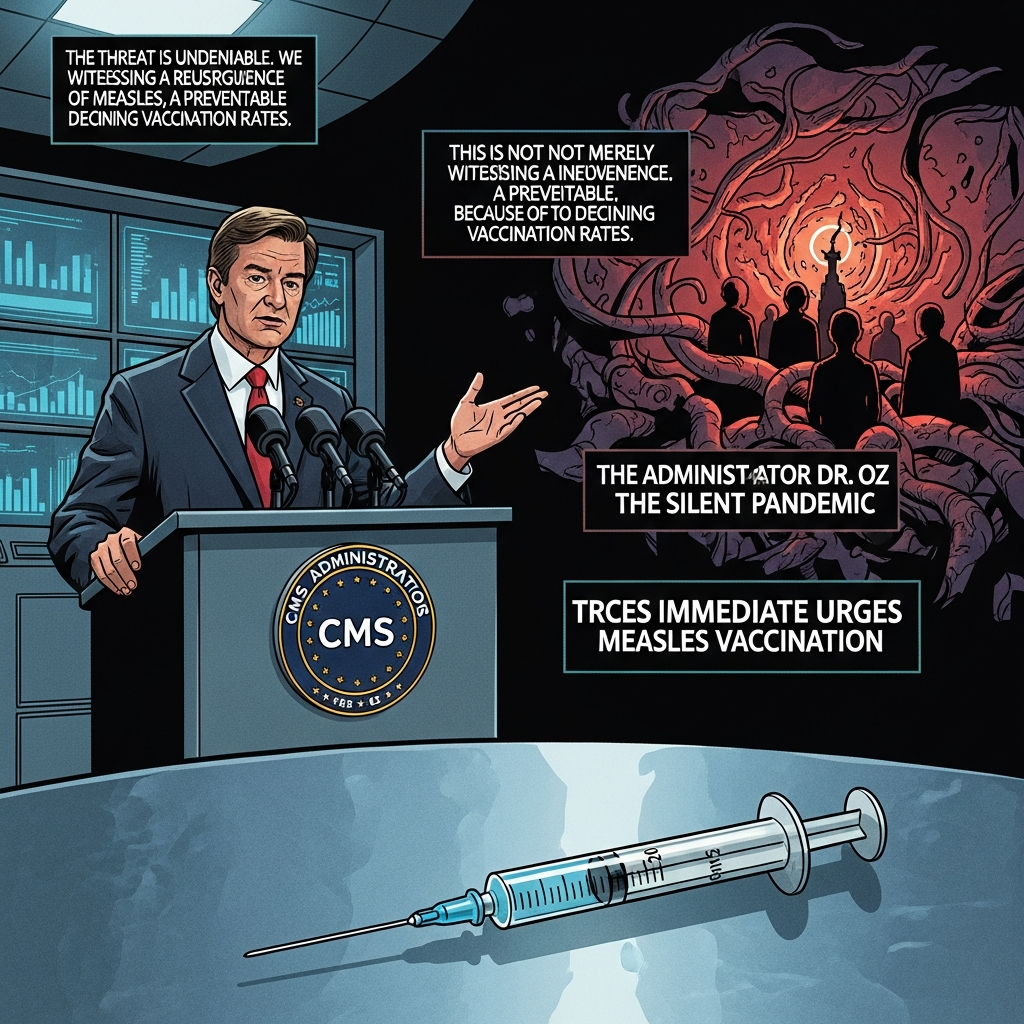
In a stark warning echoing across the nation, Dr. Mehmet Oz, Administrator of the Centers for Medicare and Medicaid Services (CMS), is making an urgent plea for Americans to get vaccinated against measles. With the highly contagious virus re-emerging in significant outbreaks across the U.S., jeopardizing the country’s measles-free status achieved in 2000, Dr. Oz emphasizes that widespread measles vaccine adoption is our most effective solution. His forceful call highlights the critical need for public action amid a concerning decline in national vaccination rates and a complex landscape of public health communication.
Dr. Oz’s Urgent Plea Amidst Rising Measles Cases
As a prominent voice in public health and a heart surgeon, Dr. Mehmet Oz issued an unequivocal directive: “Take the vaccine, please.” Speaking on CNN, he underscored the gravity of measles, highlighting it as a disease where vaccination is not just recommended, but crucial. This direct appeal from the top health official comes at a critical time. Oz also reassured the public that financial barriers should not impede access, stating that Medicare and Medicaid would continue to cover the measles vaccine as “part of the core schedule.” This strong stance provides clear guidance amidst a backdrop of mixed messages from other high-level officials regarding vaccine efficacy and safety.
The Alarming Resurgence of Measles Across the U.S.
The United States currently faces a concerning measles outbreaks resurgence, placing its hard-won measles elimination status at severe risk. Since the beginning of 2025, over 2,600 people have been infected nationwide, with cases reported in all but six U.S. states. The Centers for Disease Control and Prevention (CDC) confirmed 733 cases across 20 states by early February 2026 alone, with state health officials reporting even higher numbers.
Key outbreak hotspots illustrate the severity:
South Carolina: Documented over 900 cases, making it one of the largest U.S. outbreaks in recent history.
Texas: Experienced a significant outbreak in 2025, claiming the lives of two unvaccinated children.
Utah & Utah-Arizona Border: Reported 251 cases in 2025-26, with an ongoing outbreak in the border region.
The CDC recorded 49 outbreaks in 2025, accounting for a staggering 89% of confirmed cases that year. Crucially, statistics indicate that 95% of these cases occurred in individuals who were either unvaccinated or whose vaccination status was unknown. The virus predominantly affects children, with 28% of national cases in children under five and 57% in those aged 5 to 19. Tragically, three measles-related deaths were reported nationally last year, underscoring the lethal potential of this preventable disease.
Understanding the Measles Threat and Its Complications
Measles is far more than just a rash; it is a highly contagious viral illness posing significant health risks. Characterized by fever, cough, runny nose, red eyes, and a widespread rash, its danger lies in its ease of transmission and potential for severe complications. The virus can linger in the air for hours after an infected person coughs or sneezes, allowing others to become infected without direct contact.
While most people recover, the disease can lead to serious, life-threatening outcomes, especially for the very young and older adults. These complications include pneumonia (a leading cause of measles-related death) and brain swelling, which can cause permanent neurological damage or be fatal. Dr. Oz unequivocally stated that people should “fear” measles, directly countering narratives that downplay its severity. This highlights the critical need for effective prevention through vaccination.
The MMR Vaccine: A Proven Defense Against Measles
The MMR vaccine (Measles, Mumps, and Rubella) stands as the gold standard for measles prevention. This highly effective vaccine is typically administered to children in two doses:
The first dose is given between 12 and 15 months of age.
- A second, booster dose follows between 4 and 6 years of age.
- www.usatoday.com
- www.pbs.org
- gvwire.com
- www.thewrap.com
- www.deseret.com
Experts confirm the vaccine’s impressive efficacy, with approximately 97% effectiveness in preventing infection after a full course. Furthermore, the protection offered is long-lasting. Dr. Paul Offit, Director of the Vaccine Education Center at Children’s Hospital of Philadelphia, firmly states that “The measles vaccine protects you for the rest of your life.” This expert consensus directly refutes past suggestions of the vaccine being “leaky” or its effectiveness waning over time, reinforcing its crucial role in public health.
The Dangerous Decline in U.S. Vaccination Rates
A significant factor contributing to the current measles outbreaks US is a worrying decline in national vaccination rates. CDC data shows a drop in measles vaccination coverage among kindergartners from 95.2% during the 2019-2020 school year to 92.5% in the 2024-2025 school year. This decline is critical because a vaccination rate of at least 95% is typically required to achieve herd immunity, which protects vulnerable individuals who cannot be vaccinated due to age or medical conditions. The U.S. is now “well under the threshold necessary for effective herd immunity.”
This drop in uptake coincides with an all-time high in children with vaccine exemptions. Infectious disease experts warn that increasing public distrust in vaccines generally, fueled by misinformation and post-COVID pandemic polarization, directly contributes to the resurgence of preventable diseases like measles.
Navigating Conflicting Messages from Top Officials
Dr. Oz’s clear call for vaccination stands in stark contrast to a broader pattern of “discordant and at times contradictory statements” from within the current administration. Health and Human Services (HHS) Secretary Robert F. Kennedy Jr., a known vaccine skeptic, has often delivered ambiguous messages. While he has encouraged measles vaccination, he has also coupled these statements with reminders that it’s a personal choice or raised concerns about vaccine safety.
Kennedy’s past activism, including leading the anti-vaccine group Children’s Health Defense, and his claims about vaccine components or a non-existent link between vaccines and autism, have drawn considerable scrutiny. His administration notably instructed the CDC to abandon its position that vaccines do not cause autism and reduced the number of universally recommended childhood vaccines. These actions, combined with President Donald Trump’s past assertions about vaccine links to autism and requests to review international vaccine approaches, have created a confusing environment. Critics, like infectious disease expert Michael Osterholm, describe such messaging as “taking a garden hose to a forest fire,” arguing it actively sows distrust. This complexity underscores the immense challenge of effective public health communication during a crisis.
Frequently Asked Questions
Why is Dr. Mehmet Oz so strongly urging measles vaccination now?
Dr. Mehmet Oz, as the Administrator of the Centers for Medicare and Medicaid Services (CMS), is making an urgent plea for measles vaccination due to escalating outbreaks across the U.S. The nation has seen over 2,600 cases since early 2025, with major outbreaks in states like South Carolina (over 900 cases). This resurgence threatens to reverse the U.S.’s measles-free status achieved in 2000. Oz’s direct and unequivocal call provides crucial clarity amidst declining vaccination rates and conflicting public health messages from other officials, emphasizing the immediate need for robust protection against this dangerous, highly contagious virus.
Is the measles vaccine readily accessible and financially covered for Americans?
Yes, Dr. Mehmet Oz has explicitly assured the public that the measles vaccine is readily accessible and that financial barriers should not prevent Americans from receiving it. He stated that Medicare and Medicaid would continue to cover the MMR vaccine as “part of the core schedule.” This commitment aims to ensure that cost and access do not hinder efforts to curb the ongoing outbreaks. Individuals should consult their healthcare provider or local public health department to confirm vaccine availability and specific insurance coverage details.
How effective and safe is the MMR vaccine, given some public concerns?
The MMR (Measles, Mumps, Rubella) vaccine is highly effective and safe, providing robust, long-term protection against measles. After two doses, it is approximately 97% effective. Medical experts, including Dr. Paul Offit, confirm that a full course of the MMR vaccine confers lifetime protection, directly refuting misinformation about its efficacy waning over time or being a “leaky vaccine.” Despite past skepticism from some public figures and claims about safety issues, established scientific consensus overwhelmingly supports the MMR vaccine as a critical and safe tool for preventing measles, a potentially fatal disease.
Restoring Public Trust and Prioritizing Health
The current measles vaccine recommendation from Dr. Oz serves as a critical reminder of the importance of evidence-based public health guidance. The period following the COVID-19 pandemic saw increased polarization around vaccine policy, fostering misinformation and distrust. Restoring public confidence requires consistent, clear, and unified messaging from all health leaders, grounded firmly in scientific consensus.
The re-emergence of measles, a disease once considered eradicated in the U.S., underscores the fragility of public health achievements when vaccination rates decline. Prioritizing widespread vaccination is not merely an individual health choice; it is a collective responsibility essential for protecting community health and maintaining herd immunity. By heeding expert advice and ensuring high vaccination coverage, the nation can effectively combat this preventable threat and safeguard its measles-free future.