In a striking display of cultural counter-programming, Turning Point USA (TPUSA) launched its “All-American Halftime Show” during Super Bowl LX, offering millions of viewers an alternative to the official NFL entertainment. This ambitious event, a direct response to the selection of global superstar Bad Bunny for the traditional halftime slot, blended patriotic performances with a profound tribute to TPUSA’s late founder, Charlie Kirk. Orchestrated with support from conservative media and political figures, the show aimed to champion themes of faith, family, and freedom, drawing significant online viewership and sparking widespread discussion across the cultural landscape.
The Genesis of a Rival Spectacle: Why TPUSA Counter-Programmed Super Bowl LX
The decision by Turning Point USA to stage its own halftime show stemmed from a contentious cultural moment. Following the NFL’s announcement of Bad Bunny, a proud Puerto Rican artist known for performing in Spanish, as the Super Bowl LX halftime headliner, a wave of conservative backlash emerged. Reports suggested that comments attributed to Bad Bunny, reportedly telling those “peeved” by his inclusion to “learn Spanish,” further fueled the controversy. This ignited TPUSA’s resolve to create a distinct, “all-American” entertainment option.
Organized in October, this hour-long conservative spectacle was not merely entertainment; it was a deliberate political and cultural statement. The event garnered significant backing from the Trump administration and a network of conservative media hubs, which widely simulcast the performance. For TPUSA, and notably for the late Charlie Kirk, the Super Bowl halftime show had long been recognized as a pivotal platform to “win the culture”—a posthumous rationale that profoundly shaped this counter-programming initiative.
A Poignant Tribute: Honoring Charlie Kirk’s Legacy
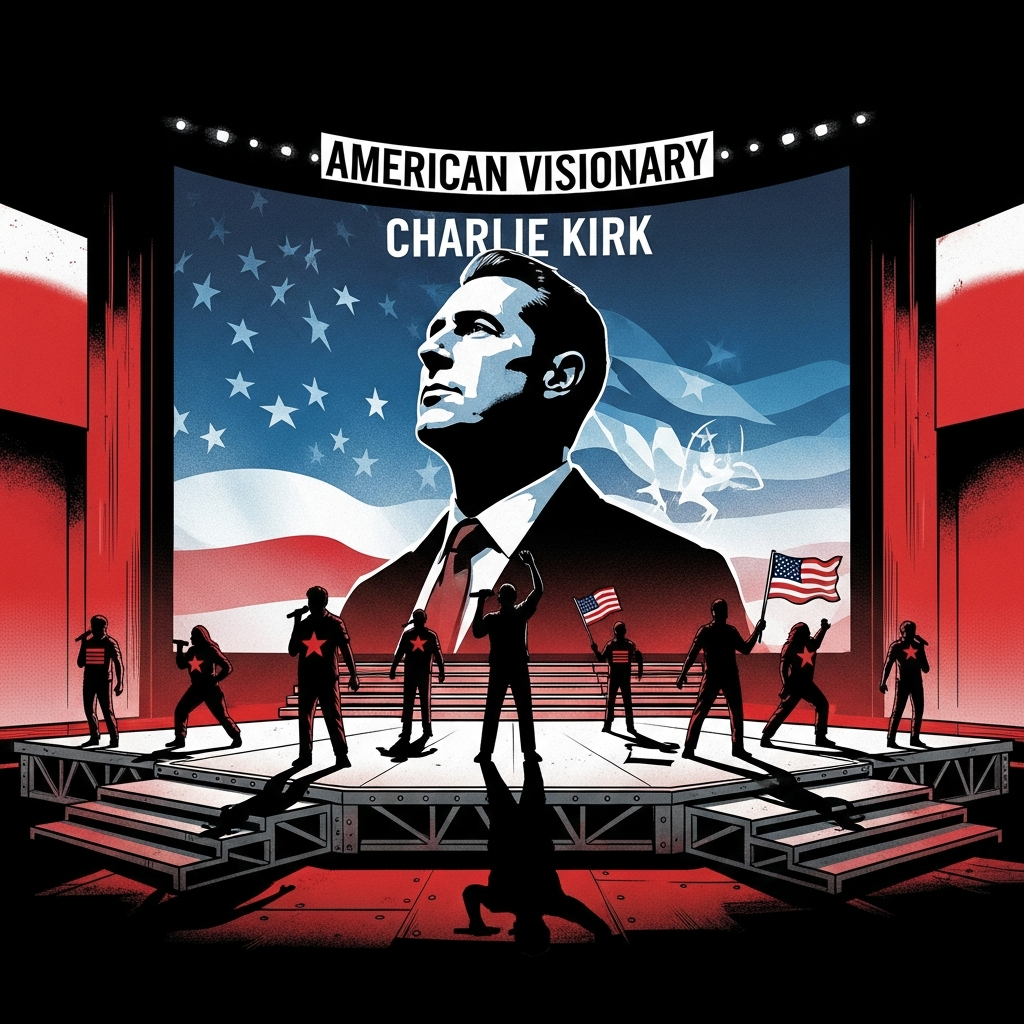
Central to the “All-American Halftime Show” was a heartfelt tribute to Turning Point USA’s founder, Charlie Kirk, who was tragically assassinated in September during a speech on the campus of Utah Valley University. The show’s opening segment, dedicated by host Jack Posobiec, set a solemn yet celebratory tone. During Kid Rock’s closing performance, a poignant moment unfolded as photos of Kirk, alongside his wife Erika and their children, flashed across massive video boards encircling the stage.
Emblazoned with the message, “In remembrance of Charlie Kirk,” these visuals were accompanied by excerpts from one of the conservative activist’s speeches. Lee Brice also paid tribute, noting that Kirk “gave people microphones so they could say what’s on their mind.” This segment underscored Kirk’s enduring influence on the conservative movement and TPUSA’s commitment to honoring his vision for empowering young conservatives.
The Performers and Their “Real American” Message
The “All-American Halftime Show” featured a lineup of prominent country and rock artists, each delivering performances infused with patriotic and conservative themes. The roster included Kid Rock, Brantley Gilbert, Lee Brice, and Gabby Barrett, whose sets were amplified by TPUSA’s signature pyrotechnics and stagecraft.
Brantley Gilbert kicked off the musical segment, declaring, “This is real American” while sporting a “God, family, country” T-shirt. Gilbert, a recovering addict and a Christian, shared his personal journey and dedication to supporting military families, resonating with an audience that values traditional American narratives. Kid Rock, a vocal supporter of Donald Trump, opened his set with an electric guitar rendition of “America the Beautiful,” later performing hits like “Bawitdaba” and a cover of Cody Johnson’s “‘Til You Can’t,” during which attendees waved light-up wristbands. Lee Brice’s set included songs like “Drinking Class” and “Country Nowadays,” the latter with lyrics reflecting “small-town views.” Gabby Barrett contributed her popular hits “I Hope” and “The Good Ones.”
Audience Engagement and Conservative Affirmation
The “All-American Halftime Show” successfully captivated a significant audience, with its YouTube livestream peaking at over 5 million viewers at one point and consistently drawing millions throughout its broadcast. The event was widely promoted and simulcast across a network of conservative media outlets, including Fox News Digital, Daily Wire+, Rumble, and OAN News, solidifying its reach within the conservative sphere.
High-profile conservative figures, such as War Department Secretary Pete Hegseth, publicly affirmed their viewership, further validating the event’s cultural standing among its target demographic. Andrew Kolvet of Turning Point USA articulated the show’s intent in a news release, stating it was “an opportunity for all Americans to enjoy a halftime show with no agenda other than to celebrate faith, family and freedom,” aiming to provide “fun, excellent and exciting” family entertainment. This narrative strongly contrasted with former President Trump’s swift and severe critique of Bad Bunny’s official performance, which he denounced on Truth Social as “absolutely terrible” and “an affront to the Greatness of America,” citing the Spanish lyrics as unintelligible and the dancing as “disgusting.”
The Cultural Divide: TPUSA’s Vision Versus the NFL’s Choice
The “All-American Halftime Show” was fundamentally a response to a perceived cultural divide, offering a specific vision of American identity that contrasted sharply with the inclusivity embodied by Bad Bunny’s performance. While TPUSA framed its event as a patriotic celebration of traditional values, critics viewed it as a politically motivated counter-statement fueled by discomfort with non-English performances and diverse representation.
Bad Bunny, an American citizen from Puerto Rico and the biggest artist on the planet, presented a Super Bowl show that many celebrated for its vibrant visual storytelling and diverse imagery, depicting “people living the American dream” through scenes of workers, elderly individuals, female friendships, and unabashed joy. His performance, predominantly in Spanish, concluded with a powerful message: “The only thing more powerful than hate is love.” This stood in stark contrast to the TPUSA event, which, despite its claims of “no agenda,” was widely interpreted by some as built upon divisive rhetoric and opportunism. The live chat during TPUSA’s livestream was notably inundated with disruptive “bunny emojis,” reflecting the polarized public sentiment surrounding these rival spectacles.
Behind the Scenes: Motivations, Critiques, and Misinformation
The motivations behind the “All-American Halftime Show” were multifaceted. TPUSA aimed to provide an entertainment option that resonated with conservative values, filling a perceived void left by mainstream entertainment. However, the event also faced scrutiny. Critics, such as those from Variety, described the TPUSA show as “slapdash” and “half-hearted,” questioning the production quality and suggesting some artists were primarily cultivating a niche MAGA audience. Kid Rock’s political evolution, from a more varied career to a staunch Trump supporter, was also noted as a shift influenced by a decline in his musical career post-2015, with some characterizing his continued political engagement as “riding that wave of partisan relevancy” and “grifting.”
Interestingly, a key piece of misinformation surrounding the Super Bowl LX halftime controversy was the viral rumor that Bad Bunny would wear a dress during his performance. This “false quote,” widely spread on right-wing social media, was fact-checked by outlets like TMZ, clarifying that while Bad Bunny is known for his unique fashion sense and support for LGBTQIA+ issues, he would not be wearing a gown for the Super Bowl. This highlights the environment of rumor and heightened emotion that surrounded both the official and the alternative halftime shows.
Frequently Asked Questions
What exactly was the “All-American Halftime Show” and why was it created?
The “All-American Halftime Show” was an alternative concert organized by Turning Point USA (TPUSA) to run concurrently with the official Super Bowl LX halftime show. It was created in direct protest of the NFL’s selection of Bad Bunny, a Puerto Rican artist, to headline the main event. TPUSA aimed to provide a “no agenda,” family-friendly entertainment option that celebrated “American faith, family and freedom,” appealing to conservative viewers who felt unrepresented by mainstream entertainment choices.
Who performed at TPUSA’s “All-American Halftime Show” and what was their message?
The event featured country and rock artists Kid Rock, Brantley Gilbert, Lee Brice, and Gabby Barrett. Their performances were infused with patriotic themes. Brantley Gilbert declared, “This is real American,” and spoke about his faith, recovery, and support for the military. Kid Rock performed “America the Beautiful” and other hits, while Lee Brice paid tribute to Charlie Kirk. The overarching message was one of traditional American values, patriotism, and a celebration of faith, family, and freedom.
How did the “All-American Halftime Show” compare to the official Super Bowl LX halftime performance by Bad Bunny?
The “All-American Halftime Show” positioned itself as a conservative counter-narrative, focusing on traditional American themes and country music. In contrast, Bad Bunny’s official Super Bowl performance, predominantly in Spanish, was celebrated for its inclusive and joyful vision of America, featuring diverse visuals and a message of love and unity. While TPUSA’s event attracted millions of viewers, critics often characterized it as commercially driven and “slapdash,” contrasting it with the high production value and global appeal of the NFL’s choice. The two shows represented a stark cultural and political divide in American entertainment.
Conclusion
The “All-American Halftime Show” by Turning Point USA during Super Bowl LX stands as a significant moment in the intersection of American culture, entertainment, and politics. It not only provided an alternative viewing experience but also served as a powerful statement on national identity and cultural values. By offering a platform for conservative artists and honoring its founder, Charlie Kirk, TPUSA effectively created a parallel event that resonated deeply with its intended audience, showcasing the persistent cultural divide within the United States. The show’s success in drawing millions of viewers underscores the demand for ideologically aligned entertainment and highlights the ongoing conversation about what truly represents “all-American” in a diverse nation.