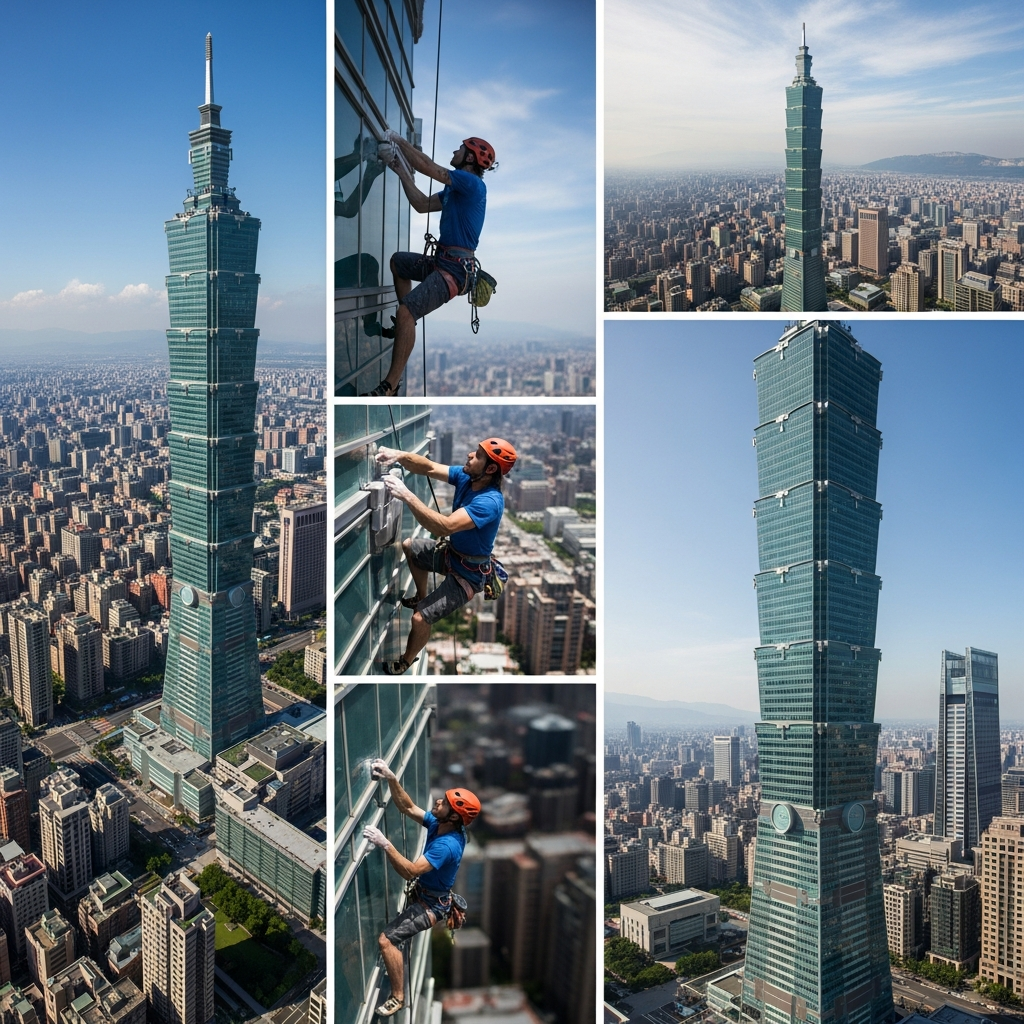
On Sunday, January 25, 2026, the world witnessed an astonishing display of human daring as American rock climbing legend Alex Honnold successfully free soloed the iconic Taipei 101 skyscraper in Taipei, Taiwan. This monumental achievement saw Honnold ascend the colossal 508-meter (1,667-foot) structure without any ropes or protective gear, marking a historic first for the landmark. His rope-free ascent of Taipei 101 captivated millions globally, streaming live on Netflix and solidifying his status as the most audacious climber of his generation. The event sparked both widespread awe and a vital discussion on the ethics of such high-risk endeavors.
The Unbelievable Ascent of Taipei 101
Honnold’s incredible journey to the summit began on the skyscraper’s southeast face. He moved with a practiced, almost balletic precision, using small L-shaped outcroppings and horizontal metal beams for footholds and handholds. The entire ascent took approximately 90 minutes, culminating in cheers from a vast street-level crowd as he waved from the spire, a red short-sleeve shirt flapping in the wind. “It was like what a view, it’s incredible, what a beautiful day,” Honnold remarked afterward, acknowledging the significant wind conditions at the top that demanded careful balance. His wife, Sanni, was among the relieved spectators below and met him near the top with a heartfelt kiss, a testament to the personal stakes involved.
Navigating the “Bamboo Boxes” and Beyond
The architectural marvel of Taipei 101, designed to resemble stalks of bamboo, presented a unique set of challenges. Honnold specifically identified the building’s middle 64 floors, affectionately known as the “bamboo boxes,” as the most arduous section. These are structured into eight distinct segments, each featuring eight floors of steep, overhanging climbing. Interspersed within these challenging vertical stretches were balconies, providing brief but essential moments for Honnold to rest and regain his composure. He deftly maneuvered around large, ornate structures jutting from the tower, pulling himself upward with the sheer strength of his bare hands. Interestingly, one section of the climb reportedly required a ladder, indicating a planned aid point where free climbing was deemed impossible without it.
A Decade-Long Dream Realized
For Honnold, the Taipei 101 free solo was not merely another climb; it was a “lifelong dream” and a “singular objective” he had contemplated for over a decade. He considered it the “biggest urban free-solo climb” ever attempted, drawing parallels to his legendary ropeless ascent of El Capitan. Honnold, now 40, had undergone months of rigorous training specifically for this feat, even practicing moves on the building itself to ensure he was fully prepared. Prior to the event, he expressed a surprising sense of calm, stating he didn’t anticipate it to be “that extreme” and viewed it as a “perfect sweet spot” for an engaging climb, highlighting his profound confidence and meticulous preparation.
From Yosemite to Taipei: Honnold’s Unique Vision
Alex Honnold first gained international acclaim in 2017 for his unprecedented free solo of El Capitan in Yosemite National Park, a feat immortalized in the Oscar-winning documentary “Free Solo.” This achievement redefined the boundaries of human endurance and mental fortitude in climbing. The Taipei 101 ascent underscores his unparalleled commitment to the most extreme form of climbing, showcasing a mental resilience and physical prowess that few can comprehend. While his usual climbs are in remote, natural settings, the urban environment of Taipei 101, with its massive cheering crowds, presented a novel psychological dimension. Initially finding the intense public gaze “unnerving,” he ultimately found the supportive atmosphere “festive.”
Behind the Live Broadcast: Netflix and Safety Protocols
The high-stakes event, initially slated for Saturday but delayed 24 hours due to rain, was broadcast live on Netflix under the title “Skyscraper Live,” with a crucial 10-second delay for U.S. viewers. This real-time coverage brought an unprecedented level of public engagement but also ignited significant ethical debate. James Smith, executive producer for Plimsoll Productions, detailed the extensive safety measures in place. Risk management specialists from Secret Compass were immediately consulted. Honnold maintained communication with Smith throughout the climb, while camera operators inside the building and four high-angle camera operators suspended on ropes provided close-up shots and vital monitoring. Professional weather forecasters were on standby, with a strict “no-climb” policy in adverse conditions.
Ethical Debates and Public Reaction
The decision to broadcast such a dangerous undertaking live, especially with Honnold now being a married father of two young girls, fueled considerable discussion. Subbu Vincent, director of media and journalism ethics at Santa Clara University, emphasized the importance of a “back-off clause” for Honnold and ensuring production elements didn’t amplify the already immense risk. He strongly advocated for the broadcast delay, arguing it was unethical to continue broadcasting if an accident occurred. Concerns also arose about the potential influence on impressionable youth, echoing past debates around daredevil stunts. Despite these concerns, Jeff Smoot, author of “All and Nothing: Inside Free Soloing,” views free soloing as a “meditative art form” within climbing culture, acknowledging the public’s fascination with its inherent danger. In Taiwan, Honnold is a household name, and the climbing community expressed immense excitement and trust in his preparation.
More Than a Climb: Inspiring the World
Alex Honnold articulated his hope that this extraordinary achievement would inspire others. He believes witnessing such a profound challenge can provide individuals with “the kick they need” to pursue their own goals, reminding them of life’s finite nature and the importance of meaningful pursuits. The event garnered immense public admiration, with onlookers describing it as a “once-in-a-lifetime experience” and “incredibly brave,” though some found it “terrifying.” Taipei 101 management and the city government fully supported the endeavor, a rarity noted by James Smith. Taiwanese politicians, including President Lai Ching-te, lauded Honnold and Netflix for shining a global spotlight on Taiwan, showcasing the nation’s warmth, passion, and beautiful scenery, moving beyond conventional headlines.
A Legacy of Daring: Honnold vs. Robert
While Alex Honnold is the first to free solo Taipei 101, he is not the first climber to scale its impressive heights. French rock climber Alain Robert, famously known as the “French Spiderman,” ascended the building on Christmas Day in 2004 as part of its grand opening. However, Robert did so with ropes, a climb that took nearly four hours and was hampered by an injured elbow, wind, and rain. Robert, understanding Honnold’s unique challenge, offered his congratulations, expressing that he “didn’t worry at all” about Honnold’s attempt, recalling his own difficult experience despite using aid. Honnold’s rope-free feat undeniably pushes the boundaries of urban climbing further than ever before.
Frequently Asked Questions
What makes Alex Honnold’s Taipei 101 ascent unique compared to previous climbs?
Alex Honnold’s climb of Taipei 101 on January 25, 2026, is unique because it was a “free solo” ascent, meaning he used no ropes, harnesses, or protective equipment whatsoever. While French climber Alain Robert had previously scaled Taipei 101 in 2004, he did so with the aid of ropes and safety gear. Honnold’s feat marks him as the first individual to conquer the 508-meter skyscraper entirely unassisted, relying solely on his physical and mental capabilities.
How did Alex Honnold manage the challenging sections of Taipei 101 during his free solo climb?
Honnold navigated the Taipei 101 skyscraper by utilizing small L-shaped outcroppings and horizontal metal beams on the building’s facade for handholds and footholds. The most difficult part was the middle 64 floors, dubbed the “bamboo boxes,” characterized by eight segments each with eight floors of steep, overhanging climbing. He strategically used balconies for short rests. He also skillfully maneuvered around large ornamental structures that jutted from the tower, occasionally needing a ladder for sections where natural holds were unavailable.
What ethical debates and safety measures surrounded the live Netflix broadcast of Honnold’s Taipei 101 climb?
The live Netflix broadcast of Alex Honnold’s high-risk free solo generated significant ethical discussion, particularly regarding the inherent dangers and Honnold being a married father of two. Producers implemented extensive safety measures, including a 10-second broadcast delay for U.S. viewers, constant communication with Honnold, the deployment of high-angle camera operators who also monitored him, and strict “no-climb” rules for unsafe weather. Experts like Subbu Vincent advocated for a “back-off clause” and the ethical imperative to cease broadcasting immediately if an accident occurred.
Conclusion
Alex Honnold’s historic free solo of the Taipei 101 skyscraper is more than just a remarkable athletic accomplishment; it’s a profound statement on human potential and the pursuit of extraordinary dreams. By facing one of the world’s most iconic urban structures without a rope, Honnold has once again redefined what is possible, inspiring countless individuals to confront their own challenges. This audacious ascent, broadcast globally, has not only etched his name further into the annals of climbing history but has also ignited vital conversations about risk, media, and the inspiring, sometimes terrifying, boundaries of human ambition. It serves as a powerful reminder of the enduring allure of pushing limits, whether on a granite wall or a towering skyscraper.