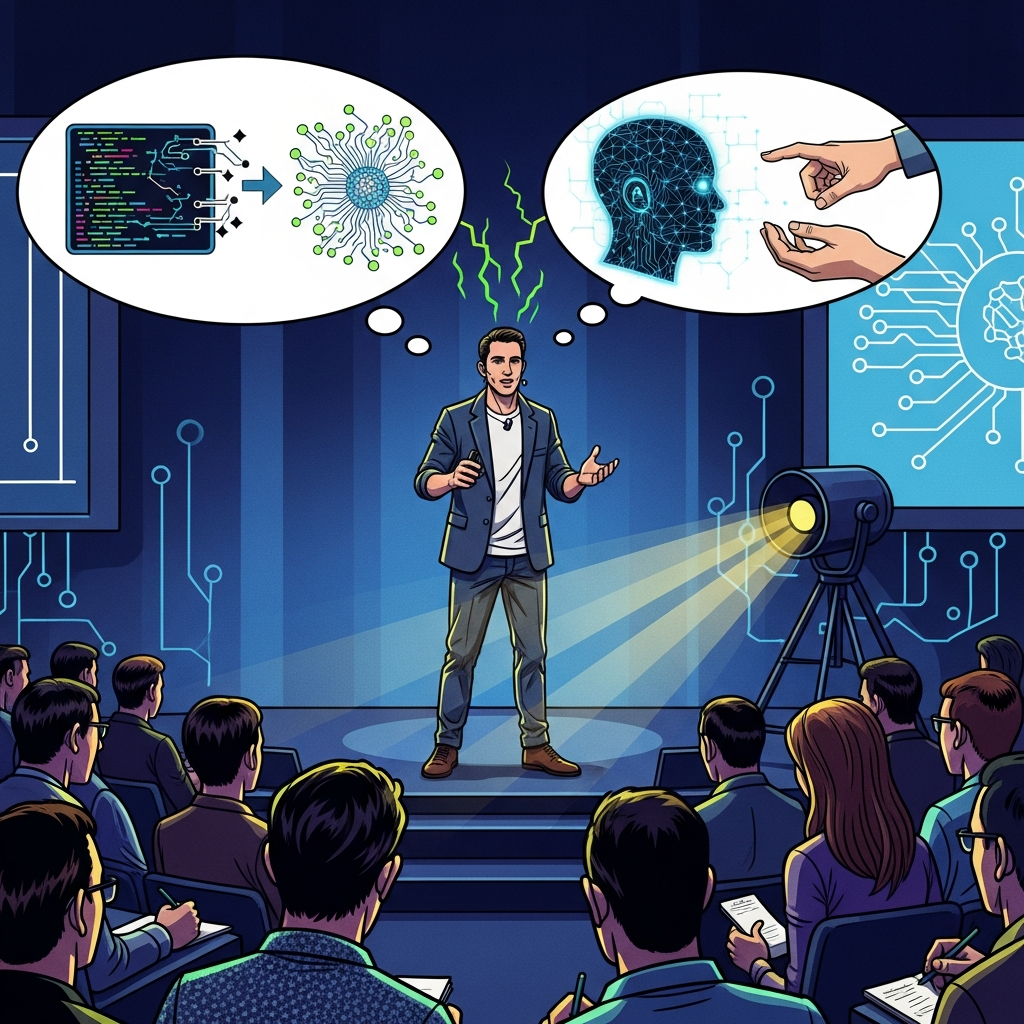
The world of software development is on the brink of a monumental shift, according to tech visionary Ryan Dahl. Dahl, the brilliant mind behind Node.js and Deno, posits a future where traditional programming, as we know it, is becoming obsolete. He provocatively suggests that “programming is dead”—not in the sense of disappearing entirely, but fundamentally transforming. This isn’t a doomsday prediction, but rather a compelling forecast about artificial intelligence (AI) stepping into the lead role of code creation.
By early 2026, AI tools are expected to move beyond simple assistance. Instead, they will actively drive software development. This redefines how code is built, maintained, and scaled across the industry. Human developers, far from being replaced, will see their roles evolve towards higher-level cognitive tasks.
The Core Argument: AI Reshapes Software Creation
Ryan Dahl’s bold statement isn’t about code vanishing. It signals the end of manually writing code line-by-line. Machines now achieve in seconds what once took human teams months. This rapid acceleration, fueled by AI, frees up developers from tedious, repetitive tasks. It marks a paradigm shift that some engineers, accustomed to syntax-focused coding, might find “disturbing.” However, it presents an unparalleled opportunity for innovation.
The shift means human programmers must redirect their valuable skills. Their future lies in strategic design, complex system architecture, and critical oversight of AI-generated code. This evolution demands adaptability, continuous learning, and a broader approach to problem-solving.
Why Humans Remain Irreplaceable in the AI Era
Despite AI’s growing prowess, Dahl firmly believes it won’t render human developers redundant. In fact, human skills will become even more precious. AI algorithms excel at low-level, repetitive programming. This liberates human developers to concentrate on their unique strengths: creativity, advanced problem-solving, and critical thinking.
The industry’s leading voices echo this sentiment. Even Geoffrey Hinton, often called the “Godfather of AI,” predicts AI will displace millions of workers. However, he agrees that tasks requiring creativity, strategy, and management will remain firmly in human hands. The future of software development hinges on humans and AI working symbiotically.
AI in Action: The Industry’s Rapid Transformation
AI’s impact on coding isn’t a distant future; it’s happening now. Leading tech giants are already leveraging AI to produce significant portions of their software.
Google and Microsoft report approximately 30% of their production code receives AI assistance or is directly developed by AI.
Anthropic, the company behind Claude Code, claims nearly 80% of code produced using its tool is AI-generated. Human involvement focuses on control and handling exceptions.
These statistics underscore a widespread industry shift. AI is quickly becoming a primary source for code. This redefines the roles of human programmers to guiding, validating, and innovating. Developers must remain dynamic, engaging in tasks that necessitate human judgment, ethics, and design thinking.
Beyond Code: Ryan Dahl’s Asynchronous Philosophy at Deno
Ryan Dahl’s vision for programming’s future isn’t his only profound contribution. As the co-founder and creator of both Node.js and Deno, Dahl has consistently championed an “asynchronous” philosophy. This approach has deeply influenced both his groundbreaking engineering work and his unique company management style at Deno.
Node.js, Dahl’s initial creation, revolutionized server-side JavaScript with its non-blocking I/O and asynchronous processing. He calls bringing asynchronous sockets and non-blocking I/O to the mainstream his “claim to fame.” Later, reflecting on Node.js’s development, Dahl created Deno. Deno is a modern JavaScript, TypeScript, and WebAssembly runtime built upon the V8 engine and Rust. It offers a contemporary design, embodying the asynchronous principles Dahl deeply believes in.
Asynchronous Management: Deno’s Remote-First Approach
Dahl extends this asynchronous ethos to Deno, the company itself. Operating as a fully remote organization, Deno prioritizes minimizing interruptions for its engineering teams. Dahl, who admits he prefers programming to the communication-heavy CEO role, manages with a focus on efficiency and flexibility.
Deno implements several key practices to foster an asynchronous work environment:
Remote-first culture: The entire team works remotely, enabling global talent and flexible schedules.
Focused conversations: Pair programming and short, productive discussions are encouraged for deep problem-solving.
Flexible meeting schedules: Meetings accommodate team members across various time zones.
Meeting recordings: All meetings are recorded and kept concise. This allows employees to catch up asynchronously, respecting personal commitments.
Extensive chat and email: These tools facilitate asynchronous information exchange, reducing the need for constant synchronous interactions.
Minimal meetings: Dahl actively works to keep meetings to a minimum, preserving uninterrupted workflow for engineers.
This management approach mirrors the technical efficiency of asynchronous programming. It aims for a less interruptive, highly flexible working environment ideal for a global, remote team.
Navigating the AI Frontier: Opportunities and Challenges
Embracing AI-enhanced tools in development offers significant opportunities. It promises to dramatically boost productivity. Developers can spend less time on boilerplate code and more on meaningful work. Future software engineers will find immense value in:
Architecture planning and system design: Defining the overarching structure of complex systems.
Ethical and quality review: Ensuring AI-generated code is correct, secure, and free of bias.
Creative problem-solving: Guiding AI to tackle novel challenges requiring human insight.
Cross-disciplinary collaboration: Integrating AI development with business strategy, design, and user experience.
Success in this evolving landscape hinges on adaptability, conceptual thinking, and the ability to work with AI rather than like AI.
However, this transformation isn’t without its challenges. A primary concern is the potential for flaws and biases within AI-developed code. Without sufficient human checks and controls, these issues could propagate. Programmers will need specialized expertise to evaluate and correct AI-generated code effectively. Navigating ethical considerations will also be paramount to prevent harmful patterns in AI-driven systems.
Frequently Asked Questions
What does Ryan Dahl mean by “programming is dead”?
Ryan Dahl’s statement “programming is dead” doesn’t imply the complete disappearance of software development. Instead, it signifies the end of manually writing code line-by-line as the primary task for human developers. He predicts that by early 2026, AI will take the lead in code creation. This transformation frees humans to focus on higher-level tasks. These include system design, architecture, and critical oversight of AI-generated code. It marks a paradigm shift where AI handles repetitive coding, while human creativity and problem-solving become even more valuable.
How should developers adapt to AI-driven coding changes?
Developers must adapt by redirecting their skills from low-level coding to higher-level cognitive tasks. This includes focusing on system architecture, making design decisions, engaging in complex problem-solving, and thoroughly reviewing AI-generated code for correctness, security, and maintainability. Continuous learning, conceptual thinking, and developing strong communication skills to guide AI tools are crucial. Embracing AI as a collaborator rather than a threat will be key to remaining relevant and successful in the evolving software landscape.
What is Deno, and how does Ryan Dahl’s ‘asynchronous’ philosophy influence it?
Deno is a modern JavaScript, TypeScript, and WebAssembly runtime, created by Ryan Dahl, built on the V8 engine and Rust. It’s designed as a contemporary alternative to Node.js, reflecting lessons learned from its predecessor. Dahl’s “asynchronous” philosophy, which involves non-blocking I/O and efficient task management, is fundamental to Deno’s technical design. This ethos also extends to how Deno, the company, operates. It fosters a remote-first, asynchronous work environment with minimal meetings, recorded sessions, and extensive use of chat to reduce interruptions and enhance flexibility for its global team.
The Future is Now: Adapting to the AI Development Revolution
The era of AI-driven code creation isn’t a distant concept; it’s unfolding before our eyes. Ryan Dahl’s insights, supported by industry trends and expert opinions, highlight a profound evolution for software development. This isn’t the end of programming, but rather its most exciting transformation yet. For developers, this means a shift from rote coding to strategic thinking, from execution to architectural vision. Embracing these changes with adaptability and a commitment to continuous learning will unlock unparalleled opportunities. The future of technology is not just about AI creating code, but about brilliant human minds orchestrating its brilliance.