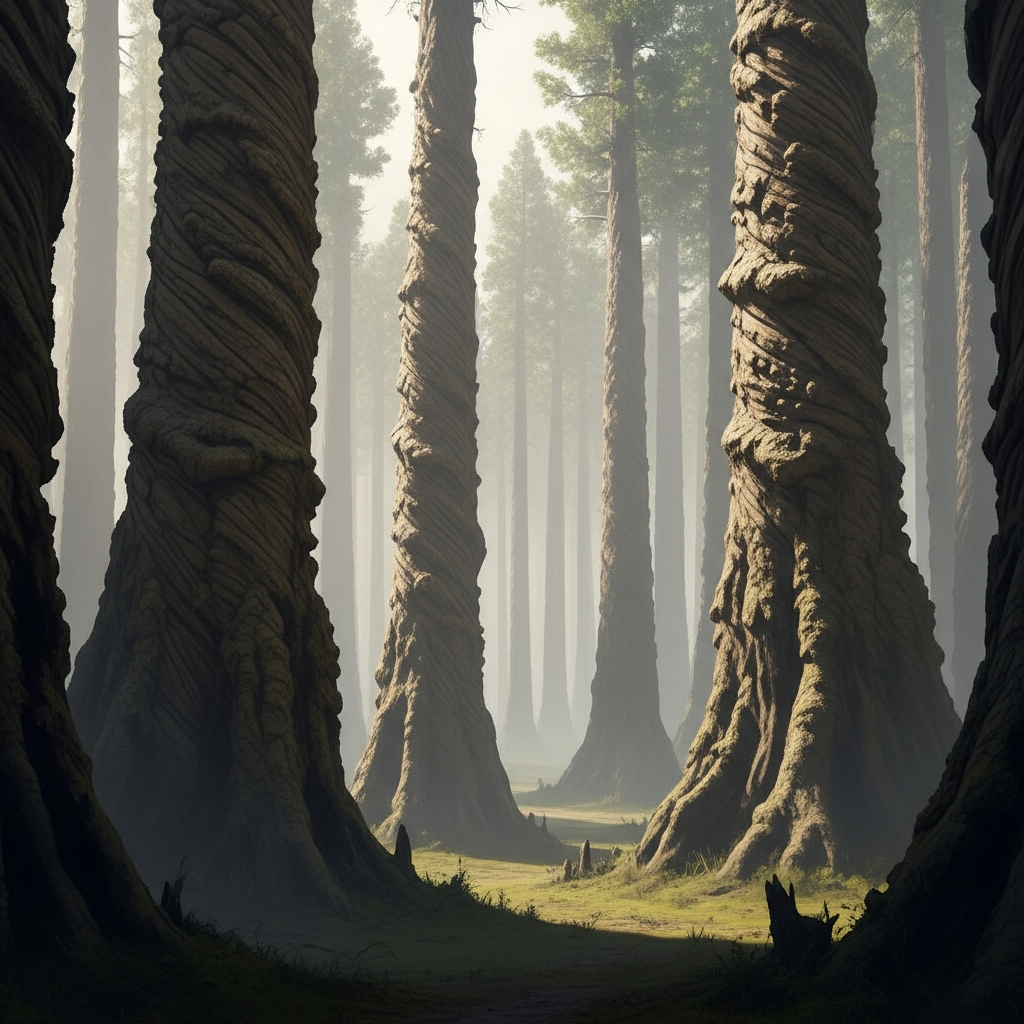
Imagine a world dominated by colossal, tree-like structures towering over 20 feet high, long before the first true forests emerged. This was the landscape of the Devonian Period, a time marked by one of Earth’s most perplexing ancient organisms: Prototaxites. This article dives into the fascinating mystery of Prototaxites, exploring its bizarre biology, its crucial role in early terrestrial ecosystems, and the captivating scientific debate surrounding its true nature. Discover why this ancient giant continues to intrigue paleontologists and where you might encounter a glimpse of its fossilized legacy today.
Unearthing the Enigma: What Was Prototaxites?
Prototaxites represents a pivotal, yet deeply enigmatic, chapter in the story of life on Earth. Discovered in 1859 by Canadian geologist John William Dawson, its fossilized remains baffled scientists for over a century. Initially, its massive, trunk-like appearance led many to believe it was an early conifer, a type of prehistoric tree. However, its internal structure told a different story. Unlike the woody tissues of trees, Prototaxites was composed of dense, tubular filaments, sparking a profound scientific re-evaluation.
This organism flourished approximately 420 to 370 million years ago, during the Devonian Period, a critical era often dubbed the “Age of Fishes.” During this time, land plants were just beginning their tentative colonization of continents, making Prototaxites’ immense size even more astonishing. It stood as a dominant feature in landscapes that were otherwise populated by much smaller, less complex flora.
The Great Debate: Plant, Fungus, or Something Else Entirely?
The true classification of Prototaxites has been one of paleontology’s longest-running debates. Its sheer scale suggested a plant, yet the lack of conventional plant structures like leaves, roots, or even vascular tissue for water transport raised serious questions. For decades, it remained an “incertae sedis” – Latin for “of uncertain placement.”
A breakthrough came in the early 21st century when detailed studies by researchers like C. Kevin Boyce proposed a radical idea: Prototaxites was, in fact, a giant fungus or a lichen-like organism. This hypothesis was supported by microscopic analyses revealing internal structures more akin to fungal hyphae than plant cells. This reclassification reshaped our understanding of early terrestrial ecosystems, suggesting that colossal fungi might have dominated land environments before woody plants evolved. This debate continues to fuel research, as scientists uncover new details about this mysterious ancient life form.
Life in the Devonian: Prototaxites’ Ancient World
The Devonian Period was a time of immense evolutionary innovation. While marine life diversified dramatically, the land was undergoing its own revolution. Small, low-lying plants like mosses and early ferns were starting to spread, but none reached the towering heights of Prototaxites. This organism would have been an imposing presence in the swampy, damp environments where it thrived, soaking up nutrients and moisture from its surroundings.
Its unique structure, a dense aggregation of tubes, allowed it to grow vertically without the need for traditional wood. This ability to achieve such stature, effectively becoming the world’s first “trees,” had profound implications for its environment.
Shaping Ancient Landscapes and Ecosystems
As one of the earliest large terrestrial organisms, Prototaxites played a crucial role in shaping the planet’s surface and atmosphere. Its immense biomass would have contributed significantly to the global carbon cycle, drawing carbon dioxide from the atmosphere. Moreover, its decomposition likely influenced early soil formation, providing organic matter that could support the growth of subsequent plant life.
The shadows cast by these giant structures would have created new microclimates, potentially offering shelter and niches for smaller organisms. Its presence suggests an early terrestrial ecosystem that was far more complex and structured than previously imagined, demonstrating the diverse paths evolution took during its early stages on land.
Finding the Fossil: Where Prototaxites Left Its Mark
Fossils of Prototaxites are primarily found in Devonian-age rock formations across North America and parts of the Middle East. Key sites include regions in eastern Canada, such as Gaspé Peninsula in Quebec, where John William Dawson made his initial discoveries. Other significant finds have occurred in parts of the United States, including New York and Ohio, and even as far afield as Saudi Arabia. These locations provide crucial insights into the geographical spread and environmental conditions favored by Prototaxites.
The fossilized remains often appear as large, cylindrical trunks, sometimes several feet in diameter, showcasing the immense scale of these organisms. Paleontologists meticulously study these specimens to reconstruct their internal anatomy, growth patterns, and ecological interactions. Each new discovery adds another piece to the puzzle, helping to refine our understanding of this truly unique organism.
Encountering Prototaxites Today: Fossils on Display
While finding a complete, standing Prototaxites fossil is incredibly rare, glimpses into its ancient world are available in select natural history museums and geological collections worldwide. Many institutions with extensive paleontology exhibits featuring the Devonian Period often include information or replica displays of Prototaxites.
These displays provide invaluable context, allowing visitors to visualize Earth’s early land environments and appreciate the sheer scale and mystery of this ancient giant. While specific display availability can vary, major natural history museums, particularly those with strong collections from North American Devonian sites, are the most likely places to feature elements related to Prototaxites. Visiting such an exhibit offers a unique opportunity to connect with a pivotal moment in Earth’s biological history, long before dinosaurs roamed or modern trees grew tall.
Frequently Asked Questions
What exactly was Prototaxites and when did it live?
Prototaxites was a massive, mysterious organism that existed during the Devonian Period, approximately 420 to 370 million years ago. It grew to imposing heights, potentially over 20 feet, and was characterized by a trunk-like structure composed of dense, tubular filaments rather than woody tissue. While initially thought to be an early conifer, scientific consensus now leans towards classifying it as a giant fungus or a complex lichen-like organism, making it one of the earliest and largest terrestrial life forms on Earth.
Where can I view Prototaxites fossils or learn more about them?
Actual Prototaxites fossils are rare but can be found in the collections of major natural history museums, particularly those with strong Devonian paleontology exhibits. Institutions in regions with significant Devonian rock formations, such as eastern Canada and parts of the United States, are good places to start. Many museums feature detailed information, illustrations, or even replicas to help visitors understand the scale and significance of this ancient giant. Online resources from reputable paleontological societies and universities also offer extensive research.
Why is the classification of Prototaxites still debated by scientists?
The classification of Prototaxites remains a subject of scientific debate primarily due to its unique anatomical features that don’t neatly fit into conventional biological categories. Its large size initially suggested a plant, but the absence of typical plant structures like vascular tissue, roots, or leaves, coupled with the discovery of fungal-like tubular filaments, challenged this view. While the “giant fungus” hypothesis is currently dominant, ongoing research continues to explore other possibilities, including complex lichen-like symbiotic relationships, as scientists work to fully unravel the biological secrets of this ancient organism.
The Enduring Mystery of the Prototaxites Fossil
The Prototaxites fossil stands as a testament to the unexpected pathways of evolution and the enduring mysteries hidden within Earth’s geological record. This ancient giant, whether a colossal fungus or an unclassifiable pioneer, played a critical role in shaping the planet during a transformative era. Its story reminds us that the history of life is full of surprises, and that even today, scientific inquiry continues to unveil new wonders from our planet’s distant past. Exploring the world of Prototaxites is not just about understanding an ancient organism; it’s about appreciating the dynamic, ever-evolving nature of life itself.