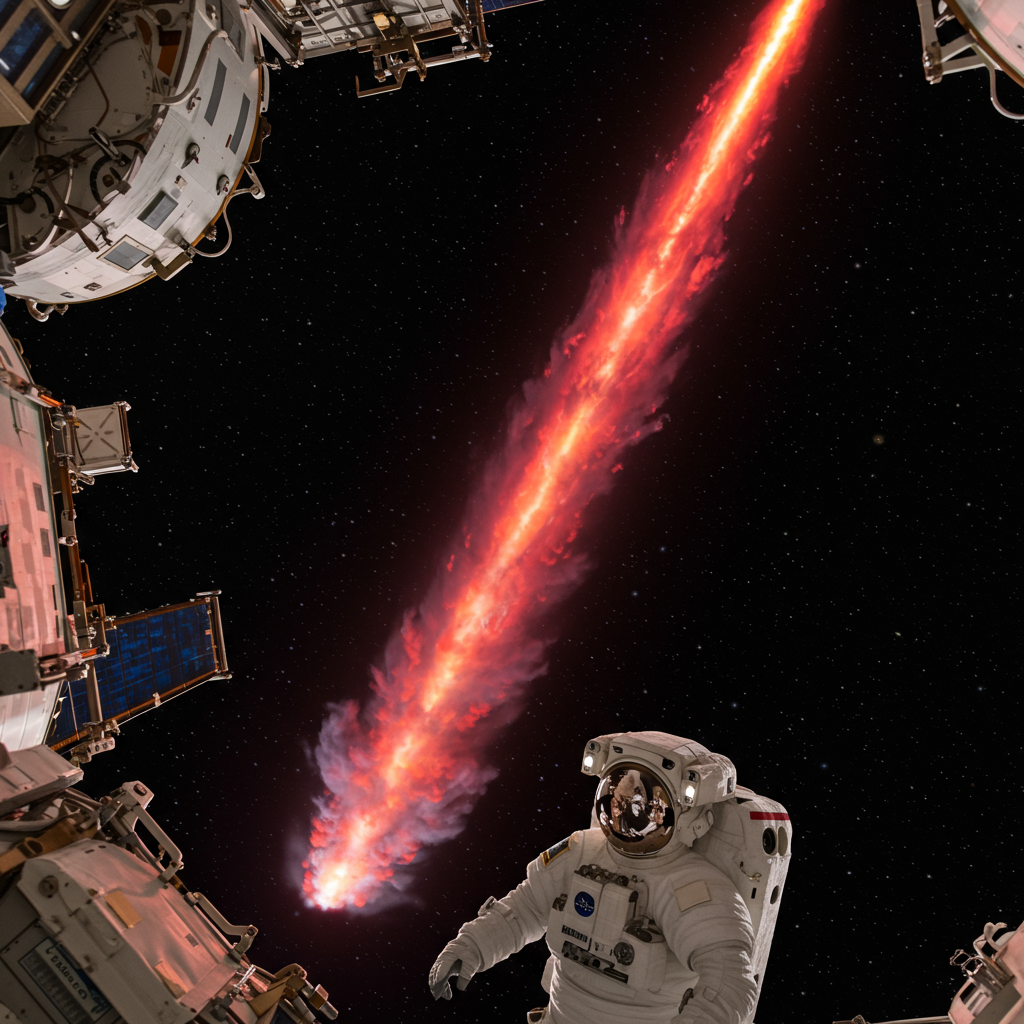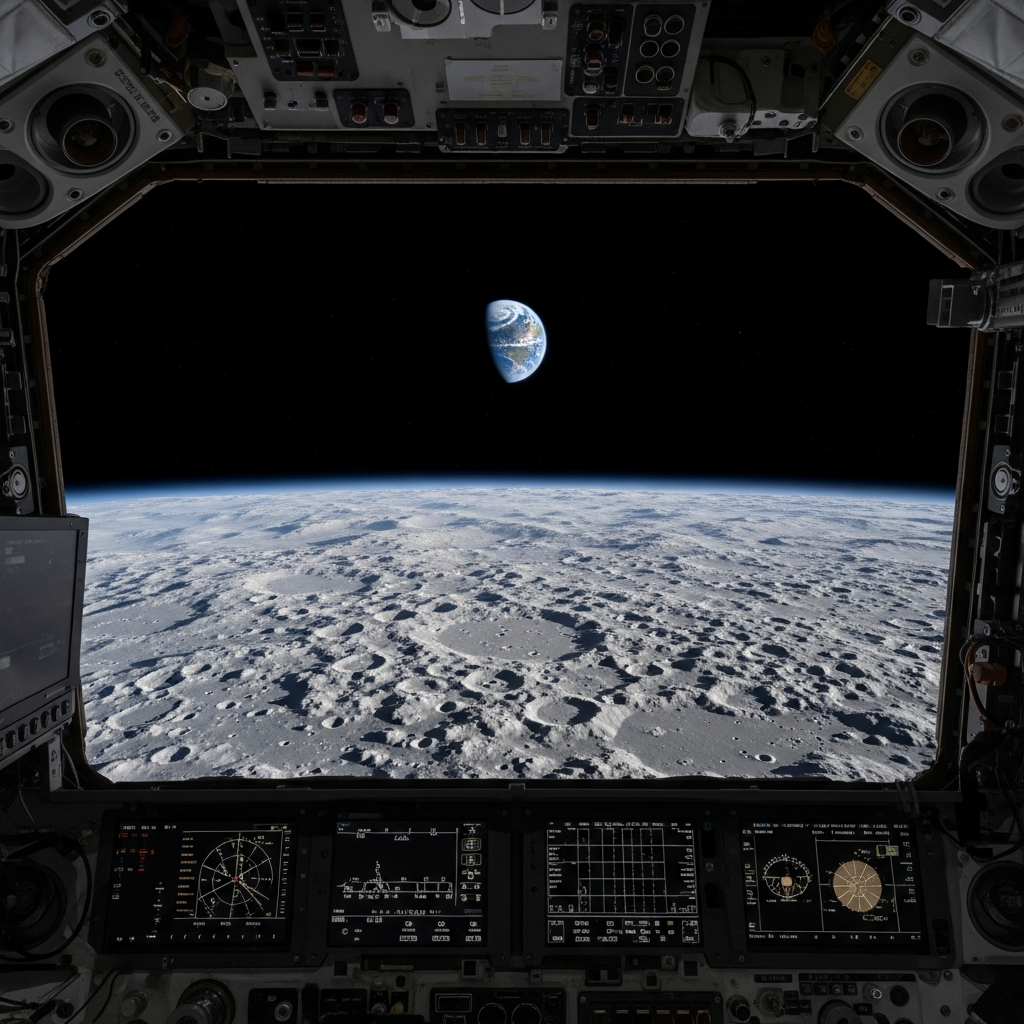
NASA’s Artemis II mission stands as a monumental leap in human spaceflight, poised to send astronauts farther from Earth than any crew has ever ventured. This groundbreaking lunar flyby, a crucial precursor to landing humans on the Moon, is set to redefine our understanding of deep space exploration. Get ready to discover the historic crew, the advanced technology, and the profound objectives driving this next-generation journey around our celestial neighbor.
A New Chapter in Human Lunar Exploration
For the first time since the Apollo era, humans are preparing to return to the vicinity of the Moon. NASA’s Artemis program isn’t just a nostalgic revisit; it’s a strategic, multi-faceted endeavor aimed at establishing a lasting human presence on the Moon and, ultimately, paving the way for crewed missions to Mars. The Artemis II mission, currently targeted for launch in early 2026, marks the second mission in this ambitious campaign and the inaugural crewed flight of the Orion spacecraft and the powerful Space Launch System (SLS) rocket.
The overarching goals of the Artemis campaign are clear:
Economic Benefits: Leveraging lunar resources and fostering new space industries.
Scientific Discovery: Unlocking secrets of the Moon and the solar system.
Mars Preparation: Developing technologies and operational experience vital for future Red Planet missions.
Artemis II will not land on the Moon. Instead, it serves as a critical test flight, a deep space dress rehearsal to rigorously validate the systems, hardware, and procedures essential for subsequent lunar landing missions.
Meet the Historic Artemis II Crew
The four-member crew of Artemis II is a diverse and highly experienced team, each making history with this mission. They represent not only NASA’s dedication to exploration but also a spirit of international collaboration.
Commander Reid Wiseman (NASA): An experienced astronaut, Wiseman will lead the mission, ensuring the successful execution of critical maneuvers and tests.
Pilot Victor Glover (NASA): Glover will become the first person of color to fly on a lunar mission, a significant milestone. He brings extensive flight experience as a former naval aviator.
Mission Specialist Christina Koch (NASA): Koch will be the first woman to journey to the Moon, building on her record-breaking long-duration spaceflight. She will manage critical systems and experiments.
Mission Specialist Jeremy Hansen (CSA): Representing the Canadian Space Agency, Hansen will be the first non-American to embark on a lunar mission, highlighting the global partnership in space exploration.
This exclusive group will join a select few who have witnessed the lunar far side with their own eyes, capturing unprecedented views for both science and inspiration.
The Mission Profile: An Unprecedented Lunar Flyby
The Artemis II mission is planned as a roughly 10-day journey. It will originate from Launch Complex 39B at NASA’s Kennedy Space Center in Florida, propelled by the towering Space Launch System (SLS) rocket. After achieving Earth orbit, the Orion spacecraft will perform a series of engine burns. These maneuvers will set it on a “hybrid free-return trajectory.” This path uses the Moon’s gravity to naturally slingshot the spacecraft around the far side of the Moon and redirect it back toward Earth, providing a critical safety net in case of propulsion system failures.
During this journey, the crew will travel approximately 400,000 kilometers (250,000 miles) from Earth. This will surpass the 1970 Apollo 13 record of 248,000 miles, making it the furthest humans have ever ventured into space. The mission’s core objective is to push the boundaries of human endurance and technological capability beyond low Earth orbit.
Testing Critical Systems in Deep Space
Artemis II is fundamentally a test flight. With a human crew onboard for the first time, a fully operational environmental control and life-support system is paramount. Astronauts will actively monitor spacecraft systems, perform navigation checks, and practice crucial maneuvers and emergency procedures. Key systems and areas to be rigorously tested include:
Life Support Systems: Ensuring the Orion capsule can sustain human life in deep space for extended periods.
Communications Systems: The Orion Artemis II Optical Communications System (O2O) will be a significant test. This system uses infrared lasers for high-speed data transmission, enabling live 4K video, high-definition images, and scientific data to be sent from lunar orbit to Earth. The crew will experience a planned 45-minute “loss of signal” as they pass behind the Moon’s far side.
Radiation Shielding: Assessing how Orion protects its crew from the harsh deep-space radiation environment.
Orion’s Heat Shield: A critical component, this shield must protect the capsule during re-entry into Earth’s atmosphere at speeds of about 40,000 km/h and external temperatures exceeding 2,700°C.
Crew Interfaces and Habitability: Evaluating how the crew interacts with the spacecraft and adapts to living in confined spaces during long-duration deep space travel.
Upon its return, the crew module will separate for a targeted splashdown in the Pacific Ocean, where recovery teams will be standing by.
Paving the Way for Artemis III and Mars Exploration
The data gathered from Artemis II will be invaluable. It will directly inform and de-risk the subsequent Artemis III mission, which aims to land astronauts at the Moon’s south pole. The south pole is of particular interest due to its potential reserves of water ice, a crucial resource for future permanent human settlements, providing oxygen, water, and even rocket fuel.
While Artemis III is currently targeted for mid-2027, delays with the Human Landing System (SpaceX’s Starship) and spacesuit development may push this timeline later into the decade. Despite these challenges, Artemis II remains a foundational step, demonstrating the capabilities needed for complex lunar operations, including rendezvous and docking with the lunar Gateway station.
Beyond the Moon, the Artemis program is firmly aligned with NASA’s long-term vision of sending humans to Mars. Each mission, including Artemis II, builds the technological expertise, operational experience, and human insights indispensable for that audacious journey to the Red Planet.
The Artemis Accords: International Collaboration Beyond Earth
The success of deep space exploration relies heavily on global cooperation. The Artemis Accords, co-led by NASA and the U.S. Department of State, establish a crucial framework for international collaboration in the next era of space exploration. Canada, a key partner in Artemis II, is among the more than 60 nations that have signed these voluntary, non-binding principles.
The Accords emphasize:
Peaceful Exploration: All activities conducted for peaceful purposes.
Transparency: Open operations to prevent conflict and share scientific data.
Interoperability: Developing systems that work together for safety and sustainability.
Emergency Assistance: A commitment to help astronauts in distress.
Space Resources: Acknowledging the importance of resource extraction for sustainable exploration.
Preserving Heritage: Protecting historical sites on celestial bodies.
These principles ensure that humanity’s expansion into space is safe, peaceful, and responsible, laying the groundwork for a truly global effort in lunar and Martian exploration.
Frequently Asked Questions
What is the main objective of NASA’s Artemis II mission?
The primary objective of NASA’s Artemis II mission is a critical test flight. It aims to rigorously validate the integrity and performance of essential systems, hardware, and operational procedures that will be indispensable for subsequent, more complex lunar landing missions. This includes thoroughly evaluating the Orion spacecraft’s life support, navigation, communication, and safety systems under real deep-space conditions, with a human crew onboard, ensuring their readiness for future deep-space endeavors.
Where will the Artemis II mission launch from and what path will it take?
The Artemis II mission is slated to launch from Launch Complex 39B at Kennedy Space Center in Florida. After launch, the Orion spacecraft will first enter Earth orbit. It will then execute a series of engine burns to establish a hybrid free-return trajectory. This path is designed to loop around the Moon, using its gravitational pull to naturally redirect the spacecraft back toward Earth, traveling approximately 400,000 kilometers (250,000 miles) from our planet before returning for a splashdown in the Pacific Ocean.
Why is Artemis II considered a critical step for future deep space exploration?
Artemis II is considered a critical step because it marks the first time humans will fly the Orion spacecraft around the Moon, thoroughly testing its capabilities and life support systems with a crew. The insights gained from this mission—regarding communications, radiation shielding, human physiology in deep space, and operational procedures—are indispensable. This mission serves as a vital dress rehearsal, laying the foundational technological and experiential groundwork for Artemis III, which plans to land astronauts on the Moon, and ultimately, for humanity’s ambitious long-term journey to Mars.
The Future is Lunar (and Beyond)
Artemis II represents more than just a mission; it’s a profound statement of humanity’s enduring drive to explore. With its historic crew, cutting-edge technology, and crucial test objectives, this lunar flyby will provide invaluable data and inspire a new generation of scientists, engineers, and astronauts. As we look ahead to 2026, Artemis II promises to be a powerful reminder of what we can achieve when we reach boldly forward into the cosmos, laying the groundwork for a sustainable human presence on the Moon and our eventual journey to Mars.