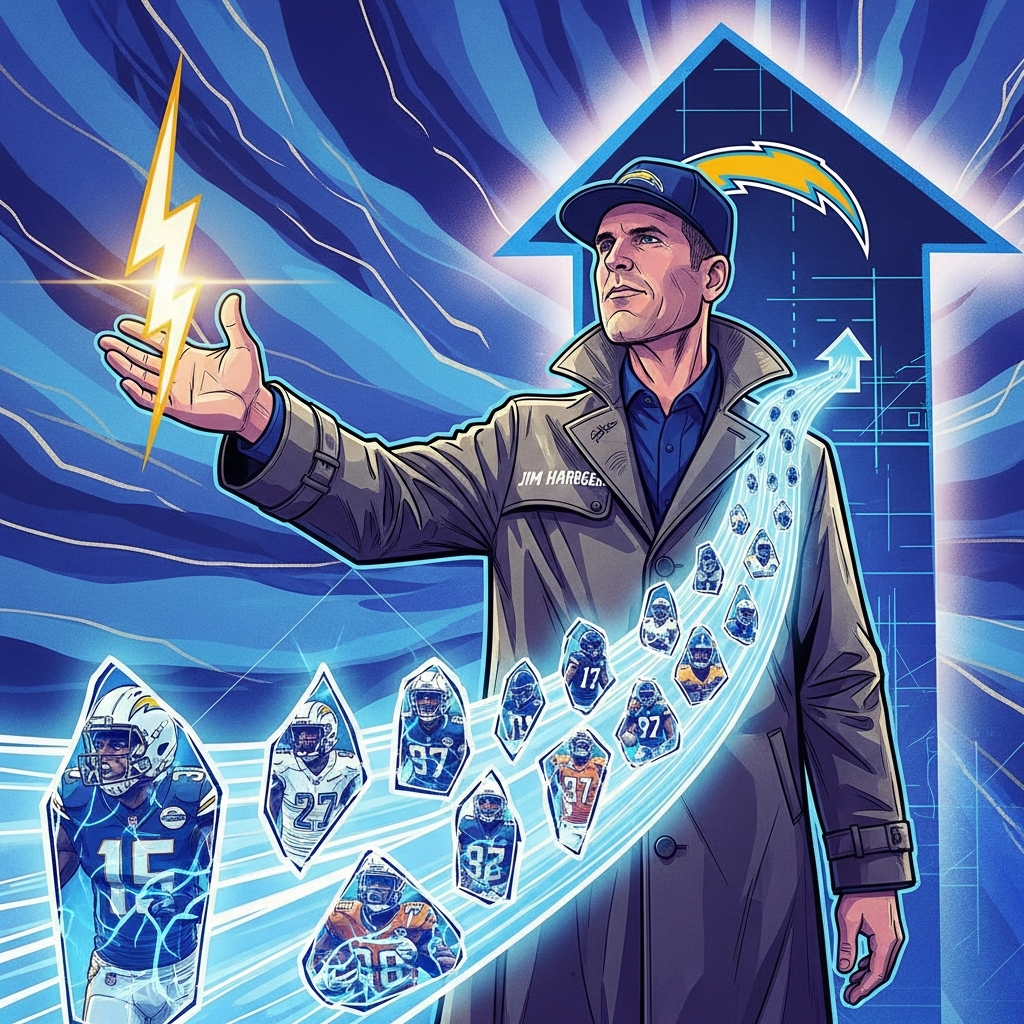
The Los Angeles Chargers are aggressively reshaping their roster for a transformative 2026 season. On January 13, 2026, the Bolts officially announced the strategic signing of 14 players to Reserve/Future free agent contracts. This decisive move signals a clear intent to build a competitive foundation, aligning perfectly with Head Coach Jim Harbaugh’s vision for a “new beginning” in Los Angeles. These signings are far more than routine transactions; they are a critical component of a broader organizational overhaul happening at the highest levels of the team.
Chargers Bolster Roster with 14 Reserve/Future Signings
Reserve/Future contracts are a crucial mechanism for NFL teams to secure talent for the upcoming league year. Players signed to these deals are added to the active roster once the new league year begins, typically in March. This grants them an early opportunity to compete for a coveted spot on the 53-man roster during subsequent offseason programs and training camp. For the Chargers, this latest batch of signings brings in a mix of promising talent, with a strong emphasis on continuity. An impressive 11 of the 14 players inked had already spent the entire 2025 season developing within the Chargers’ system as members of the practice squad. This approach suggests a commitment to cultivating talent already familiar with the team’s culture and playbook.
The full list of players who signed on January 13, 2026, includes:
Peter Bowden (LS, Wisconsin)
Dalevon Campbell (WR, South Carolina)
TeRah Edwards (DL, Illinois)
Luke Grimm (WR, Kansas)
JaQuae Jackson (WR, Rutgers)
Amar Johnson (RB, South Dakota State)
Emany Johnson (LB, Nevada)
Josh Kaltenberger (C, Maryland)
Tanner McLachlan (TE, Arizona)
Garmon Randolph (OLB, Baylor)
Branson Taylor (G, Pittsburgh)
DJ Uiagalelei (QB, Florida State)
Isas Waxter (CB, Villanova)
Thomas Yassmin (TE, Utah)
Meet the Newcomers: Key Players to Watch
While all 14 players will fight for their place, several stand out based on their recent performance and potential impact on the Los Angeles Chargers’ roster. These are the “future stars” that could make a difference:
Dalevon Campbell (Wide Receiver): Campbell turned heads during the 2025 preseason with his impressive playmaking ability. His flashes of brilliance were significant enough that the Carolina Panthers temporarily poached him from the Chargers’ practice squad during the season. However, following his release, Los Angeles quickly re-signed him, demonstrating their belief in his talent and development potential.
Tanner McLachlan (Tight End): McLachlan, a former draft pick for the Bengals, joins a Chargers team that has historically found success with athletic, field-stretching “F” tight ends. He was an impact player during his collegiate career at Arizona, suggesting he possesses the raw talent to thrive in a competitive NFL environment. His acquisition could bolster an evolving tight end room.
Amar Johnson (Running Back): Johnson made a memorable splash during the 2025 preseason with the Green Bay Packers, highlighted by a spectacular touchdown run exceeding 40 yards. The Chargers called him up to the active roster multiple times last season, seeking depth amidst various running back injuries. His quickness and big-play potential offer an exciting dimension to the backfield.
Branson Taylor (Guard): A 2025 sixth-round pick, Taylor’s signing further solidifies the Chargers’ commitment to developing their drafted talent. His presence adds competition and depth to the offensive line, an area the team is keen to improve.
Garmon Randolph (Outside Linebacker): Randolph, an edge rusher from Baylor, represents another strategic investment in defensive depth and pass-rushing capability. His development will be key in a league where disruptive edge play is paramount.
DJ Uiagalelei (Quarterback): The former Florida State quarterback’s signing adds another arm to the quarterback room. While Justin Herbert remains the undisputed starter, Uiagalelei’s presence offers a developmental project and competition for the backup role.
A New Era Unfolds: Signings Amidst Major Organizational Shifts
These Reserve/Future signings are not isolated events; they are intrinsically linked to a series of significant organizational changes within the Chargers. Coincidentally, on the very same day, January 13, 2026, the team announced the departures of Offensive Coordinator Greg Roman and Offensive Line coach Mike Devlin. Both coaches had served for two seasons, with Roman primarily responsible for calling offensive plays. This decision came just two days after a disappointing 16-3 Wild Card playoff loss to the New England Patriots, marking a swift reaction to the season’s end.
Head Coach Jim Harbaugh, famously promising a “new beginning,” has taken full responsibility for the team’s past performance. He stated, “We weren’t good enough as a team, and that’s what we do. We win as a team, we lose as a team, and that’s my responsibility.” His focus is now squarely on finding a new offensive coordinator to maximize the potential of an incredibly talented offensive roster. This includes Pro Bowl quarterback Justin Herbert, along with key players like offensive tackles Rashawn Slater and Joe Alt (who both suffered season-ending injuries but are vital for the future). Promising young talent from the 2025 draft, such as running back Omarion Hampton, wide receiver Tre’ Harris, and tight end Oronde Gadsden II, are also central to Harbaugh’s plans, alongside established playmakers Ladd McConkey and Quentin Johnston. The Reserve/Future signings, therefore, represent the initial steps in Harbaugh’s comprehensive strategy to fill out and energize a roster poised for aggressive improvement.
Why the Urgent Roster Build? Understanding Chargers’ Offseason Landscape
The Chargers’ proactive approach to securing future talent stems from an anticipated offseason of significant roster turnover. The team is projected to have the most salary cap space in the league for 2026, estimated at over $103 million. This financial flexibility, coupled with nearly 30 players set to hit various forms of free agency (Unrestricted, Restricted, and Exclusive Rights), necessitates a rapid re-evaluation and rebuilding effort.
Several veteran standouts, including wide receiver Keenan Allen and edge rusher Khalil Mack, are among the Unrestricted Free Agents whose futures with the organization are uncertain. Other notable UFAs include tight end Tyler Conklin, running back Najee Harris, and quarterback Trey Lance. Additionally, the Chargers might release players with high cap hits to free up even more funds, with potential “contract casualties” like guard Mekhi Becton, tight end Will Dissly, and cornerback Donte Jackson identified as possibilities.
Retirement also looms for some long-tenured veterans. Khalil Mack, at 35, and Keenan Allen, turning 34, are both candidates who have previously considered or could consider ending their illustrious careers. Long snapper Josh Harris and linebacker Denzel Perryman are other veterans who might opt to retire.
Specific offensive players are already “definitely” not returning. Offensive lineman Trevor Penning, acquired via trade, proved to be a “disaster,” benched in his first start. Backup center Andre James similarly failed to impress in extended opportunities. Quarterback Trey Lance had a dismal Week 18 start, solidifying the need for a better QB2. Tight end Tyler Conklin’s low production for his cap hit makes him a “one-and-done” case. Finally, running back Najee Harris, despite a strong track record, suffered a season-ending Achilles injury in Week 3, paving the way for Omarion Hampton to take the lead. These numerous departures and uncertainties highlight precisely why the Chargers are securing new talent through Reserve/Future contracts, ensuring depth and competition for every position as Harbaugh engineers his new-look squad.
Charting the Course: The Path to the 53-Man Roster
For these 14 newly signed players, the Reserve/Future contract offers a golden opportunity. It’s a chance to immerse themselves in the team’s system, impress the coaching staff, and ultimately earn a permanent place on the 53-man roster. The competition during training camp will be fierce, but it’s precisely this environment that Harbaugh wants to cultivate. These players represent crucial depth, potential special teams contributors, and even dark horse candidates for starting roles, especially given the anticipated turnover. Their journey from practice squad hopefuls or new additions to potential contributors embodies the “new beginning” mantra, emphasizing competition and development at every level of the organization.
Frequently Asked Questions
What are Reserve/Future contracts, and why did the Chargers sign 14 players to them?
Reserve/Future contracts allow NFL teams to sign players during the offseason for the upcoming league year. These players officially join the active roster when the new league year begins, offering them an early chance to participate in offseason programs and compete for a spot on the 53-man roster. The Los Angeles Chargers signed 14 players, 11 of whom were on their 2025 practice squad, to strategically bolster their roster. This move provides depth, fosters competition, and allows the team to develop talent in anticipation of significant roster changes and free agent departures heading into the 2026 season.
Which players from the Los Angeles Chargers’ recent Reserve/Future signings should fans watch closely?
While all 14 players aim to make an impact, several notable names from the Chargers’ Reserve/Future signings warrant particular attention. Wide receiver Dalevon Campbell previously showed strong preseason performance and was re-signed after a brief stint with the Panthers, indicating the Chargers value his potential. Tight end Tanner McLachlan, a former Bengals draft pick, brings an “F” tight end skill set that could thrive in the Chargers’ offense. Running back Amar Johnson made a splash with a 40-yard touchdown run in the 2025 preseason for the Packers and previously provided injury depth for the Bolts. Additionally, 2025 sixth-round pick Branson Taylor (Guard) and edge rusher Garmon Randolph are key developmental pieces to watch.
How do these Reserve/Future signings align with Jim Harbaugh’s broader strategy for the Chargers’ 2026 season?
These Reserve/Future signings are a foundational element of Jim Harbaugh’s “new beginning” for the Los Angeles Chargers. Announced on the same day as significant coaching changes, they underscore a commitment to organizational overhaul. With numerous high-profile players potentially leaving via free agency, retirement, or cap casualties, these signings immediately address the need for depth and competition. Harbaugh aims to maximize the potential of core offensive talent like Justin Herbert, and these future contracts ensure a strong pipeline of players who can contribute to that vision, establishing a competitive culture from the ground up as the team leverages significant cap space for a major rebuild.
Conclusion
The Los Angeles Chargers’ decision to sign 14 players to Reserve/Future contracts on January 13, 2026, represents a calculated and aggressive step in their offseason strategy. These signings, particularly the retention of key practice squad members, are not just about filling roster spots; they are about cultivating talent and creating a fiercely competitive environment. This proactive approach is particularly crucial given the simultaneous coaching changes and the extensive roster turnover expected this offseason. As Jim Harbaugh champions a “new beginning,” these players will be integral to building the depth and talent required to compete for the 53-man roster and ultimately, for future success in the NFL. The path to the 2026 season for the Chargers promises to be dynamic and exciting.