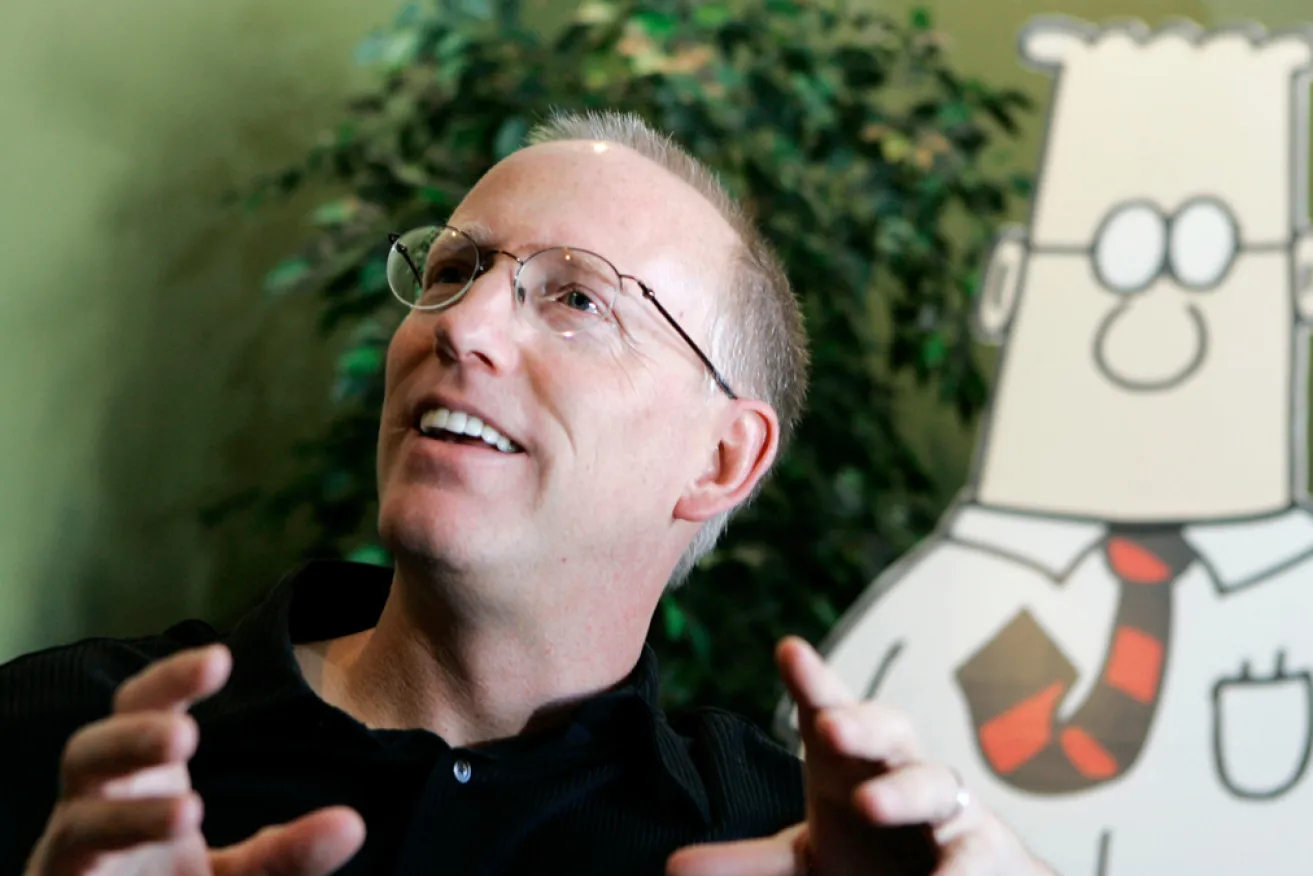
The world of satire and corporate humor mourns the passing of Scott Adams, the visionary cartoonist and author behind the globally beloved “Dilbert” comic strip. Adams died at the age of 68 after a prolonged and courageous battle with metastatic prostate cancer, a diagnosis he had candidly shared with his audience. His death marks the end of a prolific career that both captivated millions with its sharp wit and, in later years, sparked widespread debate due to his increasingly controversial public statements. This article delves into Adams’ final days, his enduring artistic contributions, and the complex legacy he leaves behind.
The Passing of a Satirical Icon
Scott Adams’ death was announced by his former wife, Shelly Miles, during a live stream of his YouTube show, “Real Coffee with Scott Adams.” This poignant moment provided a platform for Adams’ “final message,” penned on New Year’s Day, where he reflected on an “amazing life” and urged his audience to “be useful.” He expressed profound love for his followers, sustaining his commitment to connection “to the very end.”
A Battle with Metastatic Prostate Cancer
Adams had been remarkably transparent about his health struggles, first disclosing his prostate cancer diagnosis in May of the previous year. He notably highlighted that his condition, which had metastasized and spread to his bones, was the “same cancer that Joe Biden has,” though Adams’ case was significantly more aggressive. His prognosis was grim, with doctors offering “essentially zero” chance of recovery. Adams described constant pain and by December, had lost sensation from the waist down, relying on a walker. Despite the severe challenges and an initial prediction he might only live “until sometime this summer,” he courageously continued his daily livestreams, even from his hospital bed during radiation treatments. His resilience in the face of deteriorating health offered a raw glimpse into his final months.
A Final Message and Enduring Spirit
In his posthumous statement, Adams conveyed a philosophy rooted in usefulness. He described an evolution from personal fulfillment as a husband and parent to dedicating himself to the world as an author of “useful books.” This lifelong quest to “add the most to peoples’ life” was a central theme. Notably, his final message also included a declaration of accepting Jesus Christ as his “Lord and savior,” a decision he framed as an attractive “risk-reward calculation” despite not having been a traditional believer. This final, reflective act underscored his ongoing intellectual curiosity and a unique approach to life’s ultimate questions.
The Enduring Legacy of Dilbert
“Dilbert” wasn’t just a comic strip; it was a cultural touchstone for generations of white-collar workers. Debuting on April 16, 1989, it quickly ascended to global prominence, appearing in approximately 2,000 newspapers across 65 countries at its zenith. Adams drew heavily from his own corporate experiences at companies like Pacific Bell, crafting a universe that perfectly mirrored the absurdities of office life.
From Cubicle to Cultural Phenomenon
The strip, centered on Dilbert, a brilliant yet socially awkward computer programmer, and his incompetent “Pointy-Haired Boss,” offered a biting satire of corporate culture. Before popular shows like “Office Space” and “The Office” captured the workplace zeitgeist, “Dilbert” had already mastered the art of lampooning bureaucracy, micromanagement, and underappreciated employee effort. Its portrayal of Kafkaesque corporate environments resonated deeply, transforming it into a widely shared phenomenon. This success spawned best-selling books, merchandise, commercials, and even an animated TV series where Adams served as executive producer.
The “Dilbert Principle” and Office Satire
Adams’s insights into corporate dysfunction were so profound that they coined terms like “The Dilbert Principle.” This concept suggested that the least competent employees are often promoted to management positions to minimize the damage they can do in productive roles. His keen observations earned him significant accolades, including the prestigious National Cartoonist Society’s Reuben Award in 1997. That same year, “Dilbert” made history by becoming the first fictional character to be listed on Time magazine’s most influential Americans, cementing its place as an iconic critique of modern work life.
Scott Adams’ Controversial Public Persona
While “Dilbert” secured Adams’s place in popular culture, his later career was increasingly defined by a profound shift in his public persona. What began as satirical commentary evolved into outspoken political and social views that often courted controversy.
The Shift to Political Commentary and Controversial Views
Starting around 2015, Adams’s online presence, particularly his blog and daily video podcast “Real Coffee with Scott Adams,” became a platform for his conservative commentary. He became a vocal supporter of Donald Trump, often praising him as a “great persuader.” His views expanded into contentious territory, including questioning the Holocaust and expressing skepticism about the COVID vaccine. This evolution led to a “gradual darkening” of his public image and, some observed, the tone of his comic strip.
The “Cancellation” of Dilbert
The most significant professional repercussions came in February 2023. During a livestream, Adams made comments widely condemned as racist, referring to Black people as a “hate group” and advising White people “to get the hell away from Black people.” These remarks, prompted by a poll suggesting a significant percentage of Black respondents did not agree that “It’s OK to be white,” led to an immediate and widespread backlash. Numerous newspapers across the U.S., along with his long-time syndicator, Andrews McMeel Universal, swiftly canceled “Dilbert.” Editors cited the shift from “hilarious to being hurtful and mean” as their reason. Adams defended his statements as “hyperbolical” but maintained his advice to avoid groups that identify one’s own group as “the bad guys.” Following the cancellations, Adams relaunched the strip as “Dilbert Reborn” on a subscription platform, describing it as “too spicy for the general public.”
Beyond the Comic Strip: Author, Commentator, and Philosopher
Adams’s prolific career extended far beyond the drawing board. He was a multi-faceted author, a captivating online commentator, and, in his own words, a philosopher constantly seeking to provide “useful” insights.
Literary Works and Online Presence
Beyond “Dilbert” anthologies, Adams penned several successful business and self-help books, including “How to Fail at Almost Everything and Still Win Big” and “Win Bigly.” These works often explored themes of persuasion, personal strategy, and achieving success. His “Real Coffee With Scott Adams” livestream evolved into a significant online community, where he engaged with tens of thousands of viewers daily. Known for his dry, deadpan humor, he discussed current events, fostering a sense of connection through shared “Simultaneous Sips” with his audience. He moved his streams to Rumble during the pandemic, citing a desire to avoid YouTube’s content restrictions.
Personal Reflections and Public Evolution
Adams often compartmentalized his life into phases. An early focus was on being a worthy husband and parent. After an amicable divorce, he dedicated his second phase to “donating himself to the world” through his writing and livestreams, aiming to “add the most to peoples’ life.” His personal life also saw tragedy, notably the fentanyl overdose of his 18-year-old stepson, Justin, in 2018, which Adams attributed to impaired decision-making from an earlier head injury. Throughout his public evolution, Adams’ personal philosophy remained centered on individual utility and finding ways to contribute value, even amidst the storms of controversy that marked his later years.
Frequently Asked Questions
What was the cause of Scott Adams’ death and how long did he battle his illness?
Scott Adams, the creator of “Dilbert,” passed away at 68 from metastatic prostate cancer. He publicly announced his diagnosis in May of the previous year, noting that the cancer had spread to his bones. This meant he battled the aggressive disease for approximately eight months, enduring significant pain and deteriorating health, including losing feeling in his legs, until his passing.
How did Scott Adams’ public controversies impact the “Dilbert” comic strip and its syndication?
Scott Adams’ later career was significantly affected by his controversial political and social commentary. In February 2023, remarks he made on his YouTube show, widely condemned as racist, led to the immediate and widespread cancellation of “Dilbert” by numerous newspapers and its syndicator. This resulted in an estimated 80% loss of income for Adams. He subsequently relaunched the strip as “Dilbert Reborn” on a subscription-based platform.
What key themes characterized “Dilbert” during its peak popularity, and what made it resonate with readers?
“Dilbert” gained immense popularity for its sharp, satirical commentary on corporate office culture. It humorously depicted themes of bureaucratic incompetence, micromanagement, underappreciated employees, and the absurdities of daily workplace life. Its universal portrayal of a “Kafkaesque” corporate environment resonated deeply with white-collar workers, providing a comedic outlet for shared frustrations and validating their experiences with ineffective management and the challenges of cubicle life.
A Complex Legacy of Laughter and Controversy
Scott Adams leaves behind a complex and multifaceted legacy. He was a pioneering satirical cartoonist who brilliantly captured the zeitgeist of the modern workplace, making millions laugh and reflecting their daily struggles. “Dilbert” remains an indelible part of pop culture, a testament to his acute observations and comedic genius. Yet, his later years were equally defined by a public persona that ignited fierce debate and led to significant professional repercussions. Ultimately, Adams’s journey highlights the intricate relationship between creativity, public platforms, and personal expression, ensuring his name will be remembered for both his groundbreaking humor and his later-life controversies.