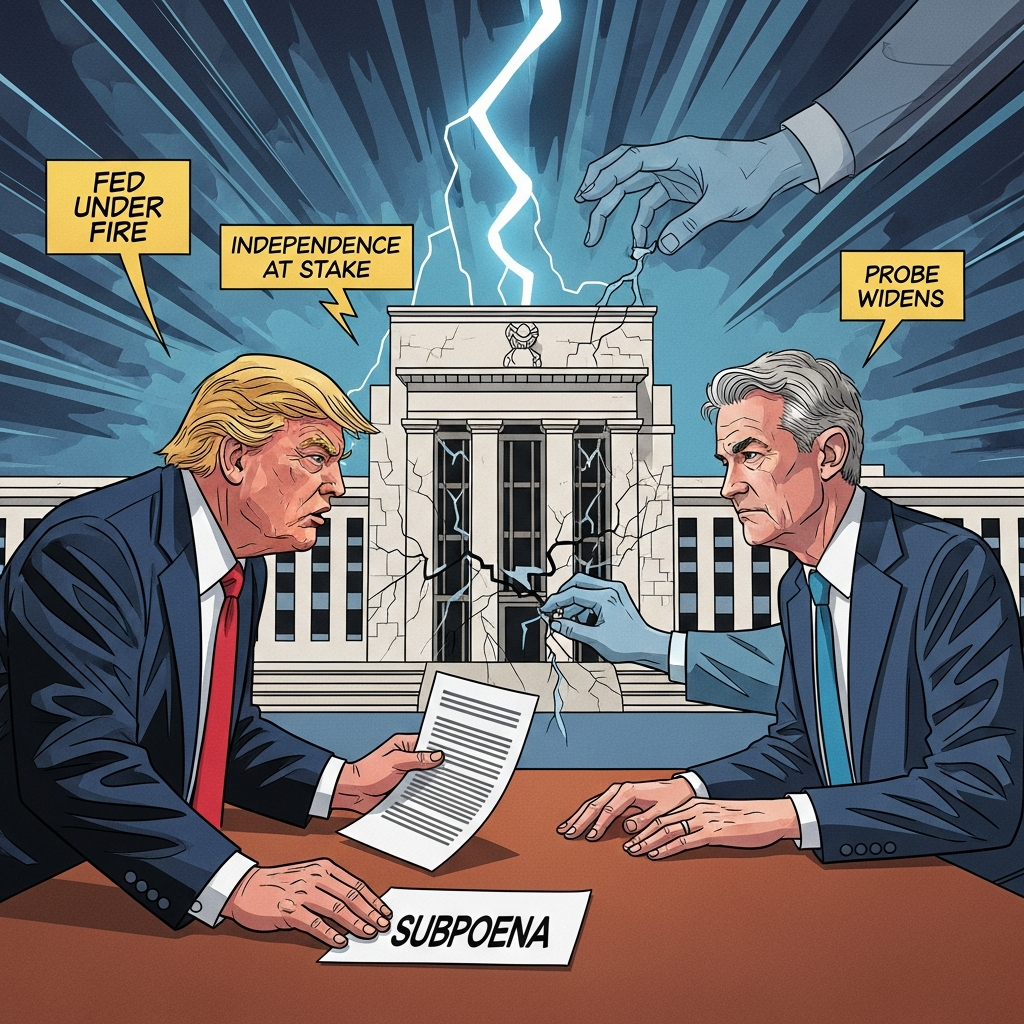
An extraordinary confrontation between a former U.S. President and the sitting Federal Reserve Chair has erupted, shaking the foundations of financial independence. What began as a campaign to persuade Donald Trump to investigate Jerome Powell has now escalated into a Justice Department criminal probe, sparking widespread debate about the politicization of America’s central bank. This article unravels the origins of this unprecedented Trump Fed investigation, its key players, the specific allegations, and the significant political and economic ramifications that could fundamentally reshape the relationship between the White House and the Federal Reserve.
The Unprecedented Probe: From “Wanted Poster” to Criminal Inquiry
The intense drama unfolded with a startling revelation: the Justice Department launched a criminal probe into Federal Reserve Chair Jerome H. Powell. This extraordinary development was disclosed by Powell himself, sending shockwaves through Washington and financial markets. The genesis of this probe traces back to Bill Pulte, Trump’s housing finance regulator, who reportedly met with President Trump at Mar-a-Lago. Pulte, a vocal critic of Powell, allegedly presented Trump with a “wanted poster” of the Fed chief, outlining scenarios that included investigating Powell. Sources suggest Trump “liked the idea.”
However, the timeline is crucial. It appears the U.S. attorney’s office in D.C. had already initiated an investigation into Powell by November, before Pulte’s alleged Mar-a-Lago meeting. This raises questions about the direct influence of Pulte versus other factors. White House officials, including press secretary Karoline Leavitt, have denied that Trump directed prosecutors to investigate Powell, with the former president also denying prior knowledge. Yet, Trump had openly contemplated legal action against Powell and raised concerns about the cost of a Fed renovation project as far back as July. Pulte himself denied involvement in the probe on Bloomberg TV, later posting on X (formerly Twitter) that the Mar-a-Lago meeting never happened.
Dissecting the Allegations: The Fed’s $2.5 Billion Renovation
At the heart of the criminal investigation are alleged discrepancies in Powell’s congressional testimony concerning a $2.5 billion renovation of the Federal Reserve’s headquarters along the National Mall. The probe aims to reconcile statements made by renovation contractors in filings to the National Capital Planning Commission (NCPC) with Powell’s testimony to Congress.
Specifically, the allegations, reportedly stemming from a criminal referral by Trump ally Rep. Anna Paulina Luna, focus on two areas:
Renovation Features: Powell allegedly denied the existence of features like a “VPI dining room,” new marble, special elevators, or water features. These items reportedly appeared in 2021 plans submitted to the NCPC for the Fed’s first large-scale renovation since the 1930s. The Fed’s defense posits that plans evolved, and Powell’s testimony accurately reflected the 2025 status, arguing changes were not “substantial.”
Renovation History: Powell reportedly stated the building “had never had a serious renovation.” Luna’s referral claims a significant renovation occurred between 1999 and 2003. The author of one external summary suggests the definition of “serious” is subjective, making this allegation difficult to prove.
These renovation features, described with “lofty terms” like “vegetated roofs” and “garden terraces” in initial proposals, became “fodder for Trump’s allies” to attack Powell for building a “marble palace.”
A History of Discord: Trump’s Strained Relationship with the Central Bank
The current Trump Fed investigation is not an isolated incident but rather the culmination of a long-standing and often acrimonious relationship between Donald Trump and the Federal Reserve. During his first term, Trump frequently criticized Powell, whom he had nominated in 2017, for keeping interest rates “too high.” These public attacks on the central bank’s monetary policy decisions broke traditional presidential norms and caused significant tension. Trump openly contemplated firing Powell multiple times.
Since leaving office, Trump has continued his campaign to pressure the Fed for rate cuts, advocating for policies he believes would stimulate the economy. This persistent criticism has intertwined monetary policy with political identity, turning the Fed into a frequent target for populist movements that view independent financial institutions with skepticism.
Powell Fights Back: A Resolute Defense of Fed Independence
In an unprecedented move, Jerome Powell released a public video statement confirming the subpoenas and forcefully pushed back against the probe. He characterized the investigation as an attack intended to undermine the central bank’s crucial independence. “The threat of criminal charges is a consequence of the Federal Reserve setting interest rates based on our best assessment of what will serve the public, rather than following the preferences of the President,” Powell stated.
This direct challenge to presidential pressure marks a significant departure from the Fed’s typical stance of avoiding direct responses to political criticism. Powell’s assertion of his commitment to the Fed’s dual mandate of price stability and maximum employment, “without political fear or favor,” echoes a long history of central bankers defending their autonomy against White House influence.
Historically, presidents have often sought lower interest rates for short-term political gains, sometimes at the risk of inflation. This has led to critical moments for Fed independence:
Harry Truman (1950s): Pressured the Fed to maintain low rates during the Korean War, leading to Fed Chair William McCabe’s resignation and the landmark Treasury-Fed Accord, which cemented the Fed’s independence.
Lyndon Johnson (1960s): Physically confronted Fed Chair William McChesney Martin over interest rate decisions during the Vietnam War.
Richard Nixon (1970s): Pressured appointed Fed Chair Arthur Burns to lower rates for his re-election, a move economists believe contributed to the “Great Inflation.”
Ronald Reagan (1980s): His chief of staff reportedly “ordered” Paul Volcker not to raise rates during Reagan’s re-election bid.
These historical examples underscore the critical importance of the central bank’s independence for long-term economic stability. Undermining this autonomy can have disastrous and lasting consequences.
The Architects of Pressure and Internal Dissension
The campaign to investigate Powell involves several key figures. Bill Pulte, described as a “mini-Trump” or the president’s “attack dog,” has been central to the public push. Pulte, who oversees the Federal Housing Finance Agency (FHFA), has a history of using his office to target political adversaries, even facing an internal investigation himself for alleged misuse of power.
The investigation is being overseen by U.S. Attorney Jeanine Pirro, a close Trump ally. Pirro’s office first sent emails to Fed staff in December, requesting a meeting or phone conversation. After receiving no response, further emails were sent, culminating in grand jury-authorized subpoenas served to the Fed. Pirro later posted on X, stating, “None of this would have happened if they had just responded to our outreach.” The Federal Reserve, however, noted the initial emails did not mention a criminal investigation, nor did they convey a sense of urgency.
Internally, not everyone in Trump’s circle supported the aggressive stance. Treasury Secretary Scott Bessent had reportedly worked months ago to quell Pulte’s initial push against Powell, believing the matter resolved. Learning of the renewed effort and the subsequent probe, Bessent was reportedly “angry” and made his displeasure known to Trump. He expressed concerns that Powell would now be unlikely to vacate his seat on the Fed board, but Trump reportedly “shrugged off the concern.”
How the Trump Fed Investigation Could Backfire
Far from achieving its intended goals, this politically charged investigation into Jerome Powell could significantly backfire on Donald Trump, creating unforeseen challenges for his administration and agenda. This potential for an “own goal” is multifaceted:
Legal Weakness and DOJ Embarrassment
The allegations against Powell, as outlined, appear legally weak. The Fed’s defense regarding evolving renovation plans and subjective interpretations of “serious renovation” presents significant hurdles for prosecutors. Trump’s past attempts to use the Justice Department for “revenge prosecutions” have often been thwarted by the legal system, with grand juries refusing indictments and judges dismissing cases. A failed prosecution against Powell would not only be an embarrassment for the DOJ but also further fuel accusations of political weaponization without tangible results.
Confirmation Hurdles for Future Fed Appointments
Powell’s term as Fed Chair expires in May. Trump is expected to nominate a successor if he wins the presidency. However, the current probe has sparked significant backlash, even among key Republicans. Senator Thom Tillis (R-NC), a powerful member of the Senate Banking Committee, has publicly vowed to oppose any Fed nominee until the investigation is resolved, citing concerns about Fed independence. Given the narrow 13-11 split in the committee, Tillis’s opposition could effectively block any Trump nominee from reaching the Senate floor. This forces Trump into a dilemma: drop the investigation or potentially sacrifice his ability to appoint a handpicked Fed chair. Sens. Lisa Murkowski (R-AK) and Kevin Cramer (R-ND) have echoed similar concerns, making consensus on any new appointment difficult.
Powell Digs In: A Prolonged Standoff
The pressure campaign could lead Powell to become even more entrenched in his commitment to the Fed’s independence. While his term as Chair ends in May, his term as a Fed Governor extends until January 2028. Powell could choose to remain on the board as a Governor, a departure from recent tradition but with historical precedent (e.g., Marriner S. Eccles). This move would allow him to continue voting on monetary policy, potentially against Trump’s desired rate cuts, and complicate Trump’s efforts to secure a majority on the Federal Open Market Committee. Such a scenario would make it much harder for Trump to implement his desired monetary policy and necessitate difficult choices regarding future Fed appointments, effectively depriving the president of a crucial seat on the seven-member board.
Political Fallout and Market Volatility
News of the probe immediately rattled markets, leading to increased gold prices (a safe haven asset) and initial stock market volatility. While stocks eventually recovered, the incident highlights the sensitivity of financial markets to threats against central bank independence.
The political fallout has been swift and bipartisan. Democrats, including Sen. Elizabeth Warren (D-Massachusetts), accused administration officials of weaponizing the Justice Department to “undercut the central bank’s independence,” likening a potential successor to a “sock puppet.” Even some House Republicans expressed frustration, indicating a broader concern about the administration’s “stupid decisions.” The White House, meanwhile, dismissed concerns as “pathetic attempts” by the “Fake News” to sow division, praising Pulte as a “loyal and important advisor.”
Frequently Asked Questions
What specific allegations led to the criminal investigation into Federal Reserve Chair Jerome Powell?
The criminal investigation primarily stems from allegations that Jerome Powell made materially false claims during his congressional testimony regarding a $2.5 billion renovation project at the Federal Reserve’s headquarters. These allegations, reportedly originating from a criminal referral by Rep. Anna Paulina Luna, focus on discrepancies between Powell’s testimony and 2021 renovation plans submitted to the National Capital Planning Commission. Specific concerns include Powell denying the existence of features like a “VPI dining room,” new marble, or special elevators, which were reportedly in earlier plans, and his statement that the building “had never had a serious renovation.”
Who are the key figures involved in pushing for the investigation into Jerome Powell?
The primary instigator of the campaign to pressure President Trump into investigating Powell appears to be Bill Pulte, Trump’s Federal Housing Finance Agency (FHFA) director. Pulte reportedly met with Trump at Mar-a-Lago, presenting a “wanted poster” of Powell and outlining scenarios for an investigation. The actual Justice Department criminal probe is being overseen by U.S. Attorney Jeanine Pirro, a close Trump ally. While Trump denies directing the probe, his long-standing criticism of Powell and the Fed’s interest rate policies provides a significant backdrop to these events.
What are the potential long-term consequences if the Federal Reserve’s independence is undermined by political pressure?
Undermining the Federal Reserve’s independence can have severe long-term consequences for economic stability and market confidence. Historically, politicizing the central bank has led to disastrous outcomes, such as the “Great Inflation” of the 1970s when President Nixon pressured the Fed to lower rates for political gain. A perception that monetary policy is dictated by political vendettas, rather than economic data, could trigger significant market volatility, currency instability, higher borrowing costs, and a loss of investor trust. It also risks distorting the Fed’s dual mandate of price stability and maximum employment, potentially sacrificing long-term economic health for short-term political gains.
Conclusion: A Critical Test for Central Bank Independence
The criminal probe into Federal Reserve Chair Jerome Powell represents an unprecedented challenge to the long-cherished independence of America’s central bank. This Trump Fed investigation has laid bare the deep political tensions surrounding monetary policy and resurrected historical debates about the balance between democratic oversight and expert autonomy. While the White House denies direct involvement, the timing and nature of the probe raise serious questions about the weaponization of legal processes for political ends.
As the situation unfolds, the potential for this aggressive maneuver to backfire on its proponents is significant. From obstructing future Fed appointments to strengthening Powell’s resolve to remain on the board, the unintended consequences could complicate efforts to reshape the central bank’s leadership and policy direction. Ultimately, this confrontation will serve as a critical test, determining the future integrity of the Federal Reserve and its ability to act as an impartial steward of the U.S. economy, free from political fear or favor.