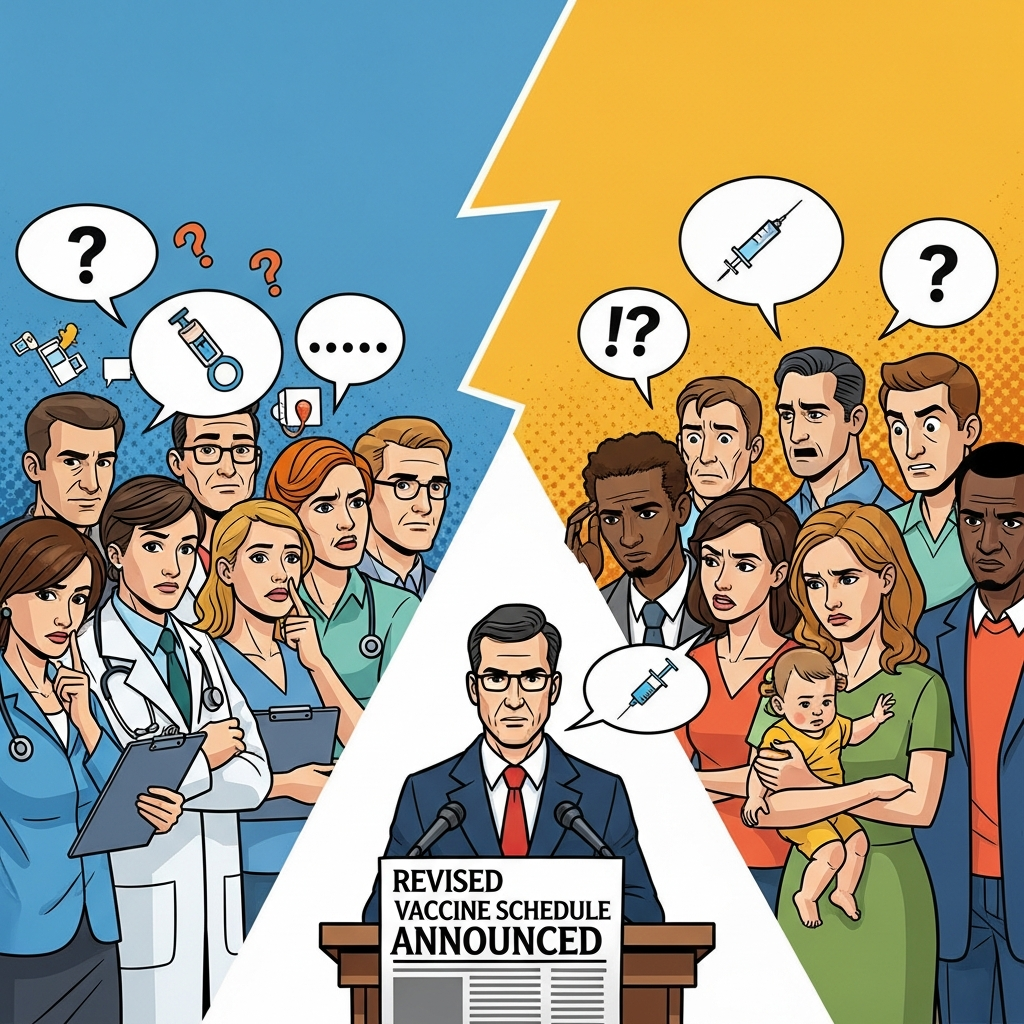
The landscape of pediatric public health in the United States has recently undergone a significant, and controversial, transformation. Federal health officials have revised the nation’s childhood vaccine schedule, reducing the number of vaccines universally recommended for all children. This unprecedented overhaul has sparked widespread debate among medical professionals and is reshaping how families and healthcare providers approach essential immunizations. Parents now face a complex decision-making environment, navigating differing recommendations from federal agencies versus leading medical associations. Understanding these changes, their rationale, and the expert reactions is crucial for protecting children’s health.
What Are the Major Changes to the Childhood Vaccine Schedule?
The most notable alteration to the U.S. childhood vaccine schedule involves a significant reduction in universally recommended immunizations. Previously, the schedule included 17 vaccines. Under the new federal guidance, this list has been pared down to 11. This means several vaccines once considered standard for all children are now reclassified.
Reduced Universal Recommendations
Six specific vaccines, previously advised for all children from birth through age 11, are no longer universally recommended. These include:
Rotavirus: Protects against severe gastrointestinal infections.
Hepatitis A: A two-dose series against a liver infection.
Hepatitis B: Crucial for preventing chronic liver disease and cancer.
Meningococcal Disease: Guards against life-threatening brain and spinal cord infections.
Influenza (Seasonal Flu): Recommended annually for children 6 months and older.
COVID-19: The vaccine against the SARS-CoV-2 virus.
Respiratory Syncytial Virus (RSV): Now only recommended for high-risk groups.
These vaccines have not been removed from the schedule entirely. Instead, their recommendation now falls under “shared clinical decision-making” or is limited to “high-risk” groups.
The Shift to Shared Clinical Decision-Making
For many of the reclassified vaccines, decisions are now left to individual physicians and parents. This “shared clinical decision-making” model requires a personalized assessment of the child’s needs. The U.S. Department of Health and Human Services (HHS) suggests that those closest to the child are best equipped to decide. This contrasts sharply with the previous “routine recommendation” model. The change shifts the onus from a broad public health recommendation to a more individualized consultation process.
Vaccines Still Universally Recommended
Despite these federal changes, a core set of immunizations remains universally recommended for all children. These vaccines continue to protect against 11 serious diseases:
Diphtheria
Tetanus
Pertussis (Whooping Cough)
Haemophilus influenzae type B (Hib)
Pneumococcal disease
Polio
Measles
Mumps
Rubella
Human Papillomavirus (HPV)
Varicella (Chickenpox)
These immunizations are still considered essential for safeguarding children from potentially severe and widespread infectious diseases.
The Rationale Behind the Federal Overhaul
HHS Secretary Robert F. Kennedy Jr., a known skeptic of many childhood vaccines, spearheaded these changes. He stated the revisions align the U.S. schedule with “international consensus.” This followed a presidential memorandum issued in December 2025. The memorandum directed HHS and the CDC to compare the U.S. vaccine schedule with those of “peer, developed countries.” This comparison reportedly included Denmark and 19 other nations.
Aligning with “International Consensus”
Secretary Kennedy asserted that President Trump’s directive aimed to determine if other developed nations are more effective in protecting their children. Following an “exhaustive review of the evidence,” Kennedy claimed the new schedule aligns U.S. practices with global norms. A senior administration official confirmed that a “comprehensive scientific assessment” comparing U.S. policy with 20 other countries underpinned these changes. This assessment was reportedly co-authored by Martin Kulldorff and Tracy Beth Høeg, both high-ranking officials within HHS and FDA.
Strengthening Trust and Transparency
HHS officials also justified the changes by citing a “drop in vaccine uptake of routine vaccinations for children.” They noted declining measles vaccination rates as evidence of waning public trust. They contended the revisions were intended to bolster confidence in the vaccine schedule. The goal, they explained, was to strengthen transparency and informed consent, thereby rebuilding public trust in health institutions. Officials also announced plans for future placebo-controlled trials to investigate vaccine timing and long-term effects. These trials are anticipated to require “many, many years” to complete.
Widespread Criticism from Public Health Experts
The federal government’s decision to revise the childhood vaccine schedule has been met with fierce criticism. Doctors, scientists, and infectious disease specialists across the nation have condemned the changes. Many express profound concern about the potential negative impact on child health.
Concerns Over Scientific Process and Data
A primary point of contention is the process by which these changes were implemented. The new schedule was introduced without formal public comment. It also bypassed input from vaccine manufacturers and, crucially, the CDC’s Advisory Committee on Immunization Practices (ACIP). ACIP typically weighs in on such changes after rigorous review. Epidemiologist Michael Osterholm, director of the University of Minnesota’s Center for Infectious Disease Research and Policy, called the decision “radical and dangerous.” He argued that eliminating vital recommendations without public discussion or transparent data review is “wildly irresponsible.” Dr. Laura Faherty, a Portland pediatrician, noted there is “no new scientific evidence to justify the alterations.”
Impact on Public Health and Disease Risk
Experts predict serious public health consequences. Dr. Faherty warned of “mixed messages” for parents, predicting a decrease in vaccine coverage. This could lead to a subsequent increase in diseases and hospitalizations. Dr. James Jarvis, clinical education director for Northern Light Health, stated “due diligence was not done.” He cautioned that fewer children would be protected, and some “will die unnecessarily because of these diseases.” He specifically cited the meningitis vaccine as crucial for preventing potentially fatal infections.
Dr. Jake Scott, an infectious disease specialist at Stanford University, characterized the changes as the “most significant weakening of childhood vaccine recommendations” in “modern American history.” Matt Wellington of the Maine Public Health Association challenged the comparison to other countries. He argued that nations have different needs, making such a comparison for vaccine schedules illogical. He suggested the decision “seems to be driven by political ideology” rather than science. Dr. Andrew Racine, President of the American Academy of Pediatrics (AAP), called the decision “dangerous and unnecessary,” warning it would “sow further chaos and confusion.”
The Historical Context of U.S. Vaccine Development
The U.S. vaccine schedule has evolved over decades, built on a foundation of evidence-based medicine. The Advisory Committee on Immunization Practices (ACIP) was established in 1964. This followed incidents like the 1955 Cutter Laboratories polio vaccine mishap, which highlighted the need for federal oversight. Each vaccine addition, from MMR (measles, mumps, rubella) in the 1970s to HPV in the 2000s, addressed diseases causing severe illness or death. For instance, the rubella vaccine helped eliminate congenital rubella syndrome, a condition causing severe birth defects.
A poignant example of a critical “safety net” is the hepatitis B vaccine. Added to the schedule in 1991, it universally protected newborns. Before its inclusion, 18,000 children annually contracted the virus. Infants infected early face a 90% chance of chronic infection, with one in four dying from liver failure or cancer. The vaccine at birth achieved a 99% reduction of hepatitis B infections in American children. The recent decision to drop the universal recommendation for this vaccine, without new safety data, is viewed by many as a significant step backward. Concerns about “immune overload” from multiple vaccines are also often raised, but scientific advancements mean today’s entire vaccine schedule contains fewer immune-stimulating antigens than a single pertussis shot from the 1980s.
What This Means for Families and Healthcare Providers
The federal guidance changes have created a complex and potentially confusing situation for parents and pediatricians alike. Understanding the practical implications is key to navigating this new landscape.
Conflicting Guidance and State Responses
The federal revisions stand in stark contrast to the recommendations of major medical organizations. The American Academy of Pediatrics (AAP) and the American Academy of Family Physicians (AAFP) have publicly stated they are not changing their vaccination schedules. They will continue to recommend the full, traditional schedule for children. Several states, including Michigan, California, New York, and Illinois, have also confirmed they will adhere to the established, comprehensive guidelines. Michigan’s chief medical executive, Dr. Natasha Bagdasarian, issued a Standing Recommendation advising healthcare providers and families in Michigan to continue following the AAP/AAFP schedule. This divergence creates a “patchwork” of protection, where children’s health outcomes could depend on their geographic location.
Insurance Coverage Remains
Despite the reclassification of some vaccines, all childhood vaccinations recommended by the AAP will still be covered by insurance. This includes private insurance plans regulated by the Affordable Care Act (ACA), as well as federal programs like Medicaid and the Vaccines for Children (VFC) program. This means families will not incur out-of-pocket costs for these immunizations. While the federal government shifted some recommendations, it affirmed that access to these vaccines will remain free and accessible.
Consulting Your Pediatrician
Given the conflicting information and the shift to shared clinical decision-making, direct consultation with a trusted healthcare provider is more important than ever. Pediatricians are best positioned to:
Provide clear, science-backed guidance.
Discuss individual risk factors for specific diseases.
Help families make informed decisions based on their child’s unique health profile.
Clarify specific state and school requirements, which may differ from federal guidance.
The AAP strongly urges parents to consult with their pediatricians to determine the best immunization plan for their children. This personalized approach is critical in ensuring comprehensive protection.
Looking Ahead: Future Research and Policy
The HHS has announced plans for future placebo-controlled trials. These trials aim to investigate the timing of vaccines and their long-term effects. Such research has already begun at the CDC and is being initiated at the FDA and the National Institutes of Health. While specific details on cost and timing remain unclear, officials anticipate these trials will require “many, many years” of follow-up. This suggests a long-term commitment to further evaluating vaccine impact, even as current recommendations face immediate changes. The outcomes of these studies could potentially influence future revisions to the vaccine schedule.
Frequently Asked Questions
What specific vaccines are no longer universally recommended for all U.S. children?
The federal government has shifted six vaccines from a “universally recommended” status to “immunizations based on shared clinical decision-making” or for “high-risk” groups. These include vaccines for Rotavirus, COVID-19, influenza (seasonal flu), meningococcal disease, hepatitis A, and hepatitis B. Previously, these were standard for all children, but now the decision regarding their administration is made in consultation with a healthcare provider based on individual circumstances.
Do leading medical organizations still recommend the full, traditional childhood vaccine schedule?
Yes, absolutely. Major medical organizations such as the American Academy of Pediatrics (AAP) and the American Academy of Family Physicians (AAFP) have publicly stated they are not changing their recommendations. They continue to endorse the full, traditional childhood vaccine schedule based on existing scientific evidence. States like Michigan have also aligned with the AAP and AAFP, advising healthcare providers and families to continue following the comprehensive immunization guidelines.
Will these federal changes impact my child’s school vaccination requirements or insurance coverage?
For most families, these federal changes are unlikely to immediately impact school vaccine requirements, as many states follow the recommendations of the AAP rather than the new federal guidance. However, it’s crucial to check with your specific state and school district. Regarding insurance, all childhood vaccines previously recommended by the AAP, including those now reclassified by federal officials, will remain covered without out-of-pocket costs by Affordable Care Act-regulated private insurance plans and federal programs like Medicaid and the Vaccines for Children program.
Conclusion
The recent federal changes to the U.S. childhood vaccine schedule represent a pivotal moment in public health policy. While officials cite reasons of international alignment, transparency, and public trust, these revisions have ignited a firestorm of criticism from the scientific and medical communities. Experts warn of potential declines in vaccine coverage, increased disease rates, and widespread confusion among parents and clinicians. Despite the federal shift, leading medical organizations and many states continue to advocate for the comprehensive, evidence-based schedule that has protected generations of children. As this debate unfolds, the most vital step for parents is to engage actively with their pediatrician. Informed decisions, grounded in scientific consensus and personalized medical advice, remain the strongest defense for child health.