The global precious metals market witnessed an extraordinary year in 2025, with gold and silver prices achieving their most significant annual gains since 1979. This “blockbuster year” culminated in a dramatic “rollercoaster end,” leaving investors grappling with both record highs and sudden dips. Understanding the forces behind this unprecedented volatility and anticipating future trends is crucial for anyone navigating the intricate world of commodities. From shifting monetary policies to geopolitical tensions and industrial demand, a complex interplay of factors shaped this thrilling market narrative, hinting at continued dynamism in 2026.
The Rollercoaster Ride of 2025: Record Gains and Sudden Swings
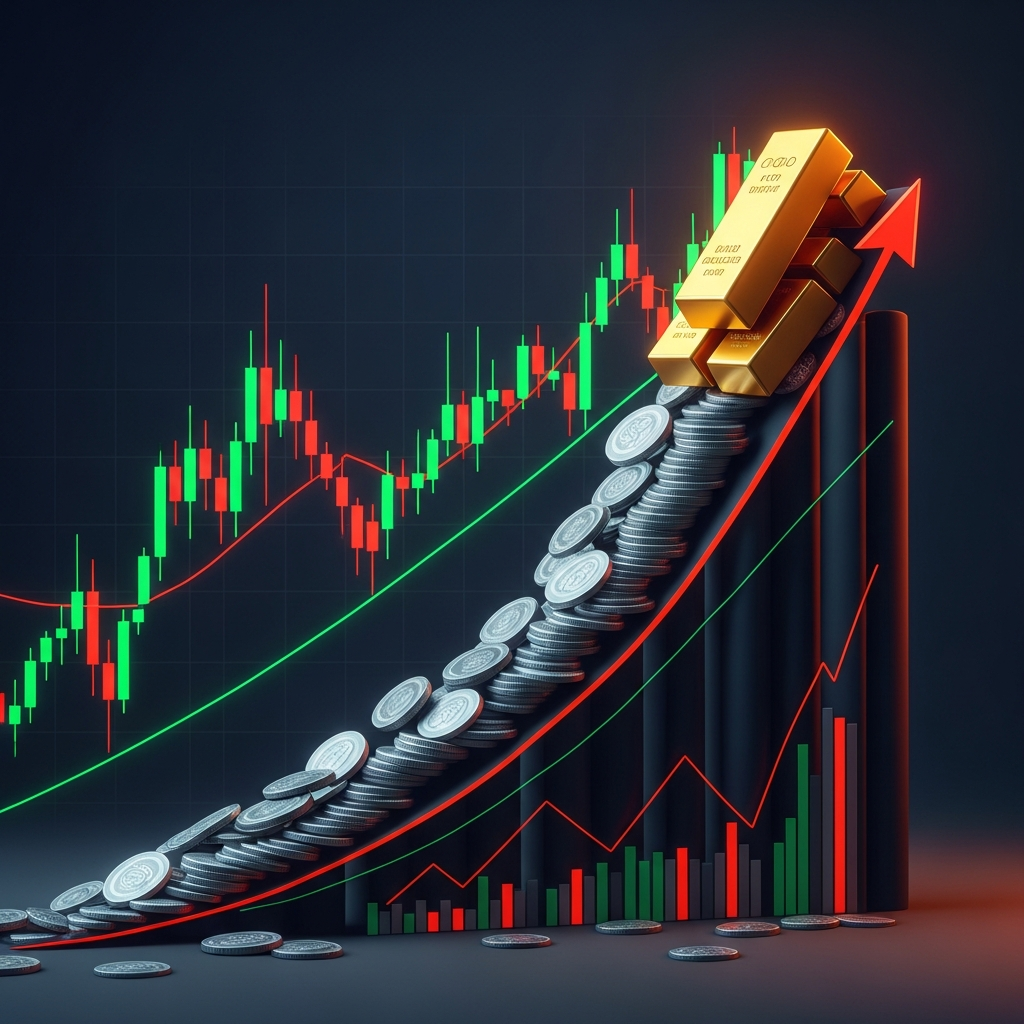
Last year saw gold and silver deliver truly exceptional returns. Gold surged by an impressive 66%, while silver catapulted an astonishing 160% over the year. These figures dramatically outshone the S&P 500’s 17% gain in the same period, underscoring the metals’ unique market position. Gold briefly touched a record high of over $4,549 an ounce before retreating to approximately $4,330 by New Year’s Eve. Silver mirrored this spectacular ascent, hitting an all-time high of $83.62 an ounce before settling around $71, though a rebound saw it trading at $77.20 later in the week.
This “rollercoaster” was particularly acute towards the year-end. Silver, for instance, experienced its largest one-day drop in almost five years, only to bounce back by nearly 8% the very next day. Jim Wyckoff, a senior market analyst at Kitco Metals, described these sharp losses as “some of the worst one-day losses in the history of trading in both gold and silver going back 50 years.” Such extreme price volatility, he noted, can signal the “final stages of a mature bull market run.” Analysts attributed these immediate downturns partly to investors cashing in on earlier gains and a crucial adjustment by the CME Group, which increased margin requirements for futures traders in precious metals. This hike likely deterred some investors, pushing prices down, while others viewed the subsequent dip as a prime buying opportunity.
Key Catalysts for Precious Metals’ Ascent
The remarkable performance of gold and silver throughout 2025 wasn’t accidental. Experts point to a confluence of economic, investment, and geopolitical factors driving this surge. Rania Gule from trading platform XS.com highlighted this multifaceted influence, emphasizing that “gold and silver prices are experiencing a notable rise due to the interplay of several economic, investment, and geopolitical factors.”
Expectations of Interest Rate Cuts Fueling Demand
A primary driver behind the surge in gold and silver prices was the widespread expectation of further interest rate cuts by the US Federal Reserve, particularly looking ahead to 2026. Lower interest rates significantly impact the attractiveness of precious metals. When rates are low, interest-bearing investments like bonds and savings accounts offer diminished returns, making non-yielding assets like gold and silver more appealing as stores of value. Additionally, reduced borrowing costs encourage speculators to invest in commodities. The Federal Reserve had already cut rates three consecutive times in late 2025, bringing its benchmark rate to 3.5%-3.75%. However, a “significant split” among policymakers, with three of twelve voting members dissenting from the most recent cut, signaled ongoing uncertainty about the Fed’s future path.
The Enduring Appeal of Safe-Haven Assets
Amidst heightened global tensions and persistent economic uncertainty, investor demand for “safe-haven” assets soared. Both gold and silver are traditionally viewed as reliable havens, often demonstrating independence from stock market movements. Volatility in bond markets and a devaluation of the US dollar further unsettled other assets typically considered safe. Research by Campbell Harvey, a a professor at Duke’s Fuqua School of Business, confirmed gold’s safe-haven status, showing its price increased during eight of the last 11 major stock market selloffs since the late 1980s. Paolo Pasquariello, a finance professor at the University of Michigan, noted this protective function is partly a “self-fulfilling prophecy,” as people buy gold because they believe it’s a safe haven.
Central Bank Accumulation & ETFs
Global central banks played a significant role in bolstering gold demand by adding hundreds of tons of the metal to their reserves. This institutional buying provides a strong underlying floor for gold prices. Concurrently, a substantial influx of money flowed into the precious metals market through various investment vehicles, notably Exchange-Traded Funds (ETFs). ETFs are baskets of investments that trade on a stock exchange like a single stock. They offer investors a convenient way to gain exposure to gold and silver prices without the complexities of owning physical bullion. This accessibility broadens the investor base and can amplify market movements.
The Silver Story: Industrial Demand & Supply Shocks
While sharing many drivers with gold, silver experienced additional, unique pressures, particularly from industrial demand and supply constraints. Daniel Takieddine, co-founder of investment firm Sky Links Capital Group, pointed to “supply tightness and industrial demand” as critical factors pushing up silver’s price.
Indispensable in Modern Technology
Silver is not just an investment asset; it’s a vital physical resource. Its superior electrical conductivity makes it indispensable in a myriad of modern technologies, including:
Electric Vehicles (EVs): Growing sales of EVs and advanced battery development significantly increase demand for silver.
Solar Panels: Silver is a crucial component in photovoltaic cells.
- Electronics: From smartphones to circuit boards, silver is pervasive.
- www.bbc.com
- abcnews.go.com
- www.livemint.com
- www.bbc.com
- www.bbc.com
This robust demand from the technology sector is reportedly outstripping available supplies, a factor that helped silver’s value more than double in 2025, surpassing gold’s performance.
China’s Export Restrictions and Tariff Fears
Adding to the supply pressures, China, the world’s second-biggest producer of silver, introduced new export restrictions. In October, China’s Ministry of Commerce announced limitations on silver exports, alongside tungsten and antimony, explicitly stating the goal was “to step up the protection of resources and the environment.” This move immediately drew concern from industry leaders, with Tesla boss Elon Musk commenting on social media, “This is not good. Silver is needed in many industrial processes.”
Further exacerbating supply concerns were fears that the US might impose tariffs on silver as part of President Donald Trump’s trade policies. Given that the US imports approximately two-thirds of its silver for manufacturing, jewelry, and investment, these tariff fears led to significant stockpiling within the US, creating shortages in other parts of the world. Manufacturers raced to secure supplies, directly pushing up global market prices.
The Challenge of Increasing Supply
Increasing silver supplies rapidly is inherently challenging. The majority of global silver output is a by-product extracted from mines primarily focused on other metals like lead, copper, or gold. This means that direct, independent increases in silver production are difficult to achieve, making its supply less elastic to price changes.
What Lies Ahead for Gold and Silver?
As the market transitions into 2026, experts offer cautious optimism tempered by warnings of continued volatility. Rania Gule anticipates gold will continue its upward trajectory, though she expects “a more stable pace compared to the record highs observed in 2025.” Daniel Takieddine also sees potential for silver to rise again in the coming year, but he advises caution, warning that “rallies may be followed by sharper corrections.”
Paolo Pasquariello suggests that the recent turbulence could foreshadow sustained volatility for gold and silver prices in 2026, primarily due to an uncertain path for interest rates. The “significant split” among Federal Reserve policymakers regarding rate cuts, coupled with the upcoming appointment of a Fed chair by President Donald Trump (who advocates for lower rates), adds layers of unpredictability. Pasquariello concludes that “Markets like gold and silver – which in my mind have sensitivity to this rate uncertainty – will experience volatility the most.” He also offered a more cautious outlook on purely safe-haven buying for 2026, implying a potentially less predictable role for these metals in this regard.
Frequently Asked Questions
Why did gold and silver prices experience such a volatile end to 2025?
The rollercoaster end to 2025 for gold and silver prices was primarily driven by a combination of profit-taking after a year of unprecedented gains and technical market adjustments. Investors capitalized on the metals’ significant surges (gold up 66%, silver up 160%), leading to selling pressure. Simultaneously, the CME Group increased margin requirements for futures traders, deterring some investors and contributing to sharp, one-day price drops. However, these dips were often followed by swift rebounds as other investors viewed the lower prices as buying opportunities, creating extreme market swings.
What key factors should investors consider when looking at gold and silver in 2026?
Investors in 2026 should closely monitor the US Federal Reserve’s interest rate policy, which remains a primary determinant of precious metals prices. Uncertainty surrounding rate cuts and a “significant split” among policymakers suggest continued volatility. The role of gold and silver as safe-haven assets will also be tested, with some experts anticipating a less predictable safe-haven role amidst rate uncertainty. Furthermore, for silver, industrial demand from burgeoning sectors like EVs and solar, coupled with potential supply shocks from export restrictions or tariffs, will be critical.
How did industrial demand and supply issues specifically impact silver prices?
Silver’s price was uniquely bolstered by its vital role in various industrial processes, particularly in high-growth sectors like electric vehicles (EVs) and solar panels, where its superior electrical conductivity is indispensable. This strong industrial demand frequently outstripped available supplies. Exacerbating supply tightness were strategic moves like China’s October export restrictions on silver, aimed at resource protection, and fears of US tariffs under President Trump, which led to significant domestic stockpiling and global shortages. Given that silver is often a byproduct of other mining operations, rapidly increasing its supply to meet surging demand remains a significant challenge.
Conclusion
The year 2025 marked an extraordinary period for gold and silver prices, delivering record-breaking gains alongside dramatic end-of-year volatility. Driven by anticipation of interest rate cuts, robust safe-haven demand amidst global uncertainties, and for silver, critical industrial applications coupled with supply constraints, these precious metals demonstrated their dynamic nature. While experts foresee continued growth for gold, albeit at a more stable pace, and potential for silver rallies, the outlook for 2026 is underscored by caution regarding interest rate uncertainty and potential sharp corrections. Navigating this evolving landscape will require investors to remain informed and agile, understanding that the journey of precious metals continues to be anything but dull.