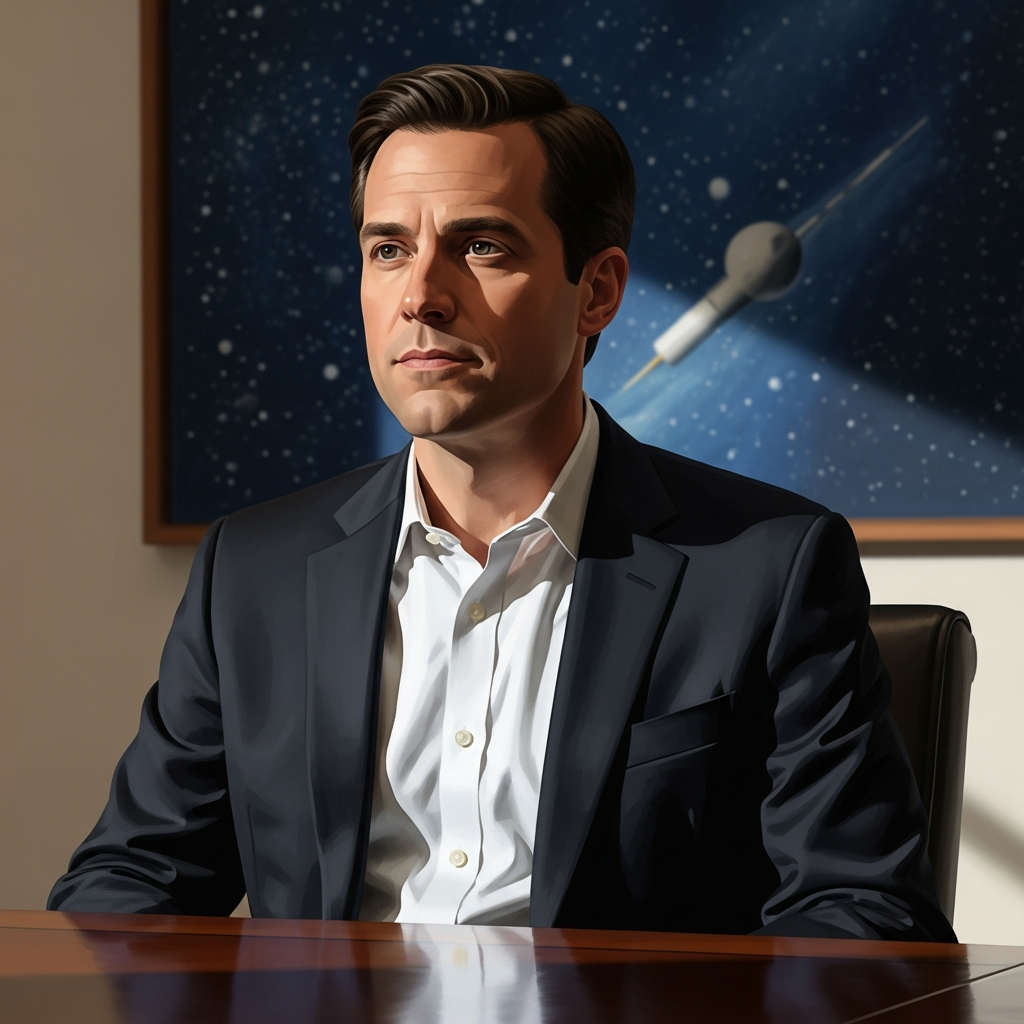
The idea of Jared Isaacman as NASA administrator sparks significant interest within the space community. As a successful entrepreneur and pioneer in civilian spaceflight, Isaacman brings a unique blend of business acumen, technological innovation, and a passion for exploration. This article explores his potential suitability for leading the National Aeronautics and Space Administration, examining his qualifications against the backdrop of NASA’s historic mission and future ambitions. We will delve into what such a leadership choice could mean for the future of U.S. space exploration and its commercial partnerships.
NASA’s Enduring Legacy and Current Imperatives
Established in 1958, the National Aeronautics and Space Administration (NASA) stands as an independent U.S. governmental agency. Its core mission involves the research and development of vehicles and activities for space exploration, extending both within and beyond Earth’s atmosphere. Headquartered in Washington, D.C., NASA was a direct response to the Soviet Union’s Sputnik launch in 1957, igniting the Space Race. It built upon the foundations laid by the National Advisory Committee for Aeronautics (NACA), created in 1915.
NASA’s structure includes four primary mission directorates. These are Aeronautics Research, Science, Space Technology, and Human Exploration and Operations. Aeronautics Research advances aviation technologies. The Science directorate explores the universe, our solar system, and Earth itself. Space Technology focuses on crucial advancements for space science and exploration. Human Exploration and Operations manages crewed missions, including those to the International Space Station, along with launch services and space transportation. Notable research centers like the Jet Propulsion Laboratory in Pasadena, California, and the Johnson Space Center in Houston, Texas, further support its vast endeavors.
Historic Achievements and Future Horizons
NASA’s history is rich with groundbreaking achievements. President John F. Kennedy’s challenge to land a man on the Moon by the 1960s culminated in the Apollo program. Neil Armstrong made history in 1969, becoming the first person to walk on the Moon. In total, 24 American astronauts traveled to the Moon across nine Apollo missions, with 12 conducting lunar surface activities. Beyond crewed flights, NASA spearheaded uncrewed programs like Viking, Mariner, Voyager, and Galileo, exploring distant celestial bodies.
The agency also developed and launched critical Earth-observing satellites, such as the Landsat series, which gathers vital data on natural resources. Communication and weather satellites also emerged from NASA’s innovations. A significant engineering marvel was the space shuttle, a reusable vehicle that first launched on April 12, 1981, from the John F. Kennedy Space Center. Looking ahead, the Artemis program, launched in 2017, aims to return humans to the Moon by 2025. A key objective is to land the first woman and first person of color on the lunar surface, with Jessica Meir identified as a potential candidate. Ultimately, Artemis seeks to establish a sustainable human presence on the Moon and pave the way for future missions to Mars and beyond.
Jared Isaacman’s Unique Profile: A Catalyst for Space
Jared Isaacman is not a traditional candidate for NASA administrator. He built a multi-billion-dollar fortune as the founder and CEO of Shift4 Payments, a leading payment processing company. However, his most impactful contributions lie in the realm of space exploration. Isaacman funded and commanded Inspiration4, the first all-civilian orbital spaceflight mission. This groundbreaking endeavor demonstrated the increasing accessibility of space beyond government-trained astronauts. His subsequent Polaris Program aims to push the boundaries of human spaceflight further, including a spacewalk by a private citizen and the first crewed flight of SpaceX’s Starship.
Isaacman’s vision extends beyond mere tourism; he champions a future where space is more accessible and commercial innovation drives progress. His direct experience with commercial space providers like SpaceX offers an insider’s perspective on the capabilities and challenges of private enterprise in space. This experience could be invaluable in a role that increasingly involves public-private partnerships. His entrepreneurial mindset emphasizes efficiency, rapid development, and bold objectives, traits that could reshape NASA’s operational tempo.
Strengths and Challenges of a Non-Traditional Leader
Appointing someone like Jared Isaacman as NASA administrator would signal a clear embrace of the commercial space era. His strengths would include a profound understanding of modern technological development cycles and a drive for ambitious, results-oriented projects. Isaacman could potentially accelerate NASA’s goals for lunar and Martian exploration by leveraging commercial capabilities more aggressively. His background also brings a fresh perspective on funding, risk-taking, and public engagement, potentially revitalizing public interest in space.
However, challenges exist. The NASA administrator role requires navigating complex political landscapes, managing vast scientific research initiatives, and overseeing a large governmental bureaucracy. Isaacman’s commercial background, while beneficial for some aspects, might clash with the established culture and processes of a federal agency. Balancing the agency’s scientific mandate with commercial imperatives would be a delicate act. An administrator must also ensure continuity of long-term research and development programs that may not offer immediate commercial returns. The role demands diplomatic skill in international collaborations and a deep respect for scientific rigor alongside exploration.
The Intersection of Commercial and Governmental Space
The prospect of Isaacman leading NASA highlights a broader trend: the growing convergence of commercial and governmental space efforts. NASA, through programs like Commercial Crew and Commercial Lunar Payload Services (CLPS), already partners extensively with private companies. An administrator with direct experience in the commercial sector could potentially streamline these partnerships and foster new avenues for collaboration. This could lead to more cost-effective missions and faster technological advancements.
Moreover, Isaacman’s advocacy for advancing human spaceflight aligns perfectly with NASA’s Artemis program. His involvement in testing new spacecraft and conducting complex missions demonstrates a commitment to pushing the human presence beyond low Earth orbit. His leadership could invigorate the push to establish a sustainable lunar presence, seen as a crucial stepping stone for human missions to Mars. The synergy between his entrepreneurial drive and NASA’s foundational mission could unlock unprecedented opportunities for space exploration.
Frequently Asked Questions
What unique qualifications would Jared Isaacman bring to the role of NASA administrator?
Jared Isaacman brings a unique blend of entrepreneurial success, significant experience in pioneering civilian spaceflight, and a deep understanding of commercial space ventures. As the founder of Shift4 Payments and commander of the Inspiration4 mission, he has demonstrated leadership in high-stakes environments, a focus on technological innovation, and the ability to execute complex projects. His direct engagement with companies like SpaceX and the Polaris Program provides an insider’s view of cutting-edge space technology and efficient project management, which could greatly benefit NASA’s public-private partnerships and accelerate its exploration goals.
How might a Jared Isaacman administration influence NASA’s long-term science and exploration goals?
A Jared Isaacman administration could potentially accelerate NASA’s human exploration goals, particularly those related to the Artemis program and future Mars missions, by fostering more aggressive commercial partnerships and streamlining development processes. His focus on rapid innovation and ambitious projects might invigorate the pace of missions. However, an administrator must also carefully balance this drive with NASA’s foundational commitment to scientific research, ensuring that critical, long-term scientific investigations and the development of new technologies for broader understanding of the universe remain paramount.
What challenges would Jared Isaacman face in transitioning from a commercial space pioneer to a federal agency head?
Jared Isaacman would face several significant challenges in transitioning to NASA administrator. These include navigating the complexities of federal bureaucracy, managing a vast government workforce with established protocols, and balancing diverse stakeholder interests (Congress, scientific community, international partners). His entrepreneurial mindset, while an asset, would need to adapt to the more deliberative pace and political realities of a federal agency. He would also need to ensure continuity of long-term scientific programs and uphold NASA’s role as a global leader in scientific discovery, not solely commercial development.
Conclusion: A New Era for Space Leadership?
The discussion around Jared Isaacman as NASA administrator reflects a pivotal moment in space exploration. As commercial entities play an increasingly vital role, the qualities sought in a leader for NASA may be evolving. Isaacman’s track record of innovation, his financial success, and his direct participation in pushing the boundaries of human spaceflight make him an intriguing, albeit unconventional, candidate. His potential leadership could herald a new era where NASA accelerates its ambitions through a stronger fusion of governmental expertise and commercial agility. Ultimately, any administrator must skillfully steward NASA’s legacy while charting an ambitious course for humanity’s future in space.