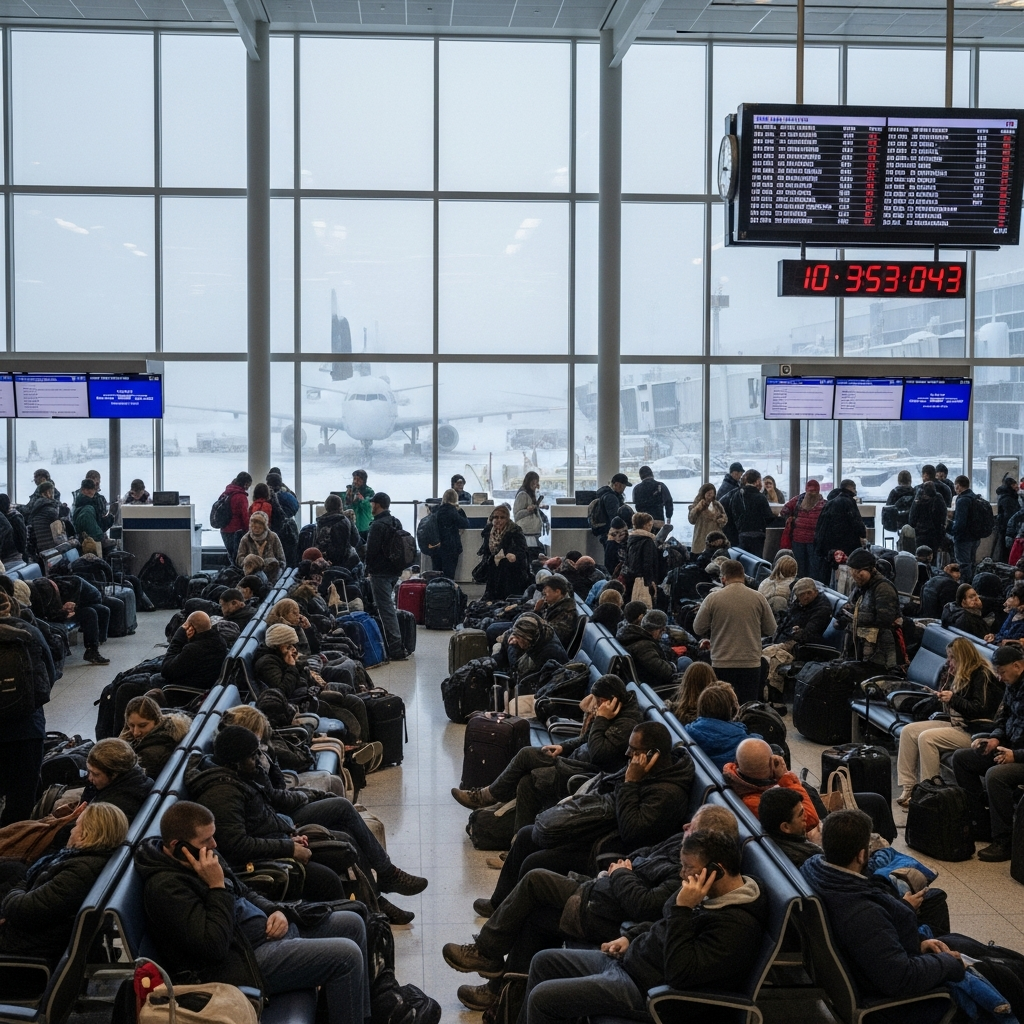
A powerful winter storm brought widespread chaos to air travel across the United States in late December 2025, leaving thousands of holiday travelers stranded. Northeastern and Great Lakes regions bore the brunt, experiencing significant snowfall, icy conditions, and extensive flight disruptions. This severe weather event occurred during a peak travel period, leading to cancellations, lengthy delays, and widespread frustration for passengers attempting to reach their destinations.
Holiday Travel Halted: The Initial Storm’s Impact
The first winter storm struck with force from Friday, December 26, through Saturday, December 27, 2025. It blanketed large parts of the Northeast and Great Lakes with snow and freezing rain. New York City’s Central Park recorded 4.3 inches of snow, marking its heaviest accumulation in nearly four years. Other areas saw even higher totals, with Hartwick, New York, receiving 11 inches and Fairfield County, Connecticut, reporting 9.1 inches. This severe weather prompted swift action from state officials.
Governors in both New York and New Jersey declared states of emergency in anticipation of the treacherous conditions. New York Governor Kathy Hochul warned of the highest snowfall in years for parts of her state. Meanwhile, Acting New Jersey Governor Tahesha Way emphasized the dangers of heavy snow, sleet, and freezing rain, urging residents to avoid unnecessary travel. These declarations underscored the severity of the incoming storm and its potential for widespread disruption.
Air Travel Grinds to a Halt Amidst Winter Fury
The impact on air travel was immediate and severe. Flight-tracking services reported staggering numbers of cancellations and delays. On Friday, December 26, over 1,700 domestic and international flights in the U.S. were canceled, alongside more than 9,000 delays. The chaos continued into Saturday, December 27. By late Saturday afternoon, over 5,500 flights were delayed, and more than 860 had been canceled nationwide.
Major metropolitan airports in the New York City area were particularly hard hit. John F. Kennedy International (JFK), LaGuardia, and Newark Liberty International airports experienced significant disruptions. On Friday alone, JFK saw 160 departing flights canceled, Newark had 107, and LaGuardia faced 90 cancellations. Ground delays were common, with JFK reporting average delays of two hours on Saturday morning. Passengers, like Mara Pimenta, who found her Latam Airlines flight canceled without notice after traveling from Brazil, recounted frustrating experiences of being stranded with little information or support.
Beyond Flights: Widespread Community Disruptions
The winter storm’s effects extended far beyond airport terminals. Hazardous road conditions emerged across the affected regions. The U.S. National Weather Service (NWS) issued warnings about the potential for black ice formation as melting snow refroze. While some areas like Newark experienced less snow, they battled icy rain, making driving extremely dangerous. Authorities strongly advised against non-essential travel to allow road crews to work safely.
Power outages also became a significant concern. Ice accumulation on power lines and trees caused considerable damage, especially in Michigan. Over 30,000 homes and businesses in the state lost electricity on Saturday morning. Although New York, Pennsylvania, and New Jersey reported fewer outages, the widespread nature of these disruptions highlighted the storm’s extensive reach. New York state even activated a “code blue” protocol. This measure aims to bring homeless individuals indoors, ensuring their safety during the dangerously cold temperatures.
Navigating the Chaos: Essential Traveler Advice
Facing such widespread winter storm flight delays requires travelers to be informed and proactive. The Department of Transportation (DOT) advises passengers on their rights. If an airline cancels your flight and you choose not to fly, you are entitled to a full refund. This applies even if you decline compensation in the form of credits or vouchers. However, the DOT also clarifies that airlines are not obligated to provide additional services, such as hotel accommodations, for weather-related delays or cancellations. These events are generally considered beyond an airline’s control.
Many airlines offered free waivers during this period of holiday travel chaos. Carriers like American Airlines, United Airlines, and JetBlue allowed affected passengers to rebook or cancel flights without incurring change fees. Travelers were strongly encouraged to check airline websites or the DOT’s dashboard. These resources help ascertain which specific airlines offer assistance following cancellations and delays. Prompt communication with your airline remains crucial for understanding your options.
What’s Next: A Second Storm and Busiest Travel Day
Just as the initial storm system began to wane, forecasts predicted another system approaching. This second storm was expected to cross the country from late Sunday, December 28, into Monday, December 29, 2025. While not anticipated to be as severe as the preceding one, it would bring additional snow, heavy winds, and rain to various regions. Much of the Midwest and Northeast, stretching from Kansas to Ohio and Pennsylvania, was slated for rain. Freezing rain was possible in parts of northern New England.
The Western U.S., specifically the Colorado Rockies and northern New Mexico, could see up to 18 inches of fresh snow. Strong winds and continued snow were also projected for the Great Lakes region and into Quebec, Canada. This weather system coincided with what the Transportation Security Administration (TSA) predicted would be the busiest travel day of the year. An estimated 2.86 million passengers were expected to be screened on Sunday, December 28. Travelers, especially those in the affected regions, needed to stay vigilant, monitor local forecasts, and adjust plans accordingly to avoid further US flight disruptions.
Preparing for Future Winter Travel
The late December 2025 US flight disruptions serve as a stark reminder of winter travel complexities. Understanding passenger rights and airline policies beforehand is invaluable. Always check flight status regularly, well before heading to the airport. Consider purchasing comprehensive travel insurance, which can cover expenses like accommodation or alternative travel if weather-related issues arise. Flexibility is also key; build in extra travel time or have alternative plans if your initial itinerary is affected.
Being proactive can significantly reduce stress and financial impact. Keep essential documents accessible and have a charging bank for your devices. Pack a small emergency kit with snacks and medication, especially if traveling with children. While no one can control the weather, smart planning empowers travelers to navigate potential delays and cancellations with greater ease and confidence. This preparation is essential for a smoother journey, especially during peak travel seasons.
Frequently Asked Questions
What caused the widespread flight delays and cancellations across the US in late 2025?
A powerful winter storm swept across the United States from December 26-27, 2025. It brought heavy snow and freezing rain, particularly impacting the Northeast and Great Lakes regions. This severe weather led to hazardous airport conditions, reduced visibility, and challenges for ground operations. The resulting cascade effect on flight schedules caused thousands of winter storm flight delays and cancellations, especially at major hubs like JFK, LaGuardia, and Newark airports, disrupting holiday travel for many.
Where can travelers find current flight status and rebooking options during severe weather?
Travelers should primarily check their specific airline’s website or mobile app for the most up-to-date flight status information. Additionally, flight-tracking websites like FlightAware provide real-time data on delays and cancellations nationwide. For information on passenger rights and airline assistance policies, the Department of Transportation (DOT) dashboard is a valuable resource. Many airlines also offer free waivers for rebooking during severe weather events, making direct contact with your airline crucial.
What are my rights if my flight is canceled or significantly delayed by a winter storm?
If your flight is canceled due to a winter storm and you choose not to travel, you are entitled to a full cash refund from the airline. This applies even if you decline alternative compensation like vouchers. However, the Department of Transportation (DOT) clarifies that airlines are generally not obligated to provide additional amenities, such as hotel accommodations or meal vouchers, for delays or cancellations caused by weather. Weather events are considered “acts of God” and are outside an airline’s control.
Conclusion
The late December 2025 winter storm served as a powerful reminder of nature’s impact on our intricate travel networks. Thousands of passengers faced holiday travel chaos as flights were grounded and schedules upended across the US, particularly in the Northeast. While authorities and airlines worked to mitigate the damage, the widespread US flight disruptions underscored the importance of preparedness. For future journeys, staying informed, understanding your rights, and employing proactive travel strategies will be vital for navigating the unpredictable challenges of winter weather.