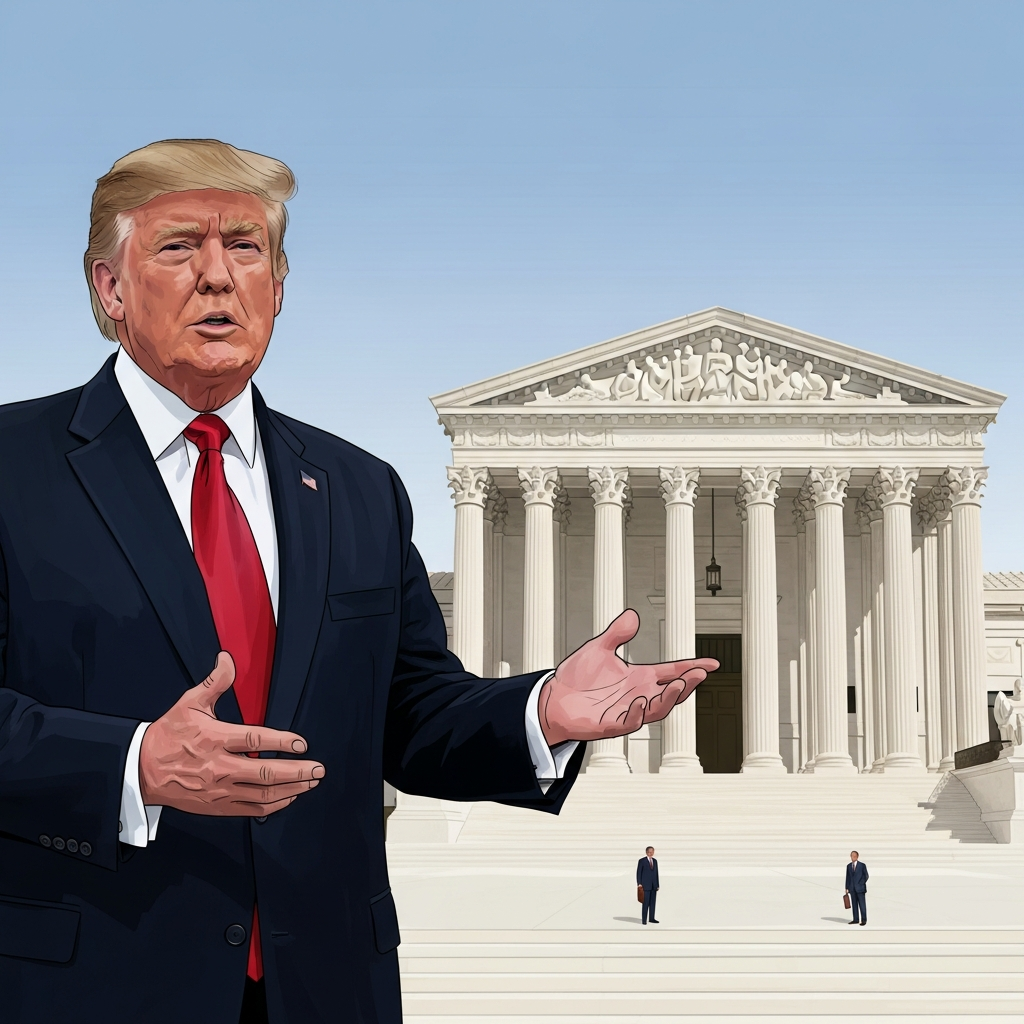
The concept of birthright citizenship, a cornerstone of American identity for over a century, faced intense scrutiny and a significant challenge during the Trump administration. While often misunderstood, its legal underpinnings are rooted deeply in the U.S. Constitution. The Supreme Court’s potential — or, as we’ll clarify, perceived — involvement in reviewing a presidential order to alter this right ignited a fierce national debate. This article delves into the complexities of birthright citizenship, former President Trump’s controversial proposals, the legal pathways and hurdles involved, and the lasting impact of this vital discussion on American society and immigration law. Understanding this issue is crucial for comprehending the future of citizenship in the United States.
Understanding Birthright Citizenship: The 14th Amendment’s Promise
At the heart of the birthright citizenship debate lies a single, powerful clause within the U.S. Constitution. Passed in the wake of the Civil War, the 14th Amendment fundamentally reshaped American citizenship. It declared that all persons born or naturalized in the United States, and “subject to the jurisdiction thereof,” are citizens of the United States and of the State wherein they reside.
The Textual Basis: “Subject to the Jurisdiction”
Section 1, Clause 1 of the 14th Amendment reads: “All persons born or naturalized in the United States and subject to the jurisdiction thereof, are citizens of the United States and of the State wherein they reside.” For generations, this clause has been widely interpreted to mean that nearly everyone born on U.S. soil automatically becomes a citizen. This includes children born to non-citizens, including undocumented immigrants. The Supreme Court affirmed this broad interpretation in the landmark 1898 case, United States v. Wong Kim Ark. This ruling involved a child born in the U.S. to Chinese parents who were not citizens, establishing a clear precedent.
Why It Matters: A Cornerstone of American Identity
Birthright citizenship is more than just a legal technicality. It has profound implications for American demographics, social cohesion, and the very fabric of national identity. It ensures that generations born in the U.S., regardless of their parents’ immigration status, are fully integrated into society. This principle prevents the creation of a permanent underclass of stateless individuals within the nation’s borders. It also streamlines the process of determining citizenship, avoiding complex and potentially discriminatory inquiries into parental status at every birth. The ease and universality of this system have contributed significantly to America’s historical assimilation of immigrant populations.
Former President Trump’s Challenge to Birthright Citizenship
During his presidency, Donald Trump repeatedly expressed his desire to end birthright citizenship for children of undocumented immigrants. He argued that the traditional interpretation of the 14th Amendment was incorrect and encouraged illegal immigration, dubbing the children born under these circumstances as “anchor babies.” His proposals sparked widespread legal and political controversy, challenging a long-held constitutional understanding.
The Executive Order Proposal: A Controversial Stance
President Trump publicly stated his intention to issue an executive order to unilaterally end birthright citizenship. His administration’s legal advisors explored whether the phrase “subject to the jurisdiction thereof” could be reinterpreted. They argued that it should exclude individuals whose parents were not legal residents or were otherwise “unlawfully present” in the United States. This executive action, if enacted, would have represented a radical departure from over a century of settled constitutional law. The push to modify birthright citizenship through executive fiat ignited a fervent debate among constitutional scholars and policymakers alike.
Legal Basis for the Challenge: An Originalist View
Proponents of changing birthright citizenship often adopt an originalist interpretation of the 14th Amendment. They contend that the framers of the amendment primarily intended it to grant citizenship to formerly enslaved people. They argue that the “subject to the jurisdiction” clause was designed to exclude Native Americans (who were then considered sovereign nations) and potentially others who owed allegiance to a foreign power, implicitly including those not legally present in the U.S. This perspective clashes sharply with the prevailing legal consensus established by Wong Kim Ark. The argument suggests that children of undocumented immigrants owe primary allegiance to their parents’ home country, thus not being “subject to the full jurisdiction” of the U.S. at birth.
The Path to the Supreme Court: Legal Hurdles and Debates
The prospect of an executive order to end birthright citizenship immediately raised questions about its constitutionality and the inevitable legal battles that would ensue. Any attempt to implement such a policy would have faced swift and substantial challenges in federal courts, likely setting the stage for a Supreme Court showdown. The fundamental nature of citizenship makes any alteration a matter of profound constitutional significance.
Initial Legal Challenges and Court Cases
Had President Trump issued an executive order, it would have been almost immediately challenged by civil rights organizations, immigration advocates, and potentially even states. Lower federal courts would have been tasked with reviewing the order’s legality against existing constitutional precedents. These challenges would likely have focused on whether an executive order could override a clear constitutional amendment, especially one interpreted for over a century by the Supreme Court itself. Such cases often lead to injunctions, temporarily blocking the policy’s implementation while courts deliberate. The process would have been protracted and complex, with different circuit courts potentially issuing conflicting rulings.
The Supreme Court’s Potential Role: Final Arbiter
The Supreme Court’s involvement would have become necessary to resolve any conflicting appellate court decisions or to provide a definitive ruling on such a momentous constitutional question. The nine justices would have been asked to consider whether the 14th Amendment’s citizenship clause could indeed be reinterpreted to exclude children of undocumented immigrants. This review would have pitted historical precedent and established legal interpretations against new, originalist arguments. A Supreme Court decision on this issue would have had a monumental impact, either reaffirming the existing understanding of birthright citizenship or fundamentally altering it for future generations. The gravity of such a case would have made it one of the most consequential constitutional debates in modern American history.
What’s at Stake? Implications of a Birthright Citizenship Overhaul
Changing birthright citizenship would trigger massive shifts across American society, affecting everything from demographics to international relations. The implications extend far beyond simple legal definitions, touching on human rights, economic stability, and national identity.
Societal and Demographic Shifts
An end to birthright citizenship would create a class of individuals born and raised in the United States, yet denied full citizenship. This “non-citizen” population could number in the millions over time, potentially forming a permanent underclass lacking full rights and opportunities. Such a change could lead to increased social stratification and conflict. It would also fundamentally alter immigration patterns, potentially leading to more clandestine births or increasing the population of children without legal status. The current system integrates children into the American fabric, enabling them to contribute fully; altering this would disrupt that pathway significantly.
International Law and Precedent
The United States is one of approximately 30 countries globally that grant birthright citizenship. Most nations operate under a “jus sanguinis” (right of blood) system, where citizenship is derived from parents’ nationality. While not universal, the U.S. system aligns with a tradition of embracing immigrants and integrating subsequent generations. Abandoning birthright citizenship could draw international criticism, particularly regarding human rights concerns for children. It might also complicate international relations, as other countries observe changes in U.S. immigration and citizenship policy.
Political Ramifications
The debate over birthright citizenship is deeply entrenched in America’s culture wars. It represents a fundamental disagreement over immigration policy, national identity, and constitutional interpretation. Any move to change it would intensify partisan divides, mobilize voters on both sides, and likely remain a hot-button issue for decades. The political consequences would be far-reaching, influencing elections, judicial appointments, and legislative priorities for years to come.
The Current Landscape: Where Does the Debate Stand Now?
Despite the intense discussion and former President Trump’s public statements, a crucial point often gets overlooked: no executive order to end birthright citizenship was ever actually issued during his presidency, nor did such a specific case reach the Supreme Court for review. The “Supreme Court to review Trump’s birthright citizenship order” headline, while capturing the essence of the intense debate and the potential for such a review, ultimately referred to a scenario that did not materialize as a formal court case.
While President Trump consistently advocated for ending birthright citizenship and his administration explored various legal avenues, the complex constitutional challenges and lack of a definitive executive action meant the issue never progressed to a direct Supreme Court review of an order. The debate remains active among legal scholars and politicians, highlighting the enduring tension surrounding immigration and national identity. The 14th Amendment’s citizenship clause continues to be interpreted as granting birthright citizenship, upheld by over a century of legal precedent. Any significant change would require either a new constitutional amendment or a direct Supreme Court ruling that overturns United States v. Wong Kim Ark, neither of which has occurred.
Frequently Asked Questions
What is the 14th Amendment’s stance on birthright citizenship?
The 14th Amendment unequivocally states that “All persons born or naturalized in the United States and subject to the jurisdiction thereof, are citizens of the United States.” This clause has been consistently interpreted by courts, most notably by the Supreme Court in United States v. Wong Kim Ark (1898), to grant automatic citizenship to nearly all individuals born on U.S. soil, regardless of their parents’ immigration status. The phrase “subject to the jurisdiction thereof” excludes only those not owing allegiance to the U.S., like children of foreign diplomats.
Did the Supreme Court ultimately rule on former President Trump’s birthright citizenship proposal?
No, the Supreme Court did not ultimately rule on a specific executive order from former President Trump regarding birthright citizenship. While President Trump frequently discussed his intention to issue an executive order to end birthright citizenship and his administration explored legal pathways, no such executive order was formally issued. Consequently, no direct legal challenge to such an order ever reached the Supreme Court for review or a definitive ruling. The debate remained largely political and theoretical rather than evolving into an actual judicial case at the highest level.
What are the core arguments against birthright citizenship for children of undocumented immigrants?
Arguments against birthright citizenship for children of undocumented immigrants primarily center on a reinterpretation of the 14th Amendment’s “subject to the jurisdiction thereof” clause. Proponents of change argue that individuals whose parents are not legal residents are not fully “subject to the jurisdiction” of the U.S. in the same way citizens or legal residents are, as their parents may still owe allegiance to another sovereign. They also contend that the original intent of the 14th Amendment was primarily to grant citizenship to formerly enslaved people, not to children of non-citizens, and that the current interpretation incentivizes illegal immigration by granting a pathway to citizenship.
Conclusion
The debate surrounding birthright citizenship encapsulates fundamental questions about American values, legal interpretation, and the future of immigration. While former President Trump’s challenge brought the issue to the forefront of national discourse, the constitutional principle, as established by the 14th Amendment and affirmed by judicial precedent, remains intact. The Supreme Court did not ultimately intervene in a direct review of a presidential order on this matter. However, the discussion underscores the profound impact of the 14th Amendment and the deep divisions that persist over immigration policy. As the nation continues to grapple with these complex issues, an informed understanding of birthright citizenship remains vital for all citizens.