Polymarket is rapidly emerging as a powerful force in the world of forecasting, transforming how we understand and anticipate future events. More than just a platform for wagers, it leverages collective intelligence and financial incentives to generate unparalleled “truth signals” across politics, economics, culture, and corporate affairs. This guide dives deep into Polymarket’s operational strategies, potential pitfalls, and its profound impact on decision-making, offering insights for both new and experienced participants. Understanding this dynamic landscape is crucial for anyone looking to gain an edge in a world of ever-shifting probabilities.
What is Polymarket? Decoding the “Truth Machine”
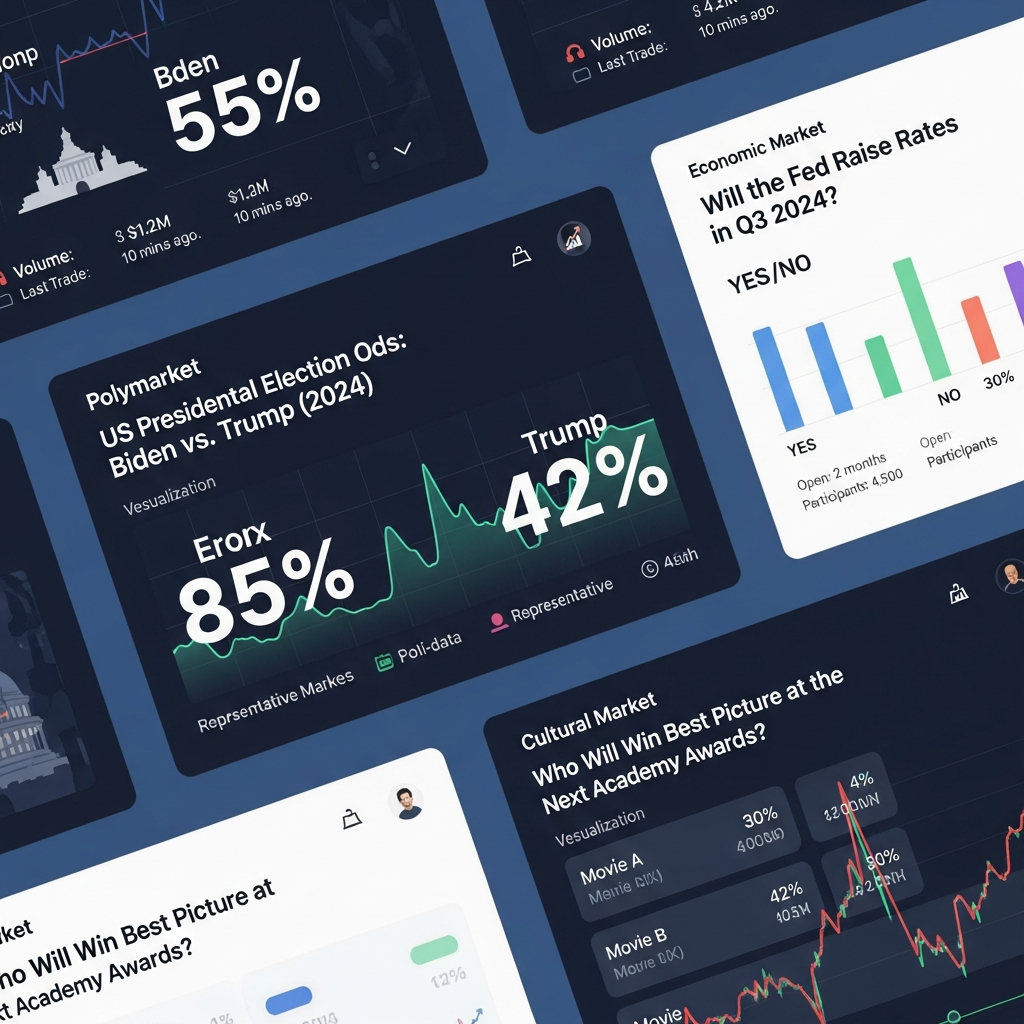
At its core, Polymarket operates as a decentralized prediction market, allowing individuals to bet real money (typically cryptocurrency) on specific future outcomes. These outcomes, ranging from presidential elections to a celebrity’s tour cancellation, are represented by “event contracts.” The price of a contract, fluctuating like shares in a stock market, reflects the crowd’s aggregated belief in an event’s probability. For instance, a contract priced at 70 cents suggests a 70% chance of that event occurring. When the event concludes, correct predictions pay out $1 per contract. This system, championed by economist Robin Hanson, aggregates dispersed information, often outperforming traditional polls and expert analyses.
Unlike surveys that capture what people say, prediction markets measure what people genuinely believe by putting “skin in the game.” Accuracy is rewarded financially, while wishful thinking is penalized. This unique incentive structure suppresses noise and ensures that the market price reflects a dynamic, real-time forecast. Research from institutions like the University of Pennsylvania and the Iowa Electronic Market consistently shows these markets frequently outperform individual expert forecasters.
The Unstoppable Rise: Growth and Market Impact
Since its launch in 2020 by Shayne Coplan, Polymarket has seen exponential growth. Originally conceived in a “bathroom office,” Coplan’s vision was to make prediction markets accessible to the general public. The platform’s user-friendly interface and diverse range of questions have attracted over 1.3 million users, with cumulative trading volumes reaching approximately $20 billion and monthly volumes exceeding $1 billion.
A pivotal moment for Polymarket’s validation was the 2024 U.S. presidential election. While many traditional polls indicated a tight race, Polymarket’s markets consistently predicted a clear outcome, ultimately proving accurate. This stark contrast highlighted the platform’s superior ability to anticipate outcomes. Beyond elections, Polymarket’s forecasts have demonstrated remarkable speed and precision in anticipating economic indicators, corporate actions like Meta AI product launches, and even specific political events like government shutdowns. This rapid information aggregation allows markets to surface likely outcomes well before traditional media or analysts catch up.
Strategic Advantages: Why Polymarket Outperforms
Prediction markets like Polymarket offer distinct advantages over conventional forecasting methods. Their speed is unmatched; probabilities shift by the hour based on new information, providing a real-time intelligence infrastructure. Traditional institutions, burdened by polling cycles, editorial confirmation, or backward-looking data, are inherently slower. This speed disparity creates a widening gap between real-time signals and institutional responses.
The core mechanism relies on financial accountability. Thousands of individuals wagering real money on outcomes transform subjective belief into quantifiable risk. This collective intelligence, often referred to as “the wisdom of the crowds,” provides a robust forecast free from ideological bias or public pressure. Unlike surveys where individuals might express politically convenient opinions, Polymarket participants are incentivized to be truthful to maximize their financial returns. This transparency and immediate judgment of outcomes help fill a growing “trust vacuum” in an era of declining public confidence in traditional institutions. For leaders, interpreting these early market signals is becoming a crucial element of modern strategy.
Navigating the Complex Landscape: Regulation and Legal Battles
Polymarket’s journey has been marked by significant regulatory challenges, particularly in the U.S. Initially, the platform prioritized building its user base over immediate regulatory compliance. This led to a 2022 intervention by the U.S. Commodity Futures Trading Commission (CFTC), which accused Polymarket of operating an unregistered exchange and offering illegal trading contracts. The platform settled, paying $1.4 million and agreeing to block U.S. users.
However, the regulatory landscape has evolved. After U.S. investigations were closed without charges in 2025, Polymarket strategically acquired QCEX, a CFTC-licensed exchange, for $112 million. This acquisition provided Polymarket with a crucial regulatory pathway for re-entry into the U.S. market. The broader prediction market industry has seen its share of legal battles; Kalshi, a rival platform, successfully challenged the CFTC in federal court, establishing that the agency lacks jurisdiction over its “event contracts” unless they involve certain highly sensitive topics. This ongoing regulatory dance underscores the innovative yet contentious nature of prediction markets.
The Pitfalls and Ethical Debates: Beyond the Bets
Despite the academic validation and financial successes, prediction markets face substantial criticism, primarily stemming from their resemblance to gambling. Consumer protection advocates, like Ben Schiffrin of Better Markets, argue that “event contracts” are essentially gambling on events like elections, which is prohibited by many state laws. There’s concern about the “epidemic of sports betting addiction” extending to these new markets, potentially compromising election integrity and exposing more people to problem gambling risks. Cole Wogoman of the National Council on Problem Gambling emphasizes that prediction markets are “functionally gambling,” pointing to the high suicide rate among those suffering from severe gambling addiction. He advocates for robust player protection guardrails common in regulated gambling but often lacking in prediction markets.
Moral and ethical boundaries are also frequently debated. Critics express unease about wagering on sensitive topics like political health or the release of hostages, labeling them “assassination” or “arson” markets. While proponents like Robin Hanson focus on the information aggregation benefits, others worry about the “dehumanizing effect” of betting on profound human events. Maintaining market integrity against potential manipulation, such as “wash trading” allegations (which Polymarket denies), also remains a persistent challenge for these platforms.
Investing in the Future: Unicorn Valuations and Strategic Partnerships
The burgeoning prediction market sector has attracted significant investor interest, with Polymarket securing a $200 million investment valuing it at $1 billion. Its rival, Kalshi, boasts an even higher valuation, exceeding $2 billion. Major financial players are taking notice; Intercontinental Exchange (ICE), parent company of the New York Stock Exchange, made a staggering $2 billion investment in Polymarket in late 2025. This strategic partnership includes plans for global data distribution and financial tokenization, signaling Polymarket’s integration into mainstream Wall Street.
Prominent figures are also aligning with the industry. Donald Trump Jr.’s venture capital firm, 1789 Capital, made a “double-digit” million-dollar investment in Polymarket, with Trump Jr. joining as a Strategic Advisor. Interestingly, he also holds a separate advisory role with Kalshi, highlighting the growing influence and attention these platforms command. These investments and partnerships underscore the belief that prediction markets are not a fleeting trend but a foundational shift in how information is valued and acted upon.
Crafting Your Edge: Polymarket Trading Strategies
Participating in Polymarket requires a blend of information analysis, probability assessment, and disciplined risk management. Here are key strategies:
Information Aggregation: Treat the market itself as a primary source of information. Observe price movements to gauge shifts in collective belief. Complement this with independent research, news analysis, and expert opinions. Look for discrepancies between market odds and traditional forecasts.
Identify Market Inefficiencies: Robin Hanson suggests constantly seeking “wrong” prices to exploit. Early markets might overreact or underreact to initial news. Experienced traders look for situations where their personal assessment of an event’s probability differs significantly from the market price.
Position Sizing and Risk Management: Never bet more than you can afford to lose. Implement strict position sizing rules, allocating only a small percentage of your capital to any single bet. Diversify your bets across different markets to mitigate concentrated risk.
Understand Liquidity: Be aware of market liquidity. High-volume markets offer tighter spreads and easier entry/exit points. Less liquid markets might have wider bid-ask spreads, making it harder to get in and out at your desired price.
Patience and Long-Term View: Prediction markets often unfold over days, weeks, or months. Avoid impulsive decisions based on short-term news cycles. Develop a thesis and stick to it, adjusting only when fundamental information changes, not just market fluctuations.
Focus on Clarity: Stick to markets with clear, unambiguous resolution criteria. Avoid markets prone to subjective interpretation, which can lead to disputes or unexpected outcomes.
The Future Horizon: Tokens, AI, and Collective Intelligence
The “Polymarket Effect” is still in its nascent stages, yet its trajectory is clear: continued market expansion, evolving regulatory frameworks, and deeper integration with advanced technologies. Shayne Coplan envisions Polymarket evolving into a “new infrastructure for collective intelligence” or even a “trading market for truth itself.”
A significant future development is the planned launch of the $POLY token. This move aims to transition Polymarket into a full-fledged crypto ecosystem, potentially offering token holders governance rights, fee sharing, and other incentives. This decentralization effort could further align user and platform interests, though it also carries risks of renewed regulatory scrutiny. Furthermore, the integration of AI is expected to accelerate forecasting capabilities, providing even more sophisticated tools for market analysis and prediction. Polymarket, along with other prediction markets, is poised to reshape how decisions are made, not just in finance, but across all sectors of society.
Frequently Asked Questions
How do prediction markets like Polymarket actually work, and why are they considered accurate?
Polymarket functions by allowing users to buy and sell “event contracts” that represent the probability of a future event occurring. The contract price, typically ranging from 1 to 99 cents, directly reflects the market’s collective perceived odds. If you buy a “yes” contract at 70 cents and the event happens, it pays $1. This system is accurate because it leverages the “wisdom of the crowds” and financial incentives; people are motivated to bet truthfully with real money. Academic research, including studies on the Iowa Electronic Market, consistently shows that these aggregated financial bets often outperform traditional expert forecasts and polls by efficiently incorporating diverse, dispersed information.
What is Polymarket’s current regulatory status in the U.S., and how can users access it?
Polymarket faced significant regulatory challenges in the U.S., leading to a 2022 CFTC settlement and a ban on U.S. users. However, after U.S. investigations were closed in 2025, Polymarket strategically acquired QCEX, a CFTC-licensed derivatives exchange, for $112 million. This acquisition provides Polymarket with a legal framework for potential re-entry into the U.S. market. While the platform aims to be fully compliant, U.S. access may still be subject to specific state regulations and continued development of their licensed operations. Users should verify their eligibility based on their current location and the platform’s updated terms of service.
What are the main risks and rewards of participating in Polymarket’s prediction markets?
The primary reward of participating in Polymarket is the potential for financial gain if your predictions are accurate, alongside contributing to a more precise aggregate forecast. Participants can profit by identifying market inefficiencies or having superior information. However, significant risks are involved. Prediction markets are “functionally gambling,” carrying the inherent risk of financial loss if your predictions are incorrect. There are also ethical concerns about betting on sensitive events and potential issues related to market integrity or manipulation. Users should be aware of the “problem gambling” risks and ensure they employ strict risk management, only wagering funds they can afford to lose.
Conclusion
Polymarket stands at the forefront of a paradigm shift in forecasting and information aggregation. By harnessing the power of collective intelligence and financial incentives, it provides a dynamic, real-time “truth signal” that often surpasses traditional analytical methods. While navigating complex regulatory waters and facing ethical debates, its rapid growth, significant investments, and influential partnerships underscore its transformative potential. For individuals and organizations alike, understanding Polymarket and the broader prediction market landscape is no longer an academic exercise but an essential step in comprehending the future of information and decision-making. As these markets evolve, they promise to offer unprecedented insights, challenging us to rethink how we predict and prepare for what lies ahead.