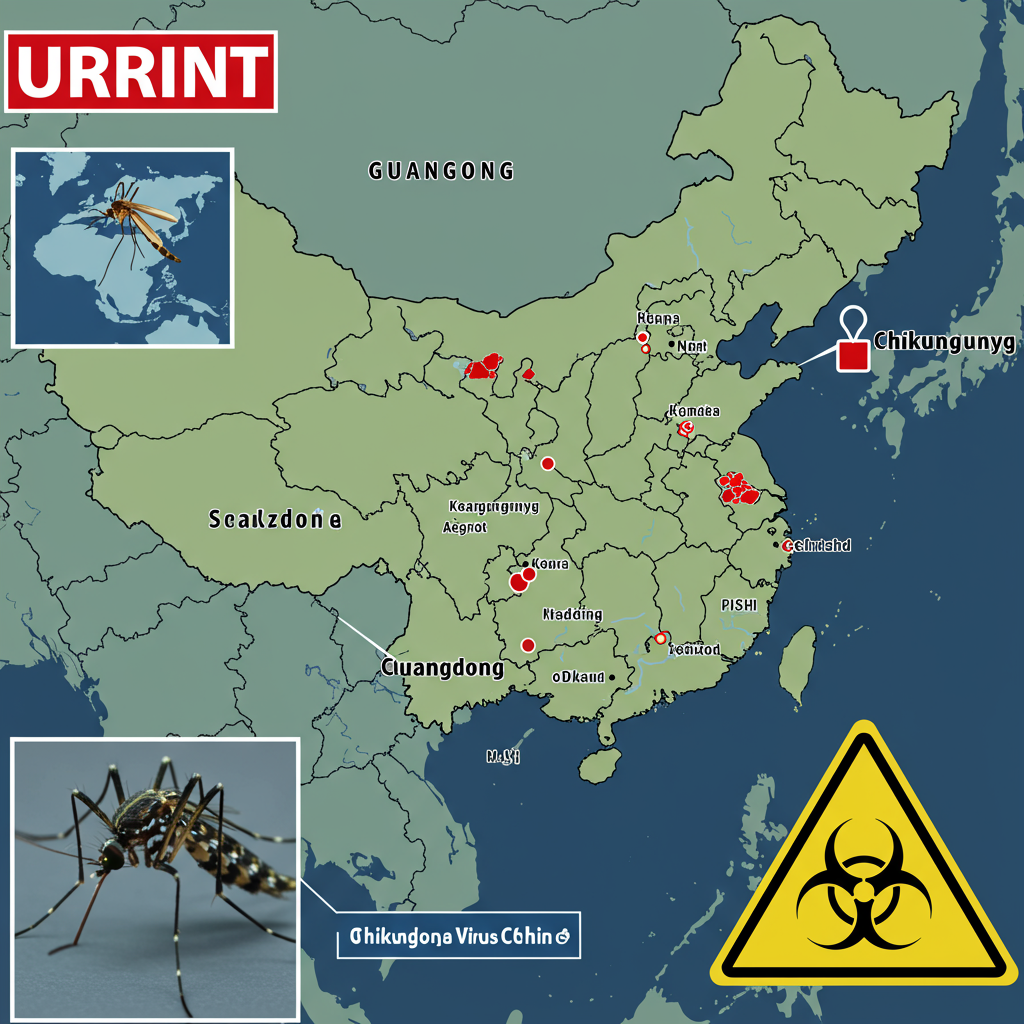
A significant chikungunya virus outbreak is currently unfolding in China, particularly in Guangdong Province, prompting an urgent travel warning from the U.S. Centers for Disease Control and Prevention (CDC). With over 7,000 confirmed cases reported since June 2025, this situation highlights the rapid spread of mosquito-borne illnesses exacerbated by environmental factors. Travelers to affected regions, including Foshan and surrounding cities like Guangzhou, Shenzhen, and Hong Kong, are advised to take immediate precautions. This guide provides crucial information on the virus, its symptoms, prevention strategies, and the global context of this emerging public health concern.
Understanding the Current Chikungunya Outbreak in China
The epicenter of this notable chikungunya outbreak is Foshan, a major city in Guangdong Province, southern China. Chinese health officials have confirmed more than 7,000 infections in this region alone, marking it as one of the most substantial outbreaks in the country since the disease’s initial detection almost two decades ago. The U.S. CDC has issued a Level 2 travel warning, urging enhanced precautions for those visiting affected areas.
This surge in cases is closely linked to the region’s monsoon season and subsequent flooding. Standing water creates ideal breeding grounds for Aedes aegypti and Aedes albopictus mosquitoes, the primary vectors for chikungunya, as well as dengue and Zika viruses. “Warmer temperatures and increased rainfall are helping Aedes mosquitoes expand into new regions,” explains Dr. Krutika Kuppalli of the University of Texas Southwestern Medical Center, emphasizing climate change’s role in this global spread. The extensive presence of these mosquitoes, combined with a largely non-immune population in mainland China, has allowed the virus to proliferate rapidly following initial imported cases.
China’s Aggressive Response to the Virus
China’s public health response to this chikungunya outbreak has been exceptionally robust, drawing parallels to its rigorous approach during the COVID-19 pandemic. Foshan authorities have designated numerous hospitals as treatment centers, increasing isolation bed capacity. Beyond standard measures like widespread insecticide spraying, draining standing water, and distributing mosquito nets, the government has implemented highly stringent, even unprecedented, enforcement tactics.
These include government workers entering private homes for mosquito breeding ground inspections without prior consent. Reports indicate patients have faced forced hospitalizations, with no option to refuse. Citizens risk significant fines for non-compliance, such as maintaining water-filled flower pots, and businesses can be penalized for failing to implement mosquito control. In one instance, electricity was reportedly cut to homes not meeting anti-mosquito guidelines. Additionally, unique biological controls are being deployed, such as releasing mosquito-eating fish into water sources and introducing “elephant mosquitoes” that prey on the disease-carrying Aedes species. Drones are also being utilized to locate and eliminate standing water sources.
What is Chikungunya Virus?
Chikungunya is a mosquito-borne illness caused by the chikungunya virus. It was first identified in Tanzania in 1952, with its name originating from a Kimakonde word meaning “that which bends up,” referencing the stooped posture of infected individuals due to intense pain. While not new, outbreaks have become more frequent in tropical regions over recent decades. Globally, the European Centre for Disease Prevention and Control estimates approximately 240,000 infections have occurred since early 2025.
Unlike some other viruses, chikungunya is not directly transmissible between humans; it relies solely on mosquito bites for spread. The virus generally has an incubation period of less than one week. Dr. Todd Ellerin, chief of infectious disease at South Shore Health in Massachusetts, advises that if more than a week has passed since leaving a high-risk area, an individual is likely in the clear.
Recognizing Chikungunya Symptoms
The symptoms of chikungunya virus typically appear four to eight days after an infected mosquito bite. According to the CDC, common signs include:
Sudden-onset high fever
Severe joint pain, especially affecting the hands, wrists, ankles, and feet
Muscle pain
Headache
Fatigue
Skin rash
While most individuals recover within seven to ten days without specific medical intervention, symptoms can sometimes persist for weeks or even months, particularly the debilitating joint pain. Deaths from chikungunya are rare; a study in Nature estimated a global mortality rate of about 0.01%, though infants and the elderly face a higher risk of severe forms. Chikungunya is distinct from Zika virus; it is an Alphavirus, and its symptoms are generally considered more severe than Zika fever.
Prevention and Treatment Strategies
Currently, there is no specific antiviral treatment for chikungunya virus. Care focuses primarily on alleviating symptoms while the body naturally recovers. The CDC recommends rest, fluid intake, and medications like acetaminophen for pain and fever. Nonsteroidal anti-inflammatory drugs (NSAIDs) may be used, but only after ruling out dengue, another mosquito-borne disease with similar initial symptoms that could be worsened by NSAIDs.
Vaccination and Personal Protection
For travelers to areas with active chikungunya outbreaks, vaccination is available and recommended by the CDC. Two vaccines against chikungunya are currently approved in the U.S., offering protection within approximately two weeks of a single dose. The CDC specifically advises vaccination for:
Travelers visiting areas with active outbreaks.
Individuals planning extended stays abroad, typically six months or longer.
Laboratory workers who handle the virus.
It’s important to note that federal officials recommended in May 2025 pausing chikungunya vaccines for individuals over 60 due to concerns about potential adverse reactions. Pregnant women are also advised to reconsider travel to affected areas and defer vaccination until after delivery.
Beyond vaccination, personal protective measures are crucial to prevent mosquito bites:
Wear protective clothing: Opt for long-sleeved shirts and long pants, especially during peak mosquito activity hours (dawn and dusk).
Use insect repellent: Apply repellents containing DEET, picaridin, IR3535, oil of lemon eucalyptus (OLE), para-menthane-diol (PMD), or 2-undecanone. Always follow product label instructions.
Mosquito netting: Utilize mosquito netting, particularly for babies too young for repellent.
Eliminate breeding sites: Promptly clear any standing water around homes or accommodations, as even small amounts can serve as mosquito breeding grounds.
Chikungunya in the United States
Chikungunya is not common in the United States. The CDC reports that there have been no locally acquired cases in U.S. states or territories since 2019. Most cases reported in the U.S. are travel-related, meaning individuals contracted the virus while abroad and developed symptoms upon returning home. In 2024, nearly 200 travel-related cases were reported, with 46 cases confirmed so far in 2025. For instance, Ohio has reported three chikungunya cases since August 1, 2024, with one case in Franklin County in 2025. While the risk of local transmission in the U.S. remains low, constant vigilance is necessary, especially with increasing global travel and climate-driven expansion of Aedes mosquito populations.
Frequently Asked Questions
What is chikungunya, and why is the China outbreak significant?
Chikungunya is a viral disease spread by infected Aedes* mosquitoes, causing sudden high fever and severe joint pain, among other symptoms. The current outbreak in Guangdong Province, China, is particularly significant due to its large scale (over 7,000 cases since June 2025) and the fact that chikungunya has not been previously established in mainland China. This means the local population lacks natural immunity, allowing for rapid and widespread transmission, exacerbated by monsoon flooding creating ideal mosquito breeding conditions.
Where are the current chikungunya outbreaks, and how can travelers protect themselves?
The most significant active chikungunya outbreak is in Guangdong Province, China, primarily in Foshan and surrounding cities. Other current outbreaks have been identified in countries like Bolivia, Kenya, and Sri Lanka. Travelers to these areas should protect themselves by wearing long-sleeved clothing, using EPA-registered insect repellents (e.g., with DEET), and utilizing mosquito netting. Vaccination is also recommended by the CDC for those visiting active outbreak areas or spending extended time abroad.
Should I get vaccinated against chikungunya, and what are the treatment options?
Vaccination against chikungunya is recommended by the U.S. CDC for travelers visiting areas with active outbreaks, individuals staying abroad for extended periods (six months or more), and laboratory workers handling the virus. Two vaccines are available in the U.S., offering protection within about two weeks of a single dose. However, the CDC recommended pausing vaccination for individuals over 60 in May 2025 due to adverse reaction concerns. There is no specific antiviral treatment for chikungunya; care focuses on supportive measures like rest, fluids, and medications such as acetaminophen to manage fever and pain.
Staying Informed and Protected
The ongoing chikungunya outbreak in China serves as a critical reminder of the dynamic nature of global health threats, particularly those driven by climate change and increased international travel. While symptoms are rarely fatal, the severe and prolonged joint pain can be highly debilitating, significantly impacting quality of life. Staying informed through reliable sources like the CDC and adhering to recommended precautions are the most effective ways to protect yourself and others from this mosquito-borne illness. Always consult with a healthcare professional for personalized travel health advice and symptom management.