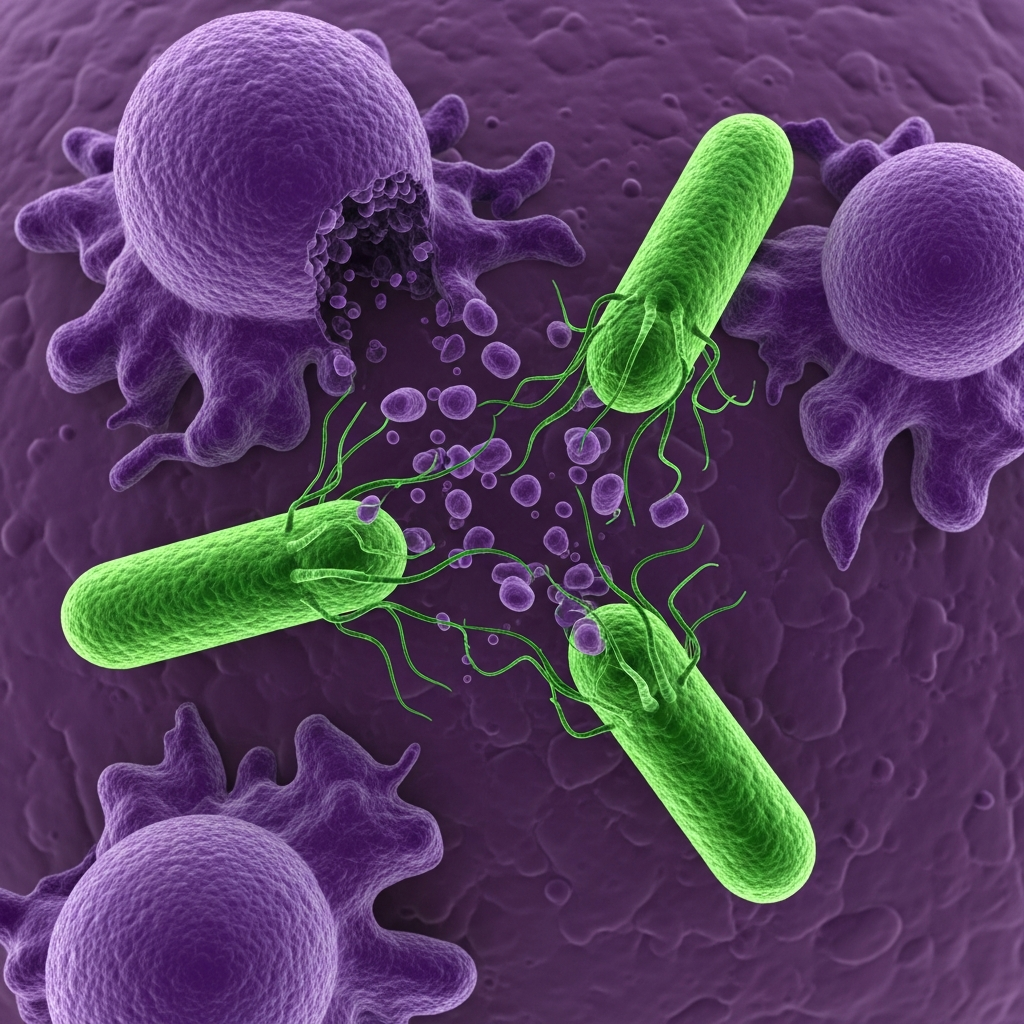
Imagine a future where microscopic allies seek out and destroy cancer cells from within. This isn’t science fiction; it’s the cutting-edge reality of a new cancer therapy leveraging engineered bacteria cancer treatment. Researchers at the University of Waterloo are pioneering a revolutionary approach, genetically programming naturally occurring bacteria to not only infiltrate tumors but also systematically dismantle them, offering a highly targeted and potentially less invasive alternative to conventional treatments. This innovative strategy harnesses the unique biological properties of certain microbes, turning them into precision weapons against disease.
The Promise of Bacterial Therapies in Oncology
The concept of using bacteria to fight cancer isn’t entirely new, but previous attempts faced significant hurdles. The challenge lies in ensuring these microbial agents can effectively colonize tumors without causing harm to healthy tissues, and crucially, survive long enough to complete their mission. This new research tackles these limitations head-on, presenting a sophisticated blueprint for a highly intelligent tumor-eating bacteria system. The goal is to create a therapy that is both potent and remarkably precise, minimizing side effects while maximizing therapeutic impact.
Why Bacteria for Cancer? Understanding the Tumor Microenvironment
Solid tumors often develop a unique internal environment markedly different from healthy tissue. At their core, many tumors are characterized by severe hypoxia—a lack of oxygen. This oxygen-deprived state arises as rapidly growing cancer cells outpace the blood supply, leading to regions of dead cells and low oxygen tension. This specific tumor microenvironment becomes an Achilles’ heel for cancer, as it presents an ideal, exclusive niche for certain anaerobic bacteria to thrive.
The Waterloo team specifically focuses on Clostridium sporogenes, a bacterium commonly found in soil. What makes Clostridium sporogenes particularly suitable for this task? Its fundamental requirement for completely oxygen-free conditions. Once spores of this bacterium are introduced into the body, they naturally gravitate towards and germinate within the hypoxic core of a solid tumor. Here, surrounded by abundant nutrients and devoid of oxygen, they begin to multiply and consume the available resources, effectively starting to “eat” the tumor from the inside. Dr. Marc Aucoin, a chemical engineering professor at Waterloo, explains, “We are now colonizing that central space, and the bacterium is essentially ridding the body of the tumor.” This natural preference for anaerobic conditions provides an inherent selectivity, ensuring the bacteria primarily target cancerous tissue.
How Engineered Bacteria Target Tumors
While Clostridium sporogenes shows immense promise due to its anaerobic nature, its natural capabilities alone aren’t enough for a complete cure. A critical limitation arises as the bacteria spread outwards from the tumor’s hypoxic core. As they approach the more oxygenated outer layers, exposure to even small amounts of oxygen becomes lethal, causing them to die before the entire tumor can be eradicated. This is where ingenious genetic engineering comes into play, transforming a naturally selective microbe into a highly effective therapeutic agent.
To overcome this inherent vulnerability, researchers introduced a gene from a related bacterium known for its superior oxygen tolerance. This strategic genetic modification empowers Clostridium sporogenes to withstand oxygen exposure for longer periods, enabling it to penetrate further into the tumor’s periphery and eliminate more cancer cells. This modification represents a significant leap, allowing the bacteria cancer treatment to become more comprehensive in its attack.
Quorum Sensing: A Smart Switch for Precision Targeting
Introducing an oxygen-tolerance gene, while beneficial, presents a new challenge: how to ensure these enhanced bacteria don’t proliferate in oxygen-rich healthy areas, such as the bloodstream. The solution lies in a sophisticated natural process called quorum sensing. This biological mechanism acts as an intelligent “on-off” switch, ensuring the oxygen-tolerance gene is activated only when and where it’s needed most – deep within the tumor.
Quorum sensing involves bacteria communicating with each other through the release of specific chemical signals. As the Clostridium sporogenes population grows within the enclosed tumor environment, these chemical signals accumulate. Once the concentration of these signals reaches a specific threshold, it triggers the activation of the oxygen-tolerance gene. This ingenious control system prevents premature activation, ensuring the bacteria remain sensitive to oxygen until they have established a dense, localized colony within the tumor. This mechanism is crucial for the safety and precision of this engineered bacteria cancer treatment, ensuring it remains highly localized and reduces the risk of systemic side effects.
Synthetic Biology: Crafting Precision Tools
The development of this targeted system is a testament to the power of synthetic biology, a field focused on designing and constructing new biological parts, devices, and systems. Dr. Brian Ingalls, a professor of applied mathematics at Waterloo, likened the process to building an electrical circuit, but with DNA as the wiring. “Using synthetic biology, we built something like an electrical circuit, but instead of wires we used pieces of DNA,” he explained. “Each piece has its job. When assembled correctly, they form a system that works in a predictable way.”
This meticulous engineering allows researchers to program the bacteria with specific instructions: go to the tumor, multiply, sense when there are enough of you, then switch on your protective shield to keep destroying cancer cells. Early studies have successfully demonstrated the modification of Clostridium sporogenes for oxygen tolerance and the functional characterization of the quorum-sensing system, even using green fluorescent protein as a visual indicator of gene activation. This work, including contributions from PhD student Bahram Zargar and supervised by Dr. Ingalls and retired professor Dr. Pu Chen, highlights the collaborative and innovative spirit driving this breakthrough.
Paving the Way for Clinical Trials
The successful proof-of-concept for both the oxygen-tolerance gene and the quorum-sensing mechanism brings this promising research closer to clinical application. The next critical step involves combining these two engineered elements into a single bacterium. Once integrated, the modified Clostridium sporogenes will undergo rigorous testing in preclinical trials. These trials, typically involving animal models, are designed to evaluate the safety, efficacy, and optimal dosage of the treatment before it can be considered for human studies.
This progression signifies a move from foundational scientific discovery to practical therapeutic development. If successful, this engineered bacteria cancer treatment could offer a paradigm shift in oncology, particularly for solid tumors that are difficult to treat with conventional methods due to their hypoxic cores. The potential for a self-propagating, self-regulating therapeutic agent that actively seeks out and eliminates cancer cells is immense, offering hope for patients with limited options.
The Future of Bio-Engineered Cancer Solutions
The work at the University of Waterloo represents a powerful intersection of biotechnology, microbiology, and chemical engineering. It underscores the growing importance of precision medicine and targeted therapies in the fight against cancer. Beyond just devouring tumors, such engineered microbial systems could potentially be further programmed to deliver anti-cancer drugs directly to the tumor site, stimulate an immune response against cancer cells, or even act as diagnostic tools. The implications extend far beyond this single application, opening doors for a new generation of smart, biological therapies.
As this research advances, the scientific community eagerly anticipates the results of preclinical trials. The vision of tumor-eating bacteria becoming a standard weapon in the oncology arsenal is still some years away, requiring extensive testing and regulatory approval. However, the foundational work has laid a robust groundwork, suggesting a future where cancer treatment is more intelligent, less invasive, and significantly more effective. This transformative approach offers a beacon of hope, demonstrating the incredible potential of synthetic biology to redefine our strategies against one of humanity’s most persistent health challenges.
Frequently Asked Questions
What makes the center of a tumor an ideal environment for Clostridium sporogenes?
The center of many solid tumors is severely hypoxic, meaning it lacks oxygen, and is often characterized by dead cells and abundant nutrients. This unique, oxygen-deprived microenvironment is perfect for Clostridium sporogenes, a bacterium that can only grow in completely anaerobic conditions. This natural preference means the bacteria selectively colonize and thrive within the cancerous mass, consuming its resources and effectively “eating” the tumor from the inside, while largely avoiding oxygen-rich healthy tissues.
How does the quorum sensing mechanism prevent the bacteria from harming healthy tissue?
The quorum sensing mechanism acts as a critical safety switch. The engineered bacteria are designed to activate their oxygen-tolerance gene only when they reach a sufficiently high density within the tumor. They achieve this by releasing chemical signals; when these signals accumulate to a specific threshold, indicating a large bacterial colony concentrated in the tumor, the oxygen-tolerance gene is activated. This prevents the gene from switching on too early or in low-density populations in oxygen-rich areas like the bloodstream, thereby localizing the therapeutic effect to the tumor itself and minimizing harm to healthy tissue.
When might this engineered bacteria cancer treatment be available for patients?
While highly promising, this engineered bacteria cancer treatment is currently in the preclinical testing phase. This involves rigorous evaluation in laboratory settings and animal models to assess safety, efficacy, and optimal dosing. If these trials are successful, the treatment would then need to proceed through multiple phases of human clinical trials, which can take several years, followed by extensive regulatory review and approval. Therefore, it is likely to be a decade or more before this innovative therapy could potentially become available for patients.