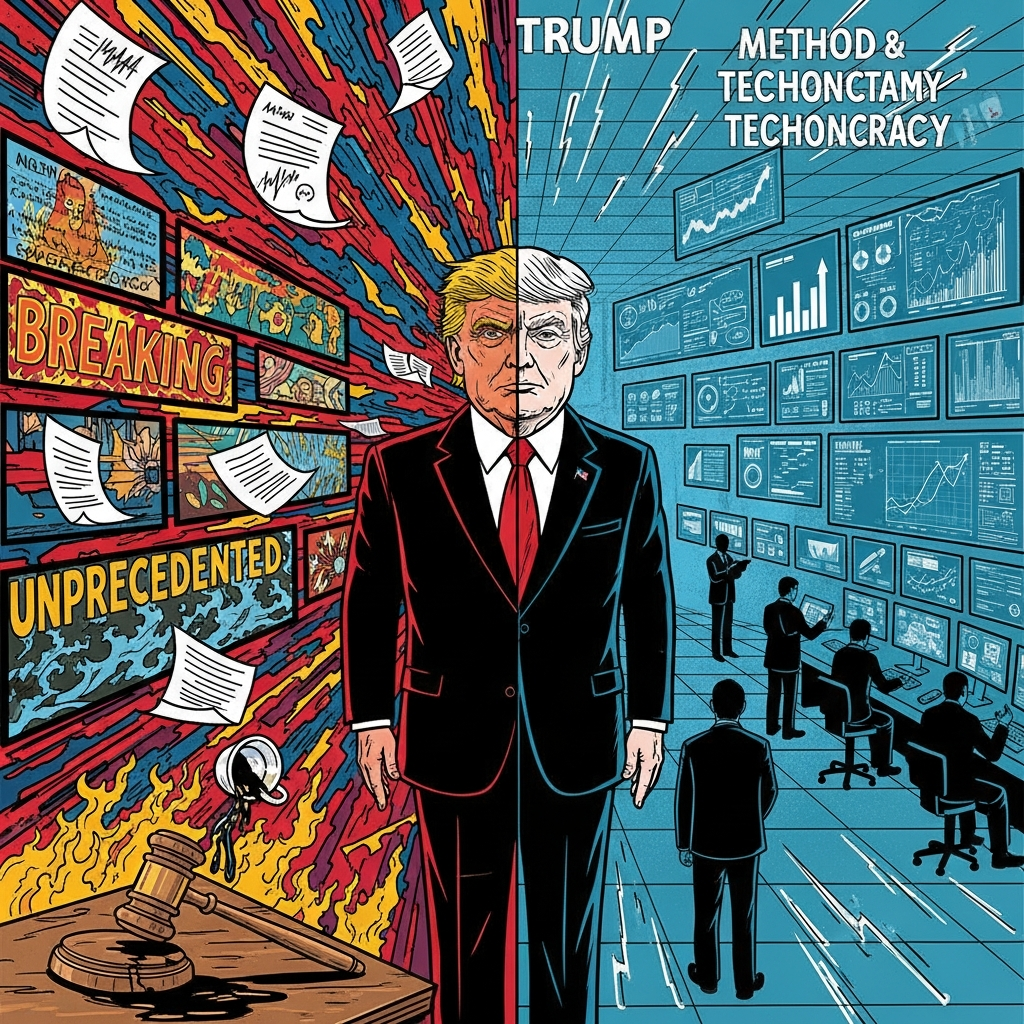
In an era of increasing political volatility, analyzing presidential leadership styles has become critical for understanding national and global stability. One particularly contentious descriptor, “Mad King Trump,” has frequently surfaced in discussions surrounding a potential or hypothetical second administration for former President Donald Trump, drawing a stark contrast with the methodical, expert-driven approach known as technocracy. This critique explores the perceived chaos and caprice of such a governance style, weighing its perceived failures against the systemic shortcomings of the technocratic systems it seeks to dismantle.
This examination synthesizes various perspectives, from critical political analyses to public opinion and expert commentary. It delves into the specific policy decisions and rhetorical patterns attributed to a “mad king” approach, highlighting instances where personal whim appeared to override established processes, often with significant domestic and international ramifications. Ultimately, understanding this dynamic is crucial for appreciating the ongoing debate about effective leadership in complex modern societies.
The “Mad King” Narrative: Origins and Characteristics
The label “Mad King” for Donald Trump isn’t merely political hyperbole; it reflects a deep concern among critics and even some former allies about his decision-making process. Right-wing influencer Candace Owens, for instance, publicly called for Trump’s removal, describing him as “deeply unwell” and warning of the dangers posed by his perceived instability. Similarly, former Republican Congresswoman Marjorie Taylor Greene urged intervention in what she termed Trump’s “madness.” These sentiments highlight a perception of leadership defined by intellectual inconstancy, unpredictable moods, and a willingness to gamble with high stakes, often at the expense of traditional policy mechanisms.
Such a governance style, frequently attributed to a hypothetical second Trump term, is characterized by a unilateral approach. This involves bypassing established interagency processes, relying instead on a small circle of advisors, and making decisions based on intuition, personal loyalty, or even the fluctuating stock market. Observers describe this as a presidency where personal slights and a quest for legacy heavily influence foreign policy and domestic agendas. The “mad king” persona suggests a leader who “rules” rather than “leads,” thriving on division and prioritizing self-adulation over comprehensive national interest.
The Technocracy Dilemma: Backlash and Its Roots
While “mad-king governance” draws sharp criticism, the original article and other analyses acknowledge that its rise was not unprovoked. Pre-Trump technocracy, defined by its reliance on experts and established bureaucratic processes, faced its own set of criticisms. This administrative state, often seen as efficient and stable, inadvertently removed crucial questions from democratic contestation. Issues such as ruinous free-trade deals, prolonged foreign wars, and open border policies were often perceived as decided by an insulated elite, regardless of which party voters elected.
This removal of critical policy areas from public debate fostered widespread public dissatisfaction. Trump, in many ways, tapped into this simmering resentment, successfully re-politicizing questions that voters had been told were beyond their understanding or influence. The “mad king” emerged, in this view, as a brash figure elevated by the popular classes to confront what they saw as unresponsive, wonkish bureaucracies. While technocracy offers stability and informed decision-making, its perceived detachment from democratic will and its occasional failures laid fertile ground for populist backlashes.
Historical Echoes: Andrew Jackson and the Second Bank of the United States
To illustrate the perils of a leader who dismantles existing structures without a robust replacement plan, parallels are often drawn to historical figures like Andrew Jackson. Jackson’s fierce opposition to the Second Bank of the United States (BUS) provides a classic American example of a popular leader challenging an entrenched administrative institution. The BUS, a pillar of the Hamiltonian state, effectively managed credit and fostered economic growth. However, it also became widely seen as a tool for the Northeastern commercial establishment, hostile to the interests of workers, farmers, and burgeoning entrepreneurs in the South and West. Crucially, the BUS leadership resisted democratic oversight, even attempting to influence election outcomes.
Jackson, a champion of the common man, successfully waged a “Hulk-smash” campaign against the BUS, ultimately destroying it. Yet, his administration failed to plan adequately for the aftermath. The resulting void led to widespread wildcat banking, a national recession, and a much less stable U.S. banking system for decades compared to more centralized systems in Europe. The lesson from Jackson’s fight, according to analysts, is that while the BUS needed better democratic oversight, its wholesale destruction without a constructive alternative created more problems than it solved. This historical pattern is cited as disconcertingly familiar when observing certain aspects of a “mad-king” approach to reform.
Unpredictable Policy: Tariffs, Trade, and Economic Impact
A hallmark of the “mad king” governance style in a hypothetical second Trump administration is its unpredictable approach to economic policy, particularly tariffs and international trade. Trump correctly identified a genuine crisis: a global trade system that often benefited Wall Street and China while eroding American manufacturing capacity and devastating working-class communities. However, his proposed solutions were characterized by disruption rather than design.
In a hypothetical second term, Trump’s administration is described as employing tariffs as virtually its sole tool for restructuring trade. This involved imposing across-the-board levies using a “cockamamie formula,” often without congressional legislation and on the basis of dubious statutory authority. These tariffs were criticized for lacking clear objectives, such as coupling them with workforce development or industrial policy that could genuinely revive manufacturing. Furthermore, tariff imposition and removal were reportedly driven by “pure caprice” and responsive to the gyrations of equity markets, leading to inconsistent application and strained relations with long-standing allies. The Supreme Court eventually questioned the statutory authority for these tariffs. Ultimately, the policy is said to have failed its ostensible purpose, with the U.S. losing manufacturing jobs and public approval for economic handling remaining low, while contributing to a projected inflation spike.
Geopolitical Volatility: The Iran War and Foreign Policy Whims
The “mad king” label finds its most pronounced application in the arena of foreign policy, where decision-making is described as entirely susceptible to personal whims. A hypothetical “Iran war” during a second Trump administration is cited as a prime example. This conflict reportedly proceeded with “no interagency process”—none of the typical collaboration among security and foreign-policy apparatuses to inform presidential decisions. Instead, policies were shaped by the president and a small group of favored advisors.
The objectives of this war were constantly shifting, ranging from regime change and military degradation to reopening or even jointly managing the Strait of Hormuz with Iran. Management of the war itself was humorously depicted as being influenced by the stock market, with operations reportedly easing on Sundays to ensure a positive market opening on Mondays. This erratic approach led to a “battered but strategically victorious Iran,” which hardened its internal position, improved its ballistic capabilities, and secured promises of sanctions relief. Ironically, despite his anti-establishment rhetoric, Trump’s actions in this hypothetical war mirrored a long-standing hawkish “deep state” goal, but executed in a manner that proved ultimately counterproductive.
Beyond this specific conflict, Trump’s foreign policy is characterized by a “might makes right” philosophy and a zero-sum view of geopolitics. Examples from a hypothetical second term include a quest to acquire Greenland, which experts warned would shatter NATO and create immense logistical burdens, threatening 200% tariffs on French wine over a perceived slight, and a “shaky and incomplete peace” in Gaza. This unpredictable approach means that “all agreements and alliances can find themselves hostage to the whims of the moment,” as the U.S. adopts what some describe as a “19th-century imperial model.”
The “Enabling Henchmen” and Delusional Reality
A crucial aspect of the “mad king” narrative is the ecosystem of advisors and figures who enable such a governance style. Political commentators describe two main categories of these “henchmen.” First, there are the “Liars,” who are aware they are promoting falsehoods or reversing previous stances to maintain favor and power. This group includes individuals who once openly criticized Trump but later capitulated and supported his policies. Second, there are the “Believers and Manipulators,” who either genuinely subscribe to the ideology or strategically use Trump as a vehicle for their own long-held agendas, whether for personal interest or to advance specific political views.
These enabling figures contribute to a political environment where the president is perceived as increasingly “less tethered to reality” and “losing his mind.” Analysts suggest it becomes difficult to ascertain if Trump is “lying,” “deluded,” attempting to manifest reality through repetition, or simply “bullshitting”—meaning he disregards truth entirely. Regardless of the motivation, the cumulative effect of these actions and the surrounding support structure is that these “words and actions constitute our reality,” shaping policy and public discourse in profound ways.
Seeking a Path Forward: Contestation or Competence?
The profound tension between “mad-king governance” and traditional technocracy raises fundamental questions about the future of American leadership. The American Founders envisioned a system built on political contestation and legislative compromise, particularly within Congress, as the ideal mechanism for policy formation. However, in an era where Congress is often described as “moribund” and lawmakers appear more focused on cable news appearances than substantive legislative work, the country finds itself perpetually oscillating between these two problematic poles.
While both “mad kings” and “imperious bureaucrats” present distinct challenges, the experience of perceived policy chaos and geopolitical instability during a hypothetical second Trump administration has led some to reluctantly prefer the systematic, if imperfect, approach of the technocrats. The call to “bring back the wonks” reflects a yearning for a return to processes, expertise, and a degree of predictability, even if those systems require significant democratic oversight and reform. The ultimate path forward likely lies in revitalizing legislative accountability and finding a balance between democratic responsiveness and expert-driven competence, ensuring that neither extreme holds sway.
Frequently Asked Questions
What characterizes the “Mad King” governance style often attributed to Trump?
The “Mad King” governance style, often attributed to Donald Trump, is characterized by intellectual inconstancy, mercurial moods, and a gambling audacity in decision-making. It involves a strong reliance on personal whim and intuition, often bypassing established interagency processes and expert consensus. Policies can be implemented erratically, sometimes influenced by external factors like stock market performance, and may prioritize personal legacy or perceived strength over long-term strategic planning. This approach often leads to unpredictable domestic and foreign policy shifts, fostering instability and internal as well as international tensions.
How did Trump’s approach to tariffs and trade mirror historical “Hulk-smash” strategies?
Trump’s approach to tariffs and trade during a hypothetical second administration mirrored historical “Hulk-smash” strategies by emphasizing the destruction of existing trade frameworks rather than careful, constructive design. Similar to Andrew Jackson’s unmanaged dismantling of the Second Bank of the United States, Trump imposed broad, often capricious tariffs using questionable statutory authority and without significant legislative backing. This disruptive tactic, while identifying a real crisis in global trade, was criticized for lacking clear objectives like workforce development or industrial policy, failing to revive manufacturing, and ultimately leading to job losses and economic uncertainty rather than planned revival.
What are the long-term implications of prioritizing individual presidential whims over established interagency processes?
Prioritizing individual presidential whims over established interagency processes has several significant long-term implications, as illustrated by the hypothetical Iran war during a second Trump administration. It leads to highly inconsistent foreign policy objectives, as seen in the constantly shifting goals for the Strait of Hormuz. Such an approach undermines the expertise and institutional knowledge within government agencies, potentially leading to poorly considered decisions and unintended consequences, like a “strategically victorious Iran” despite initial U.S. actions. Domestically, it can erode public trust in governance, diminish the credibility of policy tools, and perpetuate an environment of political instability. This ultimately compromises national and international stability, making alliances fragile and future planning challenging.