
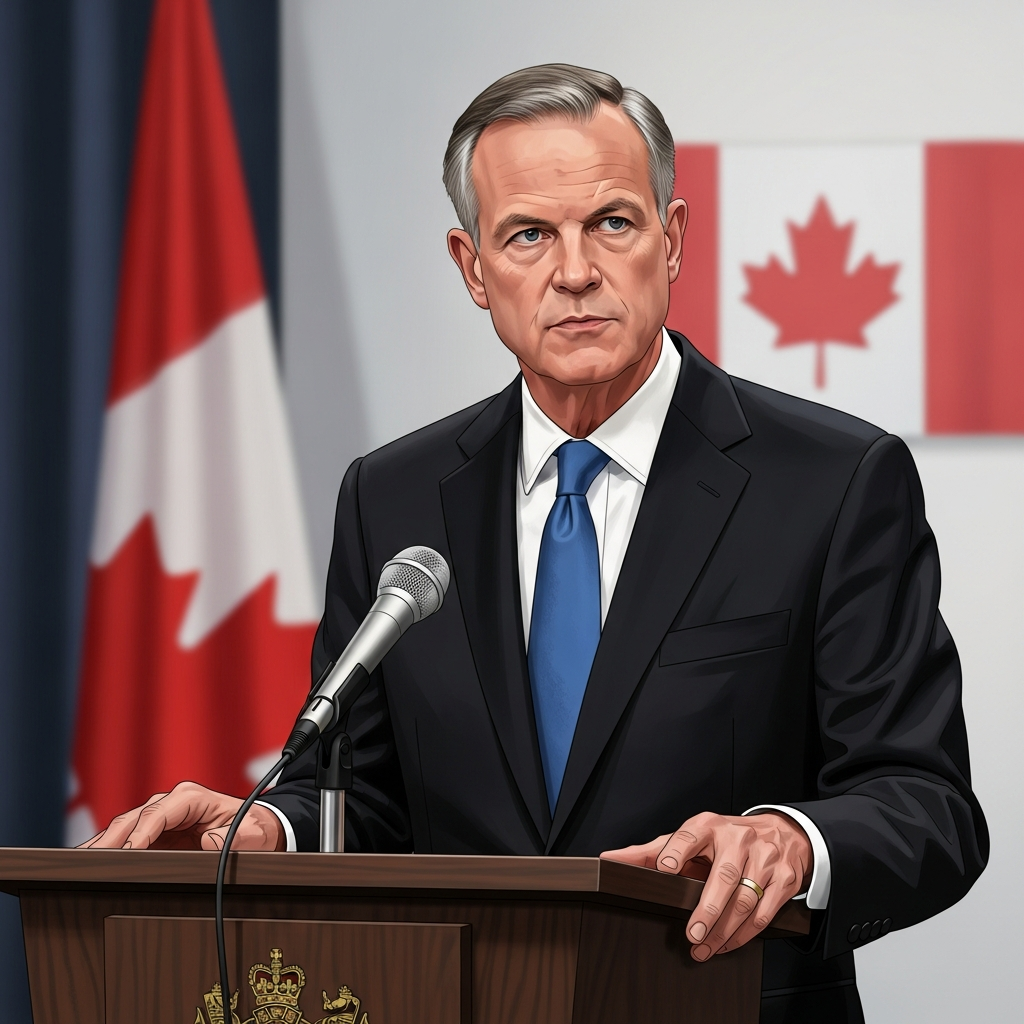
The announcement of Air Canada CEO Michael Rousseau’s impending retirement has sparked a crucial debate about leadership, language, and national identity within Canada’s largest airline. His departure by the end of the third quarter of 2026 comes after intense criticism. This public outcry followed an English-only message of condolence issued after a tragic plane crash. Prime Minister Mark Carney has since weighed in decisively, declaring that the next Air Canada CEO bilingual proficiency is not just preferred, but “essential.” This incident underscores the deep significance of official bilingualism for a national institution like Air Canada, especially one headquartered in French-speaking Montreal.
The Catalyst: A Tragic Event and Linguistic Outcry
The controversy ignited following a deadly plane crash earlier this month at New York’s LaGuardia Airport. An Air Canada Jazz flight, originating from Montreal, tragically collided with a fire truck on the runway shortly after landing. This devastating accident claimed the lives of both pilots, Antoine Forest, a French-speaking Quebecer, and Mackenzie Gunther. In the immediate aftermath, Michael Rousseau, as CEO, delivered a video message of condolence. However, this message was broadcast solely in English, even with French subtitles, provoking widespread outrage across Canada.
This singular act of communication, lacking French directly from the CEO, rapidly escalated into a national debate. The Office of the Commissioner of Official Languages reportedly received hundreds of complaints. This surge of public dissatisfaction highlighted a fundamental expectation for a leader of a national Canadian airline. The incident served as a potent reminder of Canada’s official bilingual status and the cultural sensitivities within the country.
Rousseau’s Leadership Under Scrutiny
The English-only condolence message wasn’t an isolated incident but rather exacerbated pre-existing criticisms regarding Michael Rousseau’s command of the French language. When he was appointed president of Air Canada in February 2021, he had reportedly committed to learning French. This prior promise, now unfulfilled in the eyes of many, added fuel to the fire. Political figures, including Quebec’s premier, swiftly called for Rousseau’s resignation. The pressure mounted, reflecting a broader dissatisfaction with a national leader seemingly out of touch with a significant portion of the Canadian population.
This leadership crisis brought to light the intricate relationship between corporate responsibility and national identity. For a company like Air Canada, which serves all Canadians, the ability of its top executive to communicate authentically in both official languages is paramount. The incident underscored the need for leaders to not only acknowledge but embody the linguistic duality that defines the nation.
Prime Minister Mark Carney’s Resolute Stance: A National Imperative
Following the intense public and political pressure, Prime Minister Mark Carney publicly affirmed that Rousseau’s decision to step down was “appropriate.” Carney, who had previously condemned the English-only communication as demonstrating a “lack of compassion and judgment,” seized the opportunity to lay down a firm requirement for the airline’s future leadership. His message was clear and unequivocal: “It is essential that the next Air Canada CEO bilingual proficiency is a core qualification.”
Carney’s statement wasn’t merely a suggestion; it was a powerful political mandate. It highlighted the government’s expectation that national institutions reflect and respect Canada’s foundational linguistic principles. For Air Canada, a crucial national carrier, this directive from the Prime Minister signals a new era of accountability regarding official languages at the highest executive levels. The emphasis on a bilingual Air Canada CEO is a direct response to a failure of leadership that deeply offended many Canadians.
Quebec’s Voice: Premier Legault’s Call for Action
The sentiment from Ottawa was strongly echoed and amplified by Quebec Premier François Legault. Legault, who had been among those calling for Rousseau’s resignation, explicitly saluted Rousseau’s departure. He unequivocally stated the responsibility of the Air Canada board of directors to ensure that the subsequent CEO is French-speaking. “The Air Canada board of directors will have to ensure that the next CEO speaks French,” Legault declared in a statement.
This strong stance from Quebec’s premier is rooted in the province’s unique linguistic and historical identity. Quebec is predominantly French-speaking, with approximately 80% of its population using French as their primary language. Its identity has been contentious since the British takeover in the 1760s, making linguistic issues particularly sensitive and politically charged. For a major national entity like Air Canada, headquartered in Montreal, having an executive who is not proficient in French is often perceived as disrespectful to Quebecers and an affront to the province’s cultural heritage.
The Broader Context: Canada’s Official Bilingualism
Canada is, by law and by cultural design, an officially bilingual nation. This status is not merely a formality but a fundamental aspect of the country’s social fabric and legal framework. Air Canada, as the largest airline and a vital piece of national infrastructure, holds a special responsibility to uphold these values. Its headquarters in Montreal, the largest city in French-speaking Quebec, further magnifies this expectation. The debate around the Air Canada CEO bilingual requirement serves as a powerful reminder of how deeply intertwined language and national identity are in Canadian public life.
Transport Minister Steven MacKinnon also acknowledged Rousseau’s retirement, reiterating the government’s commitment to ensuring that Air Canada “provides safe, reliable, affordable, and bilingual service to all Canadians.” This government statement reinforces the idea that bilingual service extends beyond flight attendants and ground staff; it must be reflected in the leadership itself. The symbolic importance of having a bilingual Air Canada CEO who can address all Canadians directly, in either official language, cannot be overstated. It represents an authentic commitment to inclusivity and respect.
Why Bilingualism Matters for Air Canada
For Air Canada, the stakes of this linguistic leadership crisis are high. A bilingual Air Canada CEO is critical for several reasons:
Customer Trust and Service: Direct communication from the top in both official languages builds trust with all customer segments, reflecting genuine respect for Canada’s diverse linguistic landscape.
Employee Relations: A bilingual leader can more effectively connect with and inspire Air Canada’s diverse workforce, fostering a more inclusive and cohesive corporate culture.
National Symbolism: As a national flag carrier, Air Canada is a symbol of Canada itself. Its leadership should embody the values of the nation it represents.
Legal and Moral Obligation: Beyond political pressure, there is an inherent moral obligation for a national service provider to reflect the country’s official linguistic status, especially when headquartered in a French-speaking province.
- Reputational Damage: The controversy highlighted the significant reputational damage that can occur when a national institution appears to disregard fundamental Canadian values. A bilingual CEO can help rebuild and strengthen the airline’s brand image.
- fortune.com
- fortune.com
- fortune.com
- fortune.com
- fortune.com
The Path Forward: Seeking a Bilingual Leader
The Air Canada board of directors now faces a critical task: finding a new CEO who not only possesses strong business acumen but also meets the explicit requirement of being bilingual. This process will undoubtedly be closely watched by politicians, media, and the public alike. The demand for a bilingual Air Canada CEO sets a precedent for leadership in other national institutions, emphasizing that cultural and linguistic sensitivity are paramount, particularly in a diverse nation like Canada.
This situation offers Air Canada an opportunity to reset its relationship with a significant portion of its customer base and reaffirm its commitment to official languages. The airline’s future leader must be prepared to navigate a complex linguistic landscape, demonstrating an understanding that effective communication transcends mere translation; it requires a genuine appreciation for Canada’s dual linguistic heritage. This incident serves as a powerful lesson in corporate accountability, reminding all major Canadian entities that their leadership must truly represent and respect the diverse voices of the nation.
Frequently Asked Questions
Why was Michael Rousseau’s retirement from Air Canada prompted?
Michael Rousseau’s retirement as CEO of Air Canada was primarily prompted by widespread criticism following an English-only message of condolence. This message was issued after a tragic plane crash at New York’s LaGuardia Airport, where two pilots died. The incident exacerbated pre-existing criticisms regarding Rousseau’s lack of French fluency, despite a previous commitment to learn the language. This led to hundreds of complaints and strong calls for his resignation from prominent political figures, including Prime Minister Mark Carney and Quebec Premier François Legault.
What is the significance of bilingualism for Air Canada as a national carrier?
Bilingualism is profoundly significant for Air Canada because it operates as Canada’s largest airline and a national flag carrier in an officially bilingual country. Headquartered in Montreal, Quebec, a predominantly French-speaking province, Air Canada is expected to embody and respect Canada’s dual linguistic heritage. A bilingual CEO ensures effective communication with all Canadians, enhances customer trust, fosters inclusive employee relations, and upholds the airline’s symbolic role as a representative of national values. It’s considered a legal, moral, and political imperative for such a prominent institution.
What specific criteria did Prime Minister Mark Carney set for Air Canada’s next CEO?
Prime Minister Mark Carney set a very clear and explicit criterion for Air Canada’s next CEO: they “must be bilingual.” Carney declared it “essential” that the incoming leader possesses proficiency in both of Canada’s official languages. This directive underscores the government’s firm expectation for national institutions to reflect Canada’s linguistic duality at the highest leadership levels. It was a direct response to the controversy surrounding Michael Rousseau’s English-only communication, which Carney criticized as demonstrating a “lack of compassion and judgment.”
Conclusion: A Clear Mandate for Air Canada’s Future
The retirement of Michael Rousseau as Air Canada CEO marks a pivotal moment for the national airline, driven by a crucial conversation about language and leadership. Prime Minister Mark Carney’s unwavering mandate for a bilingual Air Canada CEO sends an unmistakable message. For a country built on the foundation of two official languages, the ability of its most visible corporate leaders to communicate fluently in both French and English is not merely a nicety; it is a fundamental expectation and a reflection of national respect. Air Canada’s board now faces the responsibility of selecting a successor who embodies this essential quality, ensuring the airline truly serves and represents all Canadians as it moves forward.