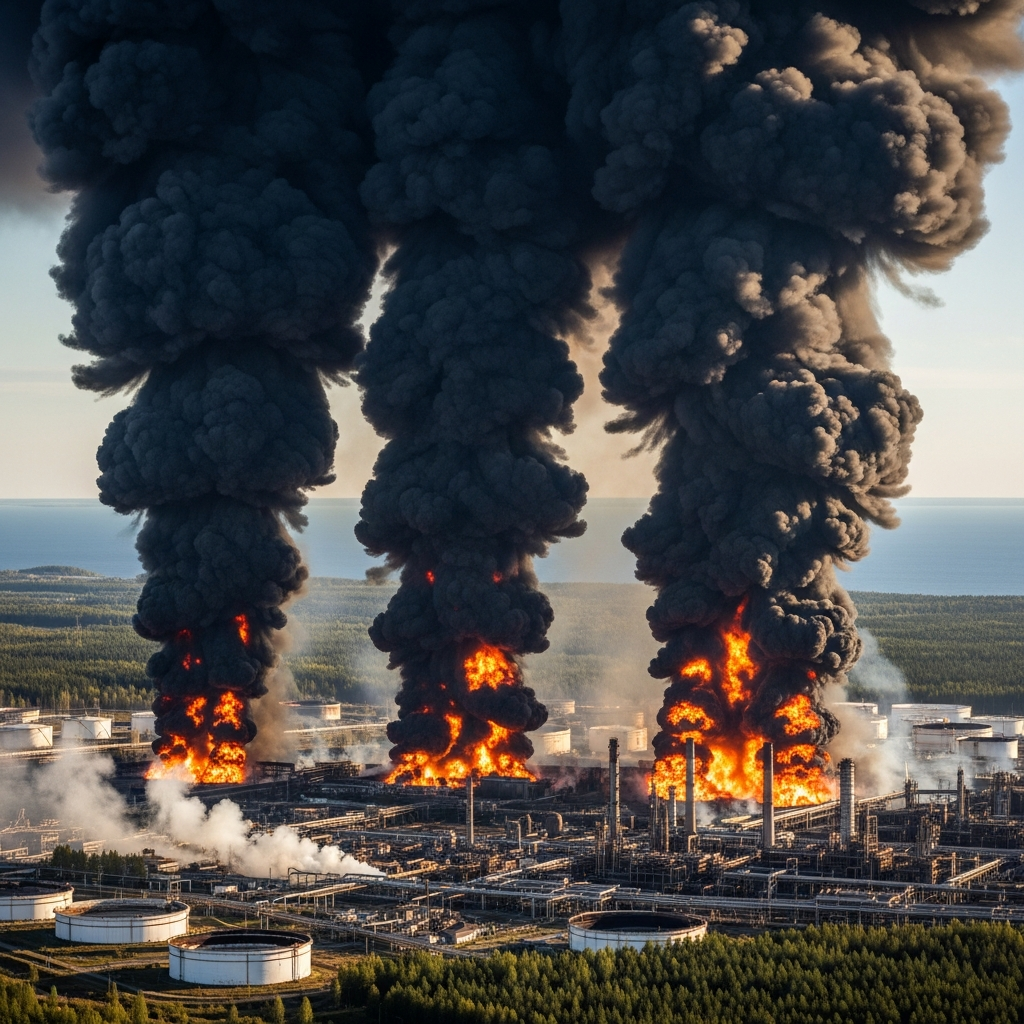
Massive fires are raging across critical Russian oil facilities in the Leningrad region, near the Baltic Sea, following a series of sustained Ukrainian drone strikes since late March 2026. These targeted attacks have caused extensive damage to vital export infrastructure, including major ports and an inland refinery, creating enormous plumes of smoke visible for days in satellite imagery. The strikes represent a significant escalation in Ukraine’s strategy to disrupt Russia’s war economy and have prompted both immediate operational halts and broader international concerns over global energy stability.
Ukraine’s Escalating Drone Campaign Targets Russia’s Oil Infrastructure
Ukraine has launched a sophisticated and relentless campaign of drone strikes against key Russian oil facilities in the Leningrad region, near the Baltic Sea, since March 23, 2026. This concerted effort has aimed at debilitating Russia’s capacity to process and export oil. The attacks have confirmed hits on at least three crucial energy sites. These include the major oil export ports of Ust-Luga and Primorsk, along with the strategically important Kirishi oil refinery located inland.
Evidence from intelligence firm Vantor and BBC Verify’s analysis of verified videos and satellite imagery confirms the devastating impact. Enormous plumes of smoke were observed rising from burning facilities at Primorsk as early as March 24. Similar widespread fires and significant damage were reported at Ust-Luga and Kirishi by March 27. NASA’s satellite resource FIRMS, which detects heat signatures, corroborated the ongoing infernos, indicating Primorsk was still ablaze early Monday, and Ust-Luga by Monday afternoon. Ukrainian drone forces commander, Robert Brovdi, even stated that Ust-Luga was intentionally struck again “to keep the fire going,” highlighting the persistent nature of these operations.
Severe Damage Inflicted on Key Export Hubs
The scale of the destruction to Russia’s energy infrastructure is substantial. Detailed analysis by BBC Verify indicates severe damage across the targeted sites. At Primorsk, at least eight storage tanks were either destroyed or significantly damaged. Ust-Luga suffered comparable devastation, with at least eight tanks sustaining destruction or damage. The Kirishi refinery, one of Russia’s largest oil-processing plants, saw at least two of its storage tanks damaged.
These facilities are critical to Russia’s global oil exports. According to the Finland-based Centre for Research on Energy and Clean Air (Crea), Ust-Luga alone accounts for 20% of Russia’s total oil exports, with Primorsk contributing another 22%. The immediate operational consequences were stark. Crea reported an unprecedented two-day period on March 26 and 27, where no ships loaded oil in any of Russia’s three Baltic ports. This marked the first such consecutive halt since Russia’s full-scale invasion of Ukraine in 2022. Reuters news agency further calculated that at least 40% of Russia’s total oil export capacity was temporarily halted on March 25 following the initial wave of assaults.
Ukraine’s Strategic Objective: Undermining Russia’s War Economy
The primary motivation behind these Ukraine drone strikes is clear. Commander Robert Brovdi articulated the overarching goal as “demilitarizing Russia’s oil arteries, refining capacity and crude export infrastructure.” This strategy directly targets Russia’s ability to fund and supply its ongoing military operations. The Ukrainian military specifically emphasized that the Kirishi refinery produces “fuels that support the armed forces of the aggressor state,” underscoring its military significance.
These economic strikes also aim to counteract financial windfalls Russia has recently enjoyed. Alexander Lord, an analyst at UK-based intelligence company Sybelline, suggested that Kyiv is likely “attempting to offset the revenue windfall that Russian oil and gas exporters are otherwise currently enjoying.” This comes at a time when Russia reportedly earned approximately £7.1 billion from oil exports in the final three weeks of March. Rising global oil prices, partly exacerbated by geopolitical disruptions like the US-Israel conflict with Iran, have contributed to this revenue boost, making Russia’s energy sector a potent target.
A Pattern of Expanding Drone Capabilities
The widespread attacks in the Leningrad region are part of an evolving and increasingly ambitious Ukrainian drone strategy. Kyiv has demonstrated a growing capability to strike deep within Russian territory, hitting varied targets with advanced uncrewed aerial vehicles. For instance, a major multi-drone and missile operation in December 2025 saw nearly 300 drones and missiles striking across western and central Russia. This included five oil refineries set ablaze and an offshore oil platform in the Caspian Sea hit, demonstrating Ukraine’s expanding range and strategic focus on Russia’s fossil fuel industry. The current strikes on Baltic oil export infrastructure continue this pattern of targeting critical economic assets.
Global Ramifications and Allied Concerns
The intensified strikes on Russian energy infrastructure have inevitably drawn international attention and generated complex geopolitical discussions. Ukrainian President Volodymyr Zelensky confirmed on Monday that allied nations have formally requested Kyiv to reduce these attacks. This appeal stems from concerns about exacerbating the global energy crisis and potentially driving oil prices even higher. The Western appeal aims to prevent further disruption to global energy supplies and mitigate price surges, which have seen oil reach as high as $119 a barrel.
However, Zelensky firmly stated Ukraine’s position: such attacks would only cease if Moscow halted its own targeting of Ukraine’s energy system. This stance highlights Ukraine’s determination to maintain strategic pressure despite international pleas. Analyst Alexander Lord further predicted that “the US will attempt to pressure Ukraine to stop these targeted strikes, as part of wider efforts to suppress global oil prices” as the conflict continues. In a separate, direct impact of the strikes, Leningrad region Governor Alexander Drozdenko reported that three individuals, including two children, were injured during one attack where Russian air defenses reportedly shot down 38 drones, underscoring the immediate human cost.
The Broader Chessboard: Economic Warfare and Geopolitical Tensions
The sustained Ukrainian attacks on Russian oil facilities underscore a critical phase of economic warfare. By targeting infrastructure vital to Russia’s export revenue, Ukraine aims to diminish the Kremlin’s financial capacity to sustain its military efforts. This strategy directly confronts the dilemma faced by Western allies: balancing support for Ukraine’s defense with concerns about global economic stability and energy prices.
The international community watches closely as these strikes unfold. They not only impact Russia’s immediate energy operations but also influence global oil markets and geopolitical negotiations. The choice for Ukraine remains stark: continue to inflict economic pain on its aggressor, or accede to allied requests to stabilize a volatile global energy landscape. This complex interplay of military objectives, economic pressures, and international diplomacy will continue to shape the trajectory of the conflict and the global energy future.
Frequently Asked Questions
What immediate impact did the strikes have on Russia’s oil exports?
The recent Ukraine drone strikes caused significant and immediate disruption to Russia’s oil export operations. According to Crea, the ports of Ust-Luga and Primorsk, which handle 20% and 22% of Russia’s total oil exports respectively, suffered severe damage. This led to an unprecedented two-day halt in oil loadings at all three Baltic ports on March 26 and 27, marking the first time since the 2022 invasion. Reuters further estimated that at least 40% of Russia’s oil export capacity was temporarily suspended following the initial attacks on March 25, severely impacting the country’s ability to ship crude.
Which specific Russian oil facilities were targeted in the Leningrad region?
The Ukrainian attacks specifically targeted three critical Russian oil facilities in the Leningrad region near the Baltic Sea. These include the major oil export ports of Ust-Luga and Primorsk, both crucial for maritime shipments. Additionally, the inland Kirishi oil refinery was struck. This refinery is identified as one of Russia’s largest and produces fuels directly supporting the aggressor state’s armed forces. Satellite imagery and verified videos confirm extensive damage and fires across all three of these strategic sites, impacting their operational capacity.
Why are international allies concerned about Ukraine’s strikes on Russian energy?
International allies have expressed significant concerns about Ukraine’s intensified strikes on Russian energy infrastructure primarily due to their potential impact on the global energy crisis. These attacks can disrupt global oil supplies, leading to increased prices and market volatility, which could have ripple effects on economies worldwide. While supporting Ukraine’s defense, allies also seek to maintain global economic stability. Ukrainian President Zelensky confirmed these concerns, stating that allies have requested a reduction in strikes to help stabilize the global energy market, even as he conditioned such a halt on Russia ceasing its attacks on Ukraine’s energy system.