Get ready for April’s full moon, widely known as the Pink Moon, set to grace our skies in 2026. This celestial event promises a captivating display, even if its name doesn’t perfectly describe its color. Peaking on Wednesday, April 1, 2026, this full moon holds deep cultural and religious significance. Whether you’re an avid stargazer or simply curious, this comprehensive guide will prepare you to fully appreciate the April Pink Moon, offering insights into its unique history, optimal viewing times, and other astronomical wonders. Discover how this spring full moon influences traditions and how you can best observe it, rain or shine.
What is the Pink Moon?
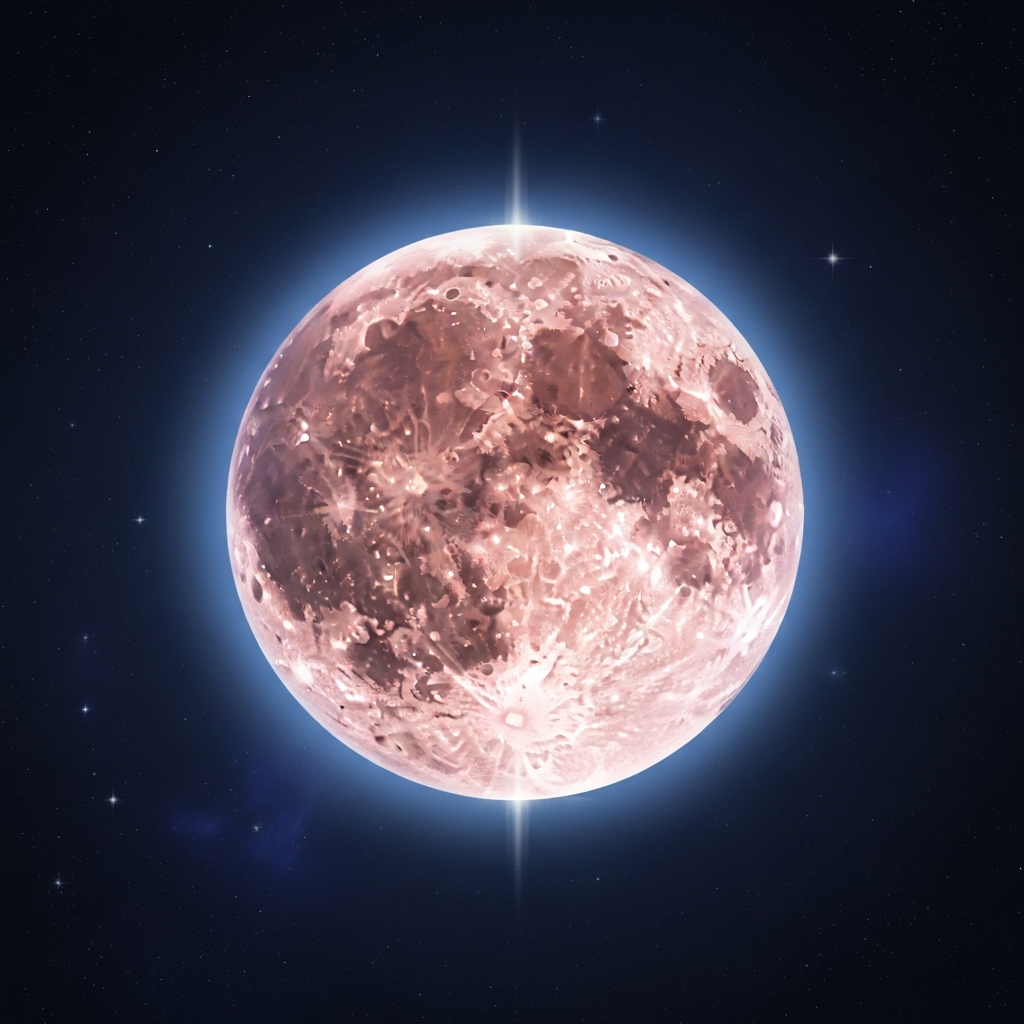
Every full moon carries a distinctive name, often rooted in historical observations of nature or cultural practices. April’s full moon is famously known as the Pink Moon. This title, however, often leads to a common misconception: that the moon will appear distinctly pink or rosy. In reality, the Pink Moon typically presents as a standard luminous orb, a bright silver-white in the night sky.
Unpacking the “Pink” Misnomer
The charming name “Pink Moon” does not refer to the moon’s hue. Instead, it pays homage to a beautiful wildflower native to eastern North America. This plant, Phlox subulata, is commonly called creeping phlox or moss pink. Its vibrant pink blooms blanket the ground during early spring, precisely when April’s full moon appears. Indigenous communities and early colonists observed this natural synchronization. They named the moon after the prominent floral display marking the start of a new growing season. The Old Farmer’s Almanac formalized many of these traditional full moon names in the 1930s, including the “Pink Moon.”
Other Ancient Names for April’s Full Moon
Beyond its well-known “Pink Moon” moniker, April’s full moon carries a rich tapestry of other names from various Native American traditions. These names often reflect specific natural occurrences or seasonal activities prevalent during this time.
Here are some additional historical names for April’s full moon:
Paschal Moon or Passover Moon: Highlighting its religious importance for calculating Easter and Passover.
Breaking Ice Moon: Signifying the thawing of winter ice in northern regions.
Budding Moon: Indicating the emergence of new plant growth.
Sucker Moon: Named after the sucker fish, which often swim upstream to spawn in spring.
Moon When the Ducks Come Back: Marking the return of migratory birds.
Maple Sugar Moon: Used by the Citizen Potawatomi Nation, signifying the maple tree harvesting season.
Boiling Sap Moon or Loon Moon: Adopted by the Ojibwe community, reflecting their observations of sap collection and wildlife.
These diverse names underscore the moon’s profound connection to the natural world and human cultures.
When and Where to See the Pink Moon 2026
The April Pink Moon in 2026 offers a prime opportunity for stargazers. Knowing the exact timing and what to expect can enhance your viewing experience.
Peak Illumination Details
According to astronomical experts, the Pink Moon 2026 will reach its peak illumination on Wednesday, April 1, 2026. The optimal viewing time for most in the Eastern Time zone will be around 10:12 p.m. ET. For those in the Central Time zone, this translates to 9:12 p.m. CT. While the moon technically peaks at a specific moment, it will appear virtually full for approximately two days before and after this date. This generous window allows multiple opportunities for observation, even if prime viewing is missed. West Coast residents will see the moon rise about an hour after its official peak illumination, still appearing completely full.
Viewing the Moon: What to Expect
When observing the full moon, especially shortly after sunset, you might notice an interesting phenomenon. The moon often appears unusually large and bright when it is closer to the horizon. This is an optical illusion, not a change in the moon’s actual size. Our brains interpret the moon as larger by comparing it to nearby reference points like trees, buildings, or distant landscapes. As the moon climbs higher in the sky, this illusion fades, and it reverts to its perceived normal size. This makes moonrise and moonset particularly captivating times to watch.
Regional Weather Outlook: Potential Obstacles
While the Pink Moon is a guaranteed celestial event, its visibility often hinges on local weather conditions. For April 1, 2026, forecasts for various regions suggest potential challenges for clear viewing.
Louisville, Kentucky: There’s an 80-90% chance of precipitation predicted, with showers and thunderstorms likely.
Milwaukee, Wisconsin: Approximately 20% cloud cover is forecast between 8 p.m. and 9 p.m. CT.
Ohio (Akron, Cincinnati, Columbus): Cities across Ohio anticipate mostly cloudy skies with a significant 60% chance of showers and thunderstorms.
These conditions could obscure the full moon’s brilliance. Even if direct viewing is difficult, the moon’s light might still penetrate thinner clouds. It’s always worth looking up!
The Pink Moon’s Profound Cultural and Religious Significance
Beyond its natural beauty, the April Pink Moon holds immense cultural and religious importance. It connects ancient traditions with modern observances, shaping significant holidays worldwide.
The Paschal Moon and Easter’s Shifting Date
The Pink Moon is also known as the Paschal Moon or Passover Moon. This alternative name underscores its critical role in determining the date of Easter Sunday. In Christian tradition, Easter is celebrated on the first Sunday that follows the Paschal full moon. The Paschal full moon is defined as the first full moon occurring after the spring equinox. The spring equinox is consistently recognized as March 21 in the Gregorian calendar. For 2026, the Pink Moon’s occurrence on April 1 means that Easter Sunday will fall just a few days later, on April 5.
Easter is famously termed a “movable feast” precisely because its date isn’t fixed. Instead, it shifts annually within a specific range, from March 22 to April 25. This variability is a direct result of its calculation method, combining the fixed spring equinox date with the moon’s 29.5-day cycle. The next time Easter will fall on its latest possible date, April 25, is projected to be in the year 2038. This intricate lunar calendar calculation has profoundly influenced Christian observances for centuries, also affecting associated holidays like Lent, Palm Sunday, and Good Friday.
Indigenous American Traditions and the April Full Moon
For various Indigenous American communities, the April full moon is more than just a calendar marker. It signifies crucial seasonal changes that guided daily life. As noted earlier, names like “Maple Sugar Moon” (Citizen Potawatomi Nation) reflect the culmination of the short maple harvesting season. The Ojibwe’s “Boiling Sap Moon” or “Loon Moon” also highlights specific natural events. These traditions demonstrate a deep, interconnected understanding of lunar cycles, seasonal shifts, and the rhythm of the natural world. These traditional names are a testament to rich cultural heritage and a profound respect for nature.
Beyond the Pink Moon: April’s Other Celestial Wonders
April 2026 isn’t just about the Pink Moon. The month offers additional astronomical delights for skywatchers.
The Lyrids Meteor Shower: A Cosmic Spectacle
Later in the month, stargazers can anticipate the Lyrid meteor shower. This annual display is set to peak between April 21 and 22, 2026. The Lyrids are caused by debris left behind by Comet Thatcher as Earth passes through its trail. To best observe these “shooting stars,” NASA recommends finding a location far from city lights. Look towards the east, specifically in the direction of the bright star Vega, which is part of the “summer triangle” asterism. Weather forecasts for the Lyrid peak are mixed, with potential cloud cover on April 21 but a more favorable, mostly sunny outlook for April 22.
April 2026 Lunar Cycle at a Glance
For those tracking the moon’s phases throughout April 2026, here’s a quick guide:
Full Moon (Pink Moon): April 1
Last Quarter Moon: April 10
New Moon: April 17
First Quarter Moon: April 23
Knowing these dates can help you plan your stargazing calendar and understand the moon’s progression.
Peeking Ahead to May’s Full Moons
Looking even further ahead, May 2026 promises a unique treat for lunar enthusiasts: two full moons.
The first, known as the Flower Moon, will occur early in the month on May 1, 2026, peaking around 1:23 p.m. ET.
The second full moon of May will be a rare Blue Moon, appearing on May 31, 2026, with peak illumination at 4:45 a.m. ET.
These events provide continued opportunities for observing Earth’s natural satellite.
Essential Tips for Stargazing and Moon Observation
Maximizing your viewing experience for the Pink Moon 2026 and other celestial events requires a bit of planning.
Finding Dark Skies Near You
Light pollution significantly hinders stargazing. To truly appreciate the moon’s brilliance or spot faint meteors, seek out areas with minimal artificial light. Many states, including Ohio, have designated International Dark-Sky Association (IDSA) certified sites.
Some recommended dark sky locations in Ohio include:
Geauga Observatory Park in Montville Township (IDSA certified since 2011).
Fry Family Park in Magnolia (IDSA certified urban dark sky area).
Burr Oak State Park: Known for its isolation and minimal light pollution.
Stonelick State Park: Offers some of Ohio’s darkest skies, popular for Cincinnati stargazers.
Wayne National Forest (Lamping Homestead Recreation Area): Arguably the darkest site in Ohio’s only national forest.
Even if you can’t reach a certified dark sky park, driving a short distance away from urban centers can make a significant difference.
Harnessing Technology for Better Viewing
Modern technology can greatly enhance your astronomical observations.
Moonrise and Moonset Times: The Old Farmer’s Almanac website is an excellent resource for precise moonrise and moonset times tailored to your specific location.
Astronomy Apps: Several free mobile applications can help you locate celestial bodies, identify stars, and track moon phases. Popular choices for both iPhone and Google Play users include:
SkyView Lite
Star Walk 2
Star Chart
NASA app
These tools can guide you to exactly where and when to look, making your stargazing efforts more fruitful.
Frequently Asked Questions
What is the true origin of the “Pink Moon” name?
The “Pink Moon” name does not refer to the moon’s color. It originates from the widespread blooming of Phlox subulata*, a vibrant pink wildflower commonly known as creeping phlox or moss pink. This native North American plant flowers profusely in early spring, coinciding with April’s full moon. Indigenous communities and early colonists associated the moon’s appearance with this significant seasonal floral display, leading to the “Pink Moon” moniker, later formalized by the Old Farmer’s Almanac.
Where are the best resources or apps for tracking the Pink Moon and other celestial events?
To accurately track the Pink Moon and other celestial events, the Old Farmer’s Almanac website is a primary resource for precise moonrise and moonset times for any location. For mobile users, several free astronomy applications are highly recommended. These include SkyView Lite, Star Walk 2, Star Chart, and the official NASA app. These apps help identify stars, track moon phases, and locate celestial bodies, significantly enhancing your stargazing experience.
How does the Pink Moon impact the date of Easter, and what does “movable feast” mean?
The April Pink Moon, also known as the Paschal Moon, plays a pivotal role in determining the date of Easter. Christian tradition dictates that Easter Sunday falls on the first Sunday following the Paschal full moon, which is the first full moon after the spring equinox (March 21). For 2026, with the Pink Moon on April 1, Easter is set for April 5. Easter is called a “movable feast” because its date varies annually, occurring anywhere between March 22 and April 25, due to this calculation method tying it to both the lunar cycle and the vernal equinox.
Conclusion
The Pink Moon 2026 on April 1 is more than just another full moon; it’s a rich tapestry of natural beauty, cultural history, and astronomical wonder. While it won’t appear literally pink, its name beautifully reflects the vibrant bloom of spring. From its role in setting the date of Easter to the ancient names given by Indigenous American tribes, this full moon invites us to connect with the cosmos and the rhythms of our planet. Despite potential weather challenges in some regions, the tips for finding dark skies and utilizing astronomy apps can help you witness this captivating celestial spectacle. Don’t forget to look out for the Lyrid meteor shower later in the month and mark your calendars for May’s exciting double full moon event. Prepare your viewing spot, download an app, and step outside to embrace the magic of the April Pink Moon.