
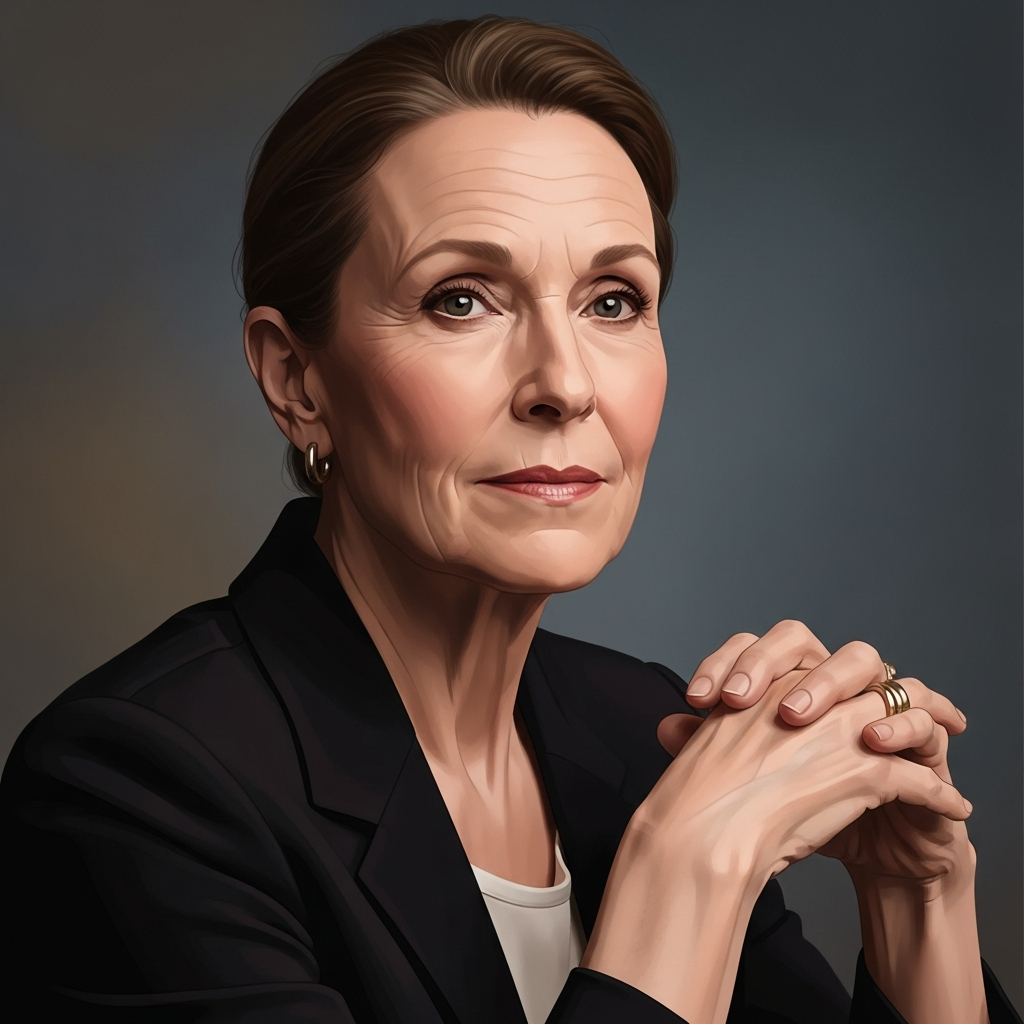
Mary Beth Hurt, the profoundly respected and Tony-nominated actress renowned for her understated power and quiet grace, has passed away at the age of 79. Her family confirmed she died peacefully on Sunday following a courageous, decade-long battle with Alzheimer’s disease. Known for her indelible performances in celebrated films like “The World According to Garp” and Woody Allen’s “Interiors,” Mary Beth Hurt leaves an enduring legacy of artistic integrity and versatile character work across both stage and screen. This deeply saddening news marks the end of a remarkable career.
A Life in the Spotlight: From Iowa Roots to Broadway Stardom
Born Mary Beth Supinger on September 25, 1946, in Marshalltown, Iowa, Hurt’s journey into the performing arts began early. She notably shared a unique childhood connection, having been babysat by future French New Wave icon, Jean Seberg. This early exposure perhaps hinted at the cinematic path she would later forge. Her passion for drama blossomed through studies at the University of Iowa, culminating in graduate theater studies at New York University’s prestigious Tisch School of the Arts.
Early Triumphs on the New York Stage
Mary Beth Hurt quickly established herself as a formidable presence in the vibrant New York theater scene. She made her Broadway debut in 1974 with “Love for Love,” directed by Hal Prince. Her exceptional talent rapidly garnered critical acclaim, leading to three coveted Tony Award nominations throughout her illustrious stage career. She was recognized for her compelling performances in:
“Trelawny of the ‘Wells’” (1976), sharing the stage with luminaries like John Lithgow and Meryl Streep.
Beth Henley’s “Crimes of the Heart” (1982), a role she originated off-Broadway and for which she also earned an Obie Award.
Michael Frayn’s drama “Benefactors” (1986), appearing alongside her longtime friend Glenn Close and Sam Waterston.
Playwright David Hare, who directed her on Broadway, lauded her unique ability to combine “the best of the English and the best of the American traditions.” He particularly praised her technical suppleness, profound freedom, and an “improvisatory gift” that ensured each performance felt fresh and authentic.
Crafting Cinematic Legacies: Mary Beth Hurt’s Film Contributions
While her roots were firmly planted in theater, Mary Beth Hurt seamlessly transitioned to film, bringing her distinctive brand of nuanced acting to the silver screen. Her big-screen debut came in 1978 with Woody Allen’s poignant drama, “Interiors.” In this film, she portrayed Joey, a sensitive artist, impressing critics and earning a BAFTA nomination for Best Newcomer. Vincent Canby of The New York Times described her performance as “very appealing,” noting her ability to hold her own amidst a star-studded ensemble.
Iconic Roles and Collaborations
Following her debut, Hurt took on a series of memorable and diverse roles. She captivated audiences as an emotionally elusive romantic interest in Joan Micklin Silver’s “Chilly Scenes of Winter” (1979). Perhaps one of her most widely recognized performances was as Helen Holm Garp in George Roy Hill’s 1982 film adaptation of John Irving’s novel, “The World According to Garp.” Opposite Robin Williams, she portrayed a fiercely independent woman who marries T.S. Garp, endures betrayal, and passionately guards his creative legacy.
Her filmography expanded to include:
Martin Scorsese’s period drama “The Age of Innocence” (1993), where she played the socialite Regina Beaufort.
“Six Degrees of Separation” (1993), as one of the socialites duped by a charismatic con artist.
The darkly comedic “Parents” (1989), where her peculiar maternal behavior hinted at cannibalistic suspicions.
Mary Beth Hurt also fostered a strong professional partnership with her second husband, renowned writer-director Paul Schrader. Their collaborations spanned four films:
“Light Sleeper” (1992)
“Affliction” (1997)
“The Walker” (2007)
“Adam Resurrected” (2008)
A Discerning Artist: Preference for Depth
Hurt was known for her selective approach to roles, prioritizing artistic depth over screen time. In a 1989 interview with The New York Times, she candidly explained her philosophy: “Fifty percent of the roles I’m offered in films are nothing. I don’t mean sizewise. There’s nothing of any interest in them.” This commitment to meaningful work shaped her career trajectory. Later, in a 2010 interview, she revealed a preference for secondary parts, stating, “I’ve never been extremely comfortable playing the lead; there’s a feeling that I have to be good.” She found “secondary parts much more interesting,” often “twisting” characters to unearth intriguing “idiosyncrasies” and complex inner lives.
Versatility and Final Performances on Screen
Beyond her acclaimed stage and film work, Mary Beth Hurt also graced television screens. She made guest appearances on popular shows such as “Law & Order,” “Thirtysomething,” and “Kojak.” Her television debut was in the 1976 film “Ann in Blue,” and she even guest-starred on “Saturday Night Live” in 1992 alongside her friend Glenn Close.
Her later film roles continued to demonstrate her range, earning an Indie Spirit award nomination for 2006’s “The Dead Girl.” Other notable appearances included M. Night Shyamalan’s “Lady in the Water,” “The Exorcism of Emily Rose,” and “Young Adult.” Her final cinematic performance was in the 2018 drama “Change in the Air,” while her last television credit was an episode of “Law & Order” in 2009. She also lent her voice to the 1995 documentary “From the Journals of Jean Seberg,” a poignant full-circle moment given her childhood connection.
A Personal Life of Grace and a Lasting Impact
Mary Beth Hurt navigated a rich personal life alongside her distinguished career. She was married to actor William Hurt from 1971 to 1981. In 1983, she married writer-director Paul Schrader, with whom she shared both a family and significant creative collaborations.
Her passing was confirmed by a joint Facebook post from her daughter, Molly Schrader, and her husband. The heartfelt tribute eloquently captured her essence: “She was an an actress, a wife, a sister, a mother, an aunt, a friend, and she took on all those roles with grace and kind ferocity.” The family found comfort in knowing that “she is no longer suffering and reunited with her sisters in peace.” This statement refers to her long struggle with Alzheimer’s disease, which was diagnosed in 2015 and led to her residence in an assisted living facility in Jersey City, New Jersey.
Mary Beth Hurt is survived by her loving husband, Paul Schrader, their daughter, Molly, and their son, Sam. Her immense talent, discerning artistic choices, and personal grace will be deeply missed by the acting community and her many admirers worldwide.
Frequently Asked Questions
What was Mary Beth Hurt best known for in her career?
Mary Beth Hurt was primarily known as an acclaimed Tony-nominated actress with a distinguished career spanning over 40 years across stage, film, and television. On Broadway, she earned three Tony nominations for her performances in “Trelawny of the Wells,” “Crimes of the Heart” (for which she won an Obie Award), and “Benefactors.” In film, she gained recognition for her roles in Woody Allen’s “Interiors” and as Helen Holm Garp in “The World According to Garp.” She was celebrated for her nuanced character work and ability to bring depth to complex supporting roles.
Which notable films did Mary Beth Hurt appear in?
Mary Beth Hurt built an impressive filmography, often collaborating with esteemed directors. Some of her most notable film credits include:
“Interiors” (1978) – her film debut, earning a BAFTA nomination.
“Chilly Scenes of Winter” (1979)
“The World According to Garp” (1982) – a pivotal role opposite Robin Williams.
“The Age of Innocence” (1993) – directed by Martin Scorsese.
“Six Degrees of Separation” (1993)
“Affliction” (1997) and “Light Sleeper” (1992) – collaborations with her husband, Paul Schrader.
“The Dead Girl” (2006) – for which she received an Indie Spirit award nomination.
“The Exorcism of Emily Rose” (2005) and “Young Adult” (2011).
Why did Mary Beth Hurt often prefer secondary roles in films?
Mary Beth Hurt had a discerning artistic philosophy, expressing a preference for secondary roles where she felt she could explore characters with more depth and less pressure. In interviews, she noted that many lead roles, especially for younger ingénues, often lacked interest. She sought to find and “twist” characters to discover intriguing “idiosyncrasies” and complex inner lives, believing that even seemingly minor individuals possess profound layers. This allowed her to deliver impactful, nuanced performances that enriched ensemble casts and contributed significantly to the overall narrative.