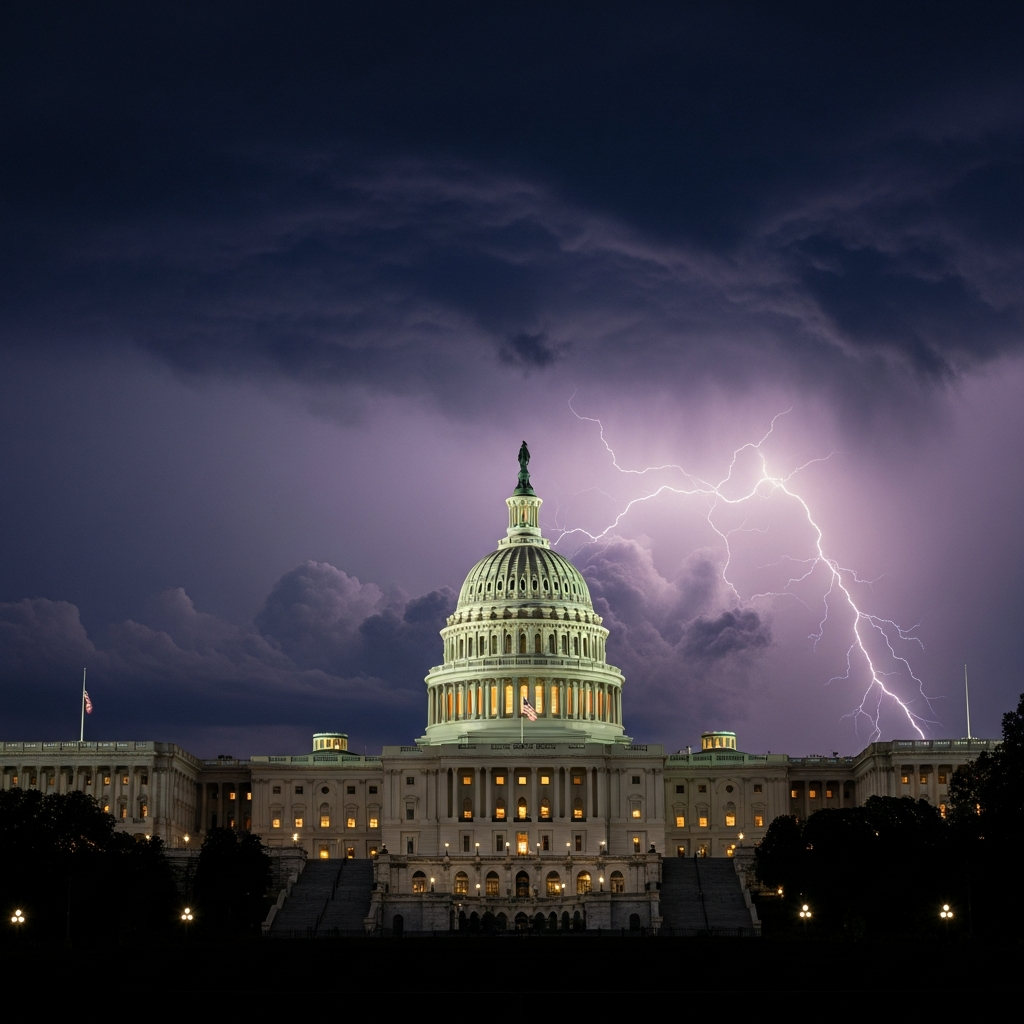
The nation’s capital is embroiled in a significant political crisis. House Republicans have delivered a stunning blow, rejecting a Senate-backed deal designed to end the Department of Homeland Security (DHS) shutdown. This unexpected move, occurring late on Friday, March 27, 2026, plunges federal operations and national security into renewed uncertainty. The eleventh-hour rejection reignites a bitter budget battle, highlighting deep divisions over immigration policy and border enforcement. This legislative deadlock leaves critical agencies without full funding and jeopardizes a swift resolution.
An Unanimous Senate Deal Undermined
A bipartisan agreement in the Senate seemed to offer a lifeline to the ongoing DHS funding crisis. Senators had unanimously passed a compromise measure in the dead of night. This proposal aimed to fully fund the vast majority of the Department of Homeland Security. However, it notably excluded specific allocations for Immigration and Customs Enforcement (ICE) and Border Patrol operations. This omission proved to be the critical sticking point for House Republicans.
Speaker Johnson’s Sharp Rebuke
House Speaker Mike Johnson quickly articulated the strong opposition from his chamber. Following extensive consultations with GOP lawmakers, Johnson publicly denounced the Senate’s plan. He characterized the agreement as entirely “not palatable” to his members. Speaker Johnson stated, “This gambit that was done last night is a joke.” He also indicated that President Donald Trump had been briefed and “understands exactly what we’re doing and why, and he supports it.” This public split between House and Senate Republicans underscored the deep ideological chasm.
The Core of the Conflict: Immigration Enforcement
The primary driver behind the House’s rejection was the Senate bill’s failure to include specific funding for immigration enforcement. Many conservative hardliners expressed outrage upon learning of the Senate’s actions. They pledged to withhold their support for any agreement unless it incorporated enhanced immigration enforcement funding. Additionally, some lawmakers pushed for a voter identification provision to be added. These demands highlight the central role of border security debates in congressional budget negotiations.
Border Security and Agency Operations
A key argument from those opposing the Senate deal centered on the operational needs of border agencies. Rep. Andy Harris (R-Maryland) voiced strong disapproval, accusing the Senate of “abdicating its responsibility.” He labeled the compromise as “bad for America.” Harris also suggested that critical services, like airport security, would not be impacted. He claimed President Trump had indicated a willingness to fund the Transportation Security Administration (TSA) through existing mechanisms. It is important to note that ICE and Customs and Border Protection (CBP) reportedly had cash reserves from a previous “megabill,” which may have influenced some lawmakers’ urgency regarding their immediate funding. However, the long-term sustainability of such operations remains a concern without dedicated appropriations.
A New Proposal: The Two-Month Stopgap
In response to the impasse, Speaker Johnson outlined an alternative path forward. He announced plans to introduce a two-month stopgap measure for a vote in the House. This legislative tool, also known as a “continuing resolution” (CR), would temporarily fund all DHS operations. The proposed CR would maintain current funding levels. Its aim is to keep the department running through May 22, buying more time for a comprehensive agreement. Such short-term funding measures are common in federal budget negotiations but often defer rather than resolve deep-seated disputes.
Senate Opposition and Recess Complications
Johnson’s counter-proposal faces significant hurdles in the Senate. Senate Minority Leader Chuck Schumer (D-New York) immediately declared the House’s suggested CR “dead on arrival.” He emphasized that any legislation differing from the already agreed-upon Senate package would have “no chance” in the upper chamber. This firm stance from Democrats signals a prolonged deadlock. Further complicating matters, many senators had already departed Washington for a planned two-week spring recess. Their absence makes a swift resolution even more unlikely, requiring them to return to Capitol Hill should the House pass its stopgap measure. The logistical challenges compound the political divisions.
Broader Implications of the DHS Funding Impasse
This latest legislative standoff carries serious implications beyond just departmental funding. A prolonged DHS shutdown jeopardizes national security functions and public safety. Airport security, managed by the TSA, has already faced disruptions. The uncertainty affects thousands of federal employees. It also undermines public confidence in the government’s ability to govern effectively. The ongoing battle over the DHS funding bill reflects a larger, persistent struggle in Washington over federal spending priorities and immigration policy.
What This Means for Public Services
For the average citizen, the DHS funding impasse translates into potential disruptions. Airport wait times could increase. Essential border protection services might be strained. The morale of federal workers, operating without secure long-term funding, could suffer. Critical programs supporting national security efforts risk underfunding or delays. This political drama directly impacts the efficiency and reliability of vital government functions. Ultimately, it highlights the real-world consequences of congressional gridlock on everyday life.
Frequently Asked Questions
What specifically caused House Republicans to reject the DHS funding bill?
House Republicans rejected the Senate-passed DHS funding bill primarily because it omitted dedicated funding for Immigration and Customs Enforcement (ICE) and Border Patrol operations. Conservative members insisted on incorporating robust immigration enforcement funding and a voter identification provision into any deal. House Speaker Mike Johnson stated the Senate’s compromise was “not palatable” to his members, indicating their strong stance on border security and immigration policy was not met by the Senate’s proposal.
How does a “continuing resolution” (CR) work in a government shutdown scenario?
A “continuing resolution” (CR) is a temporary funding measure used to keep government agencies operating at their previous year’s spending levels when a new budget has not been approved. In a shutdown scenario, a CR allows agencies to avoid or end a funding lapse, but it is typically a short-term fix. Speaker Johnson proposed a two-month CR for DHS, aiming to fund the department through May 22, 2026. While a CR averts an immediate shutdown or reopens agencies, it does not resolve the underlying budget disagreements, merely postponing the need for a long-term solution.
What are the immediate consequences for the public if the DHS shutdown continues?
If the Department of Homeland Security (DHS) shutdown continues, the public could face several immediate consequences. Airport security, managed by the Transportation Security Administration (TSA), may experience disruptions or increased wait times, although Rep. Andy Harris suggested TSA could be funded by other means. Border security operations could be impacted, potentially leading to vulnerabilities. Additionally, the uncertainty affects thousands of federal employees working for DHS, impacting their morale and potentially their ability to perform their duties effectively, which in turn affects the services they provide to the public.
The Path Forward: Uncharted Waters
The latest DHS funding impasse underscores the deep partisan divide in Washington. Speaker Johnson’s proposed two-month CR now heads for an uncertain fate. With the Senate resistant and members on recess, the legislative path forward remains unclear. The current DHS shutdown crisis highlights the immense challenge of finding common ground on sensitive issues like immigration and federal spending. For citizens, this ongoing political stalemate means continued uncertainty regarding critical national security and public services. The resolution of this funding battle will require significant negotiation and compromise, with the specter of continued federal shutdowns looming large.