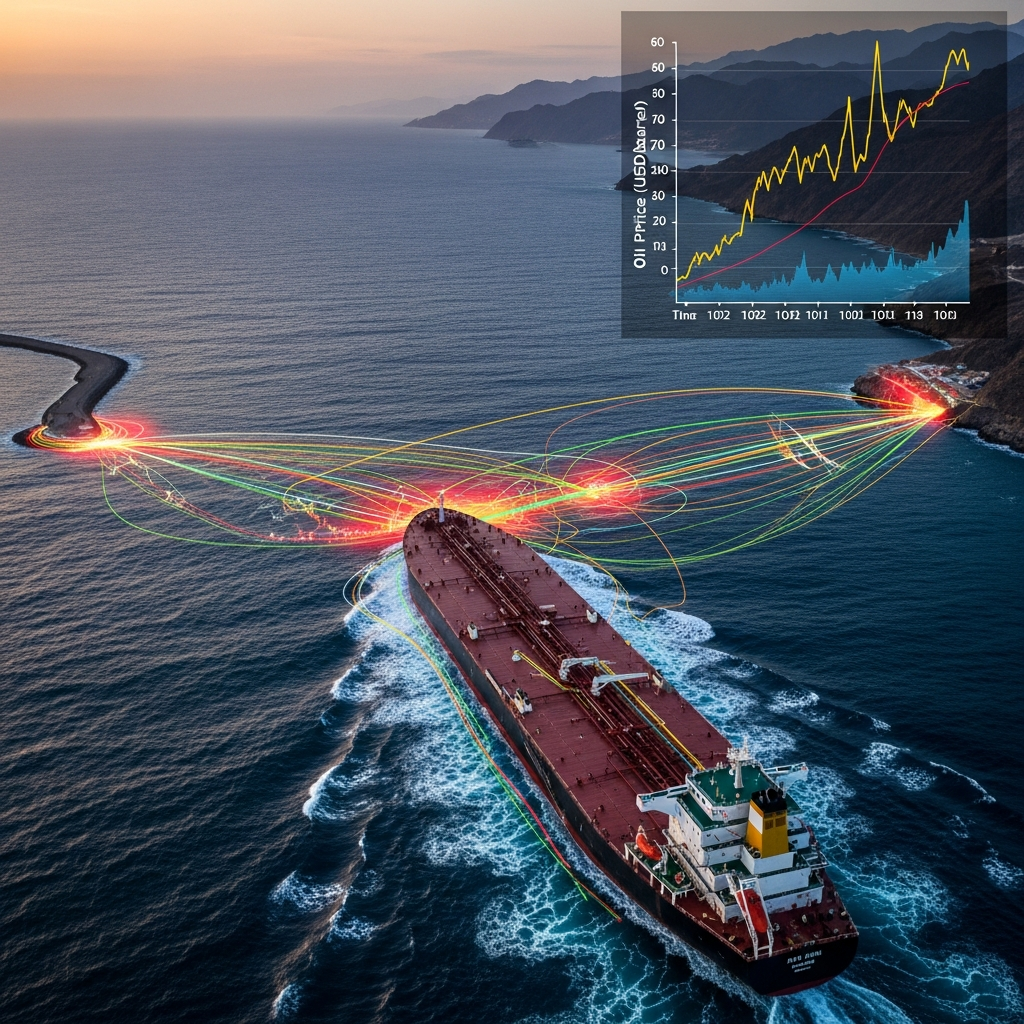
The world faces an unprecedented global energy crisis as geopolitical tensions escalate dramatically in the Middle East. With Iran at the center of a deepening conflict, international warnings suggest the energy fallout could surpass the infamous 1970s oil shocks. The International Energy Agency (IEA) has labeled this situation “very severe,” posing a major threat to the global economy. As a critical deadline from the US administration loomed, threats of retaliation over the Strait of Hormuz sent shockwaves through energy markets and global stock exchanges.
This rapidly unfolding crisis highlights the fragility of global energy supply chains. It also underscores the urgent need for international cooperation and strategic responses. The immediate impact is felt through surging oil prices and widespread market instability. This situation demands a comprehensive understanding of its various facets.
Escalating Tensions and Dire Warnings
The Middle East conflict has intensified rapidly, with the International Energy Agency issuing grave warnings. IEA Executive Director Fatih Birol stated that the current energy crisis is worse than the 1973 and 1979 oil crises. This is due to disruptions across not just oil and gas, but also vital global economic arteries like petrochemicals and fertilizers. The ongoing war, particularly Iran’s actions, has created “the largest supply disruption in the history of the global oil market.” This surpasses even the 1991 Gulf War and Russia’s 2022 invasion of Ukraine in severity.
Iran has repeatedly vowed retaliation against any US attack on its power infrastructure. The Islamic Revolutionary Guard Corps (IRGC) declared a direct reciprocal response: “If you strike electricity, we will strike electricity.” This defiance comes as US President Donald Trump issued an ultimatum regarding the Strait of Hormuz. His threat to bomb Iranian power plants if the strait was not reopened within 48 hours intensified the standoff. Iran’s military warned it could close the vital waterway indefinitely.
Geopolitical Standoff: Trump’s Ultimatum and Iran’s Defiance
The US-Iran confrontation reached a fever pitch over the weekend. President Trump stated the US would “obliterate” Iran’s power plants if the Strait of Hormuz remained closed. This aggressive posture was delivered via Truth Social. In response, Iranian officials and state media fiercely warned of severe regional retaliation. They claimed critical infrastructure across the Middle East could be “irreversibly destroyed” if their power facilities were targeted.
Iran’s Parliament Speaker Mohammad Baqer Qalibaf echoed these sentiments. He warned that regional infrastructure would become “legitimate targets” in such an event. He also predicted a prolonged surge in global oil prices. Iran’s semi-official Mehr News even published a map of Gulf power plants, ominously stating, “Say goodbye to electricity.” Such rhetoric from Tehran indicated a shift in military doctrine. A commander of Iran’s armed forces headquarters declared their forces’ doctrine had moved from defensive to offensive, promising “new surprises.”
Global Economic Fallout and Market Instability
The escalating conflict has had immediate and profound economic repercussions. Asian markets, heavily reliant on Middle Eastern oil and gas, plunged significantly. Japan’s Nikkei 225 index, South Korea’s Kospi, Hong Kong’s Hang Seng Index, and Taiwan’s Taiex all saw substantial drops. Since the conflict began, these key indices have fallen by 7-12%.
Oil prices surged dramatically. Brent crude, the global benchmark, climbed to over $114 a barrel. West Texas Intermediate (WTI) crude settled at $96.50. This surge fueled fears of global inflation and broader economic instability. Analysts widely regard these price hikes as a direct consequence of Iran’s threats and actions. The ongoing closure of the Strait of Hormuz severely constricts global oil supplies.
Civilian Casualties and Regional Impact
The human cost of the conflict has been tragic and widespread. Thousands are reported killed in Iran and Lebanon since the fighting began. Attacks continued across the region. Iranian state media reported strikes in Tehran, while Saudi Arabia intercepted ballistic missiles aimed at Riyadh. One person was wounded in Abu Dhabi by falling debris following a missile interception. Kuwait and Bahrain also reported intercepting hostile threats.
In Iran, residential areas in Urmia and Khorramabad were hit by airstrikes. Relief workers aided the injured amid collapsed buildings. Iranian media reported more than 80,000 civilian units damaged across the country. This includes medical centers, schools, and ambulances. Attacks on these facilities are “direct assaults on the lifelines that save human lives,” according to Iran’s Red Crescent Society. Meanwhile, in Israel, missile strikes injured dozens in southern areas and Tel Aviv. The Israeli military reported a 92% interception rate for ballistic missiles, though concerns lingered over failed interceptions and the use of cluster munitions.
International Response and Energy Security Measures
In response to the unprecedented global energy crisis, international bodies and governments are taking action. British Prime Minister Keir Starmer and US President Donald Trump discussed the crisis. They agreed on the essential need to reopen the Strait of Hormuz for global energy market stability. Britain is among 22 nations willing to assist in ensuring safe navigation through the critical waterway. NATO Secretary General Mark Rutte expressed confidence in the alliance’s ability to reopen the strait.
The International Energy Agency (IEA) announced its largest-ever release of emergency oil reserves. This unprecedented move involves nearly 400 million barrels of crude. This constitutes one-third of the IEA’s total holding of 1.2 billion barrels. The United States committed 172 million barrels from its Strategic Petroleum Reserve (SPR). The IEA specifically prioritized Asian and Oceanian markets for immediate distribution. These regions are most heavily reliant on Middle Eastern oil.
Limitations of Reserve Releases and Demand-Side Strategies
Despite the scale of the IEA’s release, many analysts are skeptical of its long-term impact. Neil Quilliam of Chatham House suggested the relief might “evaporate as soon as three weeks.” Maksim Sonin, an energy executive, added that “Unless the underlying problem is solved, no release can fix the market.” The released oil takes weeks or months to reach markets. This logistical challenge limits its immediate effect on prices. The type of crude also matters; many Asian refiners cannot process sour crude, which makes up part of the reserves.
Recognizing these limitations, the IEA has stressed that supply-side measures alone are insufficient. Instead, they proposed a comprehensive advisory focusing on demand-side actions. These strategies aim to alleviate pressure on consumers and bolster energy security. They target various sectors, from transportation to household energy consumption.
Here are ten key demand-reduction strategies outlined by the IEA:
Telecommuting: Encourage remote work to reduce daily commuting.
Lower Speed Limits: Recommend reducing highway speeds by at least 10 km/h.
Alternate-Day Private Car Access: Implement city policies like odd/even license plate restrictions.
Promotion of Public and Shared Mobility: Governments should promote public transport and ride-sharing.
Efficient Driving Practices: Advocate for better vehicle maintenance and eco-driving.
LPG Management: Prioritize essential uses for petrochemical feedstocks and LPG for cooking.
Industrial Efficiency: Implement short-term efficiency improvements in industries.
Household Alternatives: Encourage electric cooking to reduce LPG demand.
- Avoiding Non-Essential Flights: Reduce business and leisure air travel.
- www.aljazeera.com
- m.economictimes.com
- www.businessinsider.com
- www.scmp.com
- www.straitstimes.com
These measures, even partially adopted, could help stabilize the market and prevent extreme price spikes.
The Strait of Hormuz: A Global Chokepoint
The Strait of Hormuz remains at the heart of the global energy crisis. This narrow waterway is a crucial chokepoint. Approximately one-fifth of the world’s oil, over 20 million barrels daily, passes through it. It also handles a third of global fertilizer production. Iran’s effective closure of this strait has brought shipping “almost to a halt.” This directly threatens global supply chains and economic stability.
Iran has indicated a move towards “monetizing control” over the strait. An Iranian source mentioned reports of payments up to $2 million per tanker for passage. Tehran has also issued warnings that oil prices could exceed $200 per barrel if attacks continue and the strait remains closed. This scenario is deemed realistic by experts like former IMF economist Olivier Blanchard. The international community, including French President Emmanuel Macron, has called for efforts to restore navigation.
The US Department of State has urged Americans abroad, especially in the Middle East, to exercise increased caution. Travel disruptions are expected. US diplomatic buildings have been targeted, leading to bolstered security measures. The situation remains highly volatile, with calls for de-escalation from global leaders.
Frequently Asked Questions
Why is the Strait of Hormuz so critical to the global energy supply?
The Strait of Hormuz is immensely critical because it is the world’s most important oil transit chokepoint. Approximately 20% of global oil consumption, over 20 million barrels per day, passes through this narrow waterway. It also facilitates a third of the world’s fertilizer production. Its effective closure, as seen in the current conflict, severely restricts crude oil and natural gas shipments from the Middle East to major importing nations, particularly in Asia. This disruption directly impacts global supply, driving up oil prices and threatening economic stability worldwide.
What steps is the International Energy Agency recommending to mitigate the energy crisis?
Beyond releasing strategic oil reserves, the International Energy Agency (IEA) has issued an advisory with ten demand-reduction strategies. These aim to alleviate pressure on markets and enhance energy security. Key recommendations include promoting telecommuting and public transport, reducing highway speed limits, and implementing alternate-day private car access in cities. The IEA also suggests encouraging efficient driving, prioritizing LPG for essential uses like cooking, improving industrial efficiency, and avoiding non-essential air travel. These measures aim to curb oil and gas consumption across various sectors.
How has the ongoing conflict impacted global oil prices and economic stability?
The conflict has caused a significant surge in global oil prices. Brent crude, the international benchmark, has risen to over $114 per barrel, with warnings from Iran that prices could reach $200. This spike reignited fears of global inflation and triggered substantial drops in major stock markets across Asia and other regions. The prolonged disruption to oil and gas flows through the Strait of Hormuz creates immense strain on supply chains. This jeopardizes economic growth forecasts for the year, potentially leading to higher inflation and reduced consumer spending globally, impacting overall economic stability.
Conclusion
The unfolding global energy crisis, fueled by escalating tensions in the Middle East and the closure of the Strait of Hormuz, presents an unprecedented challenge. The IEA’s stark warnings of a crisis worse than the 1970s oil shocks underscore the severity. While international efforts, including a record release of oil reserves, aim to stabilize markets, their long-term effectiveness remains uncertain without a resolution to the geopolitical conflict. The economic fallout, marked by surging oil prices and market volatility, highlights the urgent need for both international diplomacy and proactive demand-side energy strategies. The situation demands sustained attention and coordinated global action to avert a deeper economic catastrophe and restore stability.