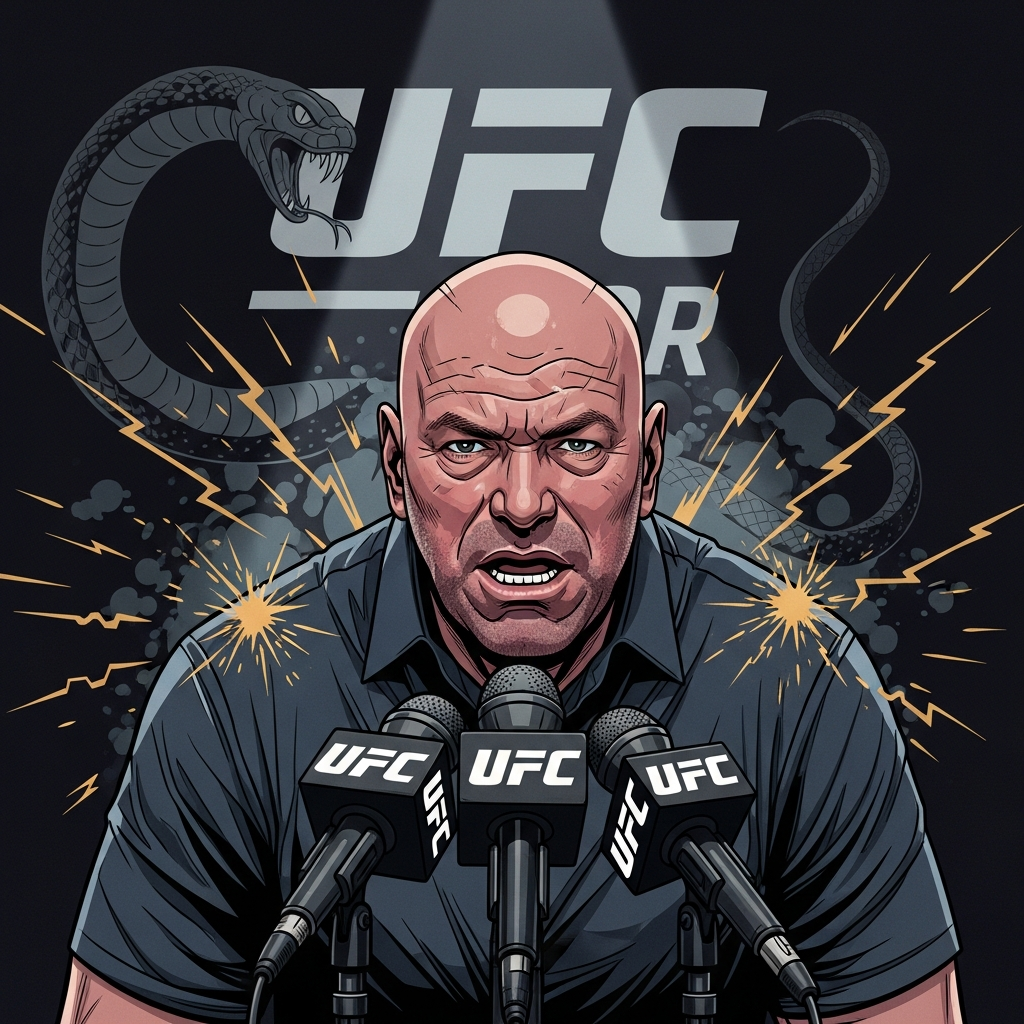
UFC CEO Dana White pulled no punches when describing Michael “Venom” Page’s winning performance at UFC London. White explicitly labeled the welterweight clash a “bad fight,” echoing the visible disappointment from fans inside the O2 Arena. This blunt assessment spotlights a crucial moment for Page as he navigates his UFC career, facing scrutiny from both the promotion’s top executive and the global combat sports audience.
Dana White’s Stern Verdict on Michael Page’s UFC London Performance
The air in London’s O2 Arena was thick with anticipation for Michael “Venom” Page’s return to the welterweight division. Fighting on home soil, Page squared off against frequent training partner Sam Patterson. However, the excitement quickly dissipated. Over three rounds, Page landed just 33 strikes and attempted a mere 61, a stark contrast to his reputation as a dynamic, high-volume striker. The lack of engagement frustrated both the live audience and, apparently, UFC brass.
The crowd erupted in a chorus of boos both during and after the fight. Referee Rich Mitchell even intervened between rounds, attempting to spur both fighters into more action, though no point deductions were issued. Dana White’s reaction was perhaps the most telling. The UFC CEO reportedly got up and walked out of the arena during the fight itself. His post-fight comments solidified his disdain: “I mean I didn’t think it was a great fight either,” White stated. “It was a bad fight. I don’t know. He won so we’ll see what’s next.” This feedback underscores a clear message: winning isn’t always enough in the UFC; performance matters deeply.
Scrutiny on “Venom” Page’s UFC Journey
Since signing with the UFC as a highly anticipated free agent, Michael Page holds a 4-1 record. His sole loss came via decision against Ian Machado Garry in his second promotional appearance. A significant point of contention, however, has been Page’s inability to secure a finish within the UFC. His last knockout victory dates back to 2019 during his Bellator tenure. While he did achieve a finish via leg kicks against Goiti Yamauchi in 2023, that too occurred before his UFC transition. This prolonged absence of highlight-reel finishes, coupled with the uninspired display against Patterson, fuels the disappointment expressed by fans and executives alike.
The Mental Battle: Page’s Pressure to Impress the UFC
The “bad fight” at UFC London wasn’t an isolated incident, but rather a symptom of deeper challenges Page has faced since his Octagon debut. The 38-year-old former kickboxer recently admitted a crucial mental shift helped turn his career around. After a decade-long run with Bellator, Page confessed on “The Ariel Helwani Show” that he initially felt immense pressure to impress UFC CEO Dana White and other executives. This led him to try and alter his natural, flamboyant fighting style in his early UFC appearances, specifically concerned about White’s historical dislike for showboating.
Page has since resolved to prioritize authenticity, declaring, “I am the best. I am the most entertaining when I am myself.” This mental liberation seems to have paid dividends. Following an impressive showing at UFC 319, where he secured a dominant decision win over former title challenger Jared Cannonier, Page earned a top-10 ranking at middleweight. He described this performance as being in “the old-school ‘MVP’ flow state,” simply “having fun” rather than trying to impress. This revelation provides critical context to his performance against Patterson: perhaps the pressure, particularly fighting in his home country, inadvertently pushed him back into a more cautious, less “MVP-like” approach.
Beyond the Octagon: Page’s Bold Stance on Fighter Compensation
Adding another layer to Michael Page’s complex relationship with the UFC are his outspoken views on fighter pay. Speaking on The Boys in the Back podcast, Page delivered a pointed critique of the UFC’s compensation structure. He highlighted the stark disparity between sums paid to non-UFC athletes by parent company TKO Group Holdings and what UFC fighters receive.
Page specifically referenced the reported $15 million one-fight contract awarded to boxer Conor Benn by Zuffa Boxing. He voiced his disbelief, stating that such a figure for a boxer of Benn’s caliber was “nowhere near the best in his field,” especially when established UFC stars earn a fraction. This deal sparked widespread backlash among UFC fighters, reinforcing a long-running grievance about elite athletes struggling financially. Page vehemently stated, “Champions shouldn’t be broke,” citing the widely discussed case of Francis Ngannou, who reportedly had to borrow money despite being UFC Heavyweight Champion. Page also dismissed the UFC’s recent “bonus bump” as insufficient, arguing it “doesn’t do enough compared to the amount of money they’ve just brought in for themselves.” These comments reveal a fighter who isn’t afraid to challenge the corporate structure, potentially leading to friction behind the scenes.
Frustration with Matchmaking and the Path Ahead
Page’s critical stance on fighter pay isn’t his only point of friction with the promotion. He also expressed frustration about the difficulty in securing high-level opponents. Despite a string of impressive first-round stoppages earlier in his career, Page lamented that he had been “asking for a lot of different fighters and not really getting responses.” This culminated in the unexpected booking against Sam Patterson, whom he described as “not the high-profile welterweight opponent” he was pursuing. He humorously suggested the booking “feels like I upset somebody” at the UFC. This sentiment implies that the “bad fight” might not solely be a reflection of Page’s performance but also a consequence of the promotion’s matchmaking decisions.
Looking ahead, Michael Page’s path remains dynamic. While he’s found significant success and a top-10 ranking at middleweight, he remains undecided about staying in the division permanently or returning to welterweight. He acknowledges that adjustments would be needed if he commits to 185 pounds, citing Jared Cannonier’s late surge in their fight. Should he return to welterweight, Page would undoubtedly remain a contender. He has expressed interest in challenging former champion Leon Edwards and, notably, current welterweight titleholder Jack Della Maddalena, believing he possesses the stylistic tools to win that fight, provided he earns the opportunity. The challenge for Page will be to consistently deliver the “MVP flow state” performances that captivate fans and satisfy executive expectations, regardless of the division or opponent.
Frequently Asked Questions
What exactly made Michael Page’s UFC London fight “bad” according to Dana White?
Dana White’s criticism stemmed from Michael Page’s perceived lack of engagement and low offensive output against Sam Patterson at UFC London. Page landed only 33 strikes out of 61 attempts over three rounds, resulting in a cautious and uneventful bout. The O2 Arena crowd booed the performance, and White himself reportedly walked out, calling it simply “a bad fight” that failed to deliver the expected action from a fighter of Page’s caliber, especially given his reputation as a dynamic striker.
How has Michael Page’s mindset changed regarding impressing the UFC brass, and has it affected his recent performances?
Michael Page recently admitted that early in his UFC career, he felt immense pressure to impress Dana White and other executives, causing him to try and change his natural fighting style. However, he has since resolved to prioritize “being himself,” believing that is when he is most entertaining and effective. This mental shift has coincided with recent success, particularly his dominant decision win over Jared Cannonier at middleweight, which he described as being in an “old-school ‘MVP’ flow state” where he was simply having fun.
What broader issues might contribute to Michael Page’s performances and his relationship with the UFC?
Beyond the individual fight performance, Michael Page has been outspoken about broader issues within the UFC, including fighter compensation. He has publicly criticized the disparity between sums paid to non-UFC athletes by parent company TKO Group Holdings (like Conor Benn’s contract) and the compensation received by UFC fighters. Page also voiced frustration over matchmaking, noting his difficulty in securing high-level opponents, which ultimately led to the Sam Patterson bout. These factors suggest a complex relationship with the promotion that could influence his motivation and approach inside the Octagon.
The Path Forward for “Venom”
Michael Page’s recent performance at UFC London has ignited a multi-faceted conversation. Dana White’s blunt criticism highlights the high bar for performance in the UFC, where winning isn’t always sufficient. Yet, by delving deeper, we uncover a fighter grappling with mental pressures, advocating for better fighter compensation, and expressing dissatisfaction with matchmaking. Page’s journey reflects the intricate balance between athletic prowess, individual ambition, and the demanding business of combat sports. As he considers his next steps—whether at welterweight or middleweight—the challenge for “Venom” will be to consistently merge his electrifying style with the strategic demands of the Octagon, while navigating his unique position within the UFC landscape.