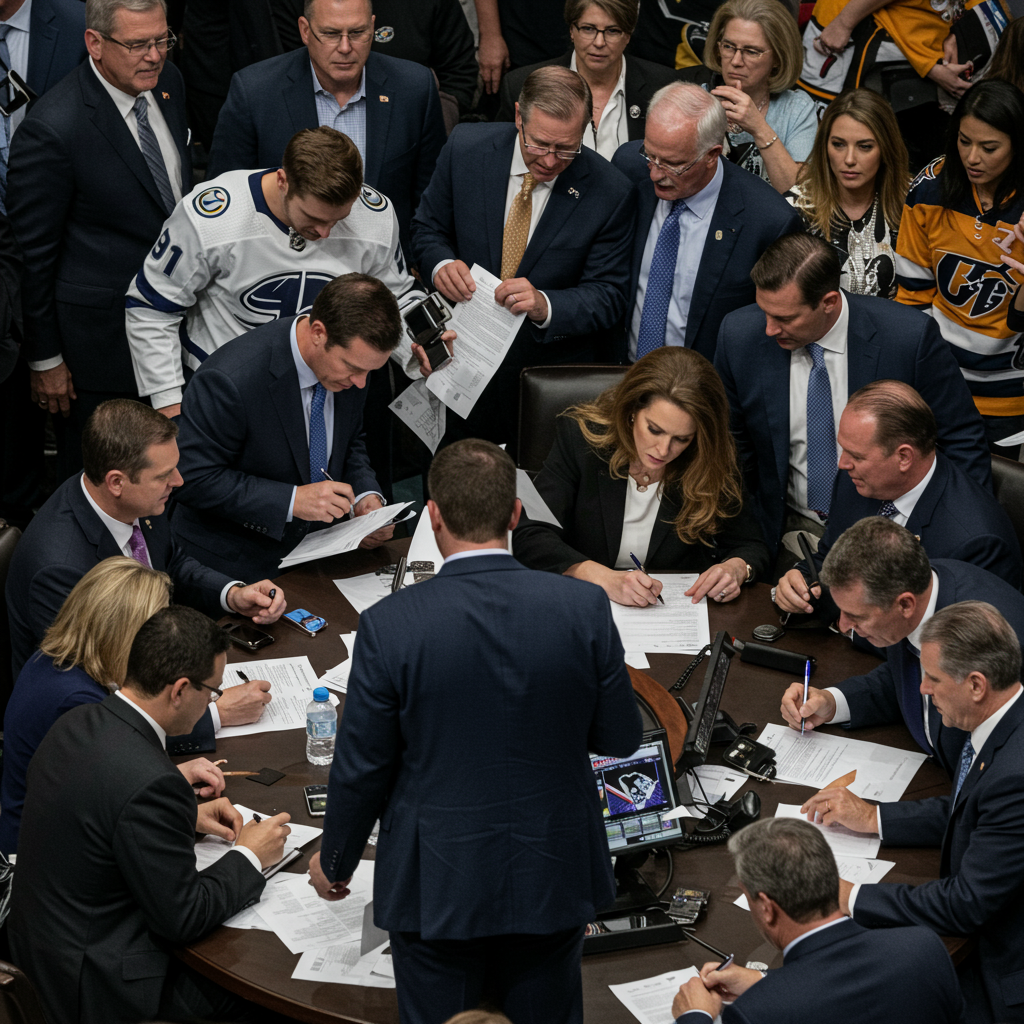
The roar of the crowd has just barely faded in Dayton, Ohio, as the electrifying First Four of the 2026 Men’s NCAA Tournament concludes tonight. This year’s opening act delivered instant classics and historic breakthroughs, setting the stage for what promises to be an unforgettable March Madness 2026. If you’re looking to finalize your bracket, understand the landscape of top contenders, or spot the next Cinderella, you’ve come to the right place. We’ll dive deep into the thrilling First Four results, explore expert predictions for the tournament ahead, and highlight the teams poised to make a deep run.
First Four Delivers Instant March Madness Lore
Tonight’s First Four action was anything but preliminary, offering two high-stakes matchups that etched new chapters into college basketball history.
Prairie View A&M Makes History: The first game saw the No. 16 seed Prairie View A&M Panthers overcome the No. 16 Lehigh Mountain Hawks with a dominant second-half surge, securing a 67-55 victory. This wasn’t just a win; it was the program’s first-ever NCAA Tournament victory, a monumental achievement that sent shockwaves through the college basketball world. Their reward? A daunting, yet exhilarating, First Round clash with the defending national champions, the No. 1 Florida Gators. This matchup, scheduled for Friday at 9:25 p.m. ET, pits a team fresh off a historic win against a powerhouse that boasts experience and ranks 12th nationally in points per game.
Miami (OH) Breaks a 27-Year Drought: Rounding out the First Four, the No. 11 Miami (Ohio) RedHawks faced off against the No. 11 SMU Mustangs. Miami proved too strong, sealing an 89-79 triumph. This victory marked the RedHawks’ first NCAA Tournament win since 1999, ending a nearly three-decade wait for program success on the national stage. Their impressive offensive display, notably attempting 41 three-pointers and converting 16 – both First Four records – showcased their “fun style of basketball” that captivated viewers. Coach Travis Steele’s impassioned statement, “We more than belong. We can advance deep into this tournament,” perfectly encapsulates the team’s newfound swagger. Miami now prepares for a challenging First Round encounter with No. 6 seed Tennessee.
Bracket Insights: Powerhouses vs. Potential Cinderellas
As the main bracket for March Madness 2026 officially takes shape, expert consensus points to a tournament potentially dominated by “deep pockets” – the traditional power-conference teams. According to insights from Yahoo Sports, the surge in NIL payouts and relaxed transfer restrictions have channeled top-tier talent into established programs, widening the chasm between college basketball’s “haves and have-nots.” This trend suggests that traditional Cinderella stories might be harder to come by this year, with strong favorites holding a significant statistical edge.
Indeed, teams like No. 1 seeds Duke, Arizona, and Michigan boast exceptional KenPom adjusted efficiency margins of at least 37.59, placing them among the strongest top seeds in recent memory. A remarkable 20 teams seeded sixth or higher also possess adjusted efficiency margins of plus-25 this season, a stark increase from previous years. This collective strength indicates that the path to the Final Four will be fiercely contested, primarily among the tournament’s elite.
Consensus Picks & Early Upset Alerts
Despite the leaning towards higher seeds, The Athletic’s staff consensus bracket, compiled from 28 writers and editors, identified some intriguing upset possibilities. While all No. 1, 2, 3, and 5 seeds largely received overwhelming support to advance in the First Round, a few double-digit seeds garnered significant backing:
No. 10 Santa Clara over No. 7 Kentucky (23 of 28 votes)
No. 11 South Florida (USF) over No. 6 Louisville (23 of 28 votes)
No. 11 VCU over No. 6 North Carolina (17 of 28 votes)
The Columbia Daily Tribune echoed the confidence in No. 11 USF, highlighting the emotional narrative surrounding their head coach, Bryan Hodgson, whose father will attend games in Buffalo. A bolder prediction from the Tribune suggested a No. 13 Hofstra upset over No. 4 Alabama, citing off-court distractions for the Crimson Tide.
For those filling out their brackets, these predictions serve as crucial guides. However, it’s worth noting the differing outlook on Miami (Ohio)’s next steps: while the original article confirms their First Four win, The Athletic’s pre-First Four consensus gave them only 7 of 28 votes to advance past Tennessee, indicating a potential tight matchup that could still swing either way in the Second Round.
Top Contenders & Regional Showdowns
The path to the Final Four is carved through four distinct regions: Midwest, South, West, and East. Each is stacked with formidable teams, but a few stand out as leading candidates to cut down the nets.
Midwest Region: Wolverines and Cyclones Lead
In the Midwest region, No. 1 Michigan and No. 2 Iowa State are widely considered the teams with the best odds to advance. The Wolverines, under Dusty May, have been defined by creative use of their towering frontcourt trio, including 7-3 center Aday Mara, 6-9 Morez Johnson Jr., and Big Ten Player of the Year Yaxel Lendeborg. This unique lineup has forged the nation’s No. 1 defense in adjusted efficiency. Offensively, Mara’s passing vision, combined with point guard Elliot Cadeau, makes Michigan a top-tier ball-sharing team. Their main concerns are turnovers (16.9% of possessions) and a tendency to go cold from three, particularly without reserve guard L.J. Cason who is out with an ACL injury. Despite these issues, The Athletic’s consensus made Michigan the sole unanimous pick for the Elite Eight. The Columbia Tribune even called them “world-beaters on their best day” and predicted them as National Champions.
The Midwest will host two First Round games on Thursday, setting the stage for these contenders.
South Region: Gators, Illini, and Cougars Battle
The South region is headlined by the defending national champion Florida Gators. After a slow start, Florida, led by coach Todd Golden, Thomas Haugh, and Rueben Chinyelu, rounded into form to win the SEC regular season title. They are a potent offensive force, ranking 12th in the nation in points per game.
Also in the South, No. 3 Illinois enters the tournament with a 24-8 record, boasting the second-best offense in college basketball. Their “Balkan Bloc” system thrives on offensive rebounding, free-throw percentage (78.9%), and two-point efficiency (58.2%). However, their defense, which struggles to pressure opponents, is a significant concern, leading to several close losses in overtime this season.
Perhaps the most balanced threat in the South is No. 2 Houston. With a 38-6 record, Kelvin Sampson’s squad is one of only five teams nationally with a top-15 adjusted offensive and defensive efficiency ranking, per KenPom. They are relentlessly determined to avenge last season’s national championship collapse. Graduate guard Emanuel Sharp, who famously dropped the ball in last year’s final possession, is back and motivated. A potential weakness lies in their lack of proven interior scoring, which can lead to over-reliance on three-pointers and scoring droughts. The Athletic’s staff unanimously picked Houston to reach the Sweet 16, with some analysts forecasting them for the Final Four.
The South region will see six games played on Thursday, kicking off intense competition.
West Region: Arizona’s Championship Aspirations
The No. 1 Arizona Wildcats are projected by The Athletic’s 2026 men’s NCAA Tournament projections to have a prime opportunity to reach the national championship game. The Athletic’s staff picked Arizona as the clear favorite to win the national championship, garnering 14 out of 28 votes. Scott Dochterman lauded Arizona as “the most complete” team, excelling in both offense and field-goal defense in their conference.
Four games are scheduled for the West region on Thursday.
East Region: Duke’s Star Power and Injury Woes
The East region is undeniably loaded, with the No. 1 Duke Blue Devils being the resounding favorite. Jon Scheyer’s team, with a 32-2 record, features freshman superstar Cameron Boozer, considered by many to be the best player in college basketball. Boozer, a 6-foot-9 forward, is a matchup nightmare, equally adept at shooting 3s (40.9%) and dominating in the post. Duke is also one of only two teams nationally ranking top five in adjusted offensive and defensive efficiency.
However, Duke faces significant concerns regarding health for the second straight postseason. Point guard Caleb Foster is out with a broken right foot, and starting center Patrick Ngongba II is dealing with lingering foot soreness, making his availability for the first weekend uncertain. These injuries could make Duke’s early games, such as their Thursday matchup against No. 16 Siena, more challenging than expected.
Speaking of Siena, their journey to the tournament is marked by a unique and challenging situation involving wing Antonio Chandler, who was ruled ineligible in late February after playing 29 games. Despite multiple legal attempts, Chandler will not return. His story is one of perseverance, having overcome serious injuries and transferred multiple times to finally play Division-I basketball. Siena coach Gerry McNamara praised his team for rallying around their “brother” during this difficult time.
Four games are scheduled for the East region on Thursday.
Barack Obama’s Bracket & Expert Bold Predictions
As is tradition, President Barack Obama’s NCAA Tournament bracket picks always draw significant attention. Dan Shanoff provides expert analysis of Obama’s 2026 choices, offering insights into how his selections align with or diverge from conventional wisdom.
Beyond Obama, expert analysts are making their own bold predictions for March Madness 2026:
Four Buzzer-Beaters: Eric Single from The Athletic anticipates an unusually high four buzzer-beaters by the end of the first weekend.
St. John’s to the Championship: Joe Rexrode boldly predicts St. John’s will reach the championship game before falling to Arizona, drawing parallels to UConn’s 2014 upset run.
Big 12 Dominance: Scott Dochterman envisions the Big 12 dominating, potentially fielding four Elite Eight teams and an all-Big 12 championship between Arizona and another conference rival.
Miami (OH) Wins Two: Grace Raynor speculates that Miami (Ohio), fresh off their historic First Four win, could surprisingly win two tournament games.
This spectrum of predictions highlights the inherent unpredictability of March Madness, even in a year where “chalk” (higher seeds) is expected to largely prevail.
Tournament Logistics: Dates, Venues, and How to Watch
The 2026 Men’s NCAA Basketball Tournament, March Madness, is officially underway, running from the First Four on Wednesday, March 18, through the Championship game on Monday, April 6. All games will be broadcast across CBS, TBS, TNT, and truTV.
Key Dates:
First Four: Wednesday, March 18 (Dayton, OH)
Round of 64: Thursday, March 19 & Friday, March 20
Round of 32: Saturday, March 21 & Sunday, March 22
Sweet 16: Thursday, March 26 & Friday, March 27
Elite Eight: Saturday, March 28 & Sunday, March 29
Final Four: Saturday, April 4 (TBS)
Championship: Monday, April 6 (TBS)
The tournament will feature 68 teams, with 31 securing automatic bids. Major conferences are heavily represented, including the SEC (10 teams), Big Ten (9), and ACC/Big 12 (8 each).
Host Venues:
First Four: UD Arena, Dayton, Ohio
First/Second Rounds: KeyBank Center (Buffalo, NY); Bon Secours Wellness Arena (Greenville, SC); Paycom Center (Oklahoma City, OK); Moda Center (Portland, OR); Benchmark International Arena (Tampa, FL); Xfinity Mobile Arena (Philadelphia, PA); Viejas Arena (San Diego, CA); Enterprise Center (St. Louis, MO).
Regional Sites (Sweet 16/Elite Eight): Toyota Center (Houston, TX – South); SAP Center (San Jose, CA – West); United Center (Chicago, IL – Midwest); Capital One Arena (Washington, D.C. – East).
Final Four: Lucas Oil Stadium, Indianapolis, Indiana.
The Biggest Snubs of March Madness 2026
While 68 teams celebrate their inclusion, several notable programs faced the disappointment of missing out on an at-large bid after Selection Sunday. Their exclusion often came down to “bid-stealers” or other bubble teams with stronger resumes.
Here are five of the biggest snubs:
Auburn Tigers: Despite a tough schedule and a win against No. 4 Florida, a 17-16 record and losing nine of their last 12 games ultimately sealed their fate, marking their first miss in four years.
Indiana Hoosiers: A “disastrous” Quad 2 loss to Northwestern in the Big Ten Tournament proved to be the “final nail in the coffin,” extending their NCAA Tournament drought to three years despite key wins.
Seton Hall Pirates: Finishing 21-12, the Pirates made a late push but were deemed by the committee as not having “done enough,” partly due to a perceived “down year” for the Big East conference.
San Diego State Aztecs: Aiming to replicate their 2023 success, the Aztecs fell short in the Mountain West Tournament final and suffered late-season injuries, breaking a five-year tournament streak.
- Oklahoma Sooners: Despite a strong finish to their season, the Sooners missed the tournament for the fourth time in five seasons under head coach Porter Moser.
- sports.yahoo.com
- www.nytimes.com
- www.columbiatribune.com
- www.nbcsports.com
- www.foxsports.com
Their absence underscores the intense competition and fine margins that define the selection process for March Madness 2026.
Frequently Asked Questions
What were the historic outcomes of the 2026 Men’s March Madness First Four games?
The 2026 Men’s March Madness First Four delivered two historic wins. No. 16 Prairie View A&M secured their program’s first-ever NCAA Tournament victory, defeating No. 16 Lehigh 67-55. In the second game, No. 11 Miami (Ohio) triumphed 89-79 over No. 11 SMU, marking the RedHawks’ first NCAA Tournament win since 1999. Both teams achieved significant milestones, setting an exciting tone for the main bracket.
Which teams are considered top contenders for the Final Four in March Madness 2026, according to expert predictions?
Expert predictions from sources like The Athletic and the Columbia Daily Tribune identify several top contenders for the Final Four. No. 1 seeds Arizona and Michigan are widely favored, with Arizona even being the clear favorite for the national championship. Other strong contenders include No. 1 Duke, despite injury concerns, and No. 2 Houston, known for its balanced offense and defense. These teams possess high KenPom/NET efficiency ratings, indicating their strong statistical probability for deep tournament runs.
How might the current landscape of college basketball, including NIL and transfer rules, affect upset potential in the 2026 NCAA Tournament?
The current landscape, heavily influenced by skyrocketing NIL payouts and relaxed transfer restrictions, is predicted to reduce the number of major upsets in the 2026 NCAA Tournament. As highlighted by Yahoo Sports, these changes funnel top talent primarily to power-conference programs, widening the gap between “haves and have-nots.” This means “Cinderella stories” from lower-seeded, single-bid leagues might be less frequent, with strong No. 1 seeds and other top teams expected to largely dominate the early rounds.
Conclusion
The 2026 Men’s March Madness Tournament is off to a roaring start, with the First Four delivering historic wins and unforgettable moments. As we look ahead to the First Round, the narratives are already compelling: from Prairie View A&M and Miami (Ohio)’s emotional breakthroughs to the powerhouse contenders like Michigan, Arizona, Houston, and Duke gearing up for their championship quests. While expert consensus points to a tournament where the elite may largely prevail, the allure of March Madness lies in its unpredictable nature. Will a Cinderella defy the odds, or will a favored juggernaut cut down the nets in Indianapolis? The stage is set for an epic month of college basketball. Be sure to check your brackets, mark your calendars, and prepare for the thrill of victory and the agony of defeat that only March Madness can deliver.