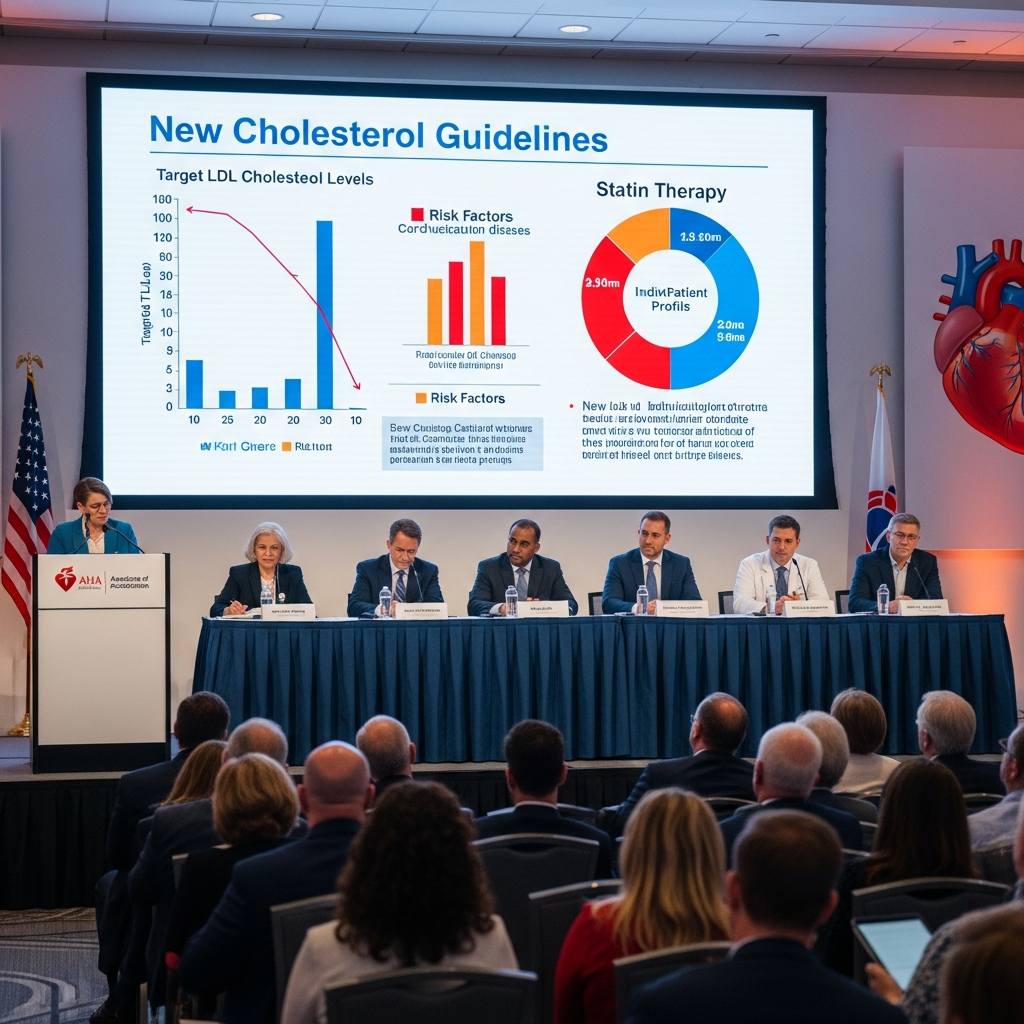
Heart health just received a significant update. The American Heart Association (AHA) and American College of Cardiology (ACC), alongside nine other leading medical associations, have rolled out groundbreaking new guidelines for managing cholesterol. These 2026 recommendations mark a pivotal shift towards earlier intervention, personalized risk assessment, and a comprehensive, lifelong approach to preventing heart attacks and strokes. If you’re looking to understand what these changes mean for your cardiovascular health, this essential guide breaks down the critical updates, from new risk calculators to specific treatment targets, empowering you to take proactive steps towards a healthier future.
A Paradigm Shift in Heart Health Prevention
The overarching message from these updated guidelines is clear: prevention starts earlier and is far more personalized. This comprehensive document, published in prestigious journals like JACC and Circulation, consolidates the latest evidence to help clinicians and patients effectively assess and manage various blood lipids. The ultimate goal is to significantly lower the risk of atherosclerotic cardiovascular disease (ASCVD), the world’s leading cause of death. Experts emphasize that over 80% of cardiovascular disease is preventable, with elevated low-density lipoprotein cholesterol (LDL-C), often called “bad” cholesterol, being a primary culprit.
Why Earlier Intervention Matters More Than Ever
A central focus of the new guidance is intervening at a younger age. Mounting evidence indicates that maintaining lower LDL-C levels over a longer duration provides substantially greater protection against future cardiovascular events. This means treatment to lower lipid levels might now be considered for adults as young as 30, especially those at high long-term risk or with already elevated LDL-C. By reducing cumulative exposure to plaque-causing lipids throughout a person’s life, these guidelines aim to mitigate lifelong risk, rather than simply reacting to immediate threats.
The Core Principles: Lifestyle First, Medication When Needed
While the guidelines introduce advanced tools and therapies, lifestyle modification remains the undisputed cornerstone of cardiovascular disease prevention. Recommendations include:
Maintaining a healthy body weight.
Engaging in regular physical activity.
Avoiding all tobacco products.
Prioritizing healthy, consistent sleep habits.
Adopting a heart-healthy diet.
For many, however, lifestyle changes alone may not be enough to reach optimal cholesterol goals. In such cases, the guidelines strongly advocate for the timely initiation of cholesterol-lowering medication. This integrated approach, combining proactive lifestyle choices with evidence-based pharmacotherapy, is designed to provide robust, sustained protection against heart disease.
Decoding Your Risk: Advanced Assessment Tools
The new guidelines move beyond traditional, single-factor risk assessments, embracing a more holistic view of an individual’s cardiovascular risk profile. This enhanced approach aims to provide a clearer, more accurate picture of both short-term and lifelong risk.
Introducing the PREVENT Risk Calculator
A significant addition is the recommendation to use the Predicting Risk of Cardiovascular Disease EVENTs (PREVENT) risk calculator. This contemporary tool is designed for primary prevention in adults aged 30-79 who do not have known ASCVD or subclinical atherosclerosis, and whose LDL-C levels fall between 70-189 mg/dL. Unlike older models that often overestimated risk, PREVENT-ASCVD equations provide a more accurate estimate of both 10-year and 30-year risks of heart attack or stroke. These categories—low (<3%), borderline (3% to <5%), intermediate (5% to <10%), and high (10% or higher)—then guide the initiation and intensity of lipid-lowering therapy.
Personalizing Risk with Key Enhancers
Beyond standard health information like cholesterol and blood pressure, the guidelines advocate for incorporating “risk enhancers” into personalized risk assessments. These crucial factors can significantly refine an individual’s ASCVD risk, prompting more intensive management. Risk enhancers include:
Family history: A close relative with early-onset heart disease.
Chronic inflammatory conditions: Such as lupus or rheumatoid arthritis.
Cardiometabolic conditions: Overweight/obesity, diabetes, chronic kidney disease.
Higher-risk ancestry: For example, South Asian or Filipino heritage.
Reproductive risk markers: Conditions like early menopause, preeclampsia, or gestational diabetes.
Specific biomarkers: Elevated triglycerides, high-sensitivity C-reactive protein (hsCRP), lipoprotein(a) [Lp(a)], and apolipoprotein B (apoB).
Beyond Standard Cholesterol: New Diagnostic Tests
The updated guidelines recommend selective use of additional diagnostic tests to further enhance cardiovascular risk assessment and guide more targeted interventions. These tests offer deeper insights into an individual’s genetic predisposition and the early stages of arterial plaque buildup.
The Crucial Role of Lipoprotein(a) [Lp(a)]
One of the most impactful new recommendations is that all adults should have their lipoprotein(a) [Lp(a)] levels measured at least once in their lifetime. Lp(a) is a genetically determined type of cholesterol not typically detected by standard lipid panels. Elevated Lp(a) (defined as ≥125 nmol/L or ≥50 mg/dL) significantly increases the long-term risk of heart attack or stroke, with very high levels more than doubling that risk. Since Lp(a) levels are largely stable throughout life, a single test, ideally early in adulthood, can provide vital information about inherited cardiovascular risk. While specific Lp(a)-lowering therapies are still emerging, identifying high Lp(a) prompts more intensive overall cholesterol management.
When to Consider a Coronary Artery Calcium (CAC) Scan
For individuals with borderline or intermediate 10-year risk where uncertainty about initiating statin therapy persists, a non-contrast coronary artery calcium (CAC) scan is now recommended. This noninvasive CT scan detects calcified plaque in the arteries, providing direct visual evidence of atherosclerosis. Any detectable CAC indicates a clear benefit from statin therapy and supports an LDL-C goal of less than 100 mg/dL, with even lower targets for higher calcium scores. This test can be a powerful tie-breaker in treatment decisions, moving many from “undecided” to proactive intervention.
Understanding Apolipoprotein B (ApoB)
Apolipoprotein B (apoB) is also recognized as a valuable marker. It can be used to assess residual ASCVD risk and guide treatment, especially in populations such as those with cardiovascular-kidney-metabolic syndrome, Type 2 diabetes, high triglycerides, or known cardiovascular disease who have already met their LDL-C and non-HDL-C goals. ApoB may offer a more accurate measure of the total number of “bad” cholesterol particles compared to LDL-C in these specific groups.
Setting Clearer Goals: Updated LDL-C Targets
A significant change in the 2026 guidelines is the reintroduction of specific, lower LDL-C and non-HDL-C treatment goals, tailored to individual risk levels. The message from experts is unequivocal: “lower LDL is better.”
Primary Prevention: Goals for Those Without Existing Heart Disease
For individuals focused on preventing their first heart attack or stroke, the guidelines establish clear LDL-C targets:
Borderline or Intermediate Risk: An LDL-C goal of less than 100 mg/dL.
High Risk: An LDL-C goal of less than 70 mg/dL.
These targets reflect clinical trials demonstrating substantial benefits at levels lower than previously recommended, emphasizing the importance of proactively reducing lipid exposure.
Secondary Prevention: More Aggressive Targets for High-Risk Individuals
For patients who have already experienced a heart attack or stroke and are at very high risk of recurrent cardiovascular events, the LDL-C goal is even more aggressive:
An LDL-C target of less than 55 mg/dL.
These stringent targets underscore the need for intensive lipid management in those with established ASCVD to prevent further adverse events.
Treatment Pathways: Statins and Beyond
While lifestyle remains foundational, medication plays a crucial role for many in achieving these new, lower cholesterol goals. The guidelines provide clear pathways for effective lipid-lowering therapy.
Statins Remain the Cornerstone of Therapy
Statins continue to be the primary, first-line medication for lowering cholesterol. They are highly effective, well-studied, and widely accessible, with generic versions being very affordable. The new guidelines support earlier and, when appropriate, more intensive use of statins, recognizing their profound impact on reducing cardiovascular events.
Non-Statin Options for Optimal Lipid Management
If LDL-C levels are not adequately lowered by lifestyle changes and statin therapy, the guidelines recommend the addition of non-statin medications. Evidence-based options include:
Ezetimibe: An oral agent that reduces cholesterol absorption in the intestine.
Bempedoic acid: A newer oral medication that inhibits cholesterol synthesis.
PCSK9 monoclonal antibodies: Injectable drugs that significantly lower LDL-C by increasing the liver’s ability to remove cholesterol from the blood.
For specific cases, other therapies for hypertriglyceridemia are also considered, always beginning with lifestyle modifications and statin therapy, with additional treatments based on ASCVD and pancreatitis risk.
Special Populations and Childhood Screening
The updated guidelines also offer crucial guidance for specific patient populations and underscore the importance of early life intervention.
Tailored Approaches for Specific Health Conditions
Lipid management strategies are detailed for individuals with conditions that elevate cardiovascular risk, including:
Chronic Kidney Disease (CKD) stage 3 or higher: Initiating therapy for those aged 40 or older.
HIV: Continuing therapy unless contraindicated.
Type 1 or Type 2 Diabetes: Emphasizing early and consistent management.
Special considerations are also noted for cancer patients and for women during conception, pregnancy, and lactation, when most lipid-lowering therapies are deferred.
Early Life Intervention: Screening in Children and Adolescents
Recognizing that high cholesterol can begin to impact heart disease risk in childhood, often due to inherited conditions, the guidelines recommend cholesterol screening for all children aged 9-11 years who haven’t been previously screened. This proactive step allows for early assessment of risk and the development of a collaborative care plan involving clinicians, parents, and caregivers. Early detection and management in youth can significantly reduce the lifetime burden of atherosclerotic disease.
Frequently Asked Questions
What is the PREVENT risk calculator and who should use it?
The PREVENT (Predicting Risk of Cardiovascular Disease EVENTs) risk calculator is a new, advanced tool recommended by the AHA/ACC for estimating an individual’s 10-year and 30-year risk of heart attack or stroke. It’s designed for primary prevention in adults aged 30-79 years who do not have existing ASCVD or subclinical atherosclerosis, and whose LDL-C levels are between 70-189 mg/dL. This tool uses routinely collected health information along with “risk enhancers” to personalize risk scores and guide decisions on starting lipid-lowering therapy.
Why is lipoprotein(a) [Lp(a)] testing now recommended for all adults?
Lipoprotein(a) [Lp(a)] testing is now recommended for all adults at least once in their lifetime because it reveals an inherited, significant risk factor for heart attacks and strokes that isn’t measured by standard cholesterol tests. Lp(a) levels are largely determined by genetics and remain stable throughout life, making a single test highly informative. Identifying elevated Lp(a) can lead to more intensive overall cholesterol-lowering strategies and provides crucial insight into an individual’s long-term cardiovascular risk profile.
What are the updated LDL-C goals, and how do they impact my treatment plan?
The new guidelines reintroduce specific, lower LDL-C (low-density lipoprotein cholesterol) goals tailored to individual risk. For primary prevention, the goal is less than 100 mg/dL for those at borderline or intermediate risk, and less than 70 mg/dL for high-risk individuals. For secondary prevention in patients with established ASCVD at very high risk, the LDL-C goal is less than 55 mg/dL. These stricter targets aim to reduce lifetime exposure to unhealthy lipids, meaning your doctor may recommend starting or intensifying statin therapy or adding non-statin medications earlier to achieve these lower, more protective levels.
Conclusion
The updated AHA/ACC cholesterol guidelines represent a powerful step forward in personalized cardiovascular care. By emphasizing earlier risk assessment, embracing new diagnostic tools like Lp(a) testing and CAC scans, and setting clearer, lower LDL-C goals, these recommendations empower both patients and healthcare providers to take a more proactive and tailored approach to heart health. Remember, over 80% of cardiovascular disease is preventable. Discuss these new guidelines with your doctor to understand how they impact your personal risk profile and to develop a comprehensive plan for preventing heart attacks and strokes throughout your lifetime. Your heart health journey starts now.