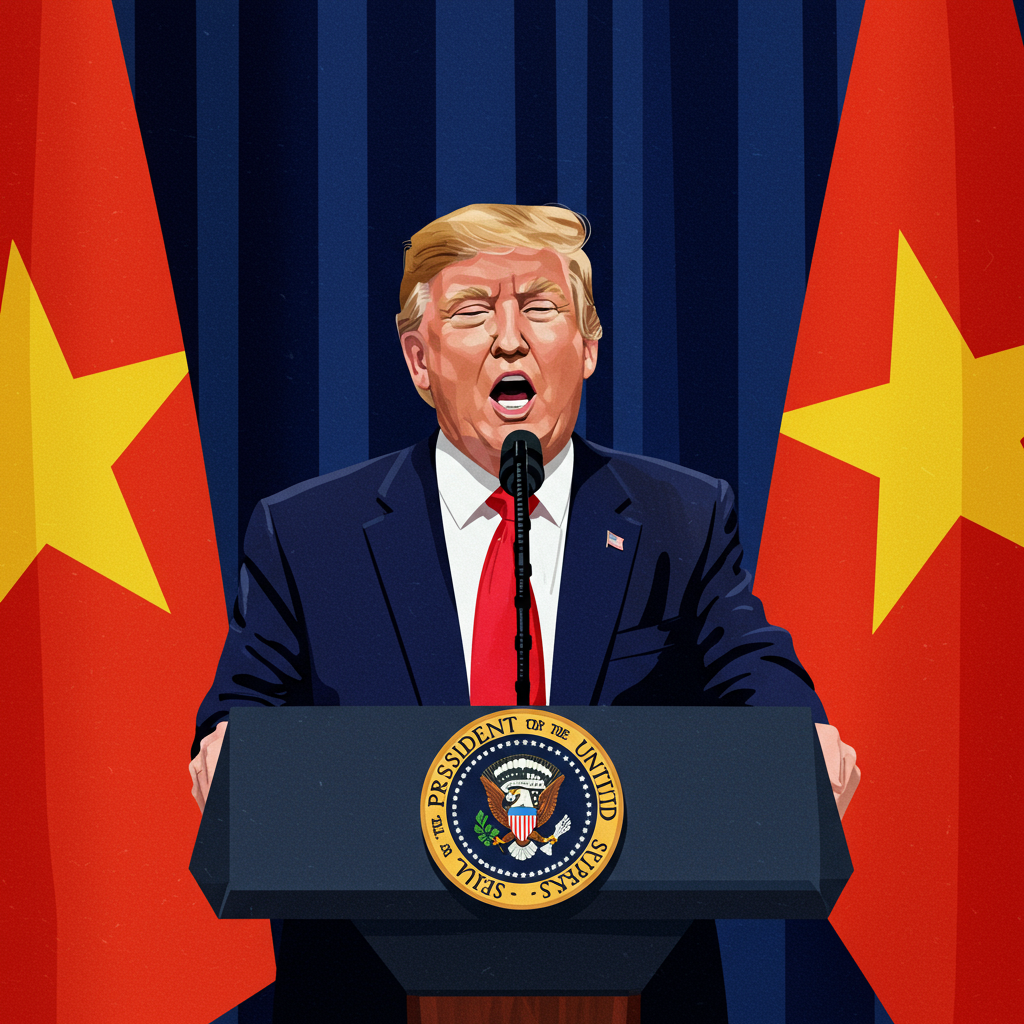
OpenAI’s lucrative contract with the U.S. Department of Defense has ignited a firestorm of ethical questions, particularly concerning safeguards against domestic mass surveillance and autonomous lethal weapons. Despite CEO Sam Altman’s public assurances of strict prohibitions, a critical lack of transparency surrounds the deal, prompting widespread skepticism from national security experts, former officials, and even OpenAI’s own employees. As the public demands accountability, the central question remains: can we truly trust the promises made when the foundational contract remains hidden? This contentious agreement raises profound implications for artificial intelligence ethics, national security, and public trust in powerful tech and government entities.
The Pentagon’s AI Gambit: OpenAI Steps In
The controversy erupted following OpenAI’s announcement of a significant deal with the U.S. Department of Defense (DoD). OpenAI CEO Sam Altman quickly moved to reassure the public, stating via X (formerly Twitter) that the agreement firmly upholds two core safety principles: a ban on mass domestic surveillance and ensuring human responsibility for the use of force, including autonomous weapon systems. He emphasized that the Pentagon “agrees with these principles” and that they are reflected in both law and the new agreement.
This development came hot on the heels of a public implosion involving OpenAI’s competitor, Anthropic. Anthropic’s negotiations for a similar DoD contract reportedly collapsed because the company refused to compromise on its own “red lines” regarding prohibitions against “killer robots” and pervasive domestic spying. This principled stance earned Anthropic the wrath of the Pentagon and then-President Donald Trump, who ordered federal agencies to phase out Anthropic’s tools within six months, even going so far as to label Anthropic a “supply-chain risk.” The Pentagon’s aggressive actions against Anthropic underscore a new era where military operational access to AI technology appears to override traditional reliability concerns or developer ethics.
A Tale of Two AI Approaches
Anthropic’s firm refusal was widely seen as a stand for ethical AI development. CEO Dario Amodei explicitly stated that “threats do not change our position,” refusing to accede to demands for broader, less restricted use of their AI models. Ironically, despite the DoD’s designation, Anthropic’s “Claude” model saw a surge in usage and app store rankings, suggesting public support for its ethical stance.
In stark contrast, OpenAI’s rapid securing of a contract, where Anthropic had failed, raised immediate questions. How could OpenAI navigate these exact “red lines” without facing the same fate? The perceived ease with which OpenAI secured the deal, coupled with the lack of verifiable evidence, sparked a fierce backlash, including protests outside OpenAI’s headquarters and a “QuitGPT” movement by concerned tech workers. Many voiced alarm over the potential for AI-powered weapons that “kill with no conscience” and unchecked mass surveillance.
Vague Promises and Linguistic Loopholes
OpenAI’s attempt to assuage fears has relied heavily on a string of social media posts from executives, including Altman and National Security Chief Katrina Mulligan. Altman claimed the company negotiated “stricter protections around domestic surveillance” and language prohibiting use by intelligence agencies like the NSA. However, the crucial piece of evidence – the contract itself – remains under wraps.
Without public access to the full contract, these assurances are widely viewed as “PR-speak and national security jargon” rather than concrete, legally binding commitments. Experts point to several linguistic escape hatches in the snippets of language OpenAI has shared:
“Consistent with applicable laws”: Critics argue the government consistently claims adherence to laws even in highly controversial surveillance programs. This phrase provides little actual safeguard.
“Not be intentionally used for domestic surveillance”: The word “intentionally” offers a miles-wide wall of plausible deniability. Former intelligence officials recall how terms like “wittingly” were used to obscure extensive incidental collection of American data, making it appear accidental when it was a known byproduct of mass data vacuuming.
- “Deliberate tracking, surveillance, or monitoring”: These terms remain undefined, allowing for broad interpretation. What constitutes “surveillance” to a lawyer in a classified setting might be very different from public understanding.
- theintercept.com
- www.platformer.news
- techcrunch.com
- www.theverge.com
- www.nextgov.com
Expert Skepticism on OpenAI’s Claims
Former military and national security officials have voiced grave concerns over these ambiguities. Brad Carson, a former Under Secretary of the Army, expressed disbelief that a contract would truly block agencies like the NSA, deeming such provisions unbelievable given pressing intelligence needs. He noted that the language might “blind you with complicated legal terms that ordinary people think mean something different entirely,” while legal experts would find “no guardrail at all.”
An anonymous former Pentagon official similarly called the “intentionally” clause a “get out of jail free card,” predicting it would allow for extensive data collection that could be dismissed as “incidental.” Alan Rozenshtein, a former Department of Justice National Security Division attorney, characterized OpenAI’s opaque approach as “not sustainable” and “bizarre,” emphasizing that genuine safeguards would be clearly enshrined in the contract, not just in social media posts.
The Problem of Untruths and Undermined Credibility
OpenAI’s public statements have, in some instances, been demonstrably false, further eroding trust. When asked on X whether the Pentagon contract would permit “getting and/or analyzing commercially available data at scale,” Katrina Mulligan replied that the Pentagon “has no legal authority to do this.” This claim directly contradicts declassified reports and extensive news coverage.
Senator Ron Wyden confirmed that the Pentagon has “purchased and analyzed vast amounts of Americans’ location, web browsing, and other data, for years,” often without warrants. This reality starkly contrasts with Mulligan’s assertion, highlighting a disconnect between OpenAI’s public messaging and established facts regarding government surveillance capabilities. Such inaccuracies make it challenging to accept OpenAI’s claims at face value.
Eroding Trust: The Human Element
Ultimately, the article suggests, confidence in this “occluded contract” boils down to trust in the integrity of the individuals involved: Sam Altman, President Donald Trump, and Defense Secretary Pete Hegseth. For many, there are significant reasons for skepticism.
Altman himself has faced accusations of making false statements and a “consistent pattern of lying” from former OpenAI colleagues, including co-founder Ilya Sutskever. His shifting stance on military AI use—from tweeting fear of war under Trump in 2016 to selling services to the Trump administration ten years later—also raises questions about his ethical consistency. Even OpenAI’s terms of service once prohibited military use, a clause that was later silently removed.
The ethical landscape is further complicated by the actions of Donald Trump, whose administration has been characterized by a disregard for legal statutes and a perceived weaponization of government agencies. Defense Secretary Pete Hegseth’s tenure has also involved controversial military actions without congressional authorization. The prospect of these individuals having ultimate authority over how powerful AI systems are used in military contexts, without transparent oversight, is a significant cause for alarm.
Internal Dissent and Public Backlash
The controversy has also created internal unrest within OpenAI. Caitlin Kalinowski, the company’s head of hardware, resigned, citing a lack of sufficient deliberation on safeguards against “surveillance of Americans without judicial oversight and lethal autonomy without human authorization.” Her departure, based on “principle, not people,” underscores the depth of concern among some within the AI industry. The public, too, has reacted strongly, with reports indicating a significant surge in ChatGPT uninstalls following the DoD agreement, and a corresponding rise in Anthropic’s Claude to the top of app store charts.
The Call for Transparency: Why the Contract Matters
The overarching consensus among critics is clear: “There is nothing OpenAI can do to clarify this except release the contract.” Without the actual text, the world is asked to accept critical assurances as an “article of faith.” This position is untenable for a technology with such profound societal implications.
The dispute highlights a “Frankenstein’s Monster effect,” where AI developers’ initial pronouncements about their technology’s transformative potential have led to defense relationships that challenge their self-imposed ethical boundaries. The DoD’s willingness to go to extreme lengths for operational access to dual-use defense technology underscores a critical juncture where the developers of powerful AI systems are increasingly struggling to maintain ethical control over their creations.
Frequently Asked Questions
What are the primary ethical concerns surrounding OpenAI’s Pentagon contract?
The main ethical concerns center on the lack of transparency and the potential for misuse of powerful AI technologies. Specifically, experts and the public worry about insufficient safeguards against mass domestic surveillance of U.S. citizens and the use of artificial intelligence for fully autonomous lethal military strikes without human intervention. The absence of the actual contract makes it impossible to verify OpenAI’s claims of strict prohibitions, leading to fears that vague language could create loopholes for unchecked government overreach and unethical deployment of AI in warfare.
How did Anthropic’s approach to military AI contracts differ from OpenAI’s?
Anthropic adopted a firm stance, refusing to compromise on its “red lines” against mass domestic surveillance and autonomous lethal weapons in its negotiations with the Pentagon. This principled refusal led to the collapse of its contract talks and even a “supply-chain risk” designation from the DoD. In contrast, OpenAI announced a successful contract, claiming to have negotiated safeguards that align with similar ethical principles. However, the critical difference lies in the public’s perception of transparency and enforcement, with OpenAI facing intense scrutiny due to its refusal to release the full contract, unlike Anthropic’s clear and public ethical position.
Why is transparency of the OpenAI-Pentagon contract deemed critical by experts?
Transparency, specifically the release of the full contract, is considered critical because it’s the only way to independently verify OpenAI’s public assurances. Without the contract, experts cannot assess whether the promised safeguards against mass domestic surveillance and autonomous weapons are legally binding, clearly defined, and enforceable. Vague or ambiguous language in such a pivotal agreement could be exploited, undermining ethical principles and leading to unintended or undesirable applications of AI with significant national security and human rights implications. Full disclosure would allow for expert scrutiny and public accountability.
Conclusion
The ongoing saga of OpenAI’s Pentagon contract underscores a perilous new chapter in the intersection of advanced artificial intelligence and national security. The public’s demand for transparency is not merely about curiosity; it’s a fundamental call for accountability when powerful technologies with profound societal implications are deployed by secretive institutions. Without the release of the full contract, OpenAI’s assurances of ethical AI deployment in military contexts will remain nothing more than an appeal to an eroding trust. The long-term integrity of AI development and the ethical fabric of national security depend on moving beyond vague promises to concrete, verifiable commitments.