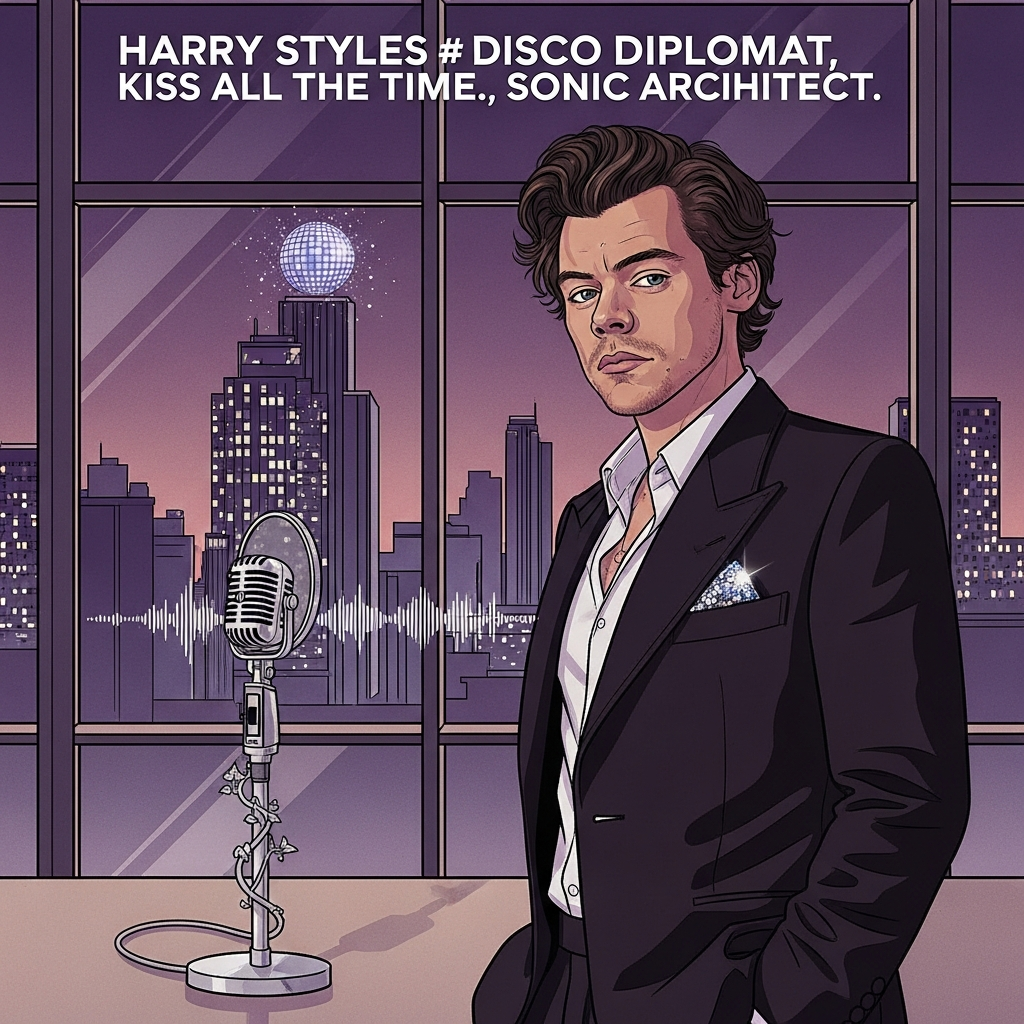
Pop superstar Harry Styles makes a highly anticipated comeback with his latest album, Kiss All the Time. Disco, Occasionally. (KATDO), offering fans a deeply introspective journey into the complexities of extreme fame. This new collection stands as a powerful statement, revealing a matured artist grappling with identity, public perception, and a significant evolution in his signature sound. Far from a typical celebrity lament, KATDO uniquely explores what it means to be a “real person” when your life is constantly under the microscope.
Harry Styles Navigates the Vertigo of Stardom with KATDO
Every major pop star eventually confronts the “it’s not easy being famous” narrative, often after reaching monumental career peaks. Harry Styles is no stranger to this. Following a Grammy for Harry’s House, the global phenomenon “As It Was,” and a record-breaking 173-date “Love on Tour,” Styles faced the emotional whirlwind that often accompanies such success. However, unlike some artists who get trapped in this cycle, Styles demonstrates strategic brilliance in his approach to this universal pop star dilemma.
His first “smart decision” was a deliberate two-year retreat from the public eye. This wasn’t just a break; it was a profound reset. Styles moved to Italy, embraced marathon training, and found solace dancing in Berlin nightclubs. These experiences, he suggests, allowed him to reconnect with himself as “one of the crowd” rather than a perpetually watched performer. This crucial period of reflection offered a perspective rarely available to artists, especially when contrasted with others who might write new material amidst grueling tour schedules. During this time, Styles also navigated a less successful foray into acting, a very public breakup, and the loss of a former bandmate – personal challenges that inform the album’s emotional landscape without being explicitly detailed.
Unpacking the Lyrics: Who Is Harry Styles Now?
Instead of directly chronicling his personal upheavals, Styles uses KATDO to delve into the meta-narrative of living a life where everyone expects you to. The album’s central theme questions his own authenticity, pondering whether he remains a genuine individual or merely the sum of public reactions and projections. Lyrics like, “It’s a little bit complicated when / They put an image in your head and now you’re stuck with it” from “Paint by Numbers” directly address this struggle. Similarly, “It’s hard to tell when the thoughts are my own” from “Season 2 Weight Loss” underscores his internal conflict, resonating with anyone who wonders how much their identity is shaped by external forces.
A key to understanding KATDO’s lyrical depth lies in Styles’ shifting use of the word “you.” Traditionally a romantic address in pop, “you” often becomes a reflexive “I” on this album. This serves as a distancing mechanism, allowing the singer to interrogate himself from a critical perspective. In “Are You Listening Yet?”, for instance, Styles wryly sing-raps to himself: “God knows your life is on the brink / And your therapist’s well fed / The fix of all fixes, unintimate sex.” When “you” refers to an erotic interest, it often signals a fleeting connection or detachment. He also uses “you” to address his audience, as heard in the vulnerable questioning of “Hoping you will love me now / Do you love me now?” from “Season 2 Weight Loss.” While some critics label his lyrics as “vagueposting,” this ambiguity can also be seen as a deliberate act of privacy, a protective layer against the breakdown of personality that celebrity often entails.
A Radical Sonic Evolution: Embracing Electronic Horizons
Styles’ third significant move on KATDO is its dramatic sonic shift. Influenced by his immersion in electronic music during his sabbatical, listening to artists like Jamie xx and attending LCD Soundsystem shows, the album departs from the “gently exploratory pop-funk” of Harry’s House and his earlier “neo-soft-rock.” The new sound is marked by harder bass and drum lines, often a blend of electronic beats and live drumming from Tom Skinner (Sons of Kemet, The Smile). An eclectic palette of analog synths adds rich texture, while Styles’ voice is treated with more aggressive electronic effects on some tracks, balanced by his familiarly buoyant singing elsewhere. The addition of a “house gospel choir” further expands his vocal arrangements, creating a more unpredictable and sonically adventurous listening experience.
Key Tracks and Unexpected Musical Moments
The album’s lead single, “Aperture,” perfectly exemplifies this new, LCD Soundsystem-esque sound. It’s a slow-burning composition where sound units gradually build, culminating in powerful, arching choruses. “Dance No More” fully embraces its disco influences with handclap beats, Moog-y arpeggios, and Chic-inspired licks, lamenting the disconnect between celebrity DJs and the communal dance floor. Other tracks showcase a diverse sonic landscape: “Ready, Steady, Go!” blends Harry’s House-like pop with Depeche Mode-esque descending synths and even features Styles singing in Italian. The album also includes two ballads, “Coming Up Roses” and “Paint by Numbers,” the latter offering deeper thematic insight despite a less captivating sonic backdrop. The peculiar closer, “Carla’s Song,” charmingly recounts playing “Bridge Over Troubled Water” to someone for the first time, a sweet celebration of music’s transportive power.
The Art of Anticipation: Pre-empting Backlash with Authenticity
The timing of Kiss All the Time. Disco, Occasionally. is strategically astute. Styles releases this introspective work precisely when a backlash against him – as a perceived “Dull 2020s Pop Guy” or “industry plant” – appears to be forming. By openly questioning himself and the nature of his fame, he proactively addresses these criticisms, demonstrating a rare self-awareness.
In an era where celebrity behavior and statements are constantly scrutinized, Harry Styles provides a fascinating contrast. Consider the recent public reaction to actor Timothée Chalamet, who sparked controversy with casual remarks about “no one caring about ballet or opera.” Despite his own singular popularity and similar anti-macho masculinity that invited the “Timothée Chalamet of Pop” comparison, Chalamet’s comments drew swift and widespread criticism from the arts community, highlighting the tightrope young stars walk. Styles, by choosing to turn inward with KATDO, offers a different approach to navigating public pressure. His album serves as a sophisticated artistic response to the very questions the public might be asking, positioning him as an artist genuinely engaging with his reality, rather than merely sidestepping it. This is similar to how Matthew McConaughey confessed to only watching Interstellar once, focusing on the experience of creation over the consumption of the final product; Styles, however, directly channels his experiences into the final product for public consumption.
The Enduring Appeal of the Pop Enigma
Ultimately, Kiss All the Time. Disco, Occasionally. is more than just another album; it’s a testament to Harry Styles’ evolution as an artist. By embracing introspection, challenging his own persona, and fearlessly experimenting with new sounds, he demonstrates a profound understanding of his place in the cultural landscape. This album is a confident, complex statement from a star who refuses to be easily defined, reaffirming his enduring appeal and securing his position as one of pop’s most intriguing figures.
Frequently Asked Questions
What are the main themes of Harry Styles’ new album, Kiss All the Time. Disco, Occasionally.?
Harry Styles’ new album, KATDO, primarily explores themes of fame, identity, and authenticity under celebrity scrutiny. It delves into the internal struggle of maintaining a “real self” amidst constant public perception, questioning how external reactions shape one’s personal identity. The album also touches on self-reflection, the emotional toll of global stardom, and the strategic navigation of a highly public life.
How does KATDO represent a new musical direction for Harry Styles?
Kiss All the Time. Disco, Occasionally. marks a significant sonic shift for Harry Styles. Moving away from the pop-funk of Harry’s House and earlier soft-rock influences, KATDO embraces electronic music, featuring harder bass and drum lines (both electronic and live), an eccentric palette of analog synths, and aggressive electronic vocal treatments. Influenced by artists like Jamie xx and LCD Soundsystem, the album offers a more unpredictable and electronically driven sound.
Why is KATDO considered a strategic career move for Harry Styles?
KATDO is seen as a strategic career move because Harry Styles released an introspective album about self-questioning at a time when public backlash or skepticism about his authenticity (“industry plant,” “Dull 2020s Pop Guy”) was beginning to emerge. By addressing the complexities of fame and his own identity through his art, Styles proactively positions himself ahead of potential criticism, showcasing vulnerability and depth that counters superficial labels. This approach reinforces his artistic credibility and long-term career resilience.